



When we speak of art, a special world comes to mind—one capable of making the head spin, captivating the soul, taming the will, and setting the heart aflutter. Naturally, everyone wishes to learn more about the “cradles of culture” that create this world and about the mentors who shape talent and give wings to the heart. The answers to these questions can be found in children’s schools of arts located throughout our country. These centers may rightfully be called the first patrons of art, transforming the efforts of gifted children into a full-flowing river and guiding them from their first steps toward true mastery. It is worth recalling that most of the country’s renowned figures in the arts followed precisely this path.
And when we speak of such schools operating under the Ministry of Culture, the First Children’s School of Arts of Turkmenabat is the first that comes to mind—and for good reason. Few people know that this educational institution was among the first five music schools established in Turkmenistan as early as 1937, making it one of the oldest in the country. In those years, children were taught in five specialties: wind instruments, piano, violin, accordion, and bayan. The fact that evening courses were already being organized at that time speaks to the city’s serious approach to the arts.
Nearly 90 years after its founding, it is interesting to look at the school’s present-day state. Today, 505 gifted children receive initial professional education here. Instruction is provided in 21 disciplines, and more than 80 highly skilled teachers work as mentors. The school’s director, Batyr Yazmyradov, introduced us to the Book of Honorary Records, created on the initiative of Honored Artist of Turkmenistan Jumabay Rozyev. Paging through it, one can find warm remarks left by distinguished individuals who visited the school over the years: composer Nury Halmamedov (February 24, 1978); the “Turkmen nightingale” Medeniyet Shahberdieva (March 24, 1981); the renowned violin pedagogue Harold Neimark (January 18, 1987), as well as entries by Nury Mukhadov, Annageldi Julgaev, Aydogdy Gurbanov, Doctor of Art History Fatima Abukova, and many others.
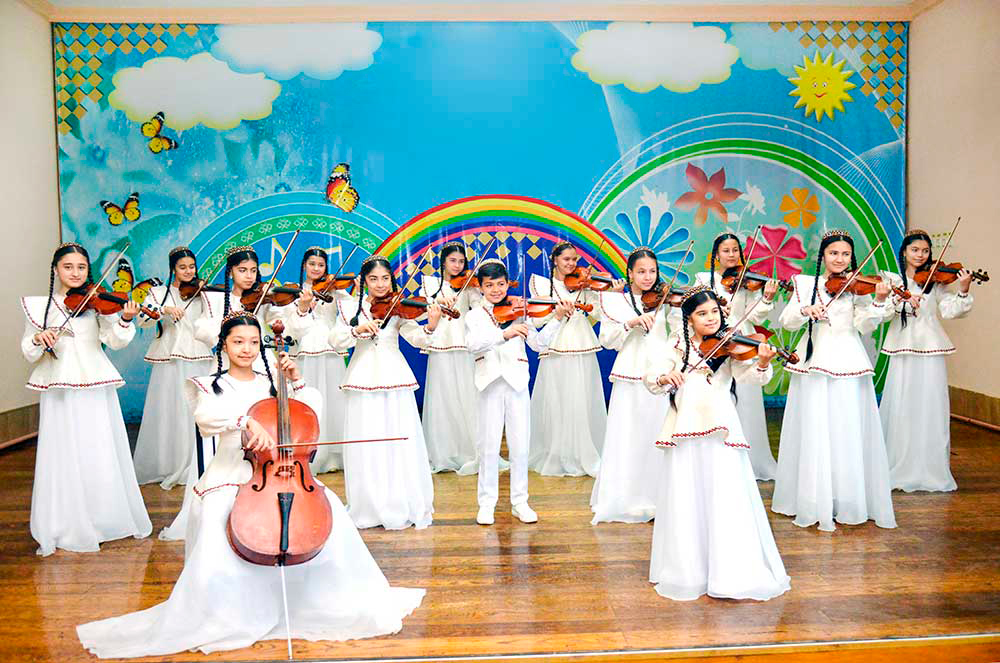
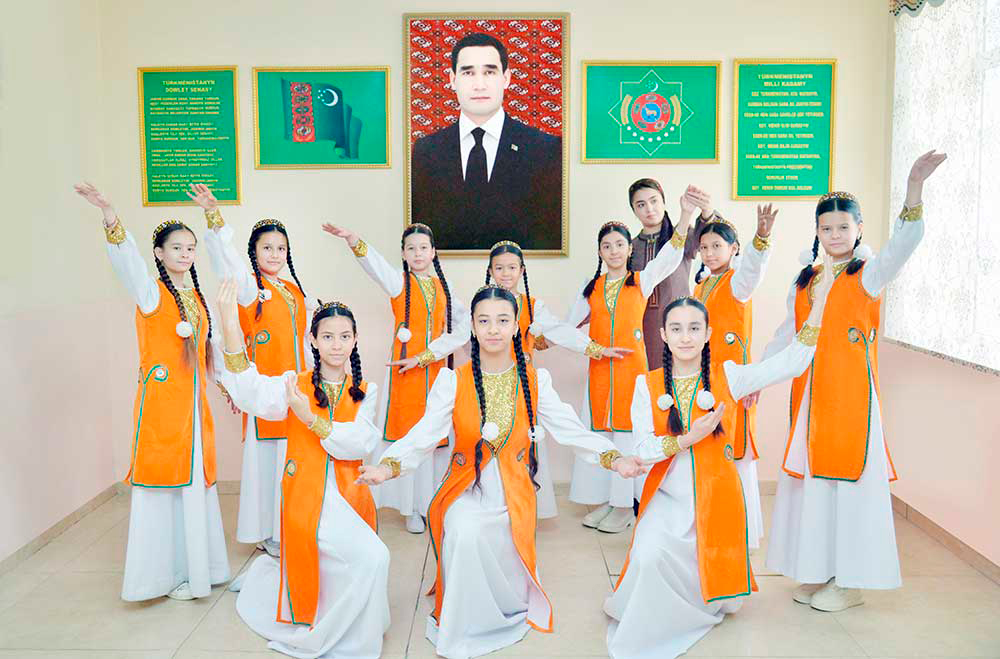
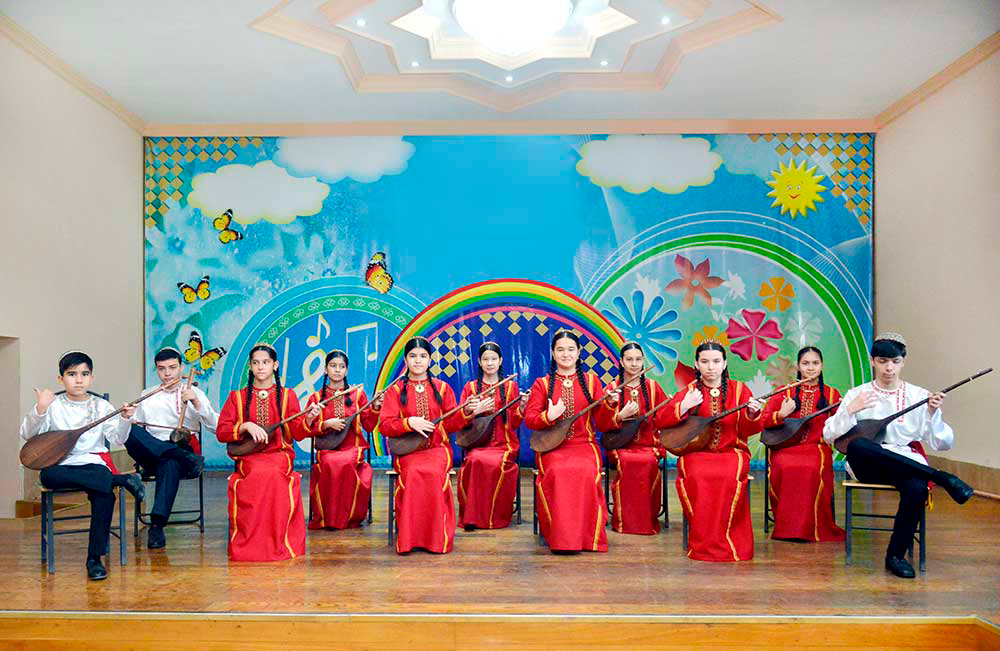
These records confirm that great masters not only visited the school but also offered valuable advice and conducted master classes. Composer Gurban Kuliyev (director from 1939 to 1941), conductor S. Dorensky, Yevgeny Mogilevsky, and composers Chary Nurymov, Rejep Rejepov, and Bayram Hudaygulyyev worked and taught here in different years. Among the school’s graduates who have achieved significant success are Azamat Avlyakulyyev, a major general; Tatyana Meredova, long-time director of the D. Ovezov Specialized Music School; Rakhman Joraev, chief director of the creative ensemble “Mukamlar köşgi”; and Batyr Sultanov, Honored Worker of Arts and composer. The school actively participates in national celebrations and international competitions. It is home to nine ensembles and orchestras, whose performances are regularly broadcast on the “Ýaşlyk” and “Türkmen owazy” television channels.
Special recognition is due to such educators as Narkuly Joraev (head of the dutar ensemble), Roza Nazarova (choirmaster), Makhym Ovezova, Dmitry Lukichev, Jemal Reiyimova, and many others.
Under the leadership of the current director, Batyr Yazmyradov, the staff is working on new compositions dedicated to the motto of the year. These works will become a fitting gift for the 35th anniversary of the country’s Independence and for the 90th anniversary of the school, which will be celebrated next year.


