


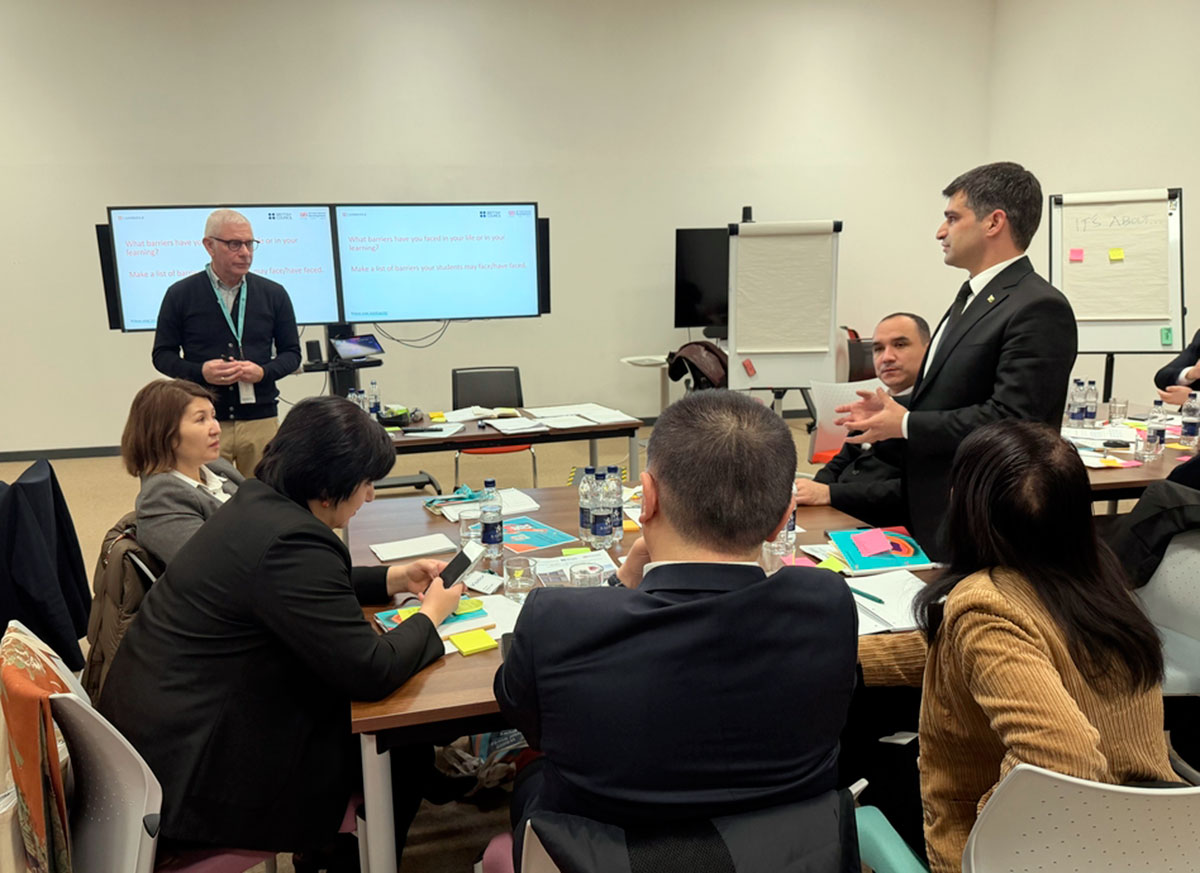
Representatives of the Turkmen education system continue their visit to Cambridge, organised from 25th to 31st of January, to participate in advanced training courses for senior management of higher education institutions in Central Asian countries.
The Turkmen delegation includes representatives of the Turkmen state university named after Magtymguly, the International University for humanities and development, the Turkmen national institute of world languages named after Dovletmammet Azady, and the Turkmen state pedagogical institute.
The course program includes training sessions, seminars, and experience-sharing events in key areas for students.
Participants study modern approaches to leadership and strategic planning in the PRESETT system, organisational and managerial practices in the field of professional development of teachers, and models of continuous professional development (CPD).
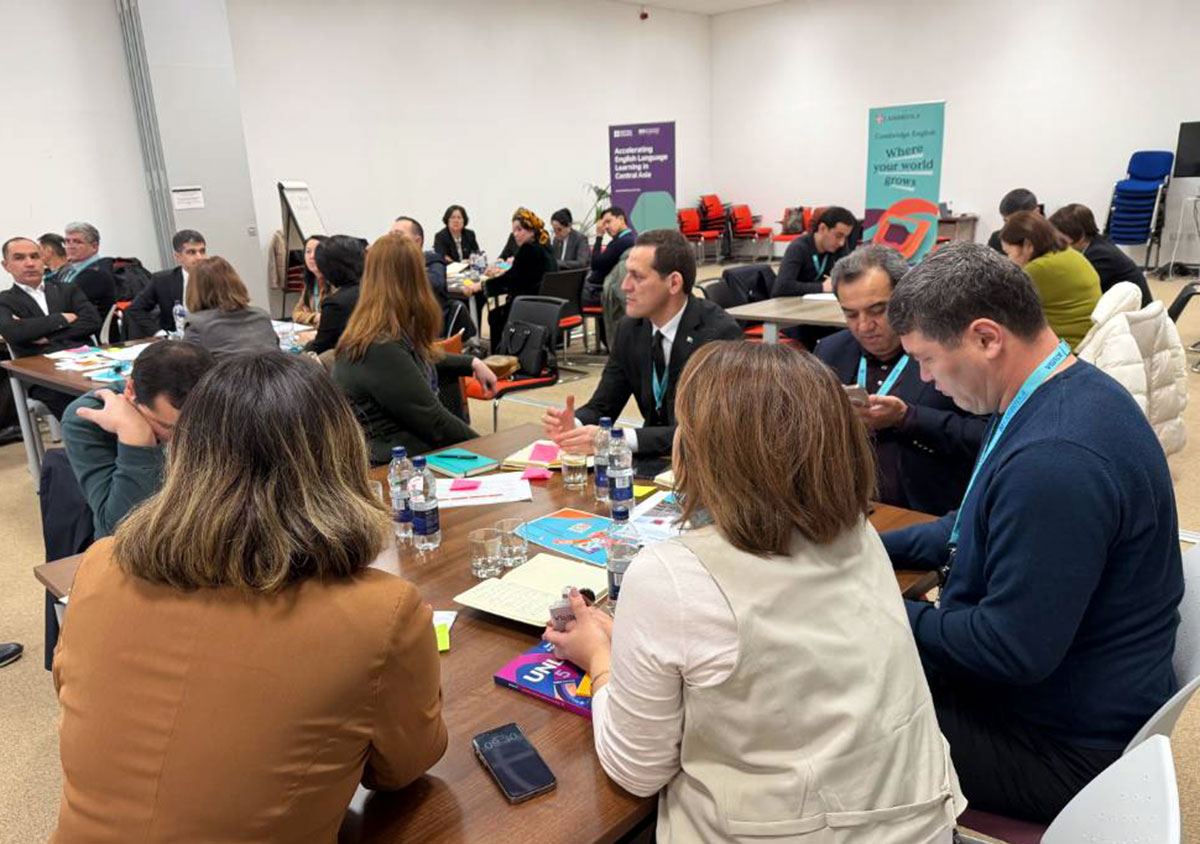
Participants will exchange experiences in the application of communicative and student-centred methods of teaching English, as well as the integration of digital educational platforms, interactive methods, and artificial intelligence technologies into the educational process.
Particular attention is paid to the consideration of methods of analysis and evaluation of the structure, content and effectiveness of educational programs.
Course participants also gain practical experience through observation of classroom activities to analyse lesson structure, teaching methods, use of teaching materials, and achievement of educational outcomes.
As part of the program, participants jointly discuss the possibilities of harmonising the structure of language curricula with modern pedagogical principles based on the CEFR (Common European Framework of Reference for Languages) approaches, as well as improving the tools for systematically measuring and assessing the development of four basic language skills: listening, reading, speaking, and writing.
Overall, the educational program includes a range of activities aimed at mastering modern pedagogical approaches, updating curricula, implementing digital technologies, and exploring advanced foreign language teaching methods.
The courses are conducted with the aim of strengthening international cooperation, studying best practices and implementing them in the national education systems of CA countries.