



On the occasion of the 50th anniversary of carpet artist Sheker Hudayberenova, a solo exhibition of her works has been opened at the Exhibition Center of Fine Arts of the Ministry of Culture.
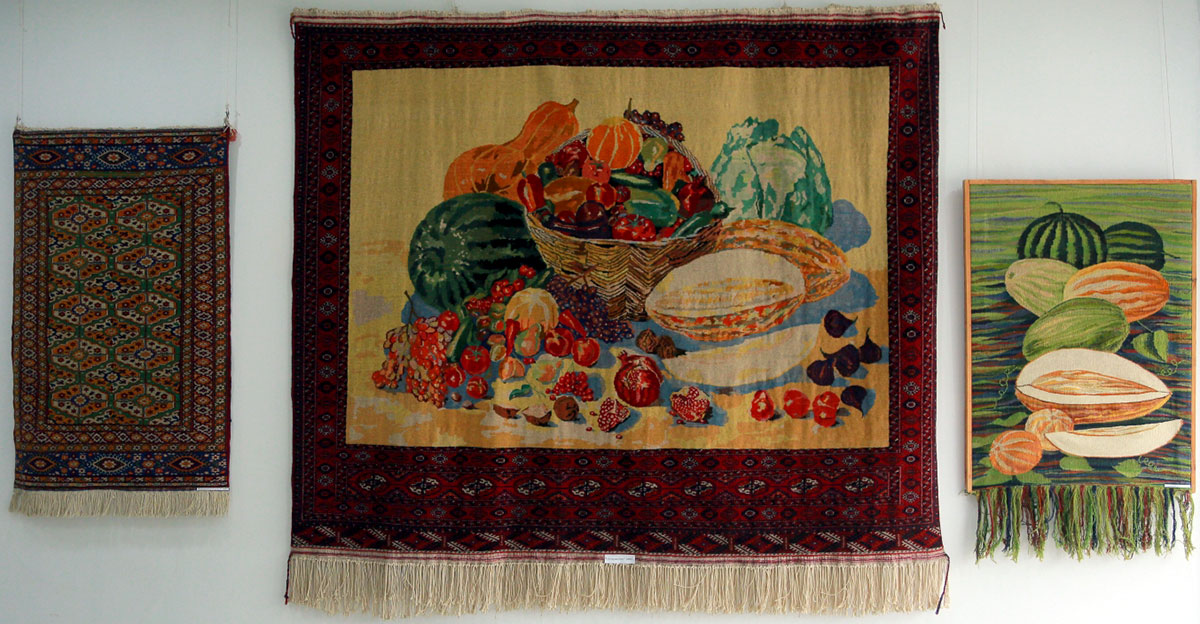
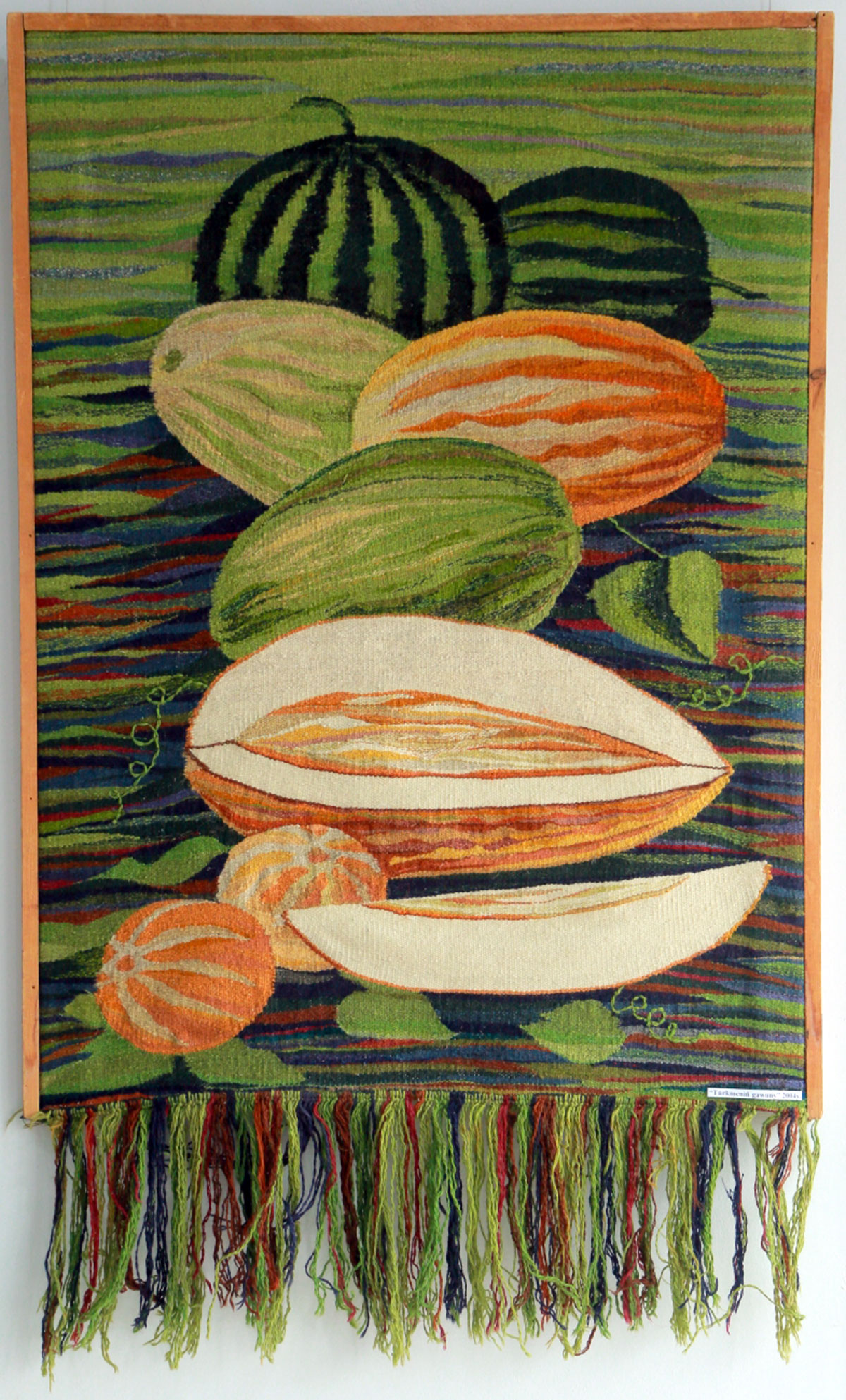
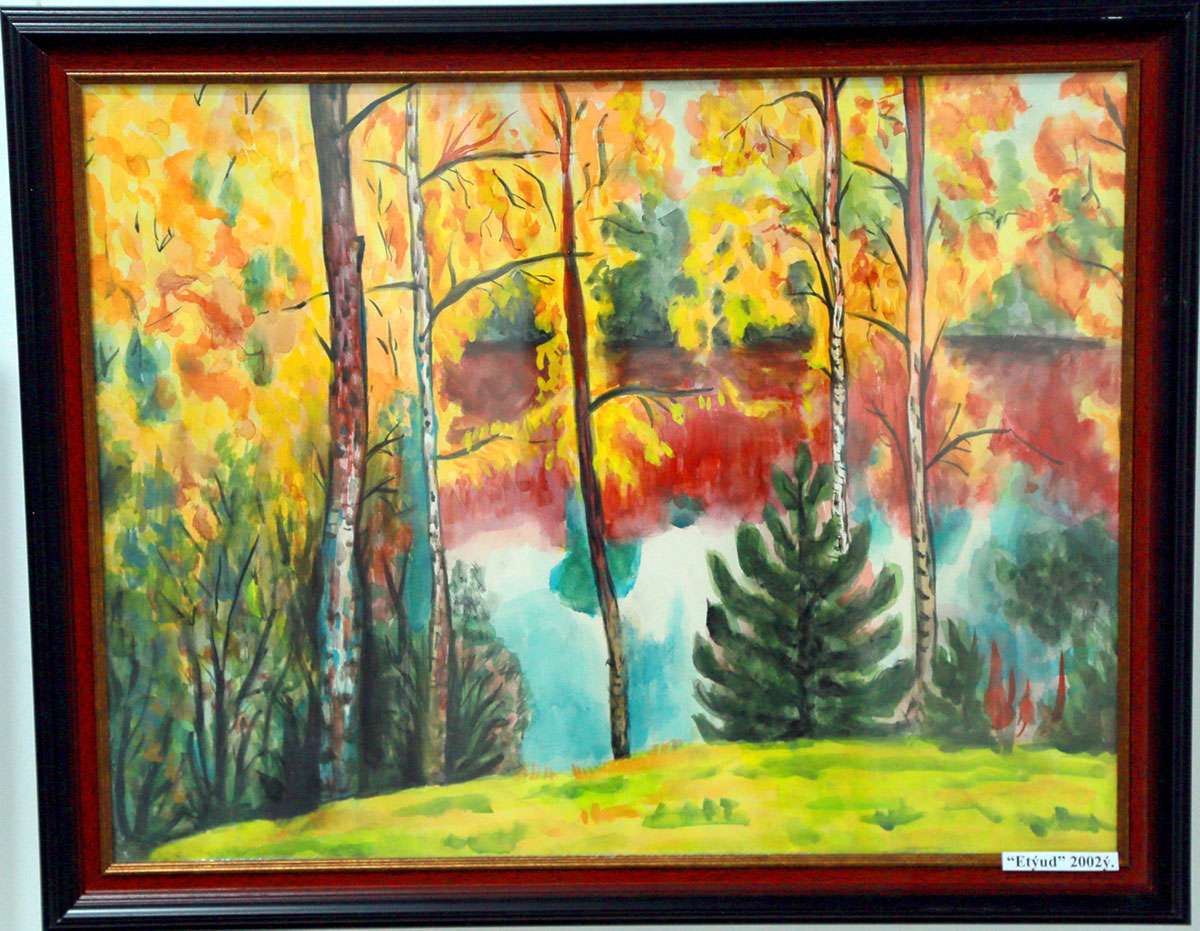
The exhibition is titled “Beauty Created by the Hands of a Master.” Visitors who came to congratulate the celebrant were first welcomed by an “appetizing” tapestry.
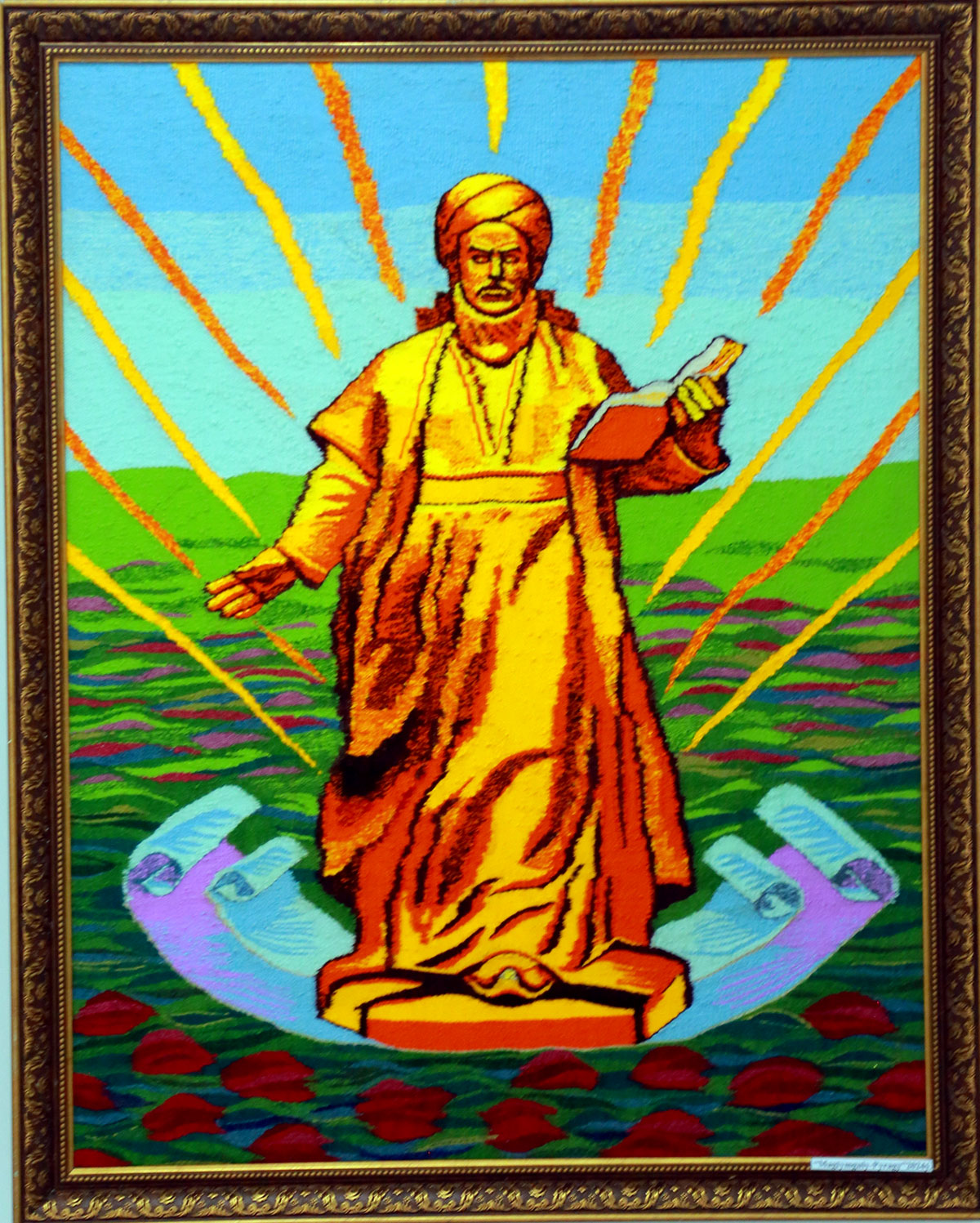
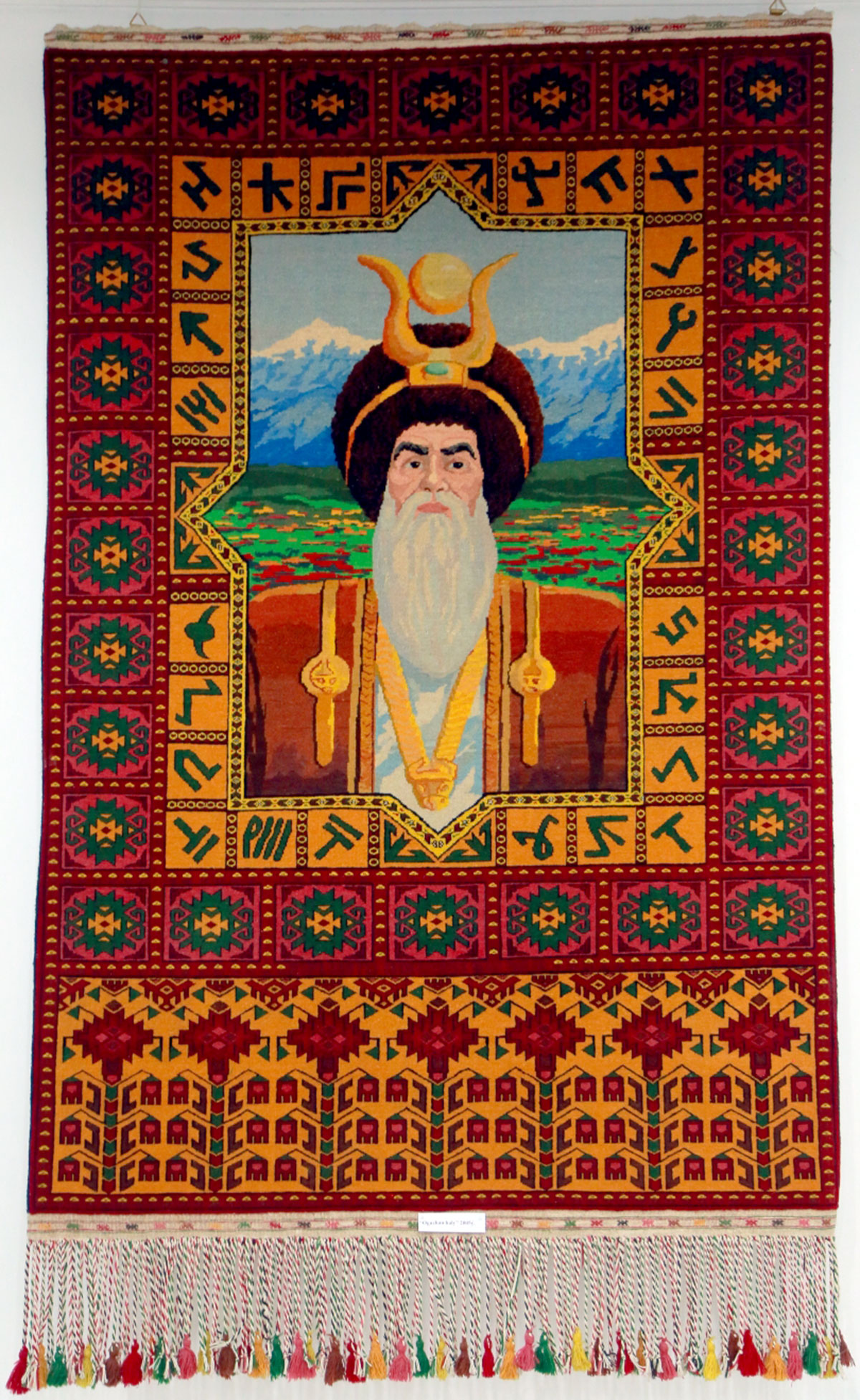
At the center of the exhibition, seated ceremoniously on a throne, was the forefather of the Turkmen people, Oguz Han, skillfully woven into a carpet by Sheker’s talented hands. As it turned out, this piece was Sheker Hudayberenova’s graduation work upon completing her studies at the State Academy of Arts of Turkmenistan. Notably, the work was included in the Academy’s Golden Fund. From the carpet, Oguz Han gazed piercingly and appraisingly at his descendants.
Sheker is a native of the Halach etrap of the Lebap velayat. From her childhood memories, her mother wove carpets in her spare time, while her father, an accountant by profession, loved drawing literary characters. Sheker was more inclined toward her father’s passion. At school, she was responsible for the wall newspaper, and teachers turned only to her for all design work. However, when the time came to choose a specialty upon entering the Turkmen State Art School, Sheker selected the carpet department. Her teacher, Anna Yomudovna Atayeva, could not have been prouder of her student, who, in addition to her studies, regularly visited the Ashgabat Carpet Factory. The teacher advised the diligent student to continue her education at the Academy of Arts, and Sheker followed her advice. At the Academy, her instructor Amanmyrat Atayev immediately noticed in the first-year student a unique ability not to repeat traditional carpet ornaments but to create new ones. He created all the necessary conditions to develop these abilities.
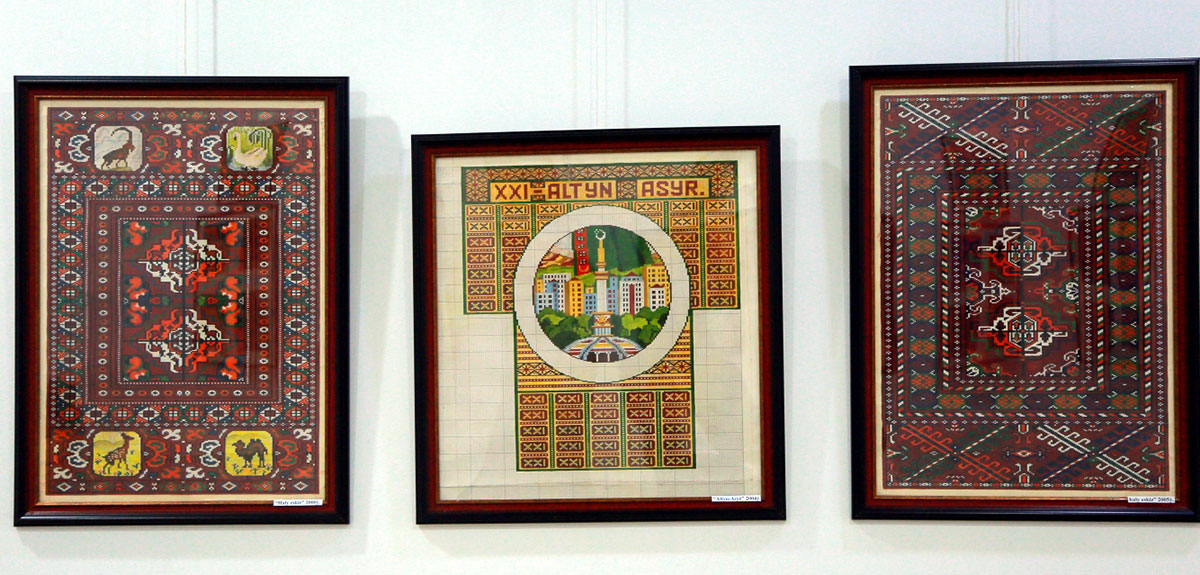
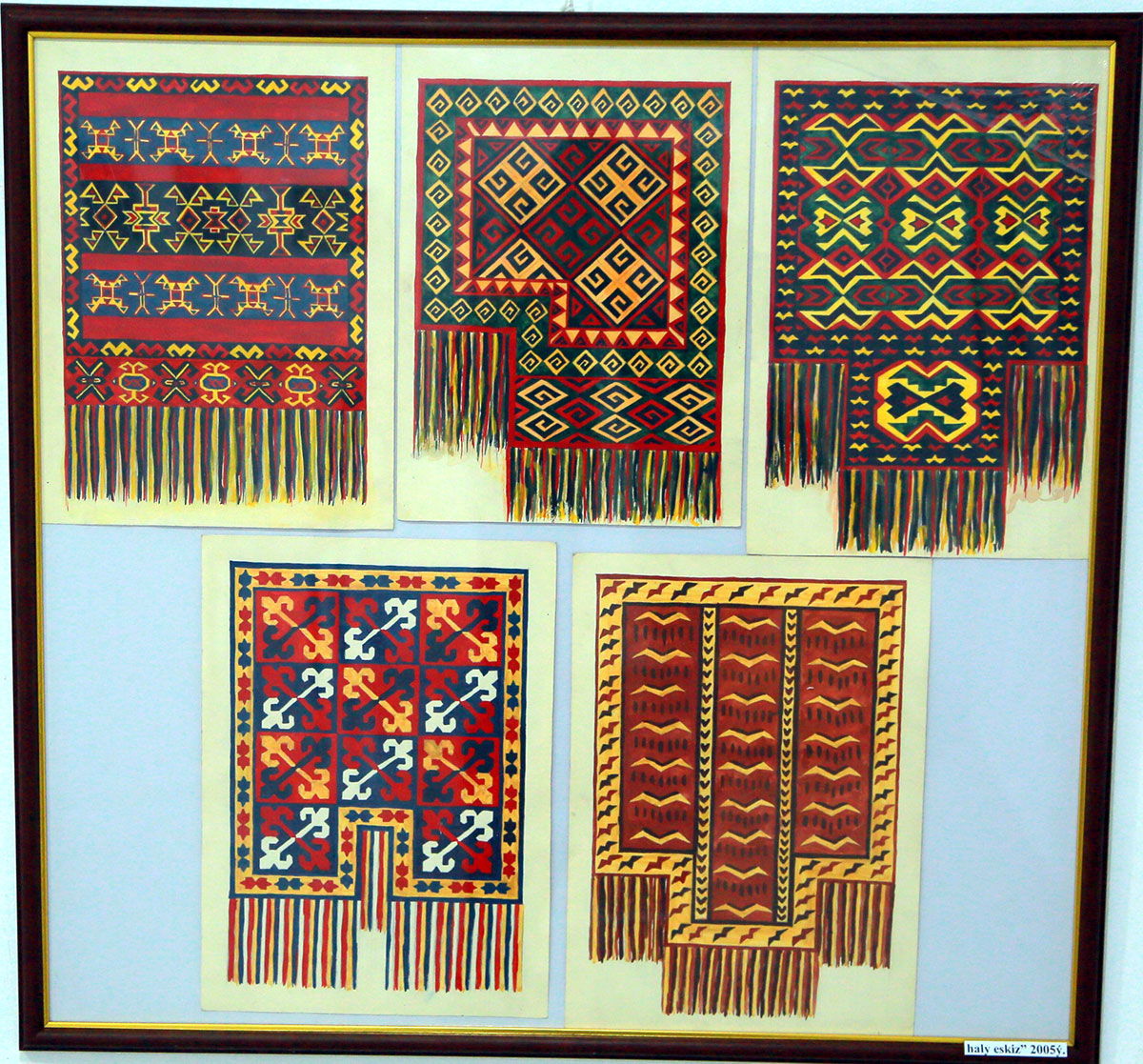
The anniversary exhibition of Sheker Hudayberenova’s works clearly demonstrated the artist’s ability to transform everything she sees into her own carpet ornaments and to skillfully vary color palettes. Sheker Shayarovna presented numerous sketches from which carpets and tapestries have already been woven, as well as designs patiently awaiting their time. Among the sketches, the work “XXI – Altyn Asyr” stands out. Sheker depicted the Monument of Independence of Turkmenistan within a circle, and for the background chose the Roman numeral XXI, placing it in a rectangle and arranging multiple such rectangles into a creative ornament.
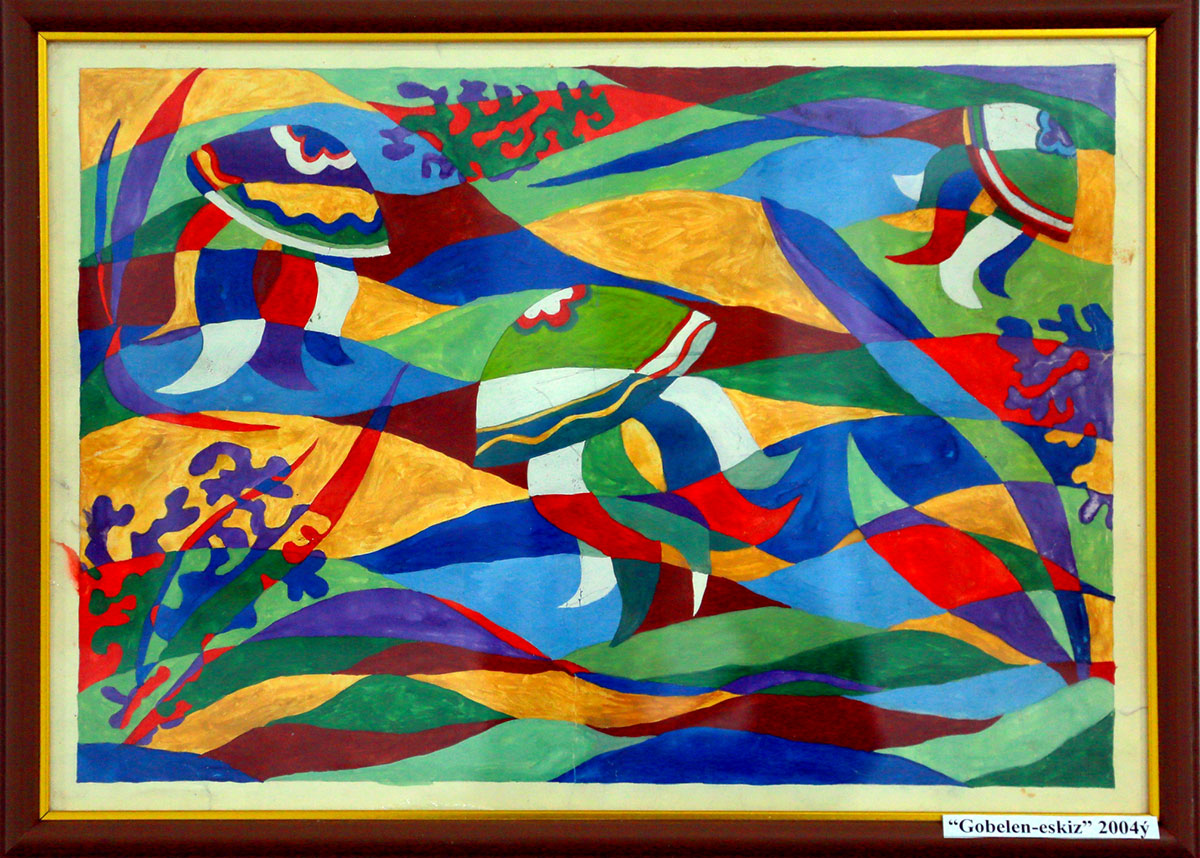
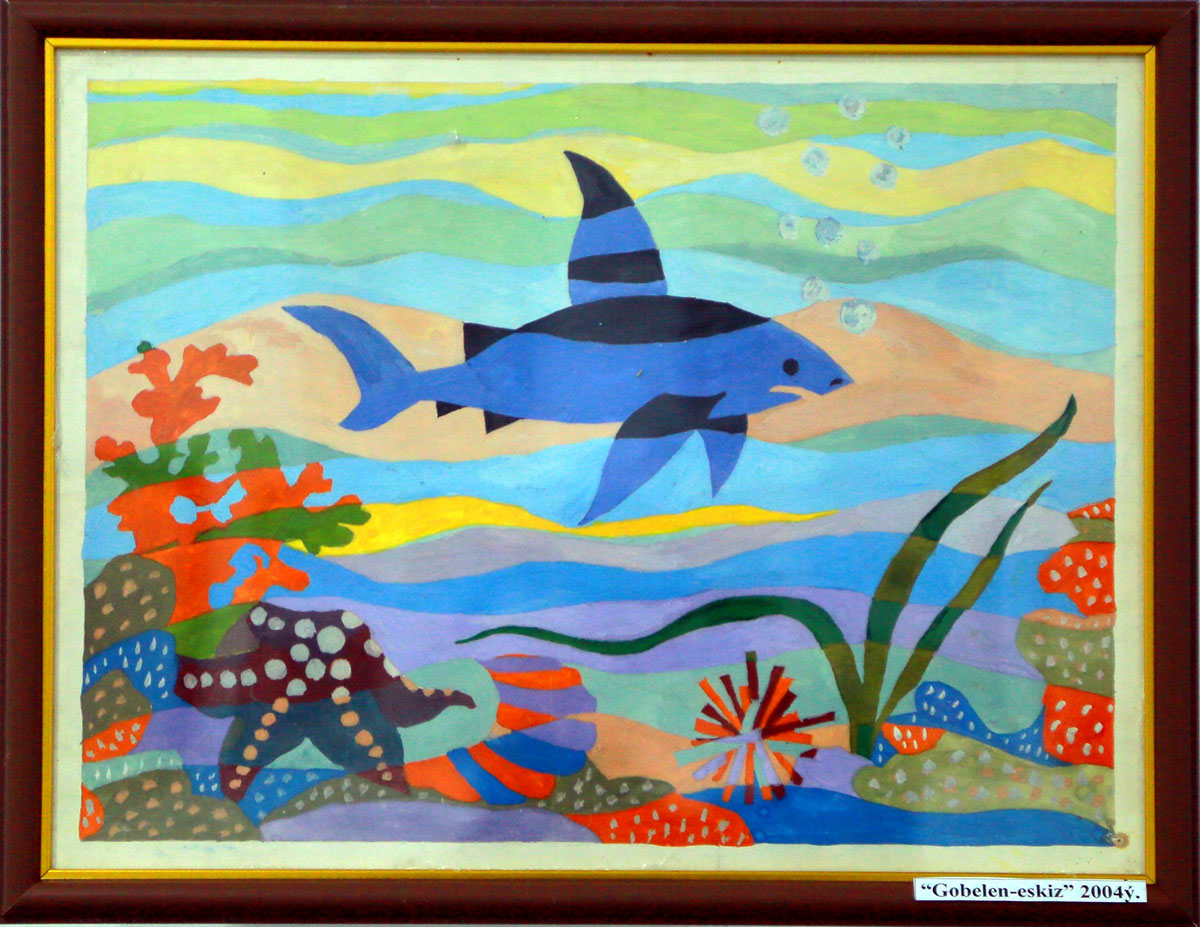
One of the tapestries presented at the exhibition is titled “The Stone Flower.” It depicts a flower from the famous Gulshirin Cave in Koytendag. Somehow it found its way into the depths of the cave and, over time, turned to stone. Today, the stone flower is a rare museum exhibit. Sheker has given the flower new life by rendering its image in the threads of a tapestry.
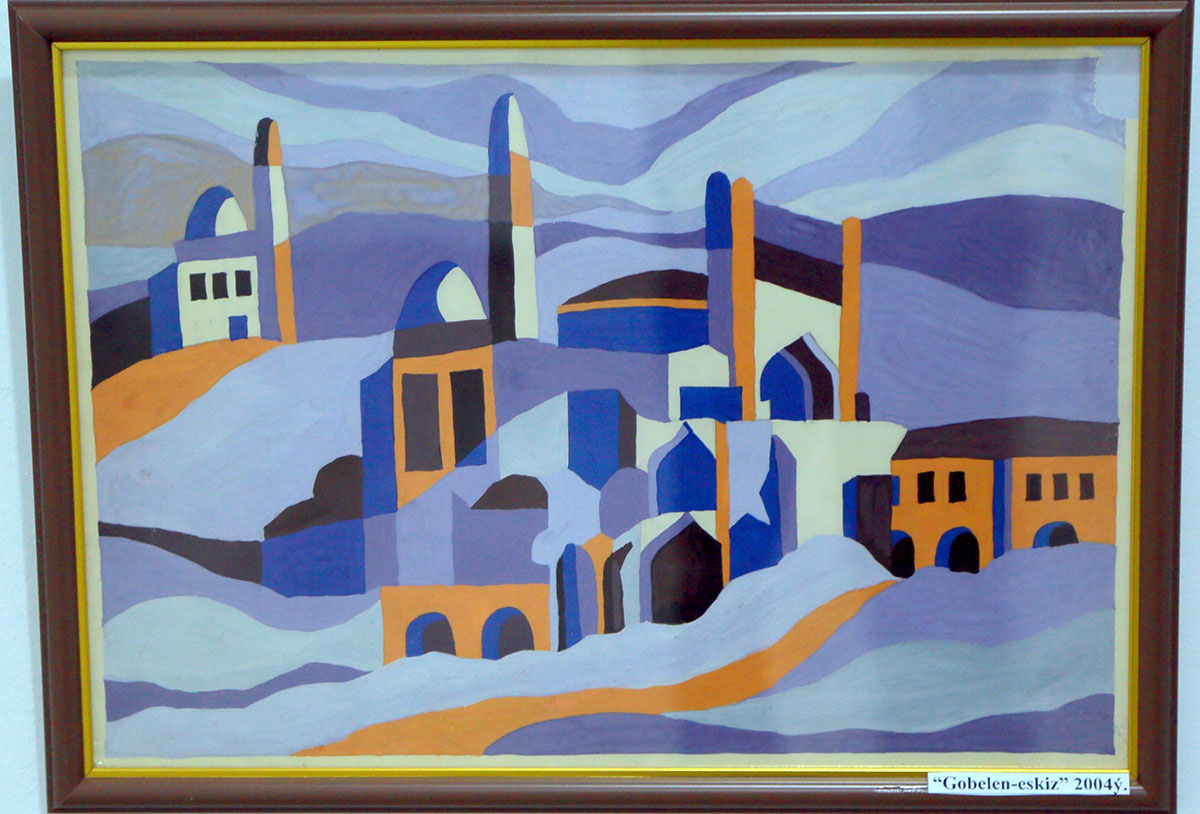
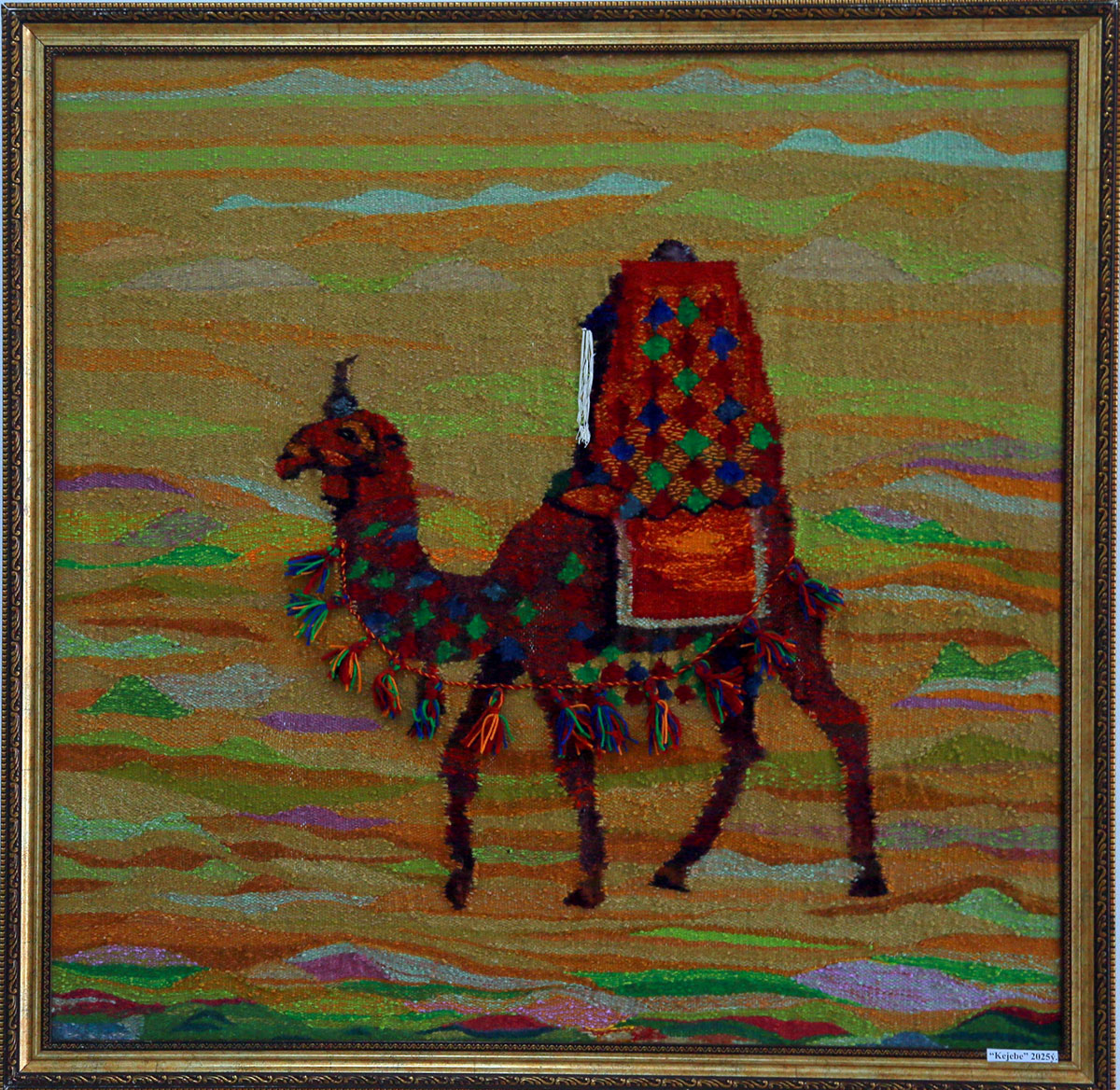
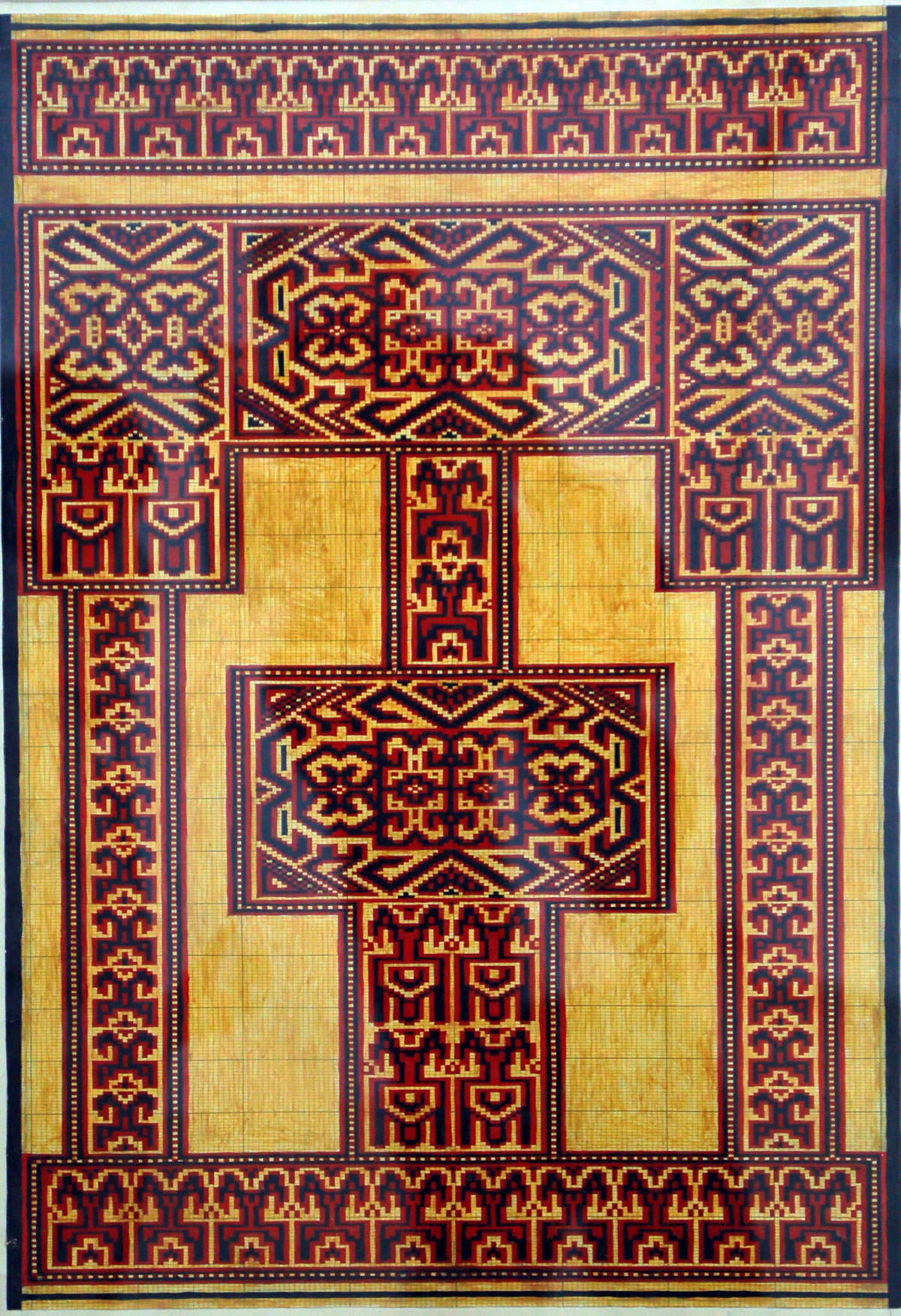
Among the carpet pieces, special attention was drawn to a carpet featuring in its center a stylized structure resembling a mosque, as well as a kejebe — a wedding carriage — or even a piece of jewelry. Each viewer is given the right to determine the purpose of this structure according to their own interpretation.
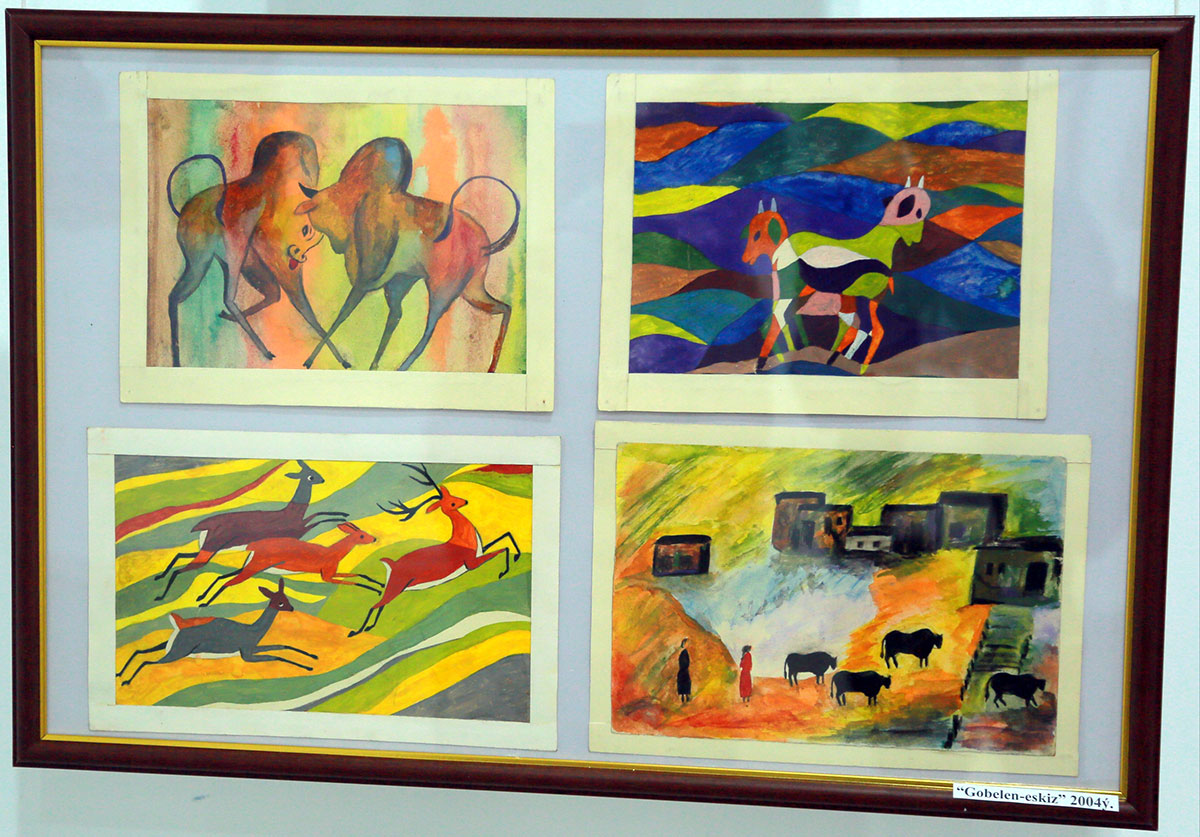
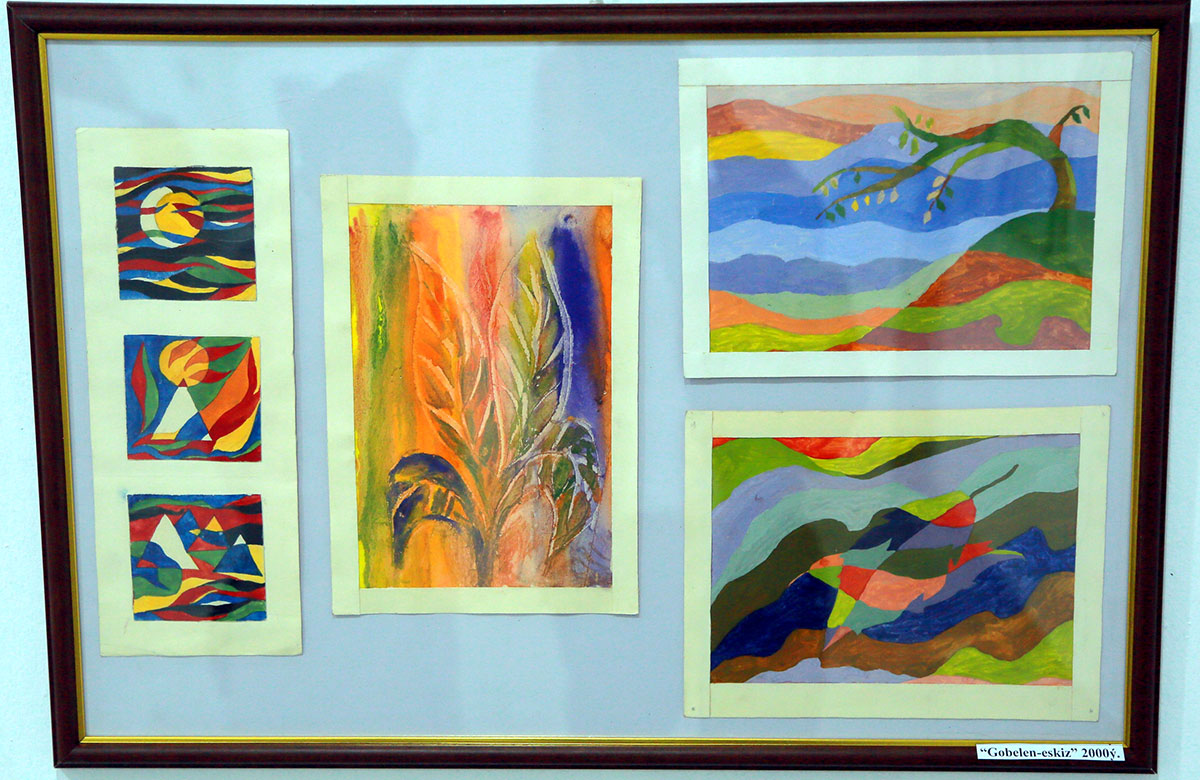
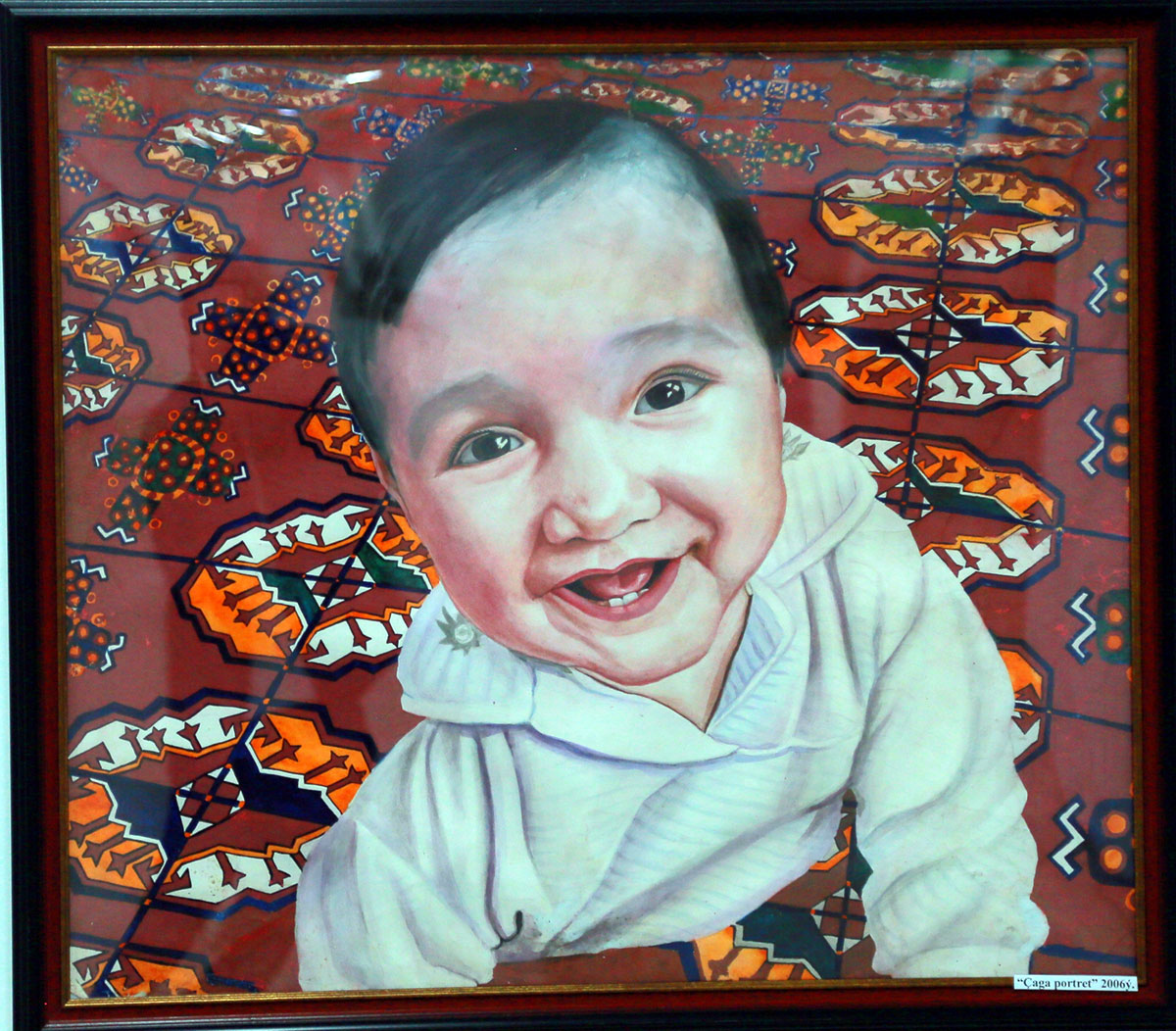
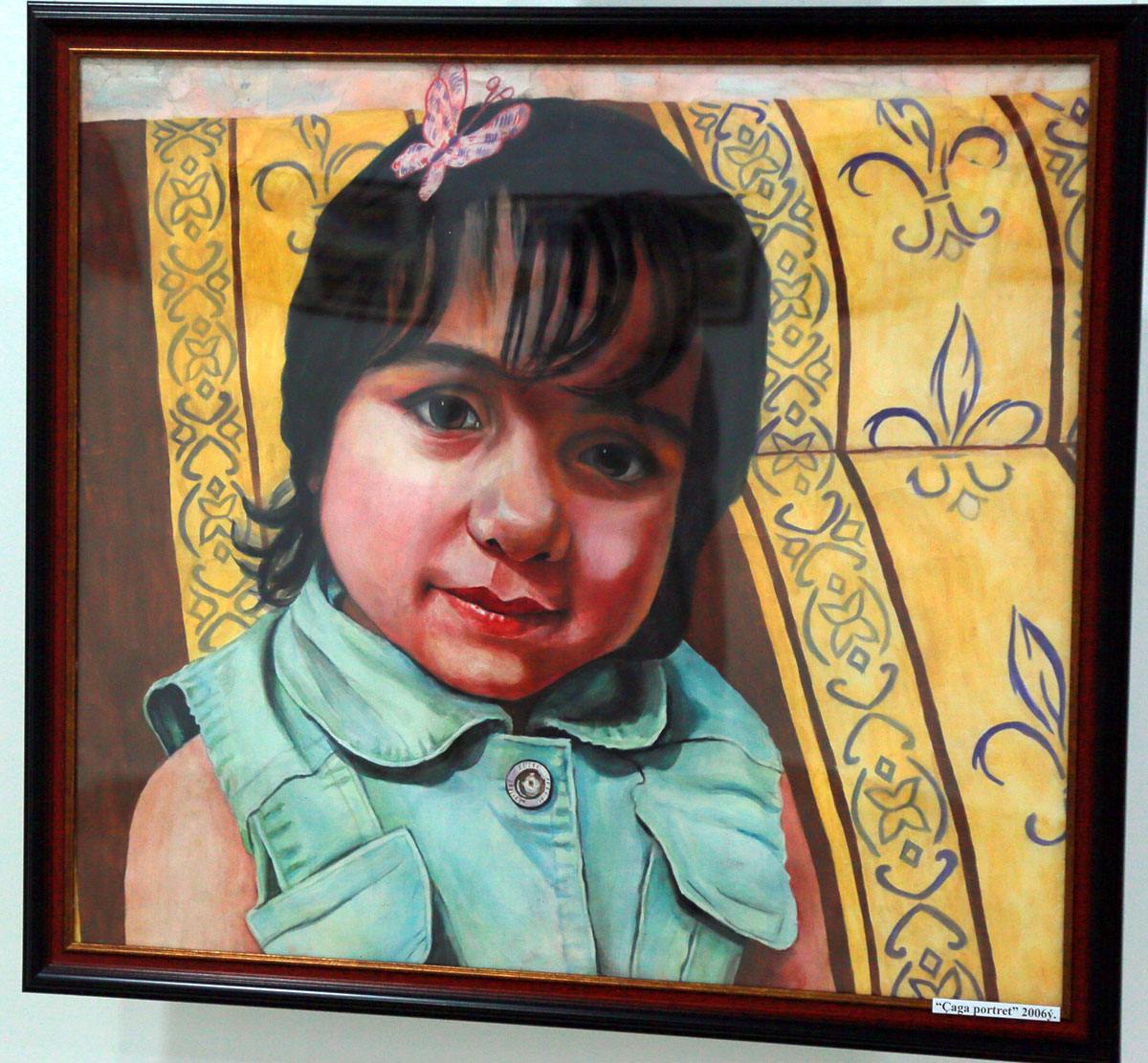
In addition to carpets and tapestries, the exhibition features a gallery of portraits created by Sheker Shayarovna during her years of study and professional work. Nearly all visitors were charmed by the portrait of a little boy with a radiant smile. The portrait of his sister also did not go unnoticed. Unlike her brother, the girl appears serious beyond her years and at the same time extremely inquisitive. The portraits are painted in the style of photorealism.
Today, Sheker Shayarovna shares the secrets of carpet artistry with her students at the Bashim Nuraly Children’s Art School. She has 37 female students who strive in every way to live up to their mentor.
“The work of a carpet weaver and tapestry artist requires tremendous perseverance and meticulousness, which hardly corresponds to the behavior of children in today’s fast-paced technological era,” comments Sheker Shayarovna. “Therefore, I have great respect for the girls’ desire to master the art of carpet weaving. I want to pass on to them my experience and diligence, as well as the joy that an author feels after creating a successful work.”