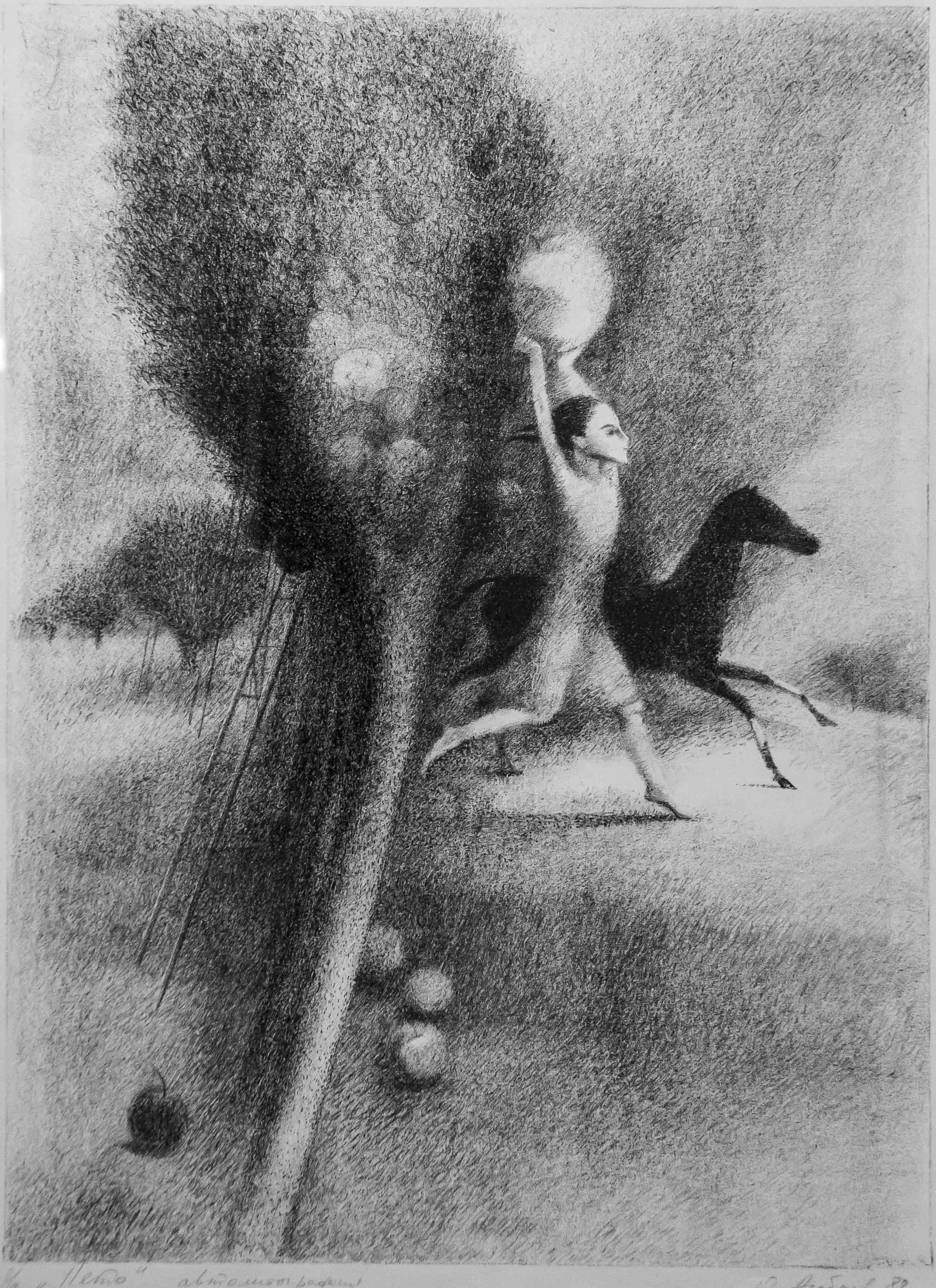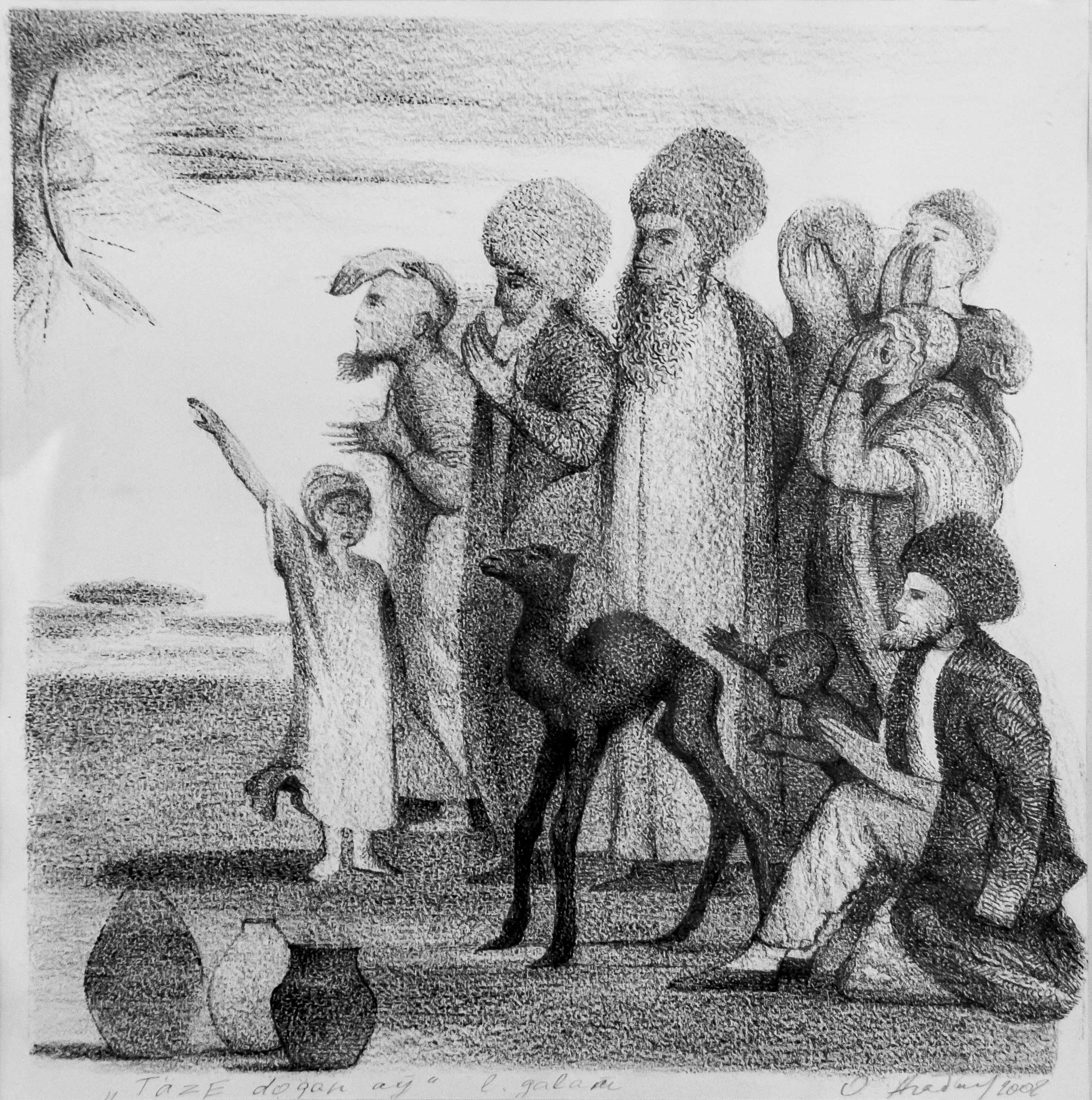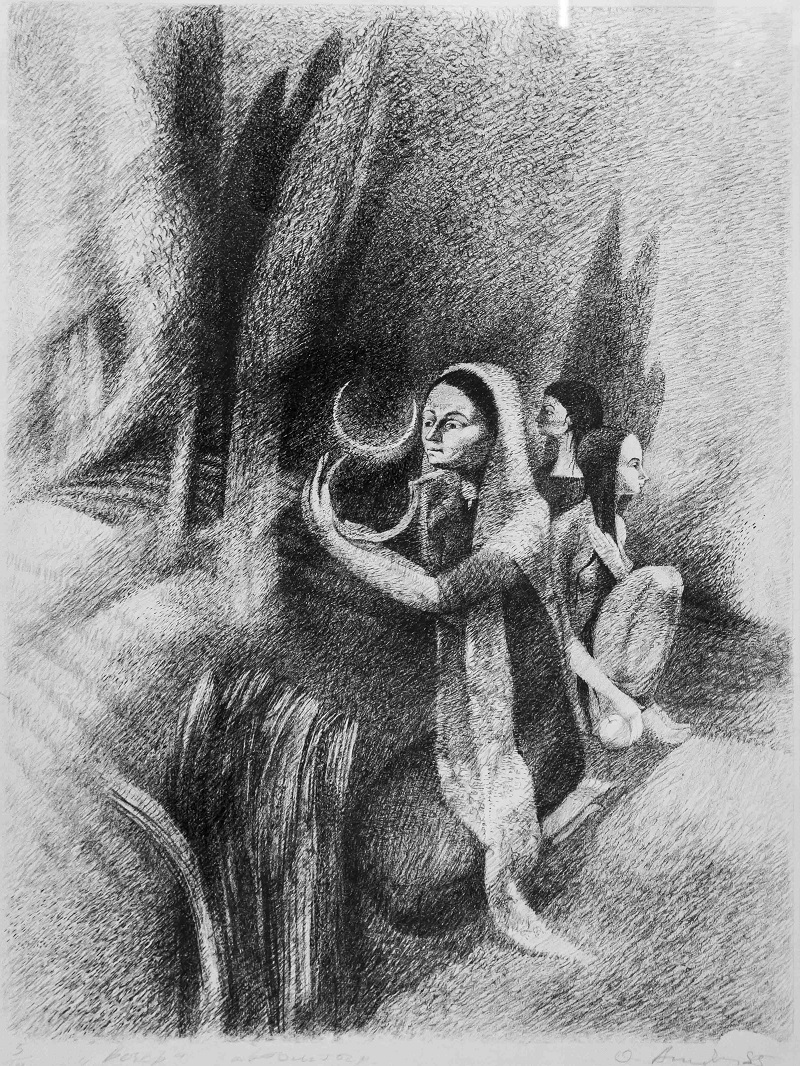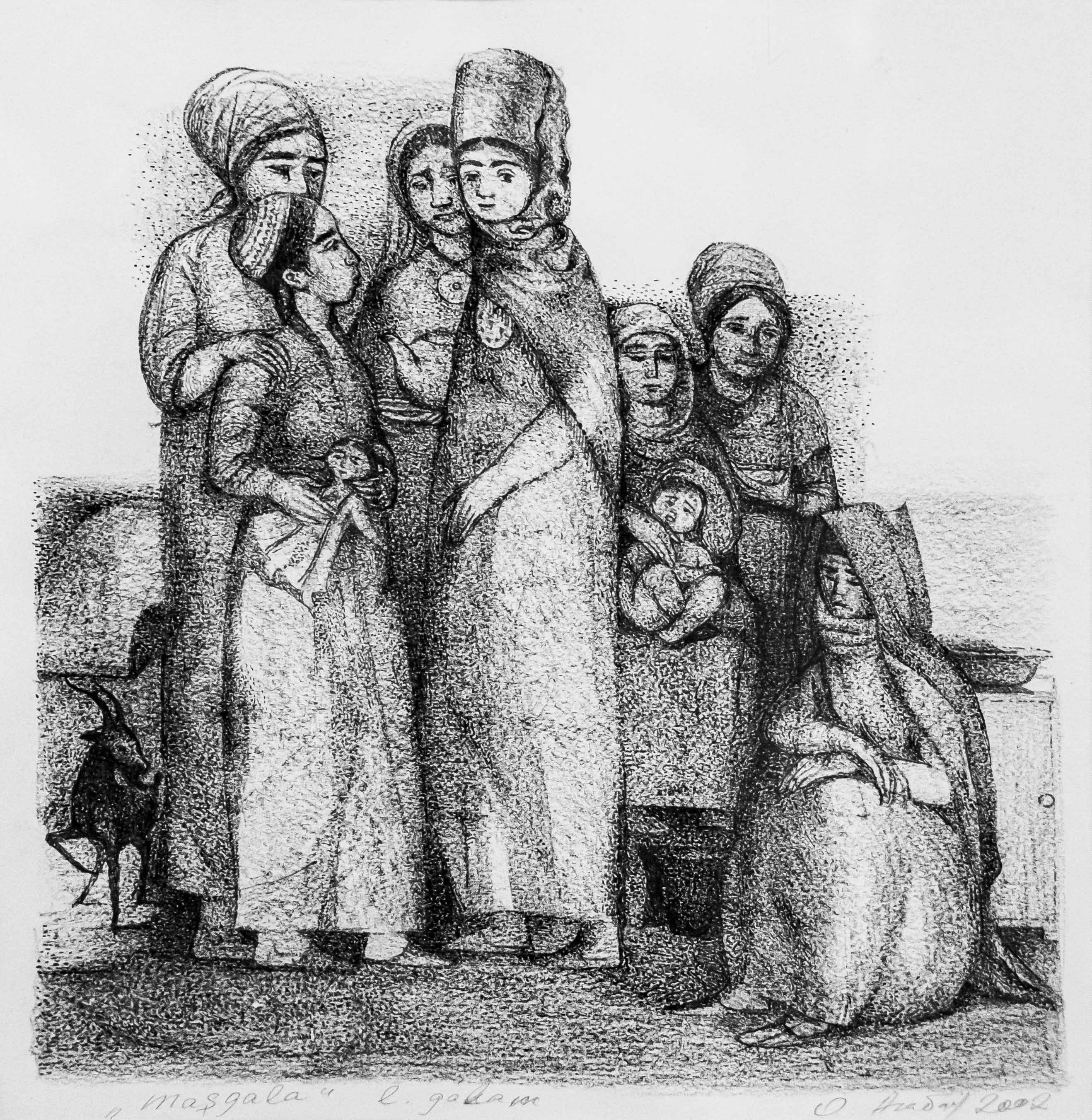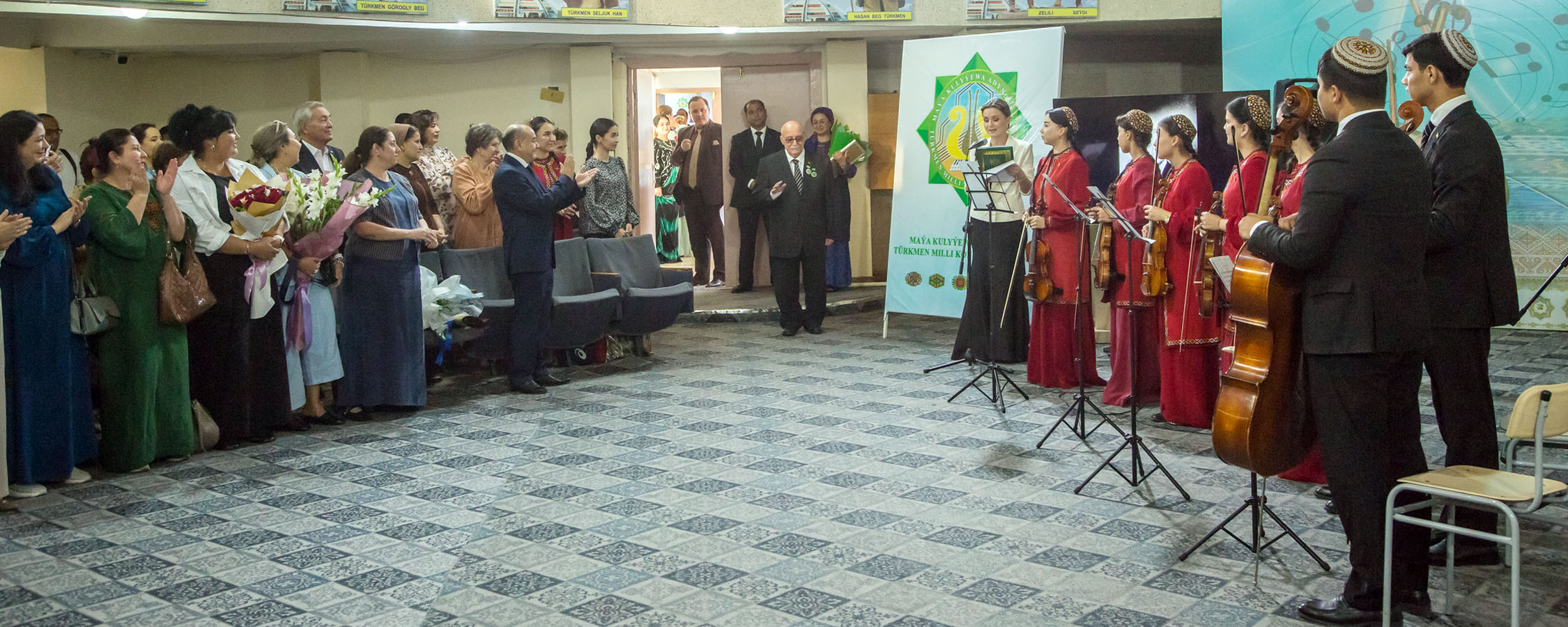



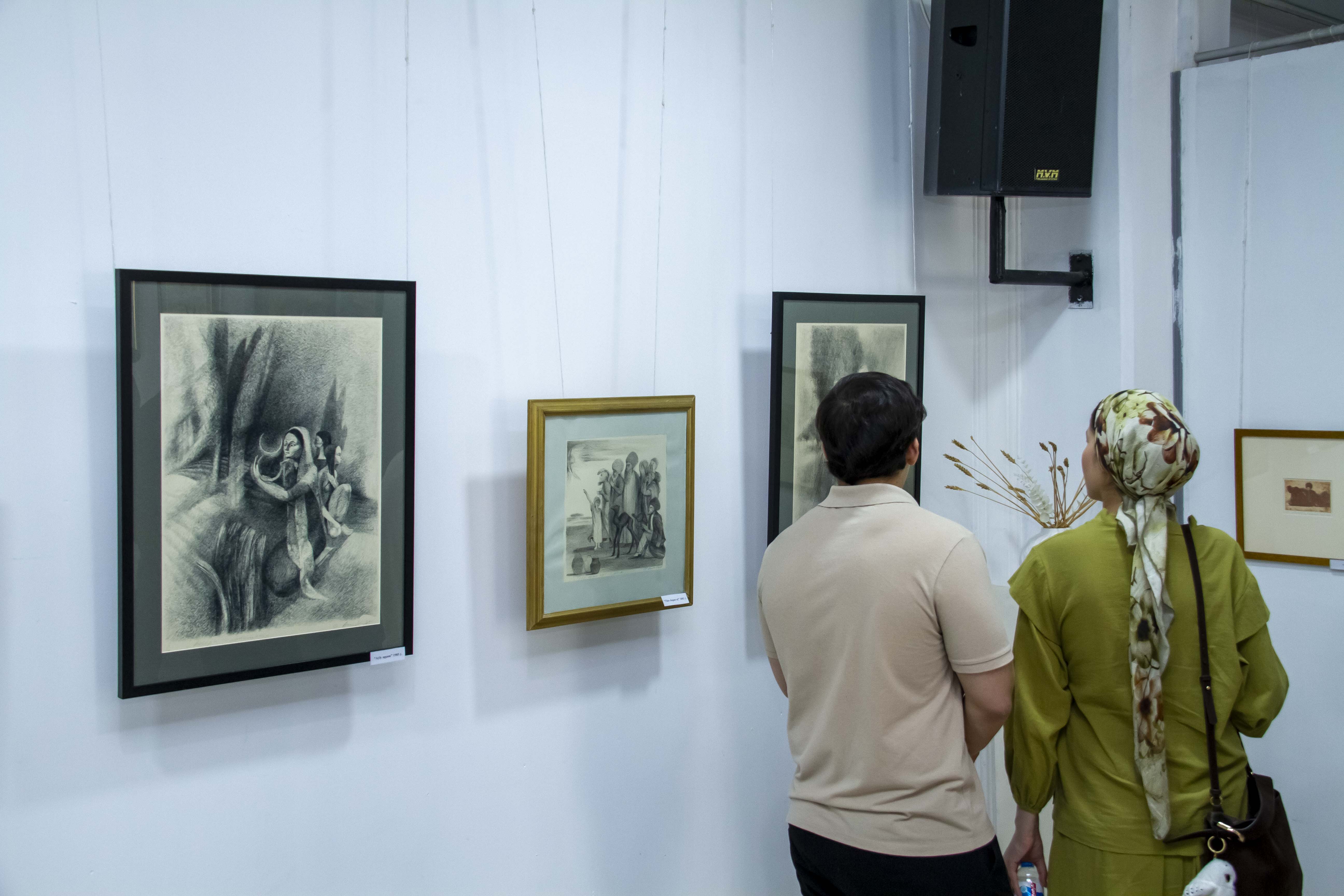

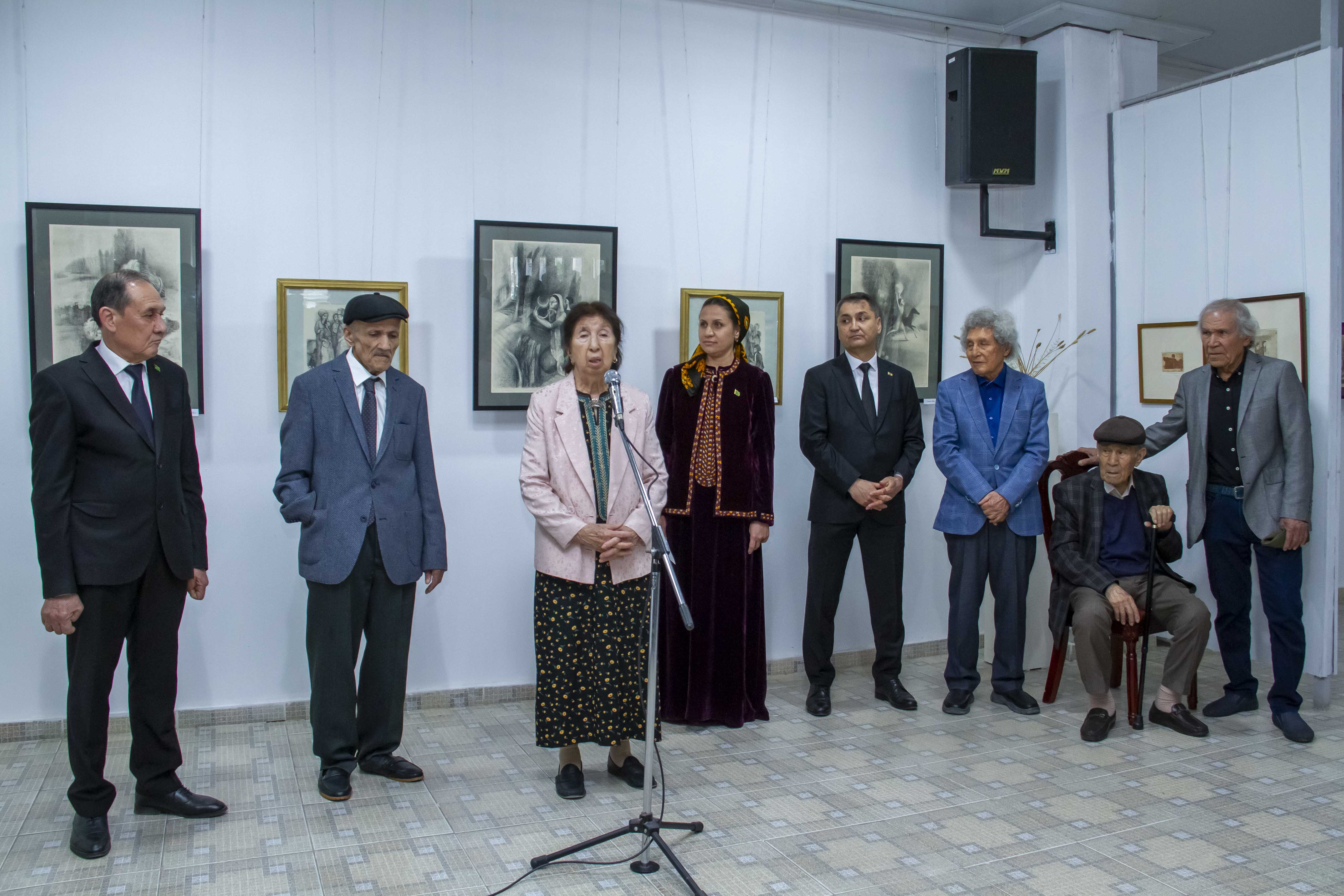
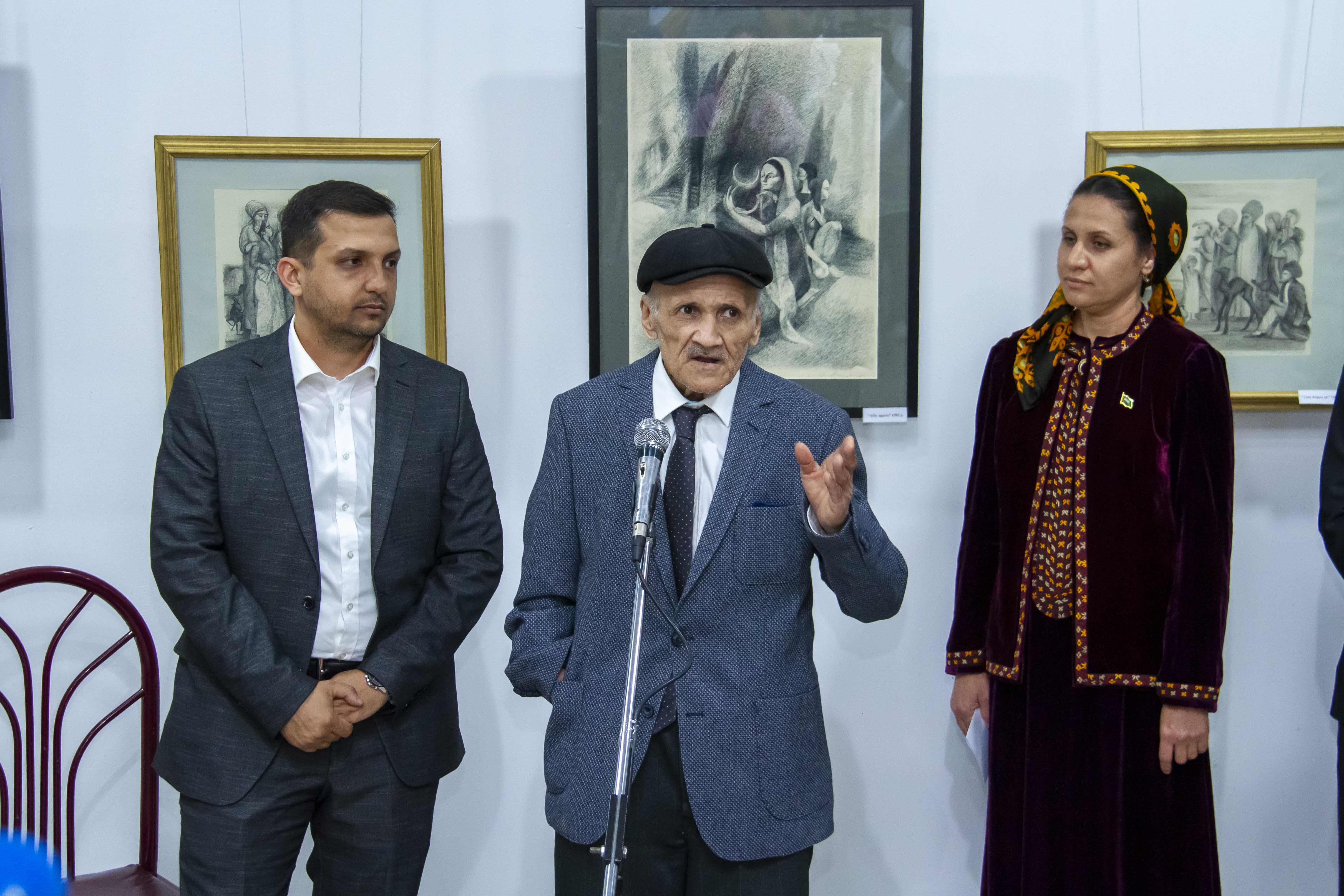
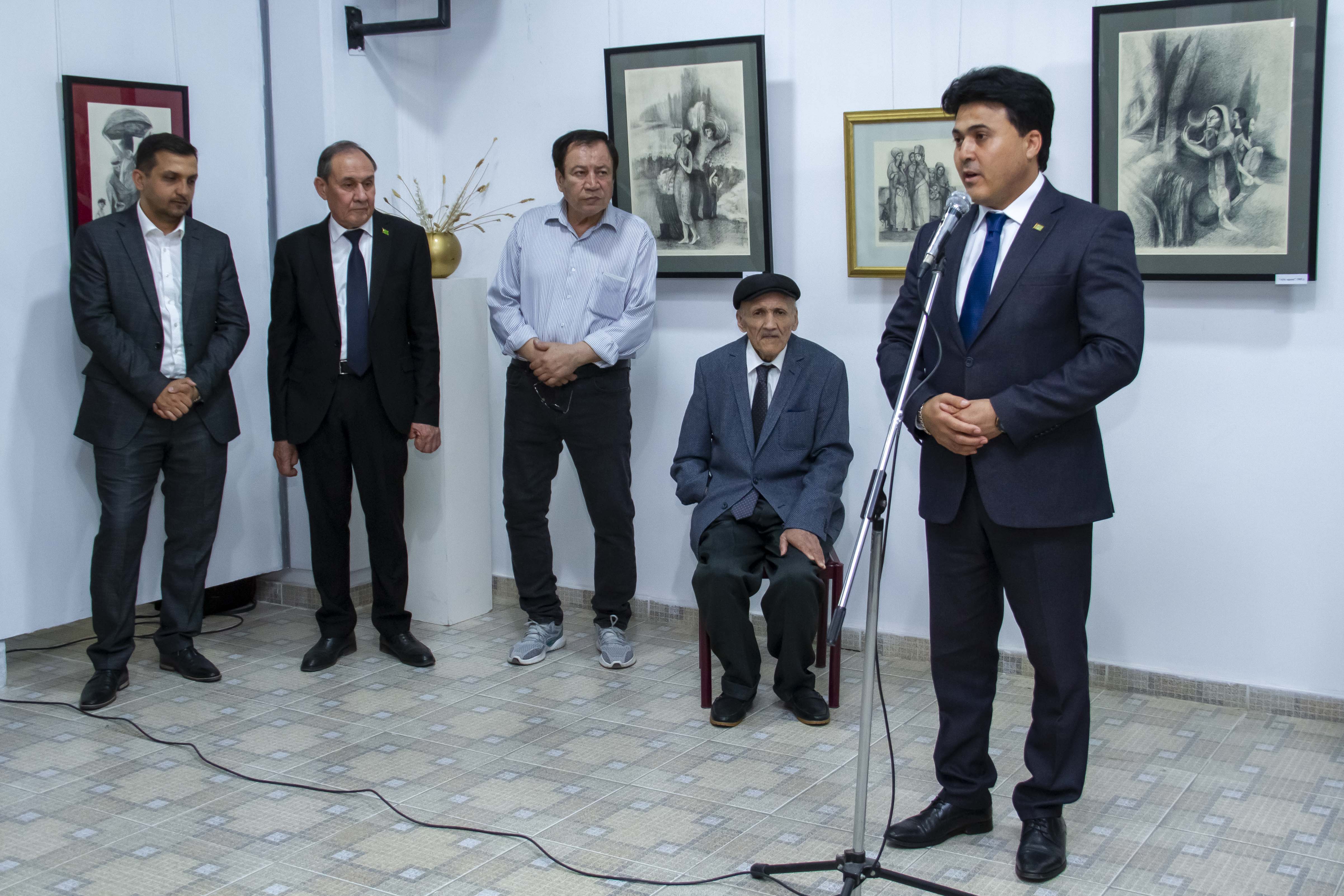
A personal exhibition of the Honored Artist of Turkmenistan, Oraz Agabayev, dedicated to his 70th anniversary, has been opened at the Exhibition Center of Fine Arts of the Ministry of Culture of Turkmenistan. The exhibition has made a great impression on visitors: those who encountered the artist’s work for the first time were pleasantly surprised, while those familiar with his work congratulated him on his successful artistic career. The opening ceremony was somewhat prolonged, as many artists and guests wished to express their gratitude to the jubilarian.
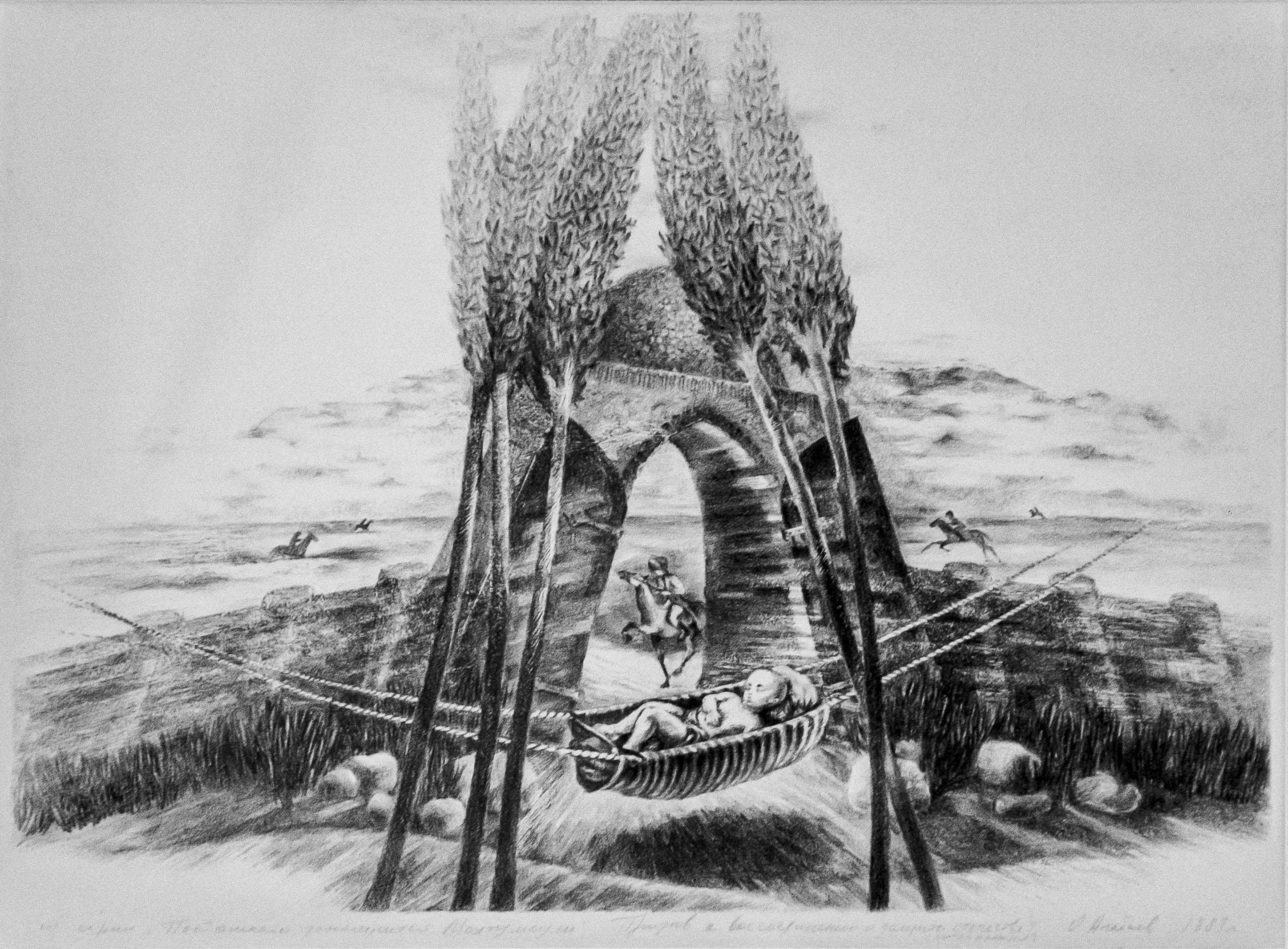
After graduating in 1976 from the Turkmen State Art School, Oraz Agabayev illustrated a children’s book about shepherds. This work so captivated the artist that it became a defining moment in his creative life. Thus, a distinctive graphic artist emerged in the country, whose works differ markedly from those of other painters. Feeling an irresistible attraction to this form of visual art, Agabayev continued his studies at the Faculty of Graphics of the Ukrainian Polygraphic Institute named after Ivan Fedorov. During his studies, he mastered all types of graphic art: drawing, pencil, charcoal, printmaking, xylography, and lithography. He mastered everything related to graphic art. Yet an artist is also a philosopher, with a personal worldview, a broad knowledge base, and the ability to vividly express ideas born in the soul.
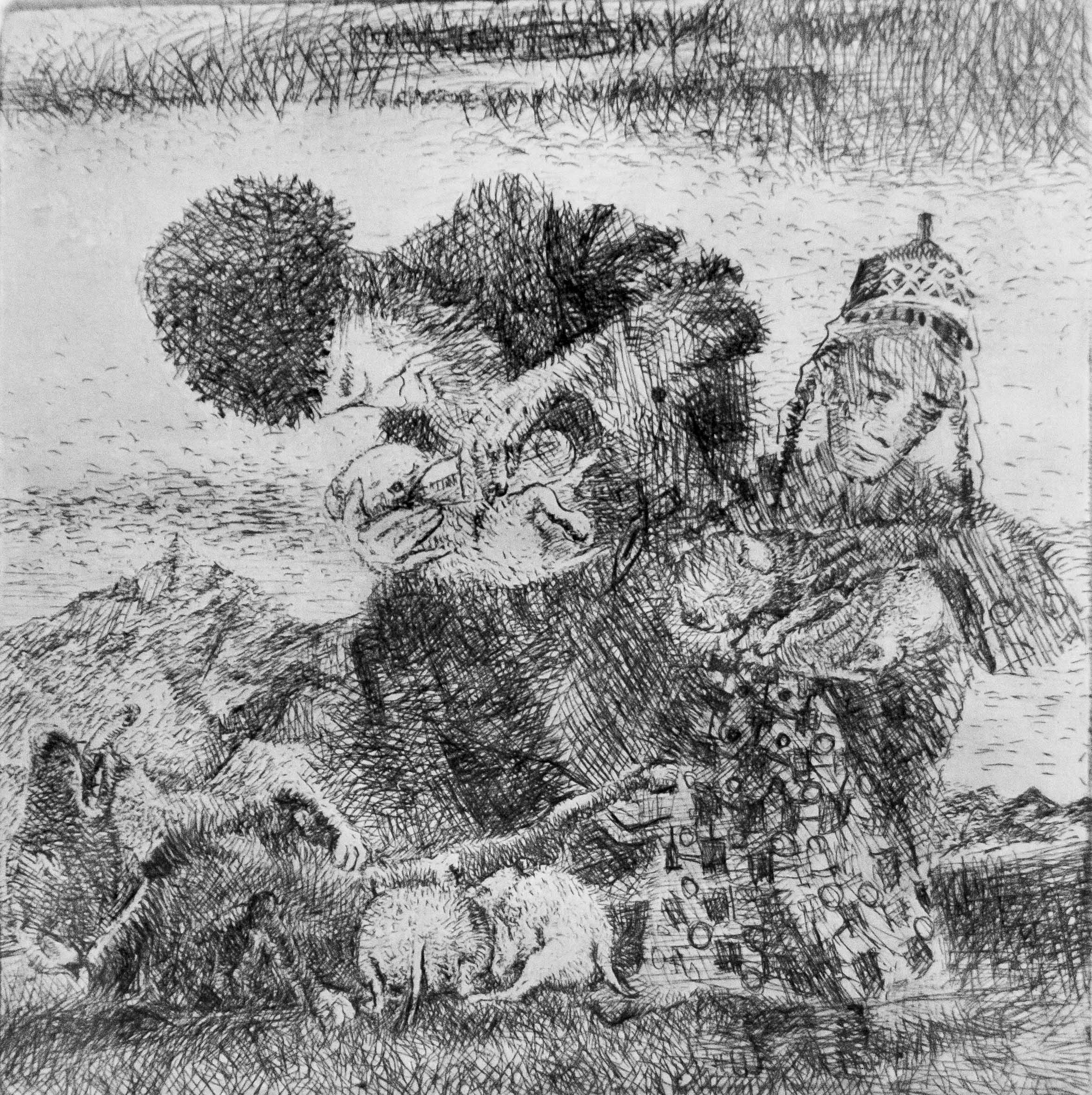
“In my work, I glorify optimism, the greatness, and the beauty of the human being,” says Oraz Agabayev. “I usually conceive a single image, but during the creative process something prompts me to depict additional elements that complement the overall picture.”
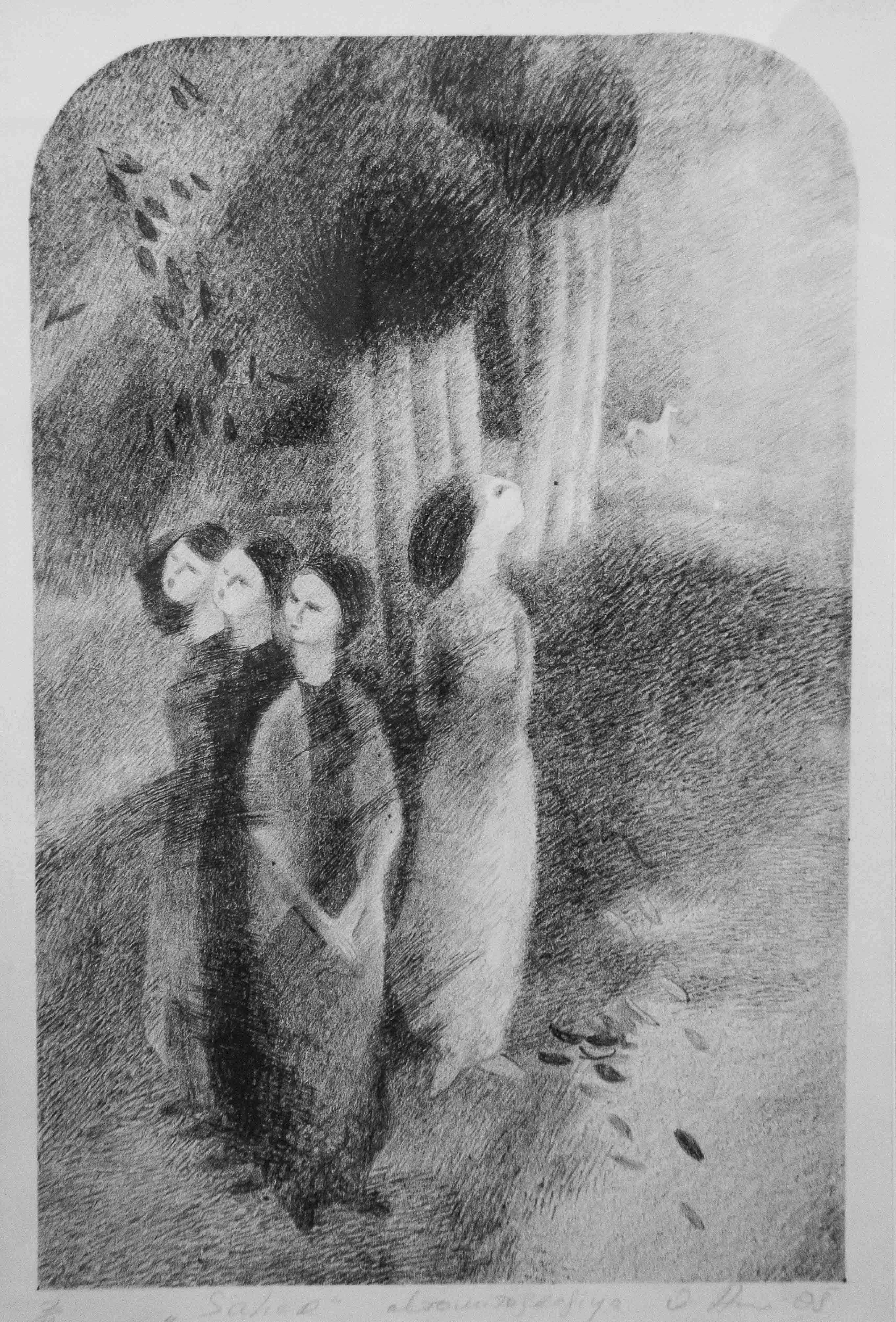
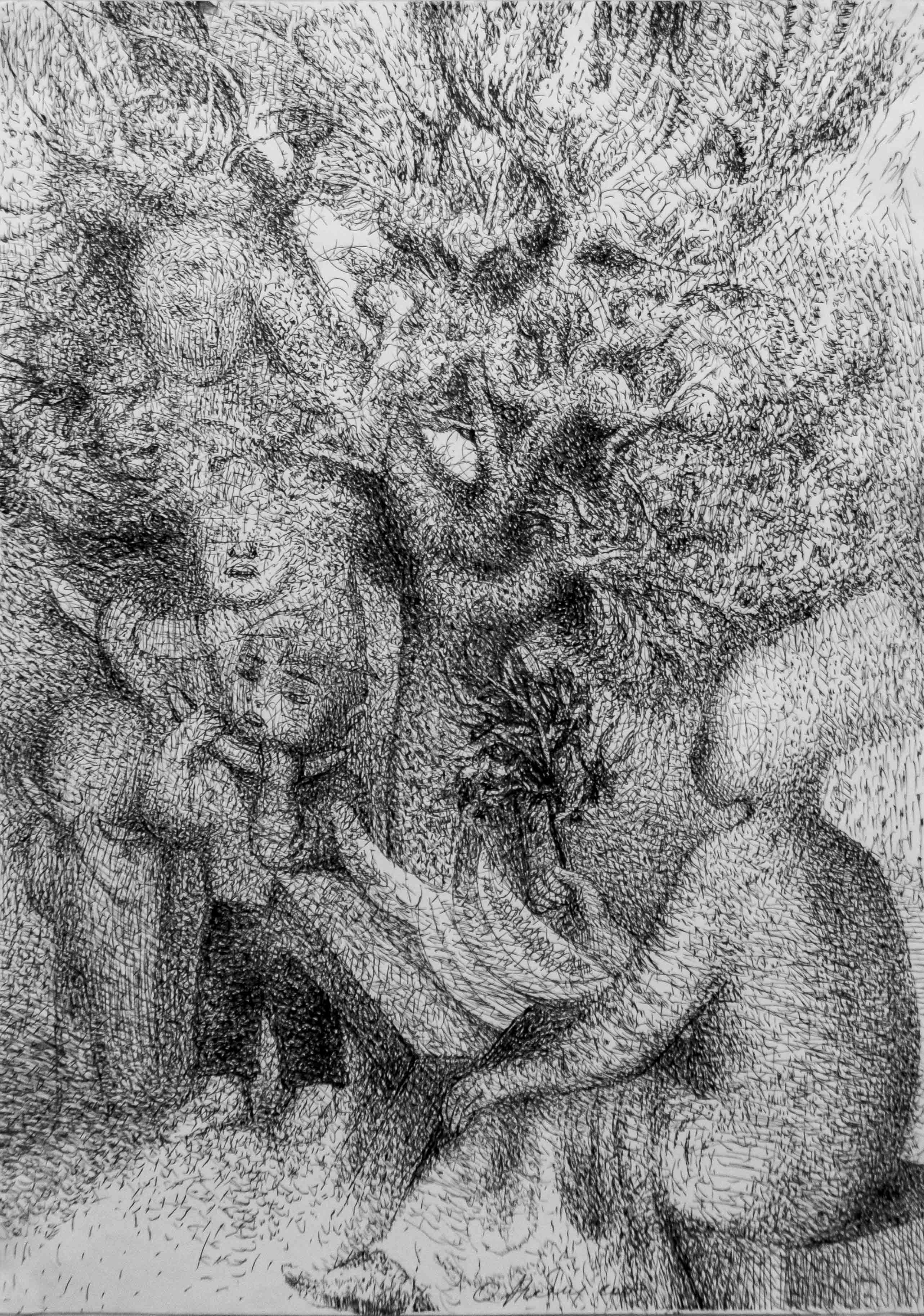
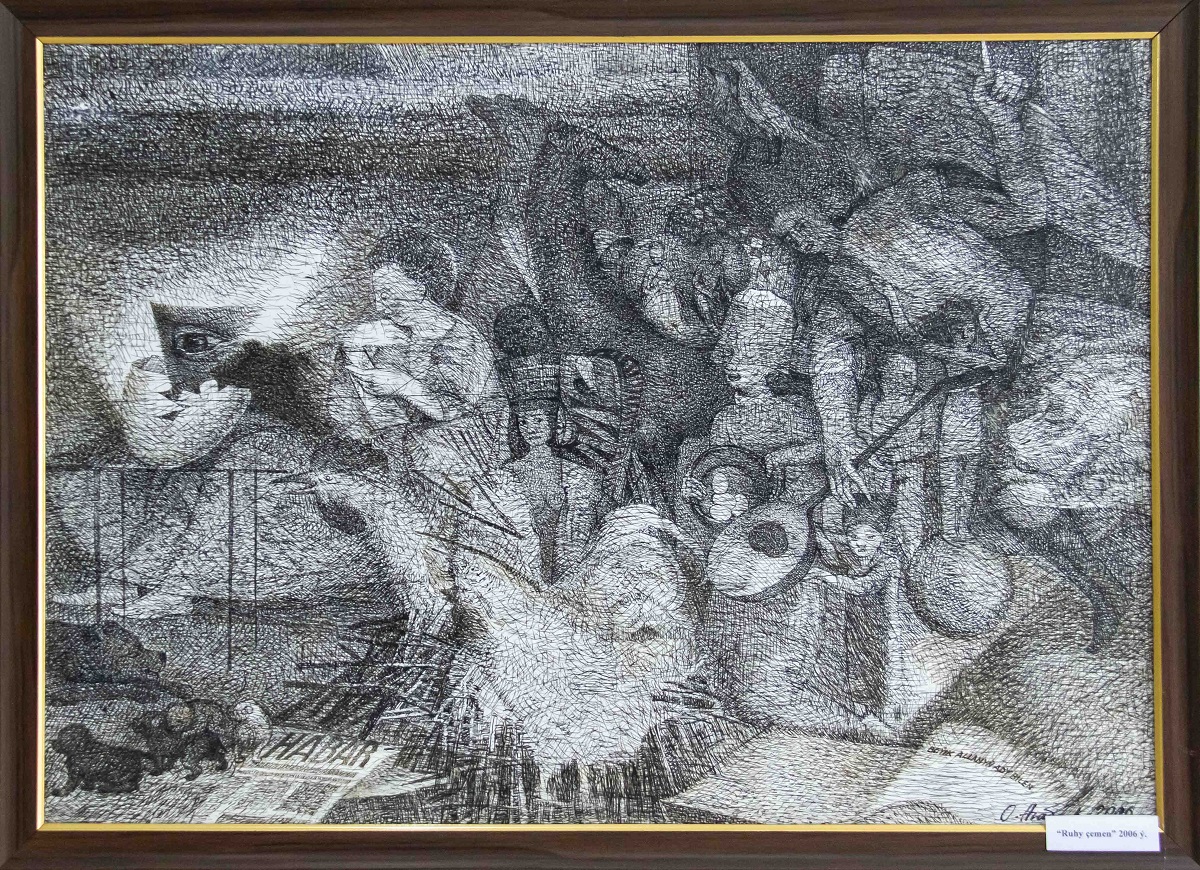
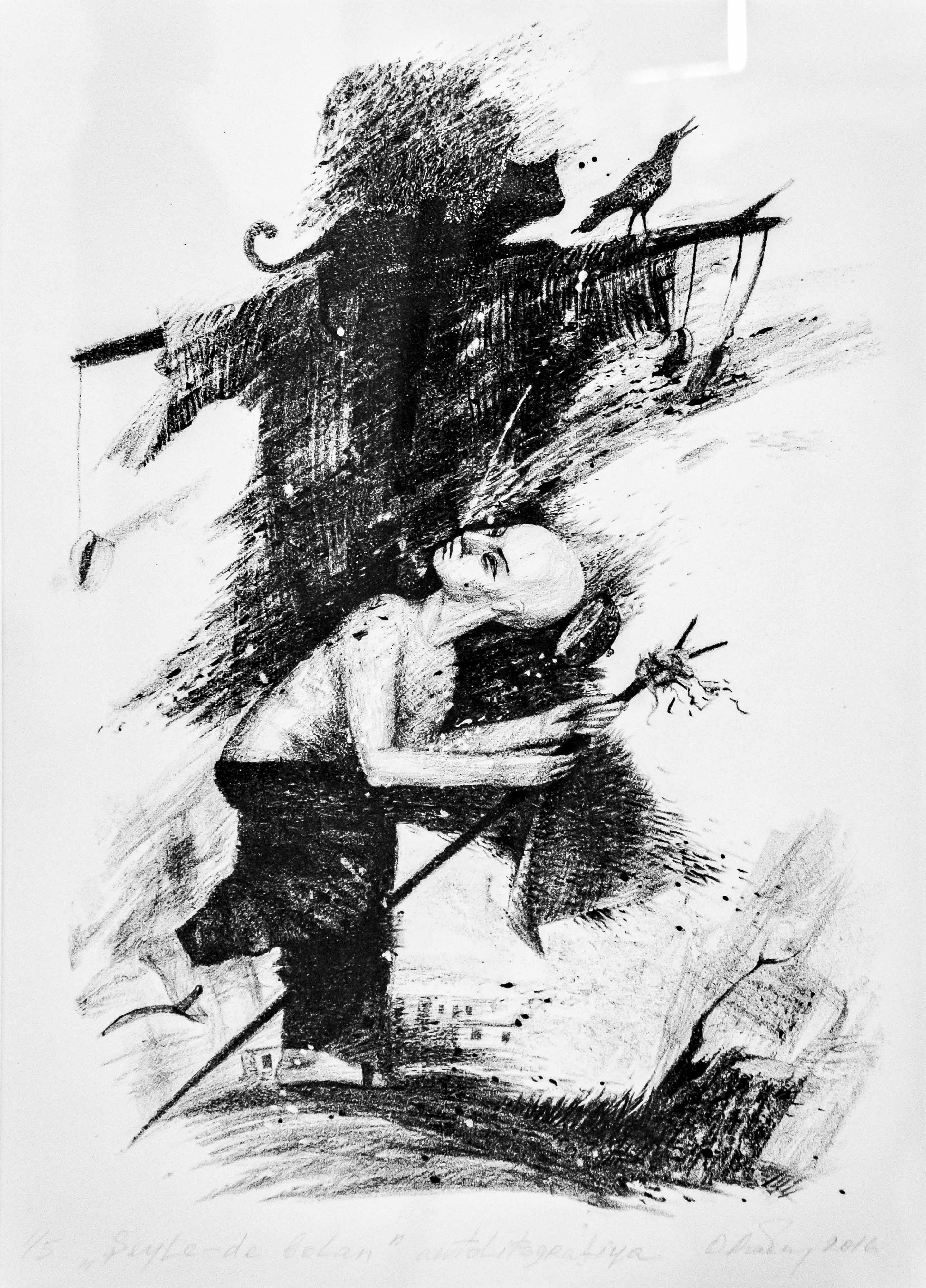
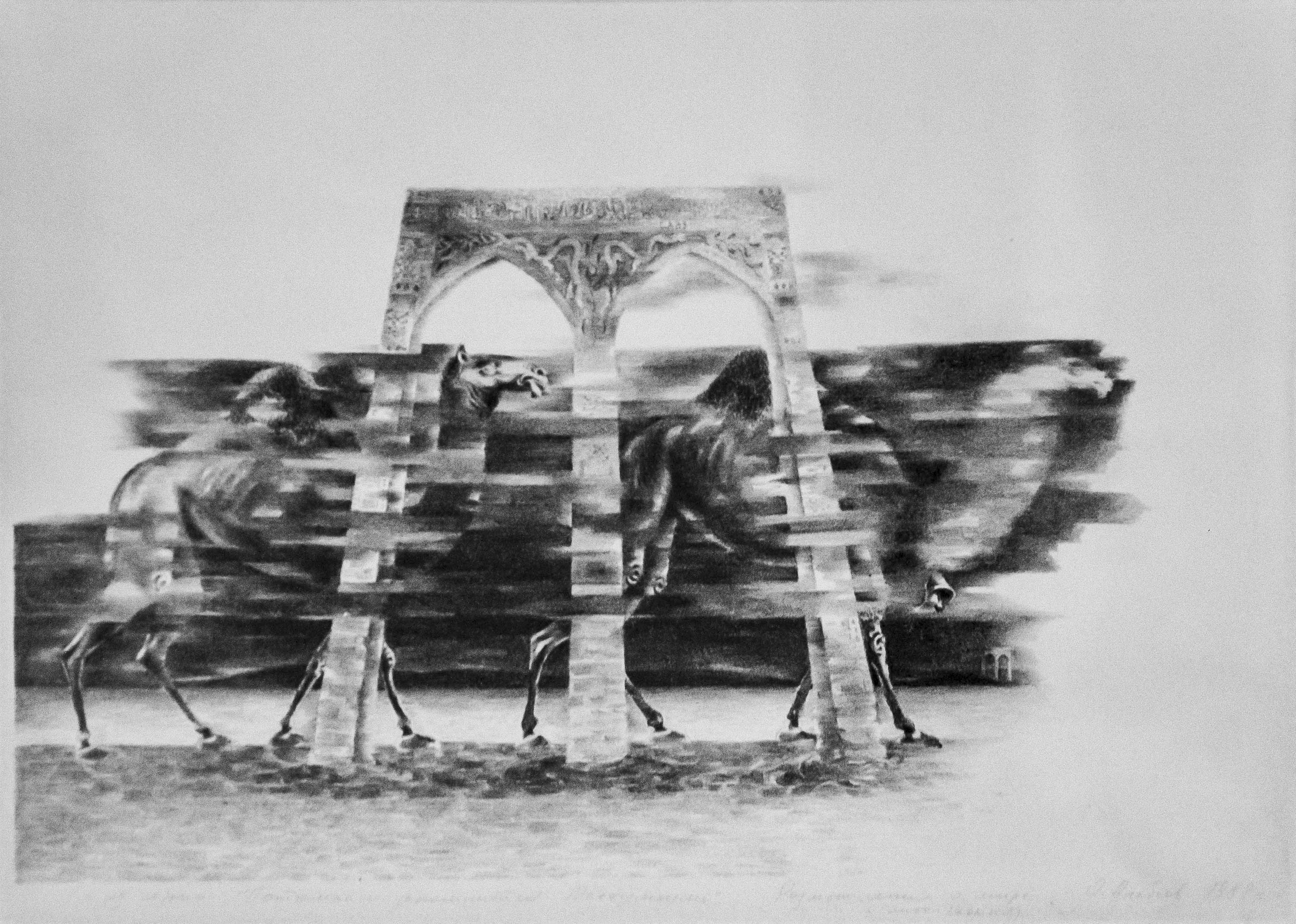
Art critics continue to debate the style in which Oraz Agabayev works. On the one hand, he draws from a national worldview; on the other, he presents it in a modernist manner. Agabayev is also known as a “serial artist.” As a rule, he takes up one theme, but finds it insufficient to express his ideas in a single work—he needs a second, third, and fourth piece. This is how such series as “Magtymguly Will Be Remembered by Descendants,” “My Homeland,” “Heritage,” “Oguz Shades,” and “Four Bouquets,” among others, came into being.
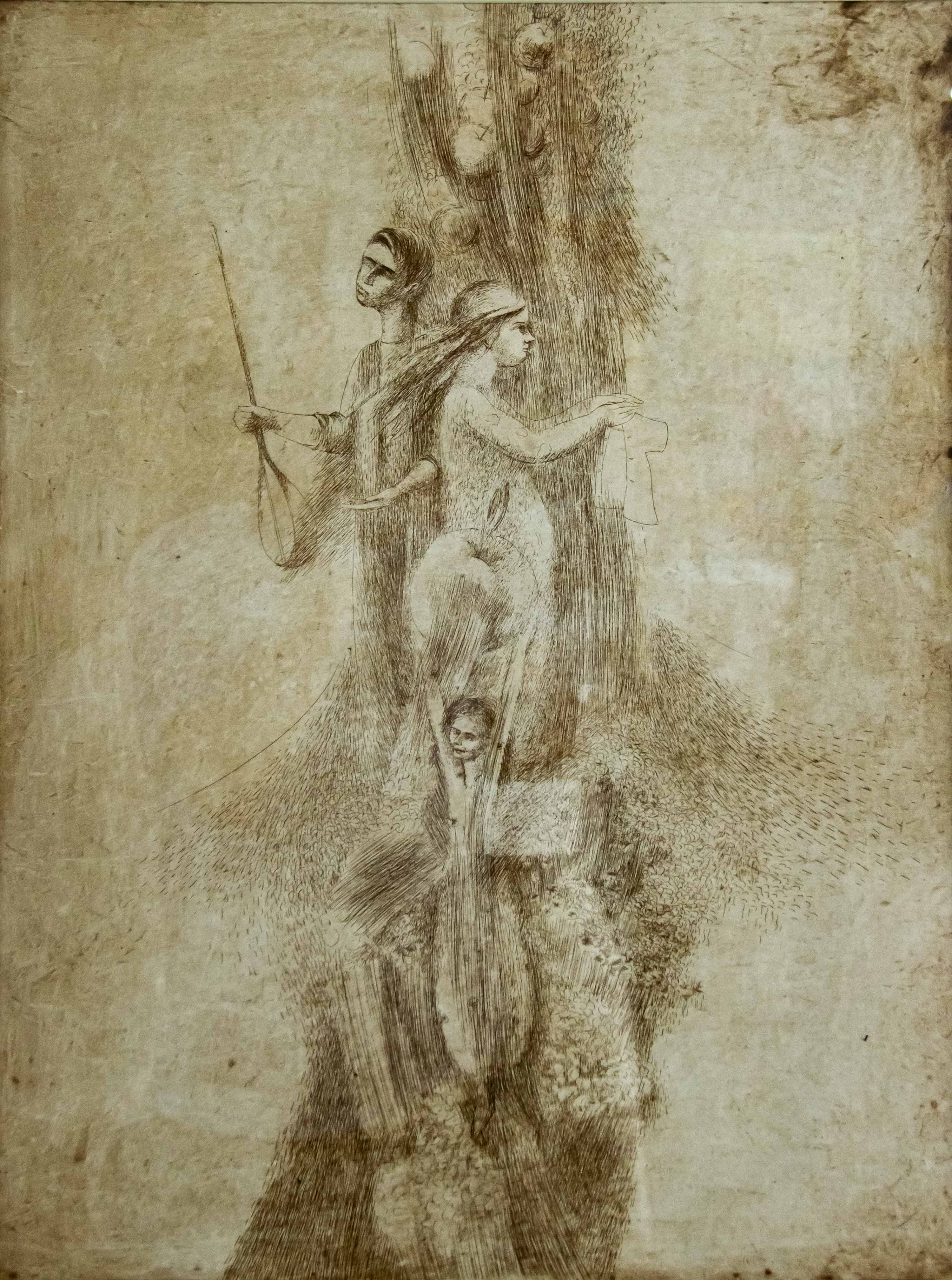
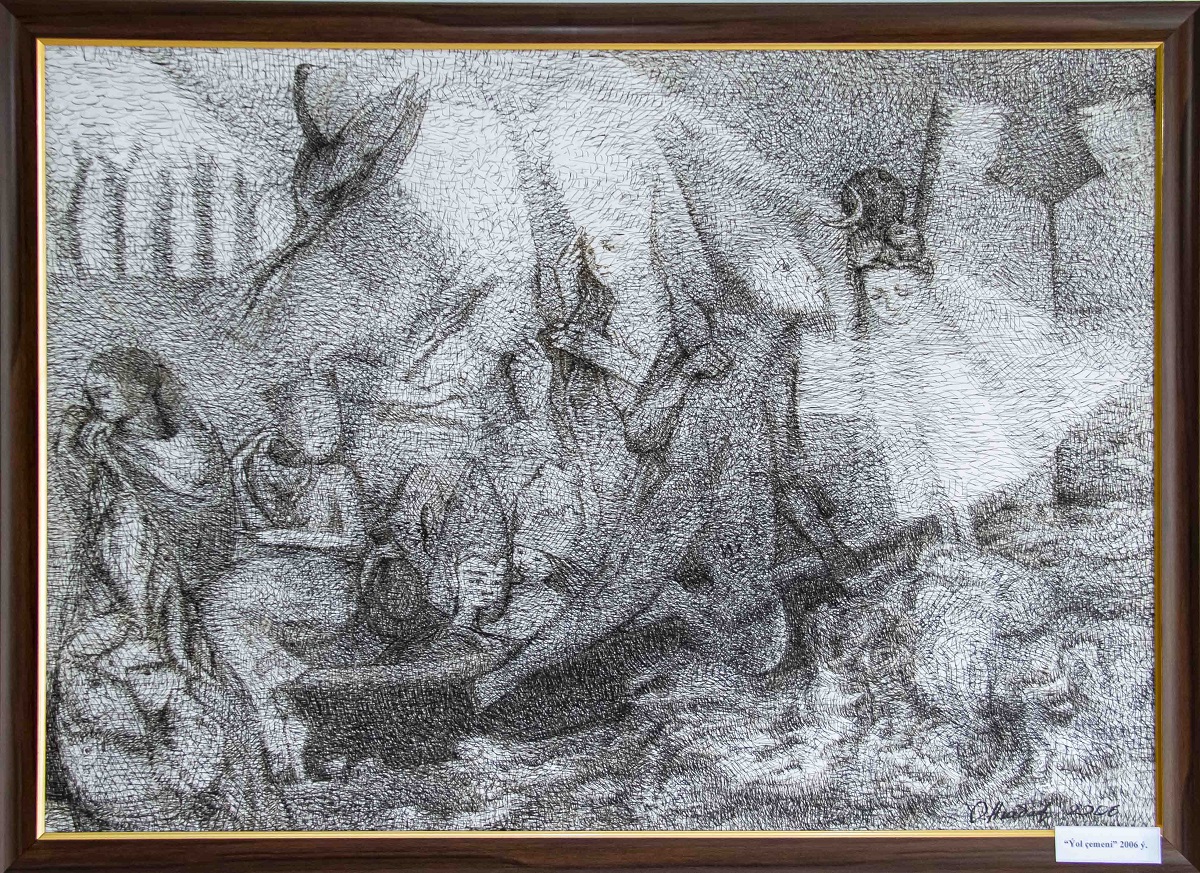
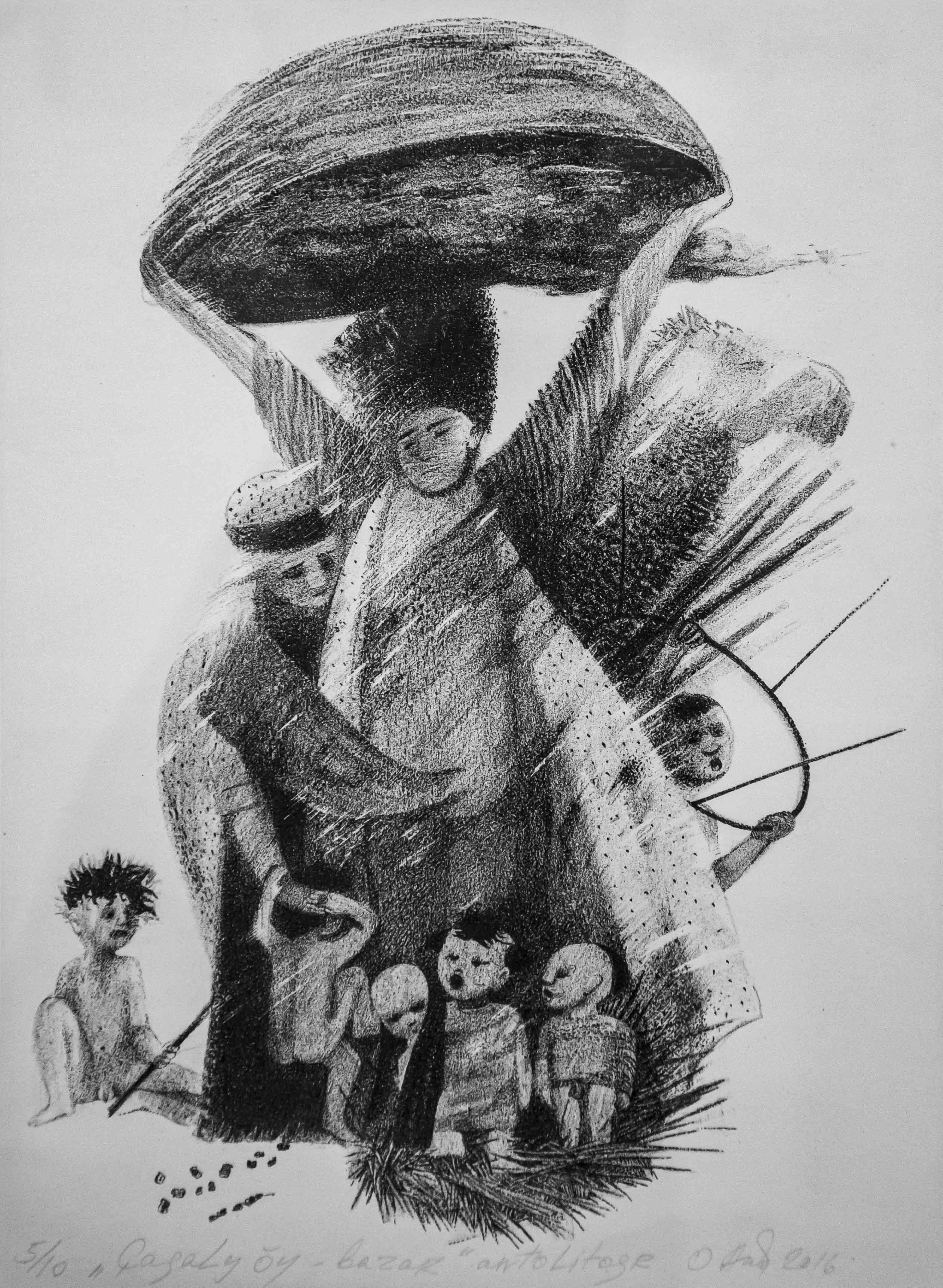
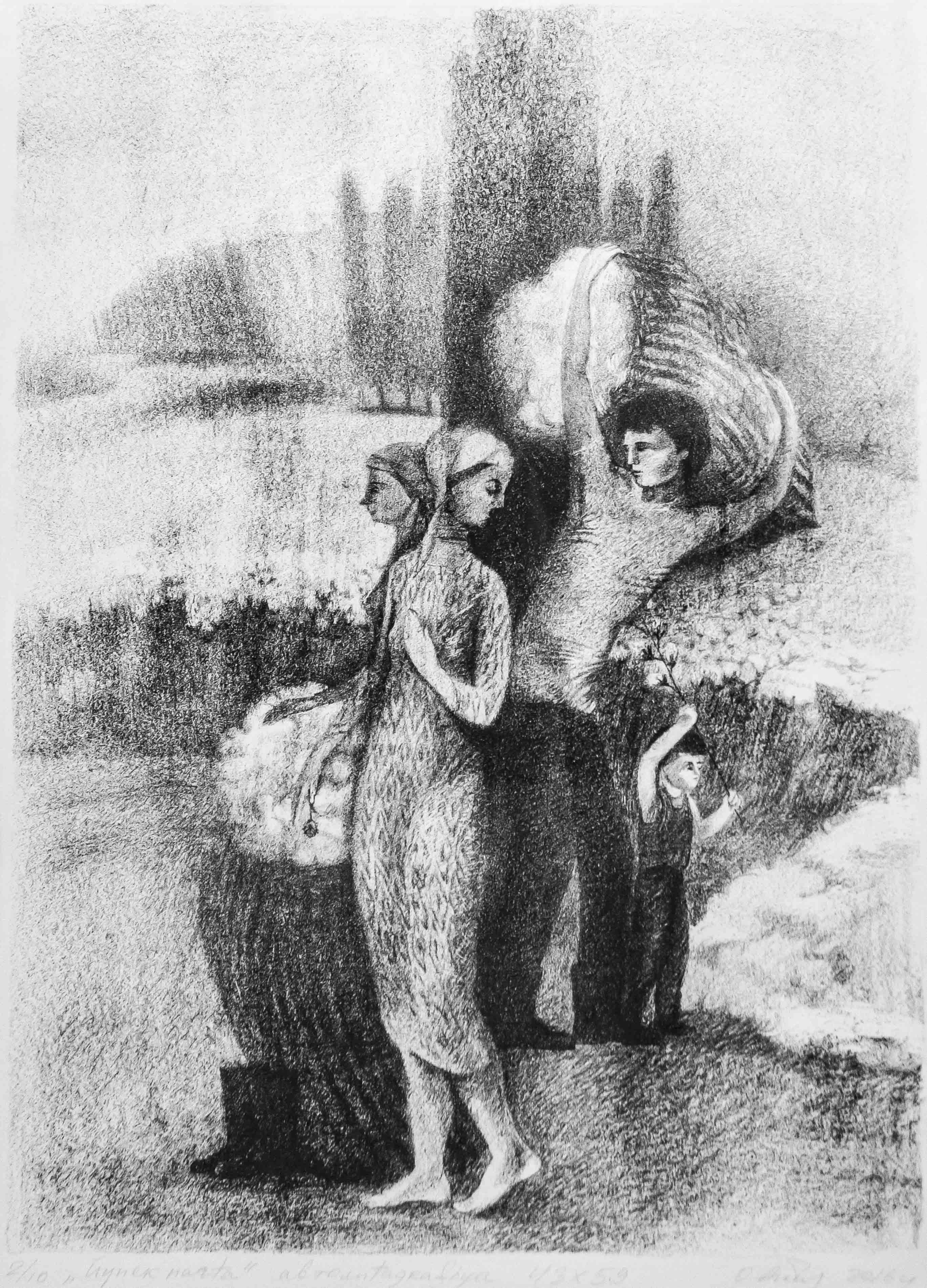
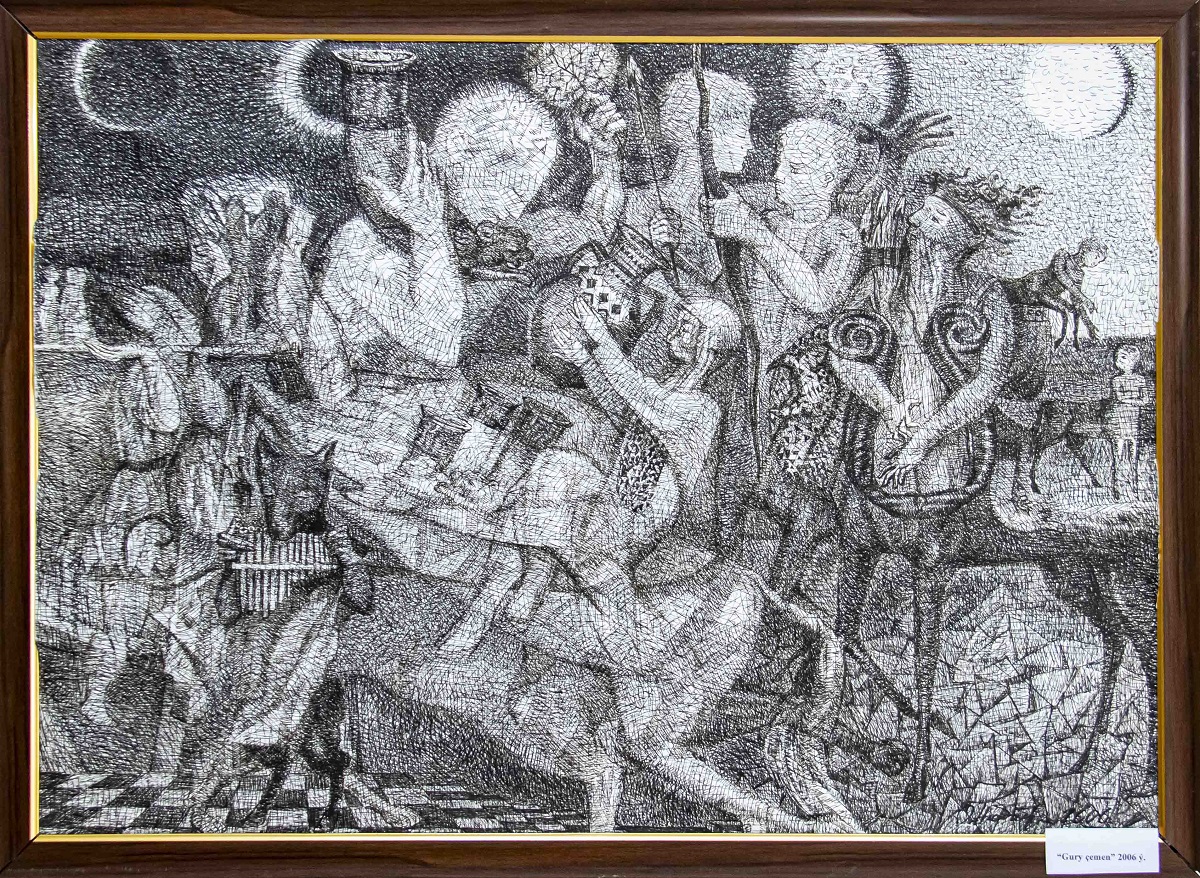
The exhibition begins with the series “Four Bouquets.” These are four paintings depicting the life of the Turkmen people in all its diversity. It is not always clear what exactly the artist portrays, but, as Oraz Agabayev himself says, “The main thing is the viewers’ own interpretation.” One of the works shows a young daughter-in-law who clearly feels uncomfortable in her new home. How gladly she would jump over the fence and return to her mother and sisters—but the piercing gaze of her mother-in-law follows her everywhere. However, this is only my interpretation. Agabayev’s works are rich in symbolism. For example, in the painting “Family,” a strong young man is depicted as a tree. An elderly woman, in need of support, leans against him, while helpless children crawl below. The most striking detail is that the man holds an inverted cauldron above his head. In this form, the cauldron resembles a dome protecting the entire family. In this work, Agabayev reminds us that a man is the link and support between the past and the future.
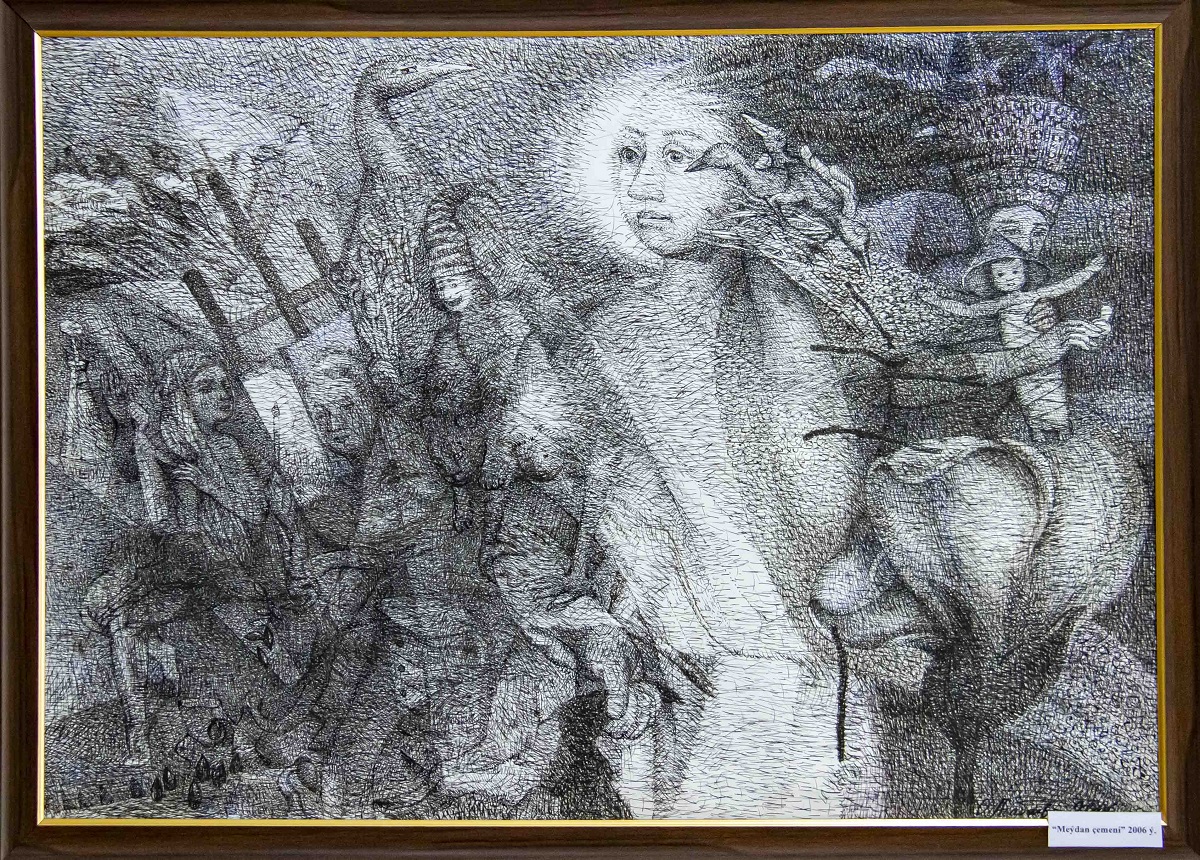
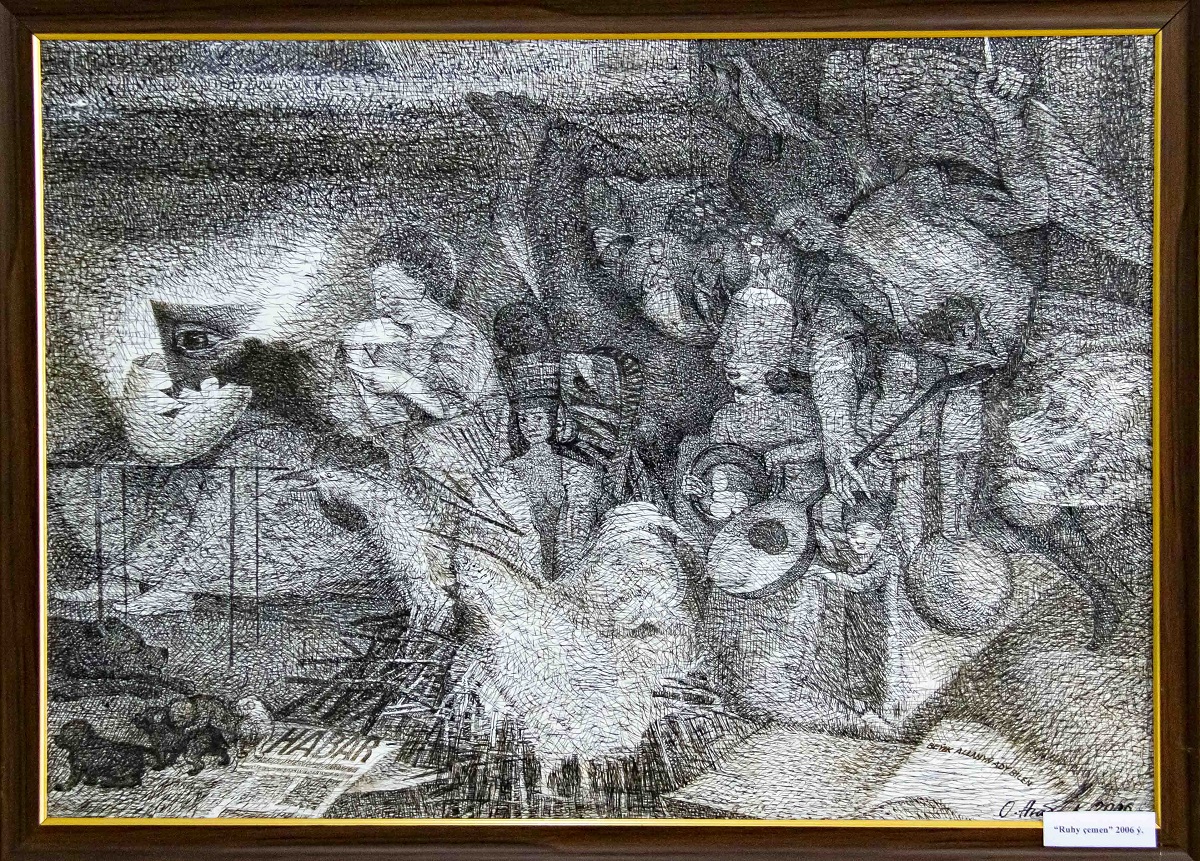
Among the visitors carefully examining the exhibited works was the People’s Artist of Turkmenistan, Gylychmyrat Yarmamedov. “Do not spare epithets,” he said, addressing me. “Oraz Agabayev cannot be overpraised.”