



On the occasion of the National Holiday of the Turkmen Horse and in honour of the motto of the year «Independent neutral Turkmenistan is the homeland of purposeful winged horses», a theatre festival was organised in our country from the 24th to 26th of April, during which performances on the theme of the Ahal–Teke horse are shown at all theater venues.
The creative team of the Main academic drama theatre took the play of Baba Annanov «White horse» as a basis. People's Artist of Turkmenistan Baba Annanov is well remembered by Turkmen film lovers for his role as Artyk in the film «The Decisive step». And now there is an opportunity to get to know Baba Annanov as a playwright. It is noteworthy that the play «White horse» included facts from the life of Baba Annanov himself. As a 14-year-old teenager, he, as a resident of the suburbs of the capital, survived the Ashgabat earthquake. Then he studied at the Tashkent theatre and art institute. Nazira, one of the main characters in the play «White horse», taught at this institute.
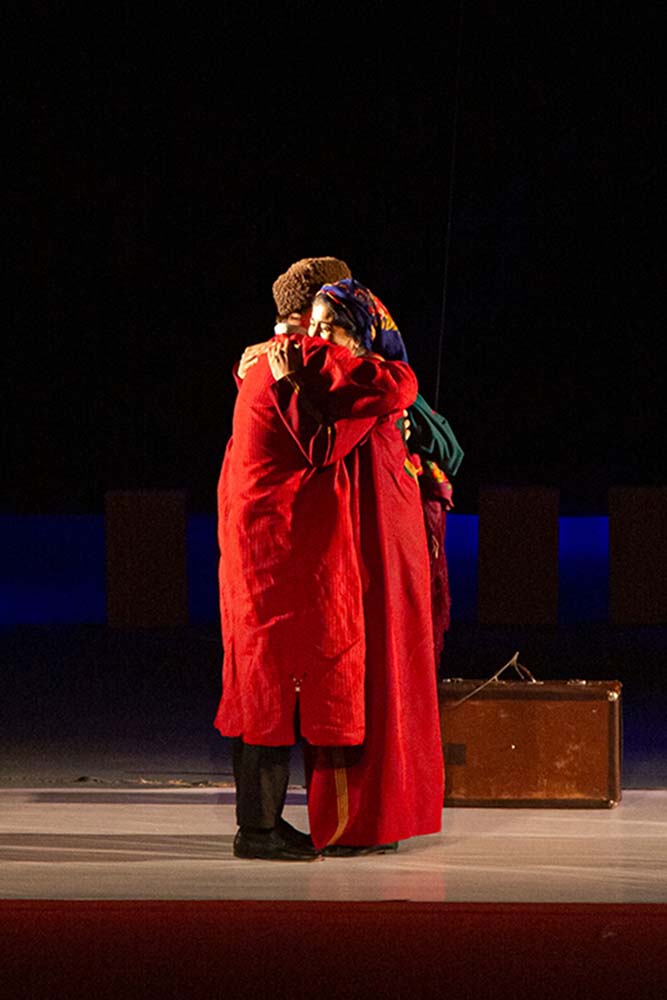
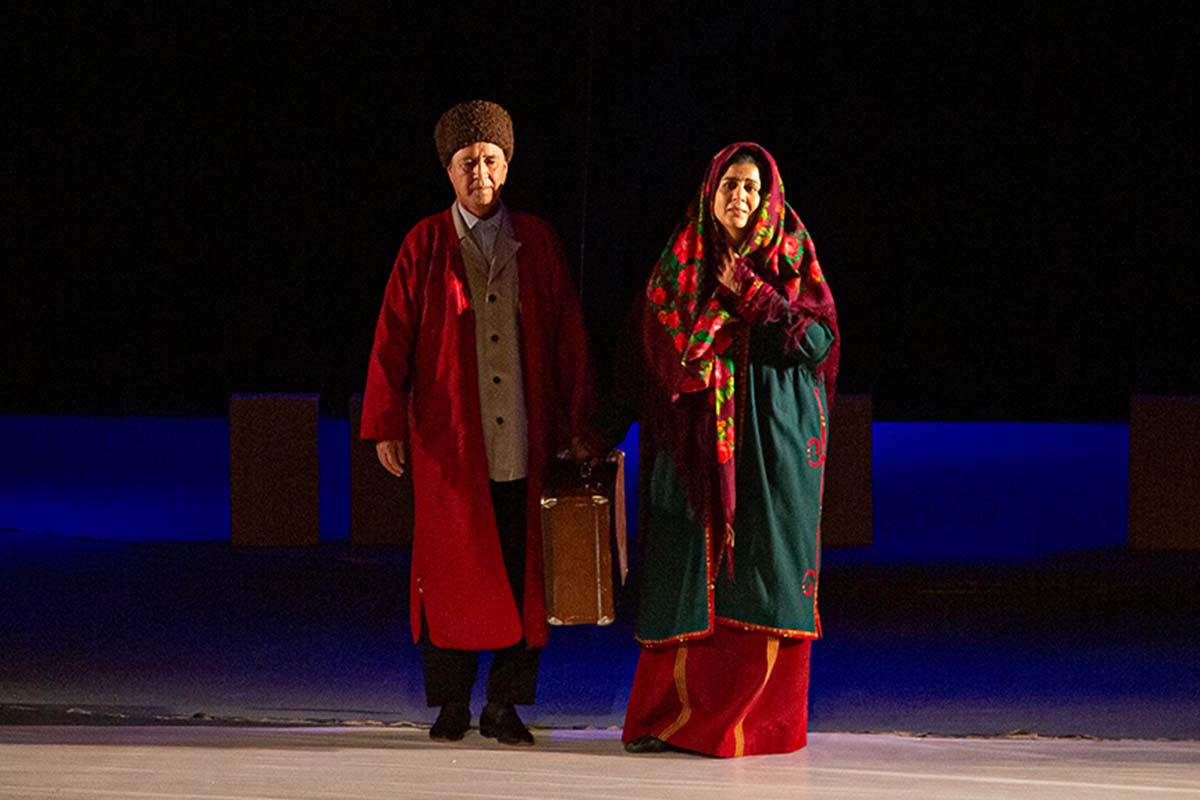
In the very first scene, the play conveyed the horror of a natural disaster: before the eyes of audience, the walls of a house collapsed, and people died under their rubble. The earthquake took husband of Jemal, and her three-month-old son, miraculously unharmed, was sent to Tashkent, where he was adopted by an Uzbek woman. Jemal herself, having lost her memory from grief, was taken to hospital.
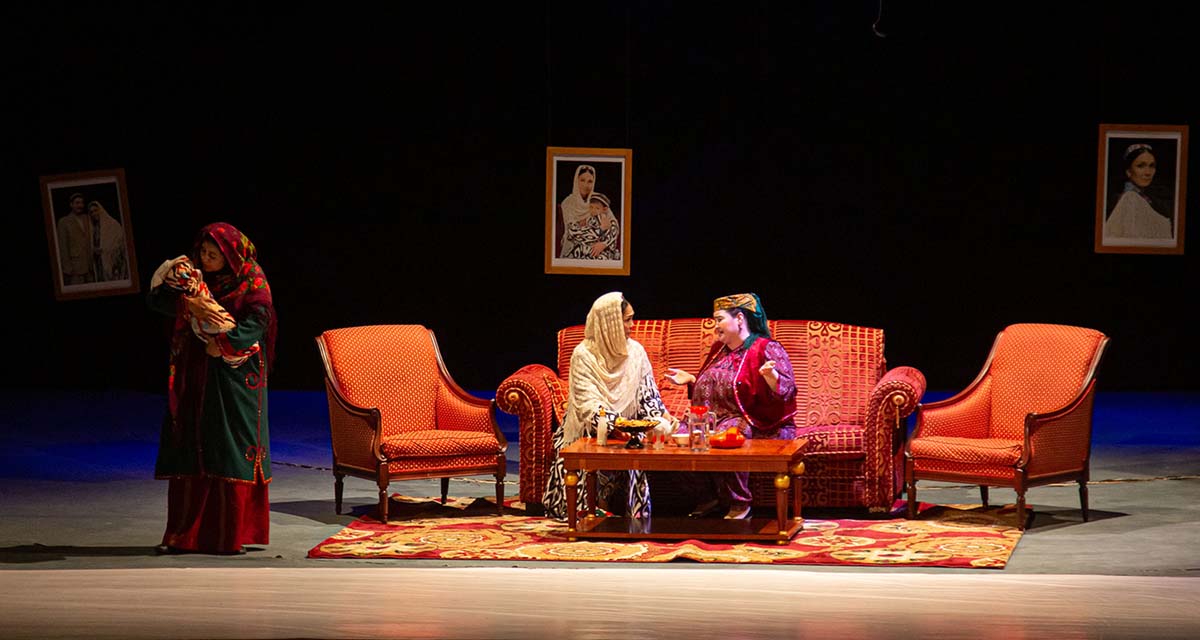
We must pay tribute to the set design of the play. Director Mekan Jumabayev and production designer Guljemal Saparova used every means to highlight the emotional experiences of both mothers, for whom their son Alisher became the meaning of life.
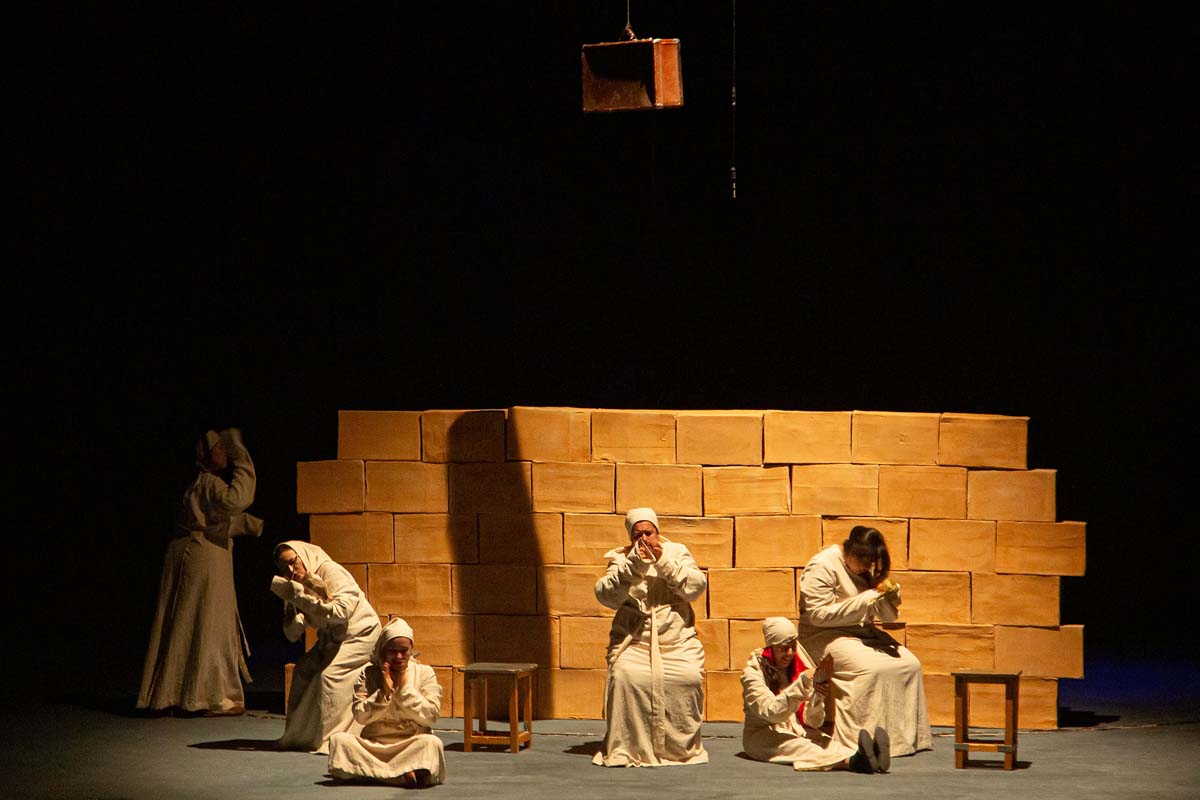
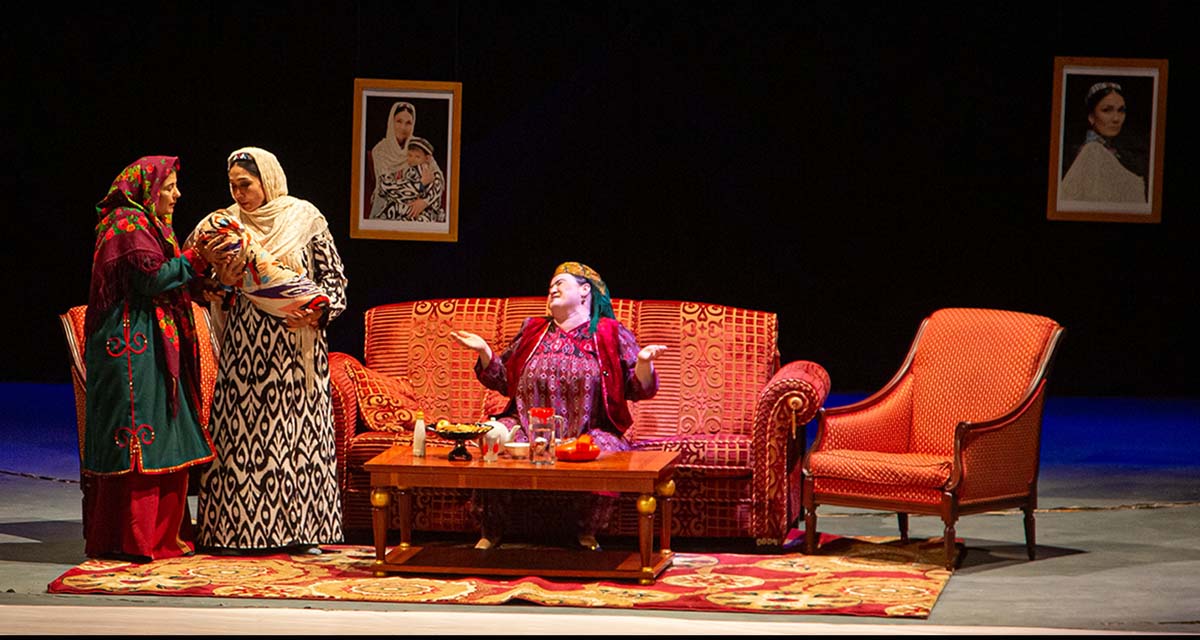
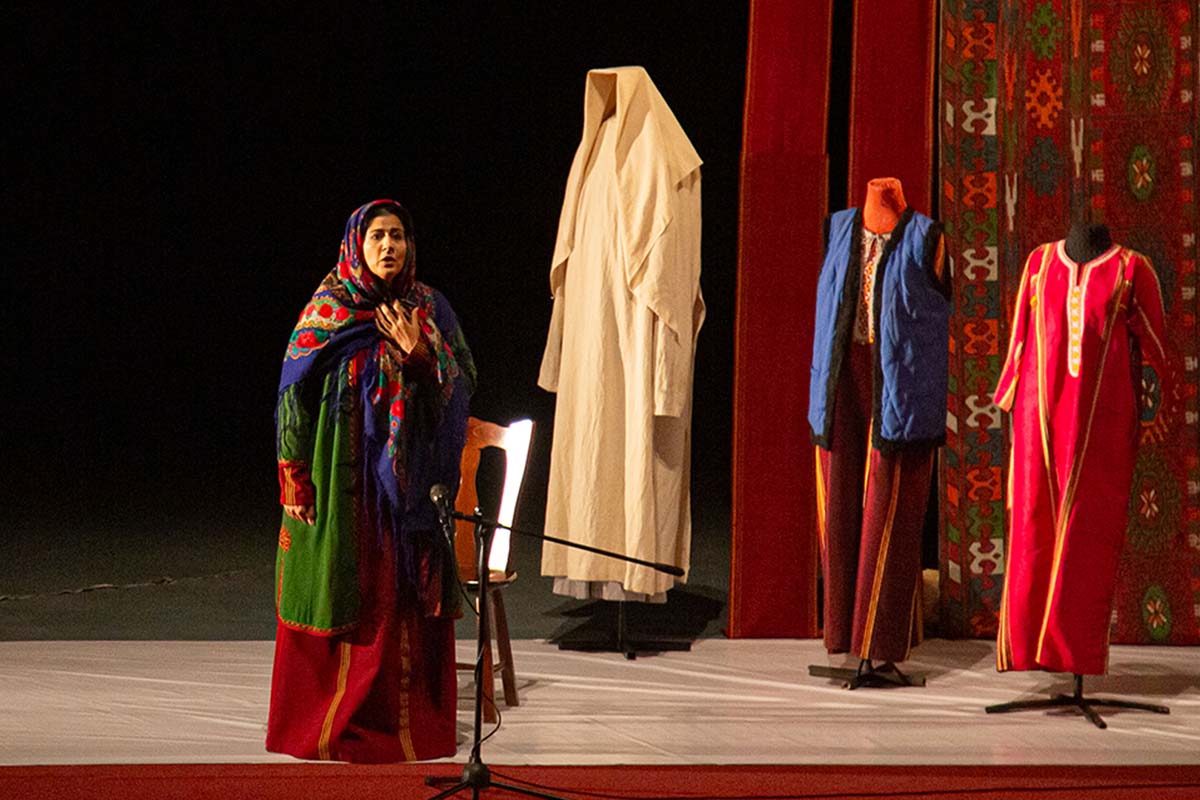
On one side of the stage were three dresses of an Uzbek woman, on the other – three dresses of a Turkmen woman, emphasising the similar, yet different, cultures of the two peoples. A suitcase hovered in the air above the stage – an attribute of travels of Jemal in her endless search for her son. And in the room of Nazira there were photographs hanging, which captured the entire path of growing up of the boy she had adopted.
Stage lighting played an important role. The light source was located at the side of the stage, which well conveyed the state of anxiety of both women. Nazira asked Jemal to remember special features of her son, and Jemal named the talisman in the form of a tumar with a white horse, which her husband hung around the neck of newborn baby. Nazira gave the talisman to Jemal with tears in her eyes.
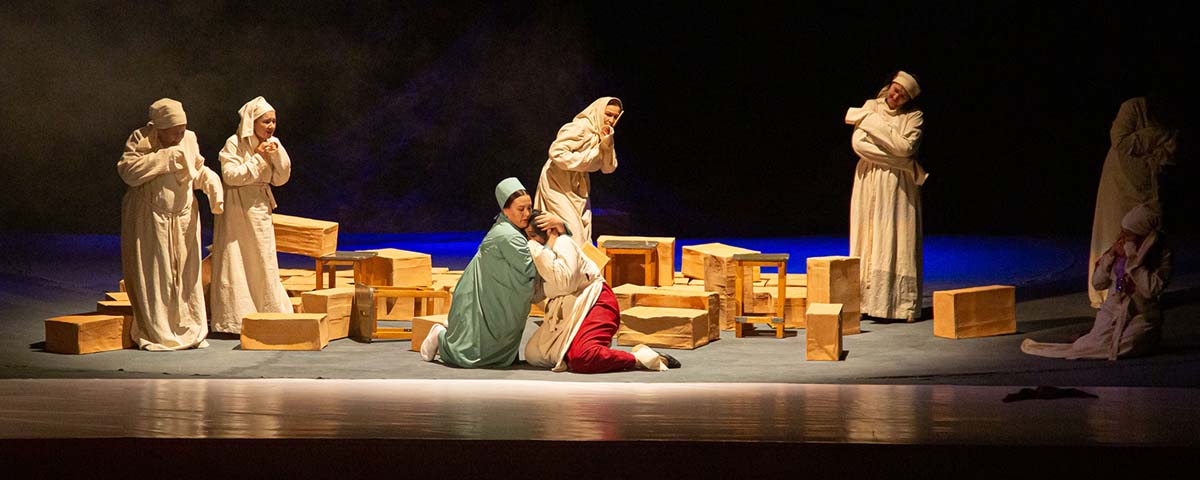
Arguments are useless - Alisher really is the son of Jemal. The white horse proved it. But what should Nazira do? Unable to find a place for herself, in despair she attacks the portraits of her son. Which of the two mothers has rights to her son? The performance does not provide an answer to this question, leaving it up to each viewer to find their own way out of this difficult situation.
Honoured Artist of Turkmenistan Mayagul Annayeva and People's Artist of Turkmenistan Gulalek Akmyradova brilliantly portrayed the mothers – a calm Turkmen woman who endures her grief with great dignity, and a light-hearted, impetuous Uzbek woman who does not want to part with her adopted boy.
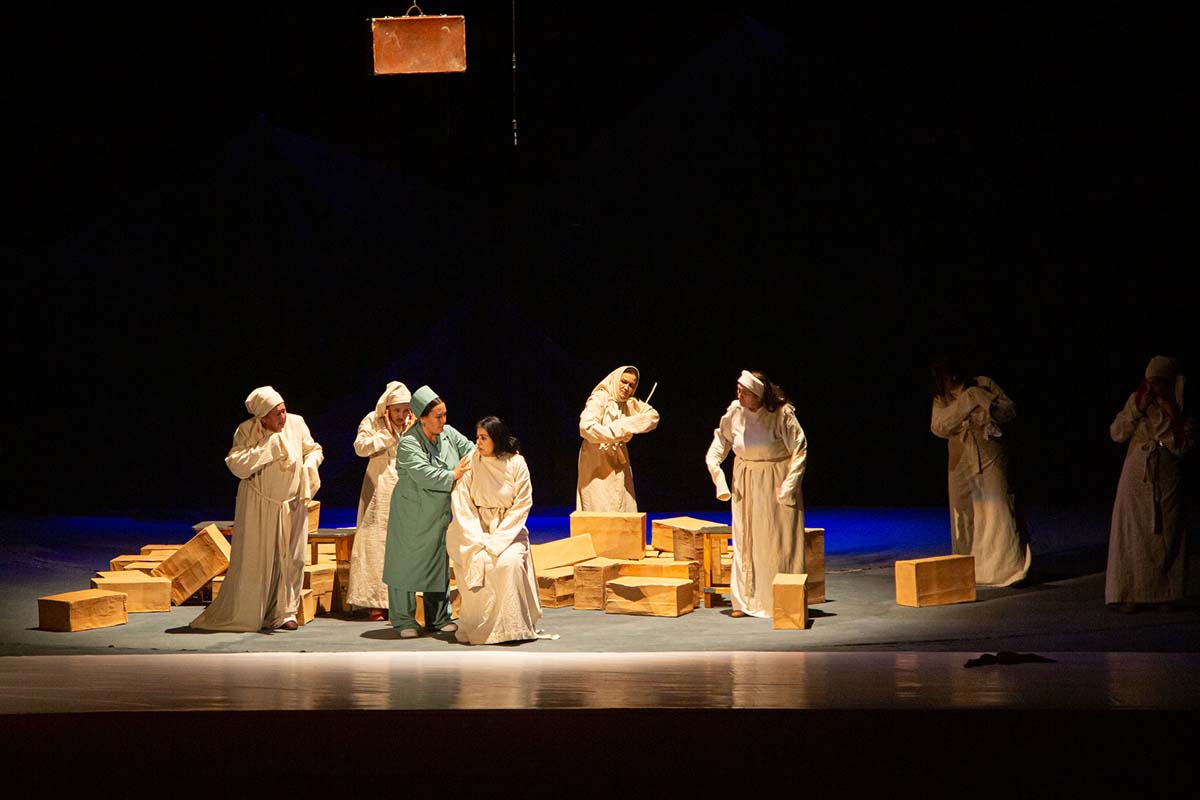
The play «White horse» is undoubtedly one of the best at the festival, thanks to the playwriting of Baba Annanov and the talented dedication of director Mekan Jumabayev and the acting troupe.