


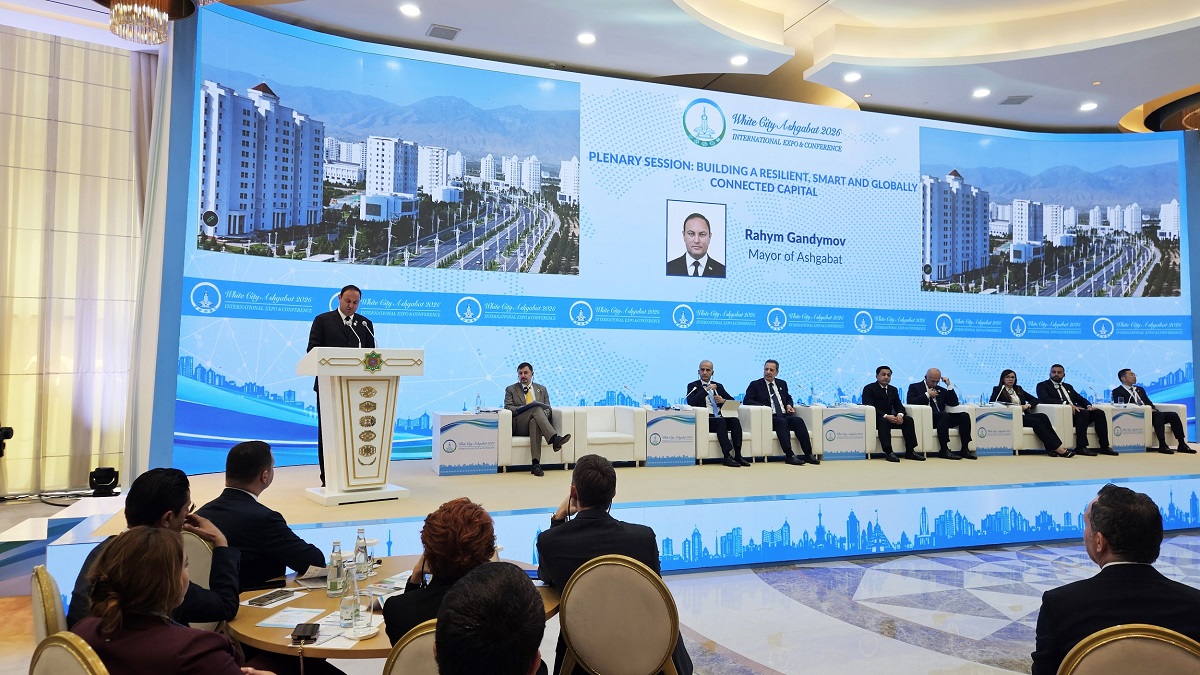
At the XXV International multidisciplinary exhibition and conference «White city Ashgabat – 2026», organised under the motto «Architecture. Innovation. Sustainable development», the hakim of Ashgabat Rahym Gandymov presented key areas of the spatial and social development of capital.
In his speech, the hakim of Ashgabat summarised the large-scale infrastructure transformations of recent years and detailed the strategic principles underlying the modern management and development model of capital of Turkmenistan.
As the hakim noted, Ashgabat has recently undergone a qualitative transformation. The construction of new residential areas, the development of wide avenues, the opening of modern socio-cultural facilities and parks, as well as the modernisation of transportation networks and utilities, have shaped a completely new image for the Turkmen capital.
However, according to R. Gandymov, the development ofAshgabat is not limited solely to architectural renewal.
«This is, first and foremost, the creation of a people-centered urban environment, open to innovation, effectively absorbing advanced international practices, and based on the principles of long-term sustainable development», – the head of the administration of the capital emphasised.
The report clearly outlined four fundamental priorities defining current and future development agenda of Ashgabat.
The first is reliable infrastructure. A modern and sustainable city requires the accelerated development of high-quality roads, utility systems, uninterrupted power supply, digital networks, and accessibility to a full range of public services for the population.
The second is environmental sustainability. Key priorities include the systematic transformation of the capital into a garden city. This strategy includes the efficient use of natural resources, the widespread implementation of energy-saving technologies, and sound long-term urban planning.
The third is digitalisation and the «smart city» concept. The modern urban governance system of Ashgabat actively relies on information technology, innovative systems, and improved efficiency in the provision of digital services.
The fourth is inclusiveness and social orientation. Any steps in urban development should serve the interests of residents, creating the most favourable and comfortable conditions for families to live, raise children, realise their potential for youth, and ensure the well-being of future generations.
In conclusion, the hakim of Ashgabat emphasised the importance of integration into the global community of cities. As noted, the progress of a modern metropolis is inextricably linked to the active exchange of experience, the expansion of international ties, and the establishment of effective collaboration with leading global development institutions.