


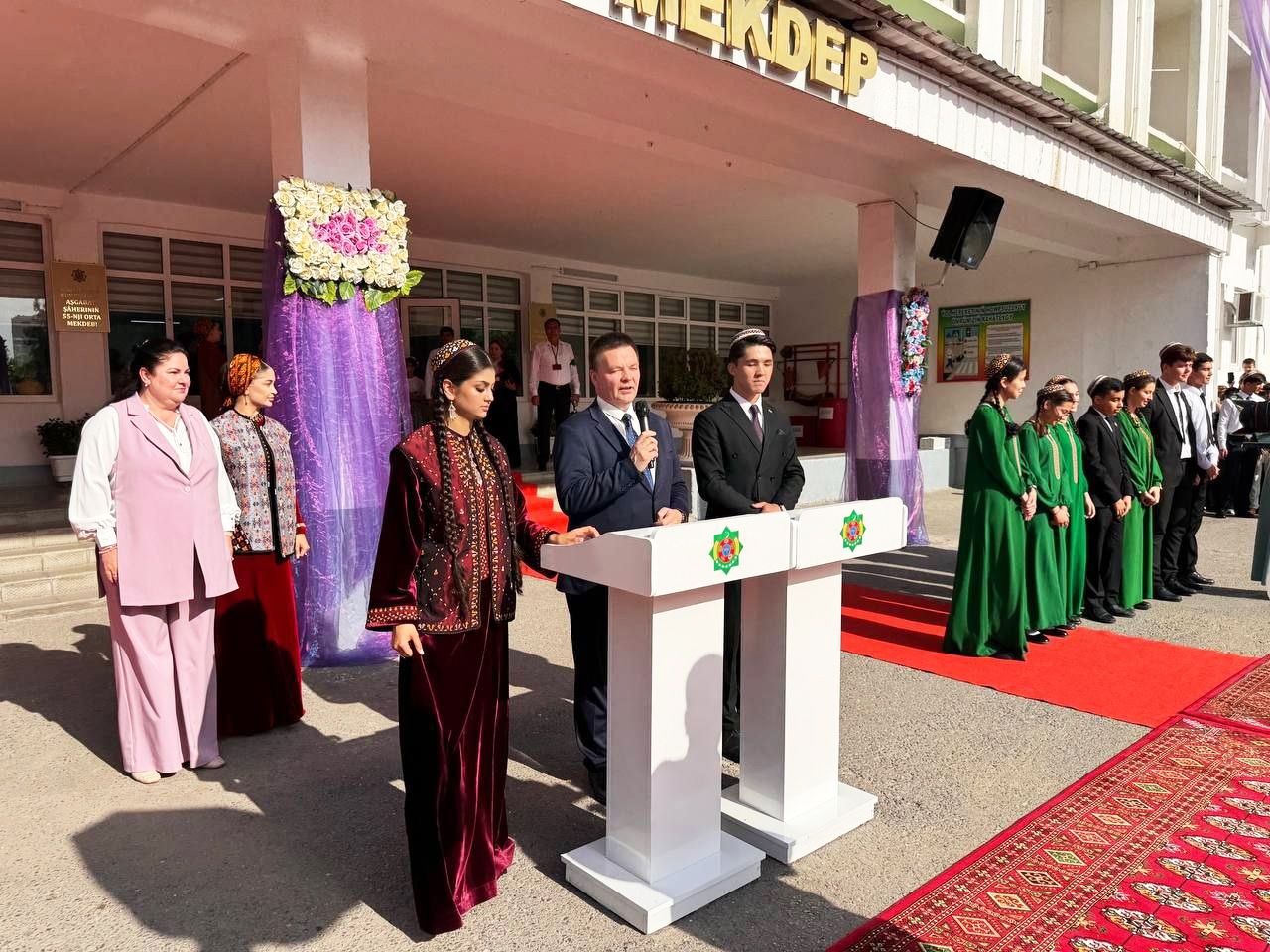
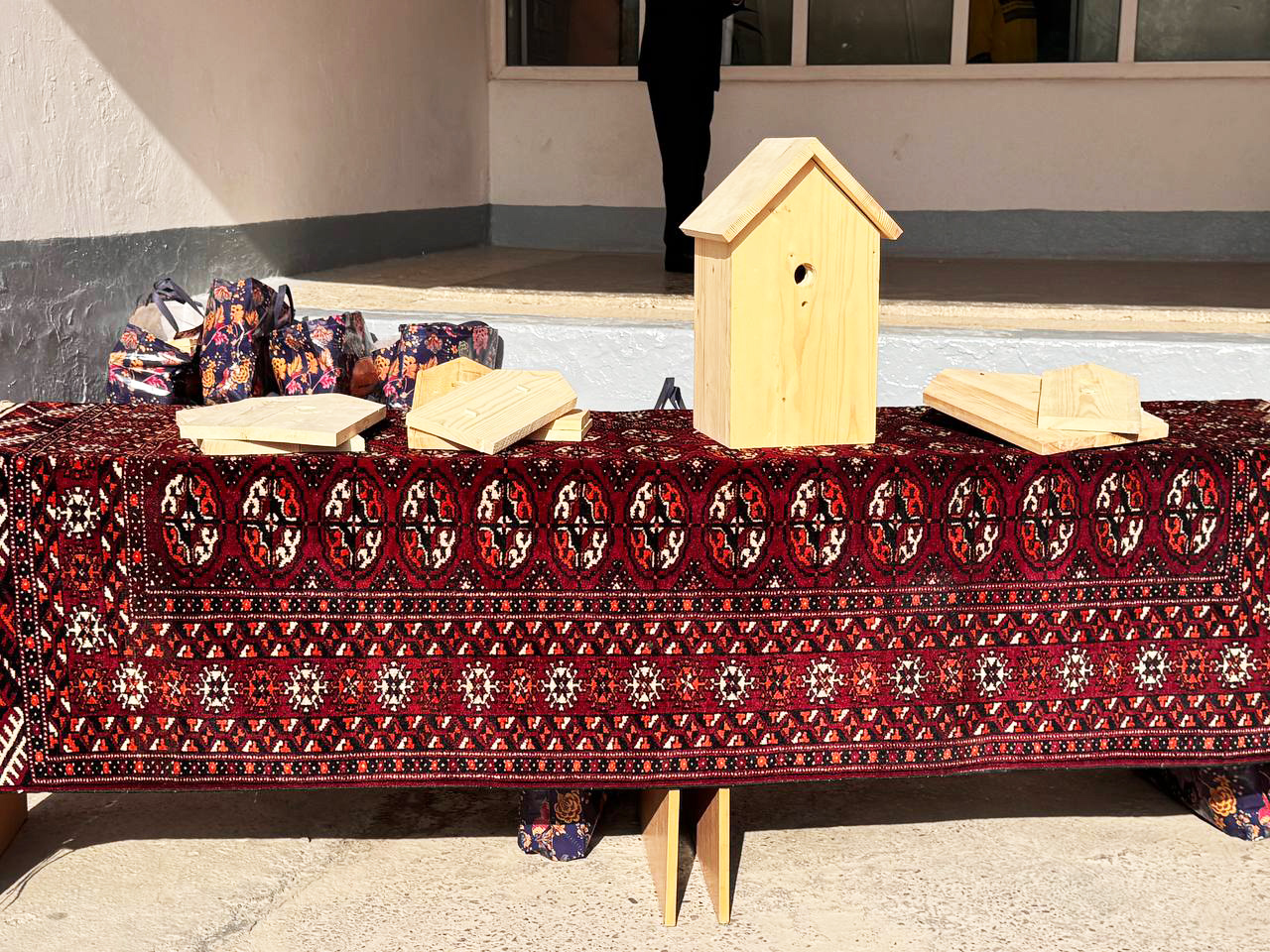
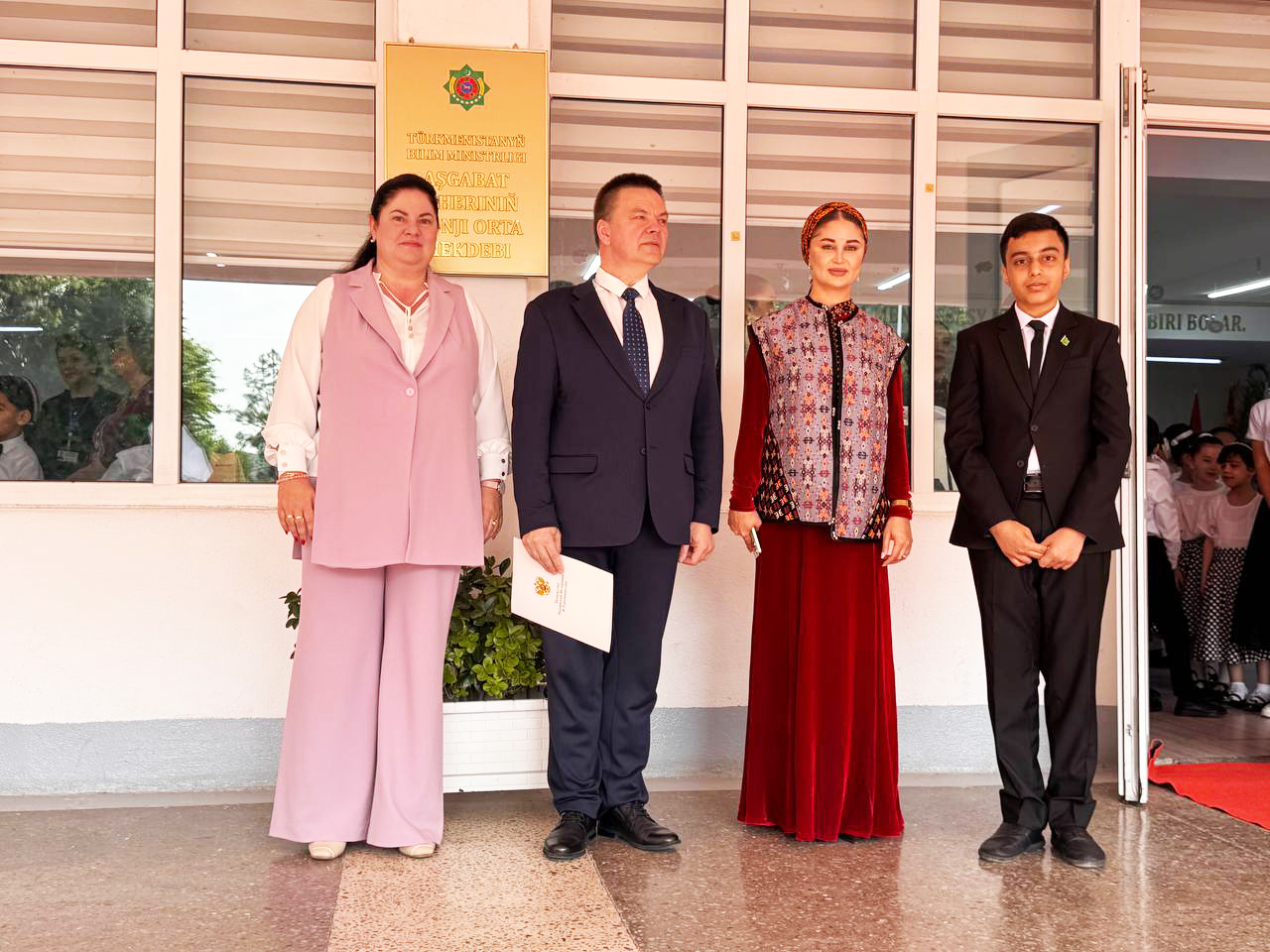
During a ceremonial assembly held at Secondary School No. 55 in Ashgabat on the occasion of the “Last Bell” celebration, Russian diplomats donated 20 eco-friendly birdhouses to the educational institution. The birdhouses were made according to a design created by seventh-grade student Ovezmyrat Sapargeldiyev.
Earlier, the student noticed a decline in the sparrow population in his neighborhood. Under the guidance of biology teacher Anna Shamova, he conducted research into the phenomenon. As a result, it was concluded that the reduction in bird numbers was influenced by modern urban development, temperature fluctuations, a shrinking food supply, and the decreasing availability of suitable nesting sites. Based on his observations, Ovezmyrat developed the project “Nesting in Climate-Resilient Conditions.”
The essence of the project lies in creating special birdhouses that provide safe and stable conditions for birds. The structures use layers of wood combined with insulating materials such as moss, hay, or foam plastic, which help regulate the internal temperature.
The use of this effective technology made it possible to reduce the temperature inside sparrow nests by 4.5 degrees, increasing chick survival rates by 35%.
During the handover ceremony, Alexander Vasilyev, Minister-Counselor of the Russian Embassy in Turkmenistan, read a message from Ivan Volynkin, the Ambassador Extraordinary and Plenipotentiary of Russia. The message stated in part:
“I am especially pleased that the reason for our meeting today is the remarkable initiative of your school’s student, Ovezmyrat Sapargeldiyev. His project, ‘Nesting in Climatic Conditions,’ has been implemented within the framework of the ‘Climate Box’ initiative, which is supported by the Russian Federation together with the United Nations Development Programme. For many years, this program has helped schoolchildren and teachers in Central Asia study issues of climate change, ecology, and sustainable development not only in theory, but also through concrete actions.”
The head of the diplomatic mission also emphasized that the Russian Federation highly values cooperation with educational institutions in Turkmenistan and consistently supports promising initiatives in the fields of environmental education, climate policy, and sustainable development.
Such events contribute to strengthening environmental awareness, friendship, and international cooperation, inspiring young people to engage in kind and beneficial projects, I. Volynkin stressed in his address.