


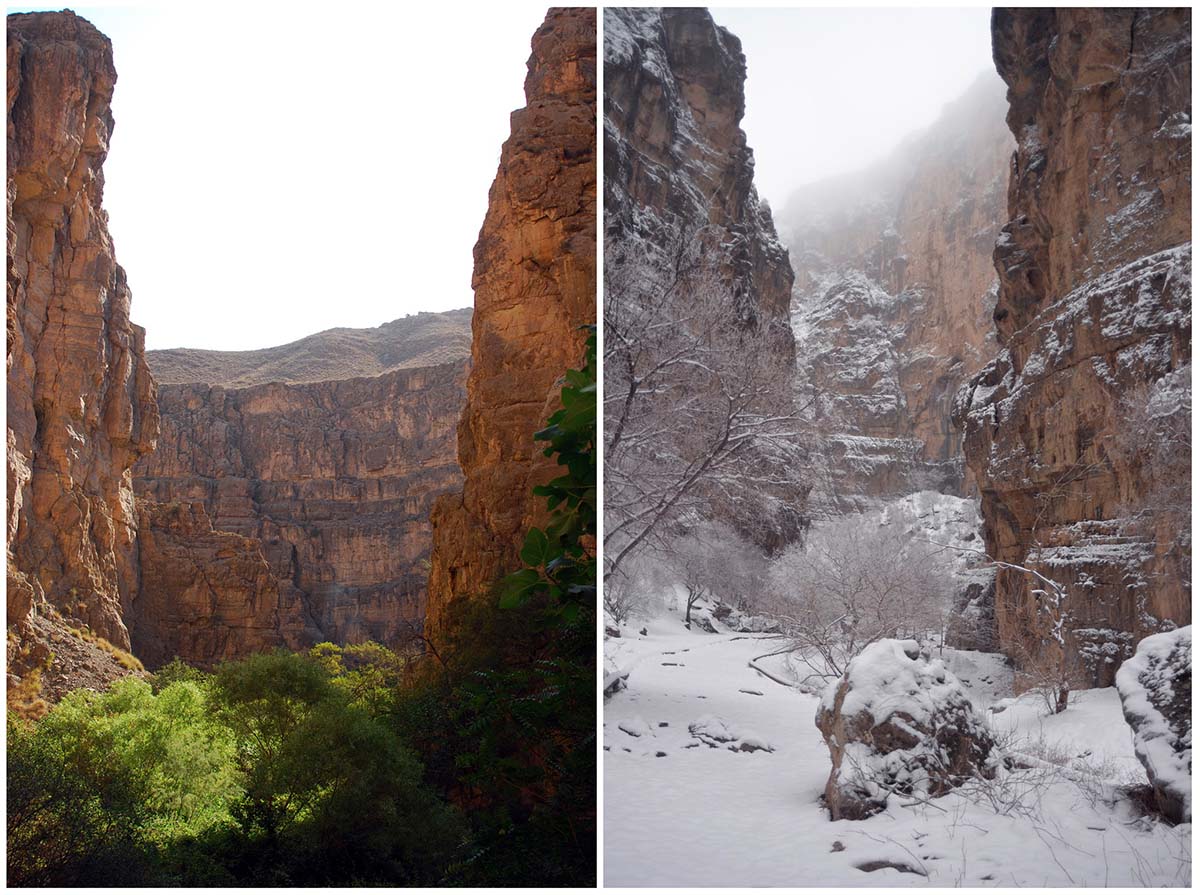
Koytendag is one of the most amazing and picturesque corners of our country. The significance of this ancient land is increasing due to the fact that, alongside unique natural sites that attract travelers from all over the world, its depths contain colossal reserves of mineral resources. These riches can be called gifts of the mountains, similar to the fruits of trees. In the year “Independent Neutral Turkmenistan – the Homeland of Purposeful Winged Horses,” President Serdar Berdimuhamedov pays great attention to the development of this region, since the resources of Koytendag are of strategic importance for the country’s economy.
The study of the world of minerals in the Garlyk Caves will undoubtedly fascinate everyone. Thanks to many years of geological exploration, deposits of zinc, copper, mercury, strontium, rock salt and potassium salts, gypsum, and anhydrite have been discovered here. In addition, researchers have found deposits of sulfur, hard coal, various types of construction raw materials, and many other mineral resources here.
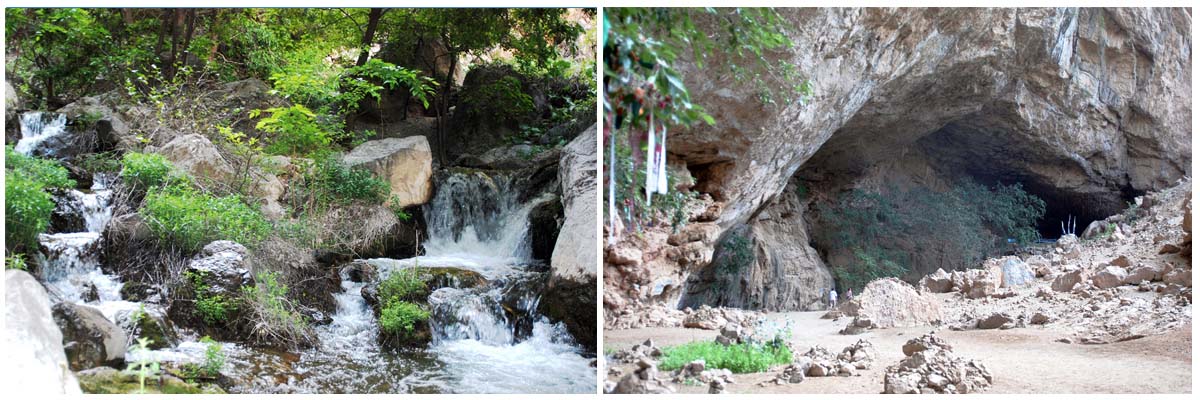
One of the valuable minerals hidden in the Garlyk Caves is barite—a dense and heavy white-colored substance. In industry, it is used mainly in the oil and gas sector during drilling operations. Another important mineral resource in which Koytendag is rich is mercury. It is extracted from cinnabar—a red-colored mineral. Cinnabar itself is formed through hydrothermal processes triggered by tectonic movements in the Earth’s crust.
Among the natural riches of Koytendag is copper ore. Pure copper possesses high ductility, softness, as well as good electrical and thermal conductivity. Thanks to these properties, it is widely used in electrical engineering, mechanical engineering, aviation, and the automotive industry. In addition, this metal is actively used in art to create sculptures and engravings, and serves as the basis for the production of bronze and other valuable alloys.
Celestine, one of the valuable minerals in the world, is also found in Koytendag. Celestine ore is a source of raw material in demand in many branches of industry. This mineral occurs in ancient sedimentary strata. In celestine-bearing rocks, in addition to celestine itself, dolomite, calcite, gypsum, quartz, and fluorite are often present.
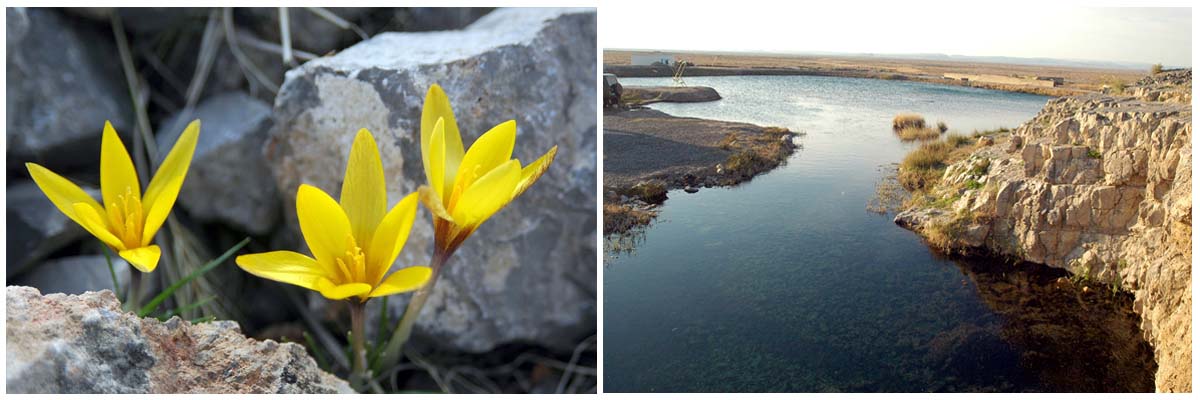
Strontium is another valuable mineral found in Koytendag. This white-colored metal is widely used in the field of electronic technologies. In addition, the Koytendag region is known for its inexhaustible reserves of potassium salt, which serves as a crucial component in the production of mineral fertilizers.
Potassium fertilizers increase soil fertility, making it possible to obtain rich harvests of agricultural crops. This contributes to ensuring food abundance in the country, which is one of the priority areas of the state policy pursued by President Serdar Berdimuhamedov. It should be noted that in the western part of the region, such varieties of potassium salts as sylvite and carnallite are most widespread.
The Garlyk Caves are an underground architectural masterpiece of Koytendag. Located on the slope of a mountain range, they are now recognized as a unique natural monument and are under state protection. This natural site lies within an Oxfordian limestone stratum of the Jurassic period. Inside, there are extensive halls and galleries; the height of the vaults varies from 0.5 to 40 meters, while their width reaches 40–50 meters.
Numerous stalactites, resembling elegant pendants, are concentrated here. Their composition is dominated by gypsum and calcite, also known as marble onyx. This mineral serves as an excellent material for making various figurines and souvenirs.
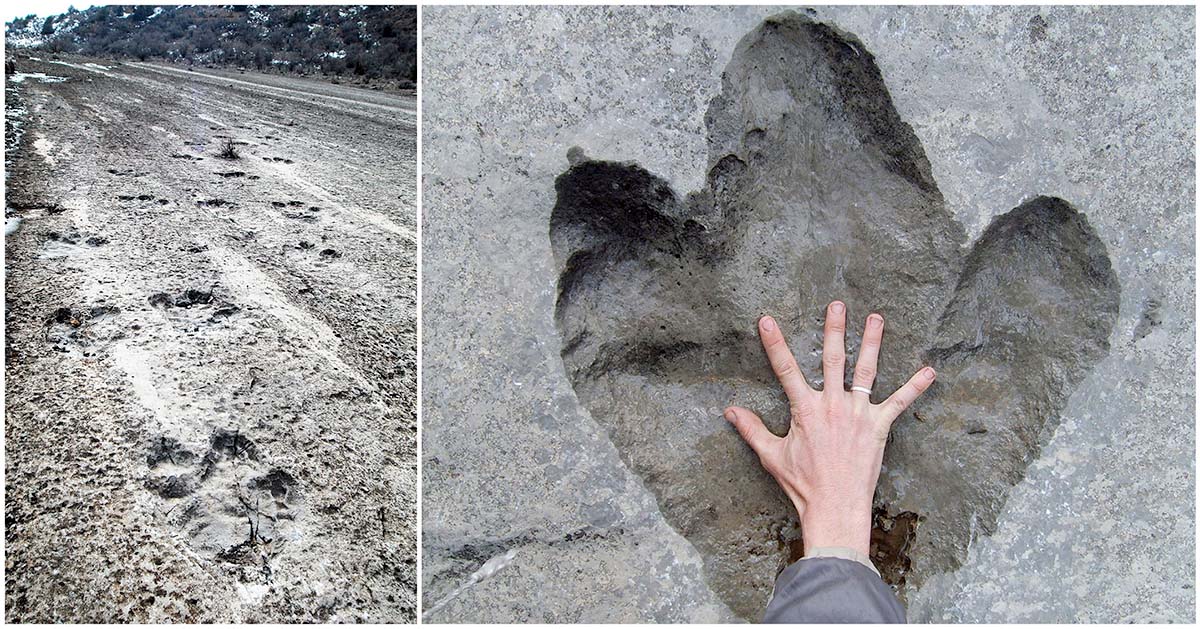
It is noteworthy that Koytendag, which combines amazing natural sites—the Garlyk Caves, the Dinosaur Plateau, the Umbar-dere Waterfall, and many others—is also rich in such an important mineral resource as coal. In terms of its chemical composition and physical properties, Koytendag coal belongs to the semi-anthracites. It is a high-quality energy fuel suitable for the production of synthetic gasoline.
The colossal limestone reserves of Koytendag should also be noted. Limestones are formed as a result of organic and chemical processes. Calcium carbonate forms the basis of this hard and dense rock. Thanks to its strength, limestone is widely used in construction and in the cladding of buildings, and serves as a raw material for the production of cement, soda, and lime. The Koytendag mountain ranges are entirely composed of gray and blue limestone strata of the Upper Jurassic period, whose thickness ranges from 10 to 35 meters.
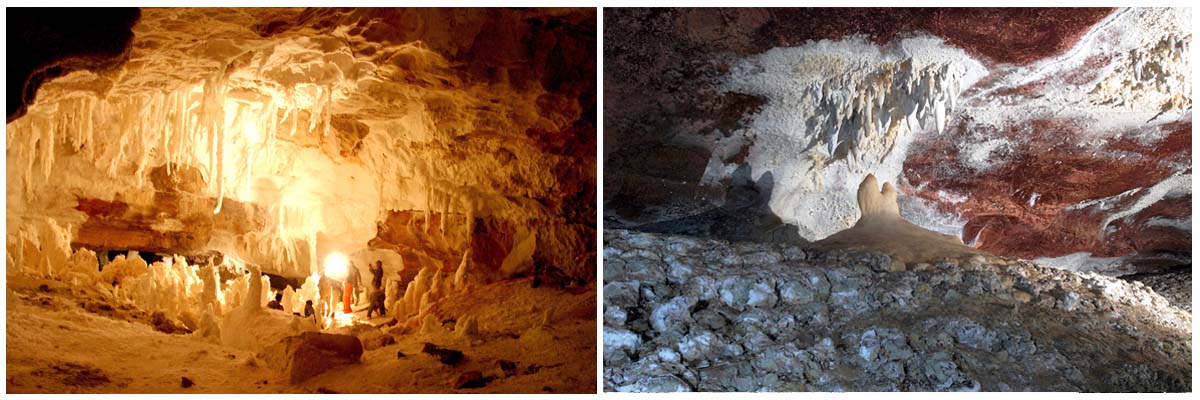
Alongside limestone, gypsum and anhydrites are widespread in Koytendag. The high-quality, multicolored anhydrite rocks found here resemble noble marble in appearance. They are used to make souvenir figurines, facing slabs, Portland cement, and other construction materials.
Cement is a key product for the construction industry. As is known, the production of construction materials plays an important role in the successful implementation of the socio-economic development programs of the country, developed on the initiative of the National Leader of the Turkmen people, Chairman of the Halk Maslahaty, and now successfully being implemented under the leadership of President Serdar Berdimuhamedov. The presence of large reserves of minerals necessary for cement production makes this region of strategic importance. In this context, it should be noted that the Lebap Cement Plant was opened with the participation of the Hero-Arkadag in February 2013. Following the commissioning of the plant’s second phase in 2024, with the participation of the President of Turkmenistan, the plant’s total annual capacity reached 2 million tons of high-quality products. The volumes of cement produced make it possible not only to meet the needs of the domestic market but also to export products abroad.
Among the natural riches of Koytendag, clayey rocks should also be mentioned. This soft, plastic, fine-grained sediment (with particle sizes of less than 0.01 mm) consists of a mixture of various minerals. When moistened with water, products can be shaped from this mass, which, after firing, turn into a strong rock. Its composition includes kaolinite, hydromica, beidellite, montmorillonite (bentonite), and halloysite.
Thanks to its properties, clay is widely used in the construction and cement industries and in the production of ceramic and refractory products. It is used to produce construction bricks, roofing materials, drainage pipes, components of medical and technical devices, and acid-resistant products for electrical engineering and water-treatment systems. It is also used in the production of phosphate fertilizers. According to their industrial purpose, clays are divided into ceramic, refractory, kaolin, and montmorillonite clays. Kaolin clays and clayey rocks required for the production of paints are found in Koytendag. In the natural environment, unfired clay is unstable when exposed to moisture. Due to being washed away by water, clayey rocks are easily subject to erosion, which forms complex terrain.
Expanded clay is obtained artificially from clayey rocks (translated from Greek as “fired clay”). This sought-after construction material is produced by high-temperature firing of certain types of clays, clay shales, and argillites. Expanded clay is widely used for preparing lightweight concrete, as well as for effective thermal insulation and sound insulation of premises.
Another type of rock found in the region is argillite. It is a hard, water-insoluble variety of clayey rocks. Expanded clay obtained from argillite makes it possible to accelerate the pace of housing construction in the country and significantly reduce the weight of large-panel slabs.
Sand and gravel rocks are widely used in the construction sector: in the production of silica bricks, wall blocks, and concrete; in plastering and asphalt works; as well as in the construction and repair of road structures and the production of refractory products. Certain types of sand are in demand in the metallurgical and glass industries. The effective industrial use of sandy rocks requires a detailed study of their genesis and mineral composition. At the same time, their strongly cemented variety—sandstone—occurs in deposits of ancient geological eras.
Thus, the large reserves of various types of mineral resources in the depths of Koytendag are of great importance for the development of the country’s economy. In the era of the Revival of the New Epoch of the Powerful State under the leadership of President Serdar Berdimuhamedov, large-scale work is being successfully carried out to develop these valuable resources, which are a national treasure, for the well-being of the people and the prosperity of the independent neutral Motherland.