


Achieving high production performance in the year “Independent, Neutral Turkmenistan – the Homeland of Purposeful Winged Horses”, as well as celebrating the glorious 35th anniversary of the sacred independence of the Motherland with worthy labor achievements, is the cherished goal of every workforce in the country. This ensures high production rates at domestic industrial enterprises.
As is well known, in the era of the Revival of the New Epoch of the Powerful State, modern buildings and facilities are regularly constructed and commissioned in order to further strengthen the economic potential of independent neutral Turkmenistan and improve the standard of living of the people. The use of domestically produced construction materials helps significantly reduce construction costs and complete projects within shorter timeframes. Accordingly, modern construction materials manufacturing enterprises equipped with the latest technologies are regularly being put into operation across the country, while existing facilities are also undergoing modernization.
Cement is the primary construction material used in the erection of various facilities. Several large cement plants equipped with advanced technologies operate in our country. One such enterprise producing high-quality products is the Lebap Cement Plant, located in the Koytendag etrap of the Lebap velayat.
With the commissioning of the plant’s second production line in 2024, output has increased even further. Thanks to the efficient organization of operations, the enterprise produced 941.1 thousand tons of high-quality cement during the first six months of 2026. This figure significantly exceeds the result for the corresponding period of last year, with an increase of 197.5 thousand tons, representing a production growth rate of 26.6 percent.
It should be noted that the highly demanded construction material produced in large quantities at the Lebap Cement Plant is also exported abroad. The enterprise pays particular attention to three key areas: cement quality, production efficiency, and environmental sustainability.
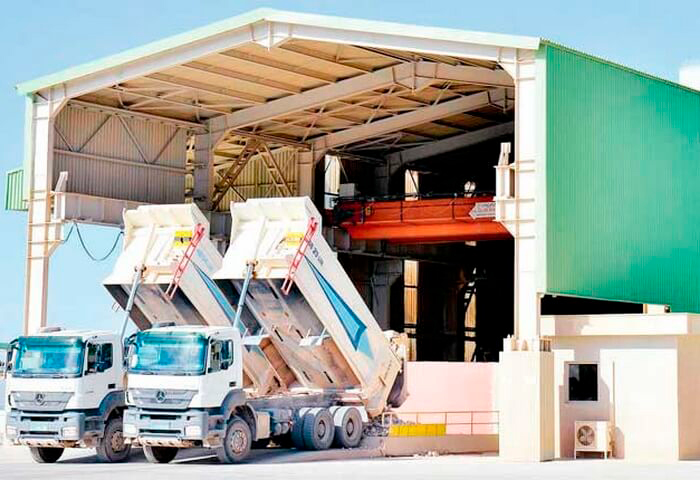
The plant produces Portland cement as well as sulfate-resistant cement used in the construction of hydraulic engineering facilities. The finished products are transported via special conveyor systems to cement storage facilities, packaged into bags, delivered to consumers by road transport, and also loaded into cement railcars for shipment by railway.
The continuity of the production process is monitored automatically by specialists at the central control room. The prompt delivery of finished products to consumers in different parts of the country contributes to the uninterrupted implementation of construction projects. Laboratory specialists conduct quality inspections of both the raw materials supplied to the plant and the finished products.
Whereas the original production line of the Lebap Cement Plant manufactured Portland cement grades S-400 and S-500, the commissioning of the second production line has made it possible to produce the even higher-quality S-600 grade cement. The state-of-the-art equipment installed at the plant by renowned companies from Türkiye, Germany, and other European countries ensures that the products fully comply with international standards.
It should also be noted that S-400 grade cement is used in the construction of various buildings, sidewalks, and paved areas. The stronger S-500 grade is used in the production of reinforced concrete structures, as well as in the construction of airport runways and roads. The strongest type of cement, S-600, is sulfate-resistant and is widely used in the installation of oil and gas drilling rigs, the construction of bridge supports, shoreline reinforcement projects, underground construction, and other similar structures.
The abundant mineral resources of the Koytendag region, together with the proximity of deposits of raw materials essential for cement production—including limestone, quartz sand, gypsum, and clay—ensure the uninterrupted operation of the enterprise and help reduce production costs. This is of key importance for increasing the plant’s profitability.