


The global energy industry has always been shaped by technology. Advances in geology opened new resource provinces. Modern drilling made previously inaccessible reserves commercially viable. Pipelines, processing facilities and sophisticated engineering systems enabled energy to move across borders and support industrial growth.
Today, the industry is entering another period of fundamental change.
Artificial intelligence, advanced data analytics, digital twins, automated systems and satellite-based monitoring are transforming the way energy resources are explored, developed, transported and managed. These technologies are not replacing the traditional foundations of the industry. Rather, they are making those foundations more productive, more reliable and increasingly responsive to the demands of a changing global economy.
For energy-producing countries, this transformation carries an important message: natural resources remain a major strategic advantage, but long-term competitiveness will increasingly depend on how effectively those resources are managed through technology, knowledge and international partnership.
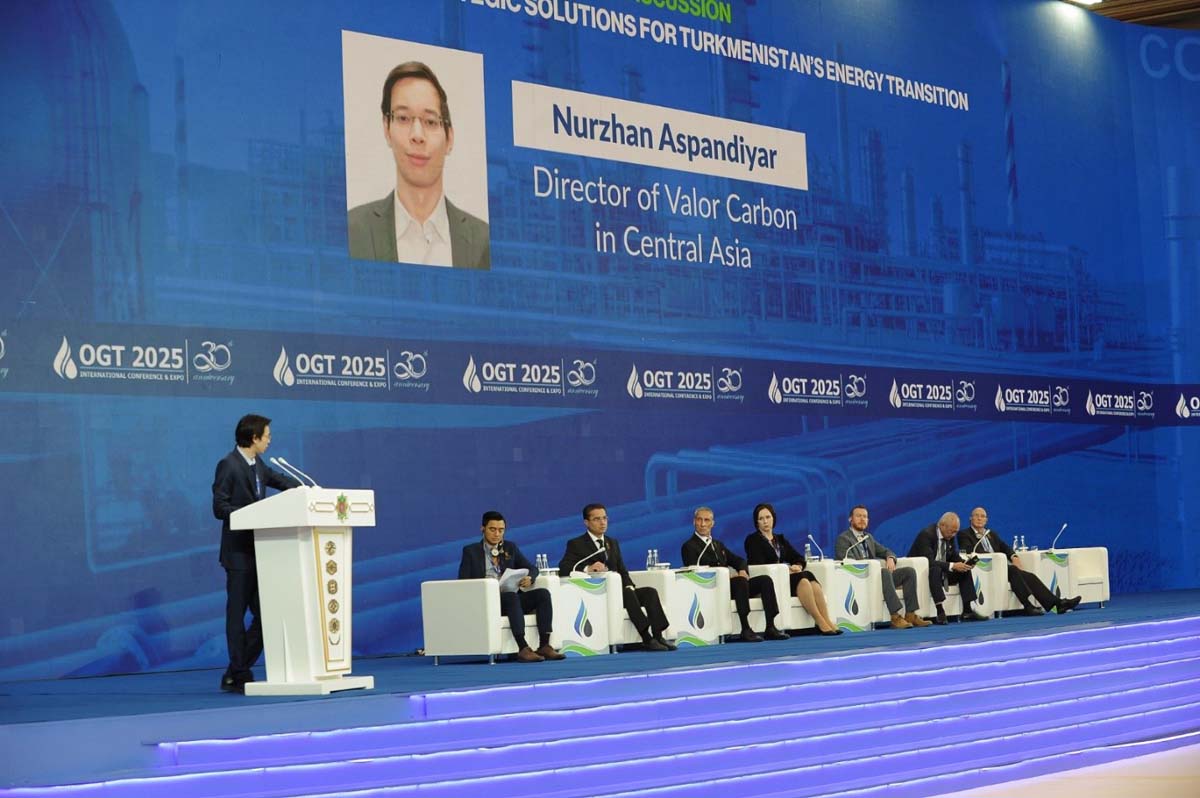
This is why digital transformation is becoming a central issue for Turkmenistan’s energy sector and an important part of the programme of the 31st International Conference and Exhibition “Oil and Gas of Turkmenistan – OGT 2026”, to be held in Ashgabat on 21–23 October 2026. The latest preliminary agenda places digital transformation and technological innovation within the strategic discussions on Turkmenistan’s future role in regional and global energy cooperation, rather than treating technology as an isolated technical subject.
From physical assets to intelligent energy systems
Oil and gas operations have traditionally depended on large physical assets: wells, platforms, processing plants, compressor stations, pipelines and storage facilities.
These assets remain essential. What is changing is the way they are operated.
Increasingly, sensors collect information continuously from equipment and production systems. Advanced software processes this information in real time. Artificial intelligence can identify patterns that may not be immediately visible to human operators, helping companies anticipate equipment problems, improve production planning and make faster operational decisions.
The International Energy Agency notes that energy companies are already applying artificial intelligence to improve production, reduce costs, raise efficiency, increase uptime, cut emissions and strengthen safety. (IEA)
This marks a shift from periodic observation to continuous intelligence.
In a conventional operating model, equipment may be inspected according to a fixed schedule or repaired after a fault develops. In a digitally enabled model, operational data can help identify early signs of deterioration before failure occurs. Maintenance can then be planned more accurately, reducing unexpected shutdowns and helping extend the useful life of valuable assets.
For a large gas-production and transportation system, even a modest improvement in equipment availability can have significant commercial value. Greater reliability supports stable production, predictable supply and more efficient use of capital.
Digitalisation, therefore, is not simply about installing new software. It is about improving the performance of the entire asset base.
Artificial intelligence as a practical industrial tool
Much of the global discussion surrounding artificial intelligence has focused on generative applications. In the energy industry, however, some of the most important uses of AI are less visible and highly practical.
In upstream operations, AI-supported analysis can assist with the interpretation of geological and seismic data. It can help engineers compare large volumes of subsurface information, identify relationships between different datasets and evaluate development scenarios more efficiently.
In drilling, digital tools can support the optimisation of well trajectories, drilling parameters and equipment performance. By analysing historical and live operational data, companies can identify conditions associated with delays, inefficiencies or increased technical risk.
In production, artificial intelligence can contribute to forecasting, reservoir management and the optimisation of wells and facilities. It can help operators understand how changes in pressure, temperature, flow rates and equipment conditions may affect overall output.
In gas transportation, advanced analytics can support compressor performance, pipeline integrity and the efficient movement of gas across extensive networks.
These applications are important because energy projects involve complex systems in which subsurface conditions, physical infrastructure and commercial requirements are closely interconnected. Digital tools can help decision-makers understand these relationships more clearly.
The value of artificial intelligence does not lie in replacing engineering judgement. Its value lies in strengthening that judgement by allowing specialists to process more information, test more scenarios and identify risks earlier.
Digital twins: testing decisions before implementing them
Among the most important emerging technologies in the energy sector is the digital twin.
A digital twin is a virtual representation of a physical asset or operating system. It may model an individual component, a processing unit, a pipeline system or an entire production facility.
By combining engineering data with live operational information, a digital twin can allow operators to assess how an asset is performing and how it may respond to changing conditions.
For example, a company may use a digital model to examine how alterations to production rates could affect equipment performance. Engineers may test maintenance scenarios before intervening in the physical facility. Operators may assess the consequences of operational changes without exposing the real asset to unnecessary risk.
The technology can also support the design and commissioning of new facilities by allowing engineering teams to identify potential operational issues before construction is completed.
The practical relevance of such technologies is reflected in current international energy policy. In July 2026, the United States Department of Energy announced support for projects involving continuous monitoring, AI-supported digital twins and infrastructure optimisation in the upstream and midstream oil and gas sector, with the stated objectives of improving efficiency, safety and reliability while reducing operating costs. (The Department of Energy's Energy.gov)
For countries undertaking major field-development, pipeline and processing projects, digital twins offer an opportunity to embed operational intelligence from the earliest stages of project design.
Data is becoming a strategic energy asset
The energy industry has always generated enormous amounts of information.
Geological surveys, well logs, production reports, maintenance records, equipment readings and commercial data all contribute to operational decision-making. Historically, much of this information was stored in separate systems and analysed retrospectively.
Digital transformation changes this relationship with data.
When information from different departments and facilities can be integrated securely, companies gain a more complete view of their operations. Managers can compare production performance with equipment condition, maintenance expenditure, energy consumption and environmental indicators.
This creates the possibility of moving from fragmented reporting towards integrated decision-making.
However, the quality of the result depends on the quality of the data. Artificial intelligence cannot compensate for incomplete, inconsistent or poorly governed information. Successful digital transformation therefore requires clear standards for data collection, storage, ownership, accessibility and verification.
It also requires people who understand both the technology and the physical energy system.
A data scientist may understand an analytical model, while a reservoir engineer understands the field. A cybersecurity specialist understands digital risk, while an operations team understands the consequences of a shutdown. The strongest results are achieved when these capabilities work together.
For this reason, digital transformation is as much an organisational and human-capital challenge as it is a technological one.
Cybersecurity becomes an operational priority
Greater connectivity brings greater capability, but it also introduces new risks.
As production facilities, pipelines and industrial systems become more digitally connected, cybersecurity can no longer be considered only an information-technology issue. It becomes part of operational safety, reliability and business continuity.
The distinction is especially important in energy because many facilities depend on operational technology—systems that monitor and control physical equipment and industrial processes.
A disruption to an office computer network may affect administration. A disruption to operational technology could affect production, equipment integrity or the safe operation of a facility.
International cybersecurity frameworks increasingly emphasise governance, risk assessment, protection, detection, response and recovery. The NIST Cybersecurity Framework 2.0, for example, provides organisations with a structured approach for understanding and managing cybersecurity risks across sectors. (NIST CSRC)
The issue is not whether energy companies should digitalise. Digitalisation is already advancing. The challenge is to ensure that it is implemented securely.
This requires robust system architecture, clear responsibilities, workforce awareness, incident-response planning and close cooperation between operational, engineering and information-technology teams.
Cybersecurity should therefore be considered from the beginning of a digital project, rather than added after new systems have already been deployed.
Technology and environmental performance
Digital transformation is also changing the way the energy sector measures and manages environmental performance.
Methane monitoring provides a clear example.
Satellites, aircraft, drones, fixed sensors and advanced analytics can now help identify significant emission events more quickly and accurately than was previously possible. Artificial intelligence can analyse large volumes of remote-sensing data and assist in identifying sources that require investigation.
The United Nations Environment Programme’s Methane Alert and Response System uses data from more than 30 satellite instruments, together with scientific expertise and advanced AI models, to notify governments and companies of major methane-emission events so that mitigation action can be taken. (UNEP - UN Environment Programme)
This demonstrates an important principle: digital technology becomes most valuable when it connects information with action.
Detecting an emission is only the first step. Operators must then verify the source, understand the cause, carry out repairs and confirm that the issue has been resolved.
Digital monitoring can also support energy efficiency by helping companies identify where fuel, electricity or process energy is being used inefficiently. Better information can guide targeted improvements, reducing operating costs as well as environmental impact.
At OGT 2026, this connection between technology and sustainability will be reflected in both the dedicated digitalisation discussions and the session on methane-emissions reduction, energy efficiency, environmental monitoring and carbon management.
Why technology partnerships matter
No energy company or producing country develops every digital capability independently.
Digital transformation brings together multiple areas of expertise:
– energy engineering;
– software development;
– automation;
– telecommunications;
– artificial intelligence;
– data management;
– cybersecurity;
– satellite monitoring;
– research and professional training.
This makes partnership essential.
International operators can bring experience from complex projects in different markets. Technology companies can provide platforms, analytical tools and specialised systems. Service companies can support implementation and integration. Universities and research institutions can contribute knowledge and workforce development. National energy companies provide the operational context and long-term strategic direction.
The most effective partnerships are not based simply on the sale of a technology product. They include adaptation to local requirements, training, knowledge transfer, technical support and the development of domestic professional capability.
This is particularly important because digital transformation is not a one-time project. Technologies evolve, operating needs change and systems require continued improvement.
Long-term cooperation creates greater value than isolated deployment.
Relevance for Turkmenistan
Turkmenistan’s energy sector offers a significant field for the application of advanced technologies.
The development of the Galkynysh gas field, the modernisation of gas-transportation infrastructure, offshore activity in the Turkmen sector of the Caspian Sea, gas-processing projects and the expansion of industrial production all involve large and technically complex assets.
Digital solutions can support these priorities at every stage.
During exploration, they can assist in processing geological and geophysical information. During development, they can strengthen project planning and engineering. During operations, they can improve asset performance, maintenance and safety. Across the value chain, they can contribute to emissions monitoring, energy efficiency and workforce development.
The objective should not be to introduce technology for its own sake. The objective should be to apply the right technology to clearly defined industrial priorities.
This practical approach is also reflected in the OGT 2026 programme. The strategic plenary identifies digital transformation and technological innovation among the factors supporting sustainable growth across the energy value chain.
The Executive Fireside Conversation will examine how technology, innovation and artificial intelligence can contribute to the next chapter of international energy cooperation in Turkmenistan.
A dedicated discussion titled “Technology, Digitalisation and Artificial Intelligence in the Energy Sector” will address artificial intelligence, digital oilfields, digital twins, automation, cybersecurity, data analytics, asset optimisation and smart energy infrastructure.
The agenda also links innovation with future workforce development through the OGT Future Energy Leaders’ Forum, where digital skills, artificial intelligence and university–industry cooperation will form part of the discussion on preparing the next generation of energy professionals.
Taken together, these elements show that technology will not be confined to a single session. It will form part of the wider dialogue on investment, partnerships, operational performance, sustainability and human-capital development.
Technology with purpose
The energy industry’s digital transformation is accelerating, but the direction of that transformation will matter as much as its speed.
Technology should deliver practical outcomes:
– safer operations;
– more reliable production;
– more efficient use of infrastructure;
– stronger environmental performance;
– better investment decisions;
– greater opportunities for specialists and young professionals.
Artificial intelligence will not eliminate the need for experience, engineering knowledge or leadership. On the contrary, it will make these capabilities even more important.
The future energy company will combine physical assets with digital intelligence. The future energy partnership will combine investment and engineering with data, technology and knowledge transfer.
For Turkmenistan, this creates an opportunity to connect one of the world’s major energy-resource bases with the technologies shaping the next generation of the global industry.
This is why technology matters—and why the conversations taking place at OGT 2026 will extend far beyond the conference hall.
They will concern how partnerships can turn data into decisions, innovation into operational value and technological progress into sustainable development.
Energy provides the foundation. Technology strengthens its potential. Partnership turns that potential into progress.
Detailed information about the 31st International Conference and Exhibition “Oil & Gas of Turkmenistan – OGT 2026”, including delegate registration, exhibition participation, and partnership opportunities, is available on the official website: www.ogt-turkmenistan.com.