


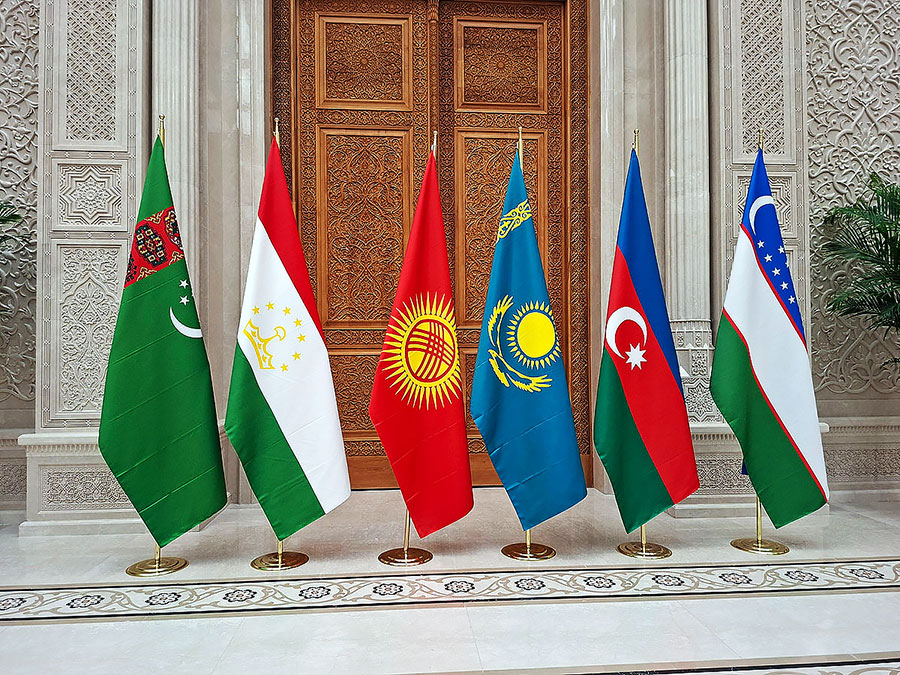
Today, it can already be stated that the initial stage of sovereign state-building and the emotional uplift that followed the independence of the Central Asian states has gradually given way to an understanding of the objective necessity of regional integration in order to address common transnational challenges. The evolution of statehood in the Central Asian countries has progressed from the isolated strengthening of national sovereignty during the first years of independence to the pragmatic realization that the region’s sustainable development is impossible without coordinated joint efforts. The initial impulse toward disintegration and isolated nation-building has been replaced by an understanding of the inseparable interconnectedness of the countries of the region, creating a demand for deep cooperation. Since then, the states of the region have taken three major steps in this direction.
The First Step. Within this demand, the issue of developing trust—or, more precisely, trust-based interstate relations—came to the forefront as a necessary condition. It was precisely this issue that was addressed at the meeting of the heads of state of the region held eight years ago in Astana, where the foundations of the “CA-5” format were laid. At that time, the key objectives of the new framework were to establish stable, trust-based relations among the countries of the region, coordinate efforts in the foreign policy sphere, resolve long-standing pressing issues, and eliminate various bureaucratic and legal obstacles in bilateral relations.
The seven meetings of Central Asian leaders held since then have contributed, for example, to resolving issues related to the delimitation and demarcation of state borders, establishing mechanisms for the management of water and energy resources, increasing mutual trade, creating joint transport and logistics corridors, and jointly countering transboundary threats, terrorism, extremism, and instability. None of these advances would have been possible without the shared understanding—without exception—of the importance of mutual trust and the urgent need for joint efforts in addressing the same transnational challenges.
Over the past few years, regional cooperation has reached a qualitatively new level, facilitated by historic agreements on state borders and the strengthening of mutual trust. This has also been reinforced by the region’s growing political weight.
A particularly significant achievement at this stage was that, as a result of coordinated efforts, the development of a unified position, and the region speaking with one voice on the international stage, the “CA-5” format effectively acquired the addition of “plus.” The transformation into the “CA-5 Plus” platform enabled the region to negotiate with global players as a cohesive and unified political force. The Consultative Meetings of the “CA-5 Plus” format, which subsequently became regular, transformed Central Asia from a group of neighboring states into a stable political and economic region with its own interests and development priorities.
At this point, the grouping approached its logical second step. Regular exchanges of views among the leaders of the Central Asian countries on the most pressing issues led to the realization that the joint development of transit corridors and energy routes would require moving beyond the narrow framework of intra-regional cooperation toward the broader global trading system and interregional ties.
In this regard, the close observation by the Central Asian countries of Azerbaijan, and in turn Baku’s growing interest in the new “CA-5 Plus” platform, played a certain role over a relatively short period of time. Azerbaijan’s accession to the format took place gradually through integration into the region’s key platform—the Consultative Meetings of the Heads of State of Central Asia. Initially, it participated as an “honored guest.” The official announcement of Baku’s full-fledged entry into the regional platform was made in Tashkent during the Seventh Consultative Meeting.
The inclusion of Azerbaijan in the Central Asian five-party platform changed the geopolitical and economic architecture of both the South Caucasus and Central Asia. For the CA-5 countries, Baku’s capabilities open the “gateway” to Europe, while the integration of transport infrastructure makes it possible to build a unified logistics chain for the transit of the region’s goods to global markets.
Moreover, the already established CA-6 format strengthens the region’s agency in its dialogue with the world’s major centers of power. The region now acts not as a collection of separate states but as a single economic and logistics bloc. The seemingly rapid and effortless accession of Azerbaijan can be explained simply by the long-standing ties that already existed among the countries, as well as their shared mentality and common interests.
It can be stated with a high degree of confidence that the meeting of the CA-6 leaders held in Cholpon-Ata at the end of July this year became a kind of third step in strengthening trust among the countries. This is evidenced, first and foremost, by the Cholpon-Ata Declaration, signed by all six leaders—a document that officially enshrined a high level of mutual trust. It is also worth noting that informal contacts are valuable not in themselves but because they develop into real agreements and practical arrangements. It should also be added that the transition to the practice of informal consultative meetings among the leaders of the Central Asian countries (Kazakhstan, Kyrgyzstan, Tajikistan, Turkmenistan, and Uzbekistan), with the participation of the President of Azerbaijan, also marks a large-scale transformation of the geopolitical and economic map of Eurasia. This forward movement is yet another confirmation of the highest degree of trust among the leaders of the six states. In addition, informal consultative meetings underscore the leaders’ commitment to efficiency and pragmatism in their relations. This format provides additional opportunities to discuss sensitive issues—security, logistics, water management, and energy—without the constraints of rigid bureaucratic procedures. Such an approach also makes it possible to find compromises quickly and coordinate actions amid a rapidly changing global environment.
So, what has the large-scale transformation of the “CA-5” format brought, and what will it bring in the future? First, it reflects the transition of the Central Asian states from fragmented bilateral relations and dependence on external geopolitical centers toward regional agency and deep integration. Second, the transformation is gradually turning Central Asia from an “object” of the foreign policy of major powers into an independent, strong, and united player on the global stage.
It is also important that the regular summits of the Central Asian heads of state have become the principal mechanism for making strategic decisions without the need for mediation by external powers. The CA-6 countries have gained a genuine opportunity to coordinate infrastructure development in order to secure their role as the key bridge between Asia and Europe.
Another important trend is that the CA-6 countries are gradually moving away from the role of mere exporters of raw materials (oil and gas) toward deep processing and the creation of high value-added products within the region. For example, the joint processing of oil and gas using the experience and capacities of Turkmenistan, Kazakhstan, and Azerbaijan, combined with existing logistics capabilities (the ports of Turkmenbashi and Baku), can guarantee the energy and food security of all countries within the format. Finally, the process of delimitation and demarcation of borders—which for decades served as a source of local conflicts—is nearing completion. Equally important is the joint response to transnational threats, drug trafficking, and other common challenges.
The Cholpon-Ata meeting became a kind of “synchronization of watches” ahead of the Eighth Official Consultative Meeting of the Heads of State of Central Asia and Azerbaijan, scheduled for 8 October 2026 on Turkmenistan’s Caspian coast, in the Avaza National Tourist Zone. There is no doubt that this meeting, during which the leaders will address issues of regional security, trade and economic cooperation, energy, transport logistics, environmental protection, water resources, humanitarian cooperation, and youth exchanges, will further strengthen the trust-based ties among the countries of the region and Azerbaijan.