



The painting “Portrait of Composer Nury Halmamedov” is part of one of the permanent exhibitions at the State Museum of Fine Arts of Turkmenistan. Its author is the Honored Art Worker of Turkmenistan, Mamed Mamedov.
Many paintings have been created about the brilliant Turkmen composer. Among them are works by renowned artists such as Durdy Bayramov, Yarly Bayramov, Abdulla Abdullaev, and Hajy Atakgaev. Nevertheless, to this day, the most successful portrait of Nury Halmamedov is considered to be the work of Mamed Mamedov. It is enough to look at this painting just once for it to remain forever in one’s memory. This year marks the 60th anniversary of the painting “Portrait of Composer Nury Halmamedov.”
The following description of this painting was given by Azat Annaev, an art critic and Honored Cultural Worker of Turkmenistan:
“In Mamed Mamedov’s painting ‘Portrait of Composer Nury Halmamedov,’ the musician is depicted against the background of a rural landscape, with ancient mulberry trees standing in the distance. Nury Halmamedov himself, leaning against an old mulberry tree, seems to physically sense the vibration of its trunk. The composer appears to be listening to the rustling of the tree’s swaying branches, to the sounds of autumn nature, and clearly perceiving a whirlwind of new melodies.
The painter portrayed Nury Halmamedov wearing a bright red shirt, a color that sounds like the main chord in an autumn symphony, where every detail of the landscape plays its own part while preserving the unity of the composition and the color scheme of the work. The contrast between the intense red color and the subdued tones of autumn continues in the red-orange strip of the horizon, symbolizing the inexhaustible forces of nature and the creative passion of the great composer.
The crimson line of the horizon continues endlessly, like life itself and like inspiration. The artist succeeded in capturing a moment of this never-ending process called life. And this is the life of a genius!
However, there are two interpretations of the meaning of this painting. According to the first, the composer is depicted at the moment of creative contemplation while creating another masterpiece. This interpretation is supported by the background of the painting, which shows a rural landscape with five mulberry trees and growing reeds. It symbolizes the unity of the nature of his native land and the composer’s talent.
The second version is connected with the memories of Evgeny Michelson, an Honored Art Worker of Turkmenistan and a famous animator, which he shared in Jamila Kurbanova’s book ‘Nury Halmämmet’: during the discussion of his new composition by the admissions committee, the maestro anxiously left the hall and, while waiting for the verdict, stood alone in the courtyard under a tree, resting his hand against its trunk.
The emotional tension and deep feelings conveyed so accurately by the artist correspond to the moment described by E. Michelson. However, in his memories he refers to a courtyard that, theoretically, should have appeared in the background, while the painting instead depicts a rural landscape.
If this detail is not viewed formally, one can uncover the secret behind the attraction of this portrait. Unlike other artists who primarily sought to express the power of the great composer’s talent, Mamed Mamedov presented the maestro in a different way – sincere, vulnerable, and deeply concerned about his creation. This is a side of the composer that we do not usually know. According to the memories of those around him, he was a person whose behavior did not fit into ordinary frameworks, and at the same time a genius to whom everything was forgiven. Therefore, supporters of this interpretation view Mamed Mamedov’s ‘Portrait of Composer Nury Halmamedov’ as the discovery of another, unknown side of Nury Halmamedov.
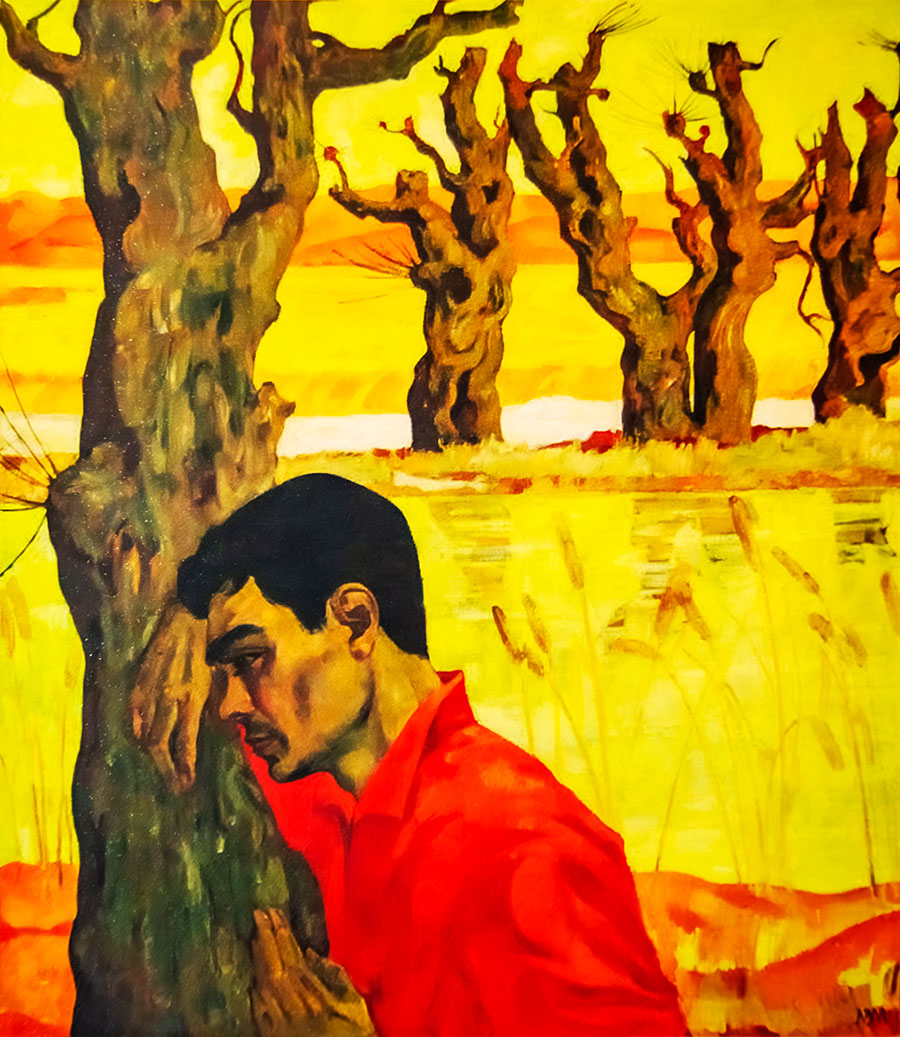
The artist draws a parallel between the maestro and the mulberry tree, which is rightly called a blessed tree by the people. The tree is mercilessly cut back to provide food for silkworms, yet, like the Phoenix bird, it grows new branches again. And what indescribable joy the fruits of this tree bring to birds and children! The mulberry tree may appear gnarled and sturdy, but at the same time it possesses extraordinary charisma. In essence, the mulberry tree can be compared with the extraordinary personality of the brilliant composer.
The similarity between the destinies of the artist and the composer is striking: both were born in 1938, both lacked maternal warmth and were raised in an orphanage. Both received higher education at prestigious creative institutions in Russia. A true Turkmen far from his homeland becomes even more Turkmen: nostalgia intensifies the national identity. For creative people, this is reflected in their works, where the unique culture of their people is emphasized. The composer and the artist proved this through their own examples, creating divine music and impressive works of art.
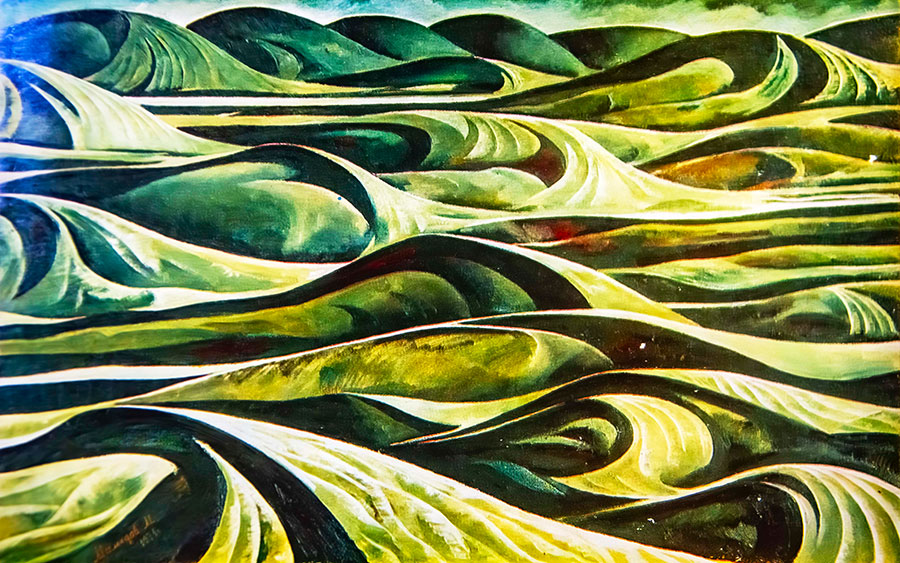
In 1964, Mamed Mamedov returned to Turkmenistan with a diploma from the Leningrad Institute of Painting, Sculpture and Architecture named after I. Repin, as well as with ideas, plans, and a thirst for creativity. One can say of Mamed Mamedov that he appeared at the right time and in the right place. The 1960s were a period of extraordinary growth for Turkmen painting. A generation of talented artists emerged. It is enough to recall the ‘Magnificent Seven’ – a group of seven Turkmen painters named so by art critic Galina Saurova. Mamed Mamedov was also a member of this group. At that time, these artists were considered avant-garde painters who brought a fresh perspective, new forms of self-expression, and different artistic approaches to the academic art of Turkmenistan.
Take, for example, the painting ‘Garagum.’ Mamed Mamedov depicted only a small fragment of one of the largest deserts on the planet and portrayed the succession of sand dunes on the canvas as waves of the ocean. He added a noble ochre color to the dull grey-brown tones, and the dunes seemed to ‘speak’ through their many curls and shapes. No one had depicted the Garagum Desert this way before him.
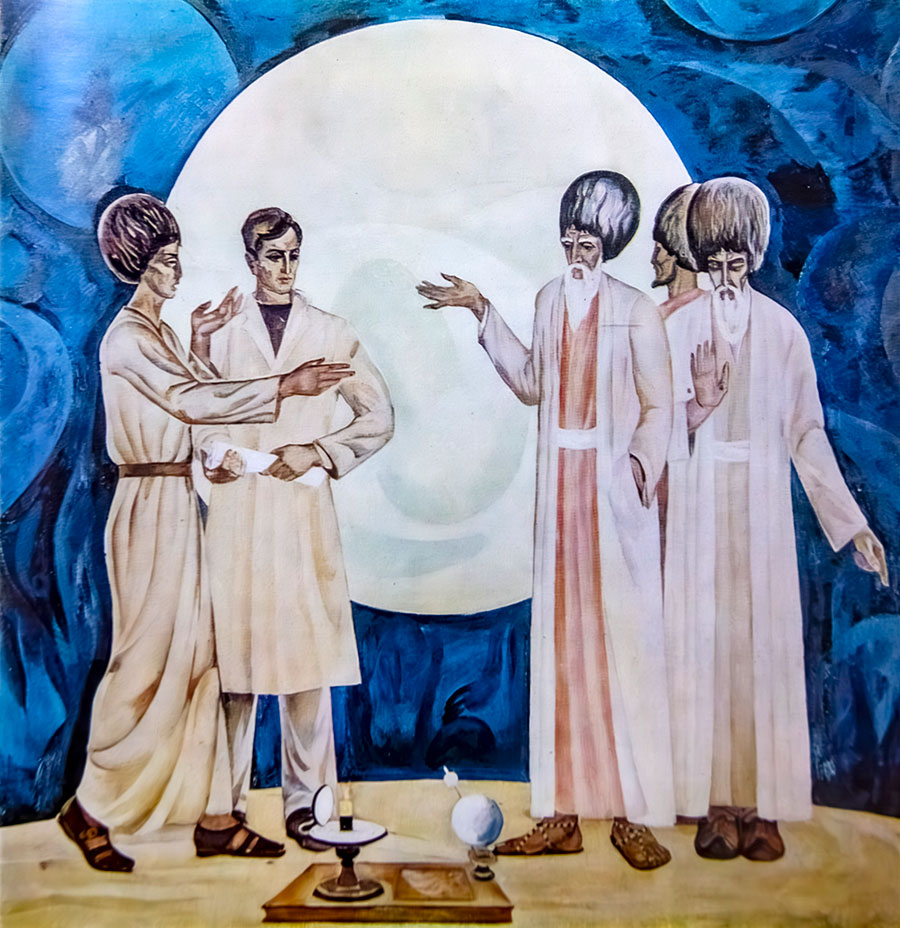
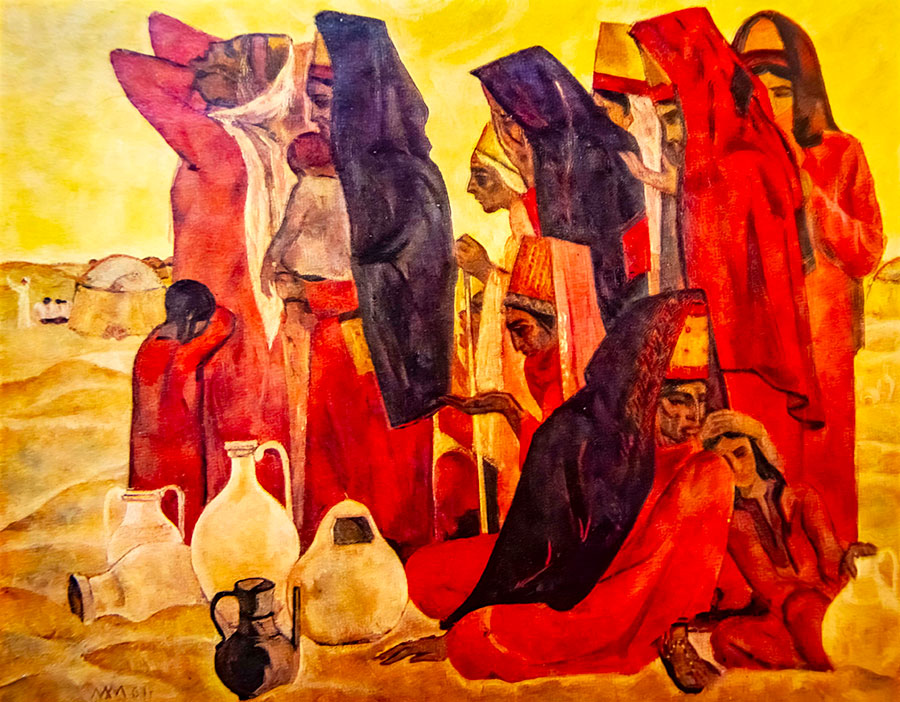
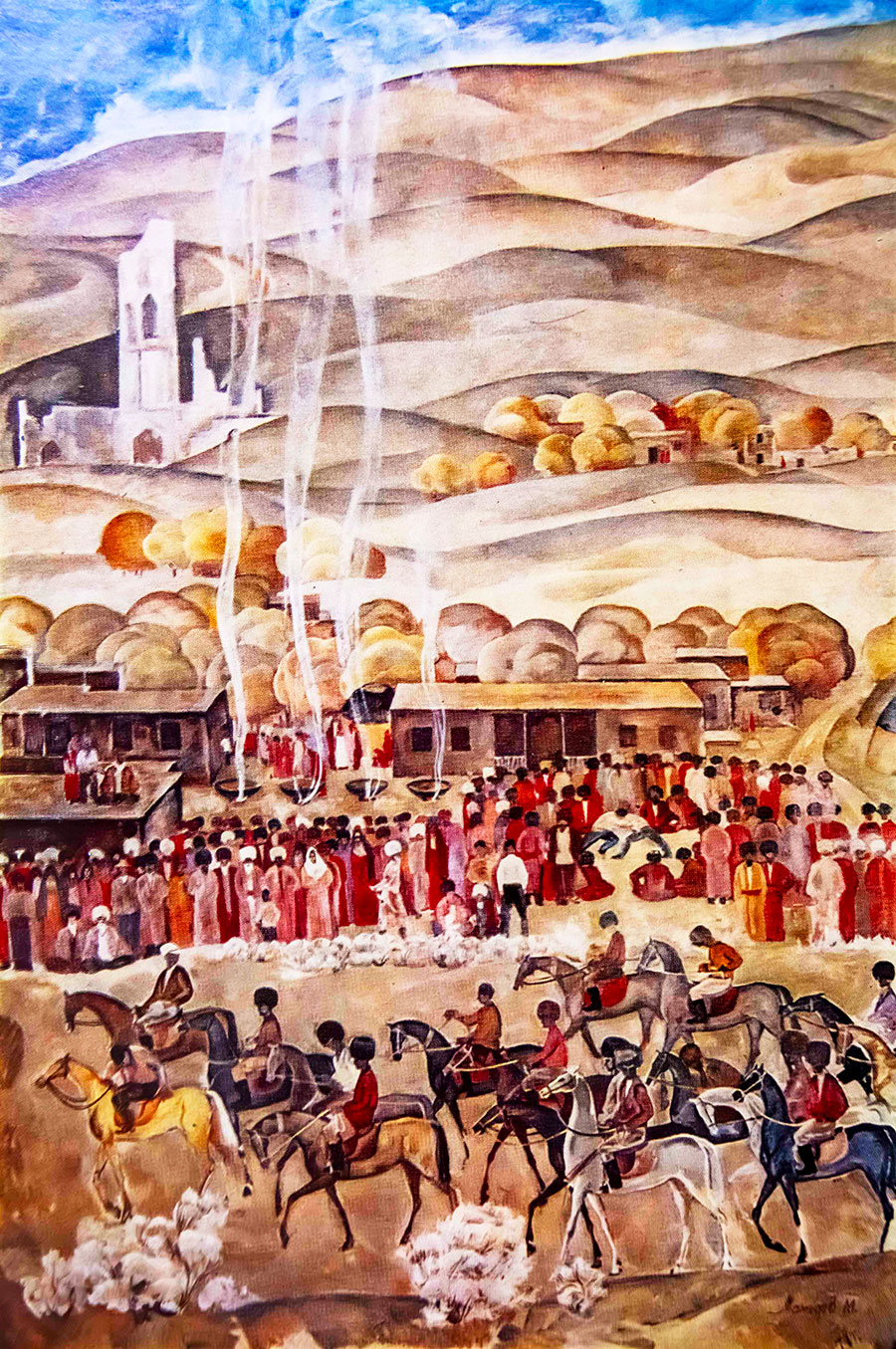
Artist Mamed Mamedov created many paintings well known to art lovers and preserved in the State Museum of Fine Arts. Among them are works such as ‘Prayer for Water,’ ‘Toy,’ ‘Conversation about the Universe,’ and others. It was the painting ‘Prayer for Water’ that brought the artist great fame. For many years, this work was considered the hallmark of Mamed Mamedov’s art. However, time has put everything in its proper place: thanks to the recognition of numerous admirers, the painting ‘Portrait of Composer Nury Halmamedov’ eventually took the leading place in the artist’s legacy.”
The painting “Portrait of Composer Nury Halmamedov” has outlived both the composer and the artist, yet it continues to inspire viewers with the sincerity of its emotions. There is much red color in it: it represents the passion without which there could be no great Nury Halmamedov. The genius of Turkmen music presses his cheek against the trunk of the mulberry tree, just as little children cling to their mother in search of protection. But Nury Halmamedov had no mother – he had Music, which flowed from his heart as a gift to his compatriots and to the entire world.