



The course of Azat Myradov’s life was determined by chance. One day, he happened to see a reproduction of Ilya Repin’s famous painting “Ivan the Terrible and His Son Ivan.” The boy was stunned: how could such complex emotions as fear, remorse and compassion be conveyed in a painting so convincingly that it seemed as though everything were happening before his very eyes? From that moment on, Azat decided to become an artist and never parted with his pencil and paper. His art teacher noticed Azat’s enthusiasm and did everything possible to support his talented pupil. Thanks to this encouragement and his diligent preparation, the graduate of a rural school in the Vekilbazar etrap entered the painting department of the E. Hommaev Music College in Mary in 1994.
The Mary school of painting has always been renowned for its outstanding masters. Azat was extremely fortunate to study under such professionals as Ayna Nuryeva and Gylychmyrat Gurbanov. He moved in the circles of renowned artists, visited their studios and became acquainted with their work. The Mary school of painting laid a solid foundation of knowledge and skills for the young artist. However, there is always room for improvement, so immediately after completing his studies, Azat Myradov entered the Faculty of Painting and Design at the State Academy of Arts of Turkmenistan.
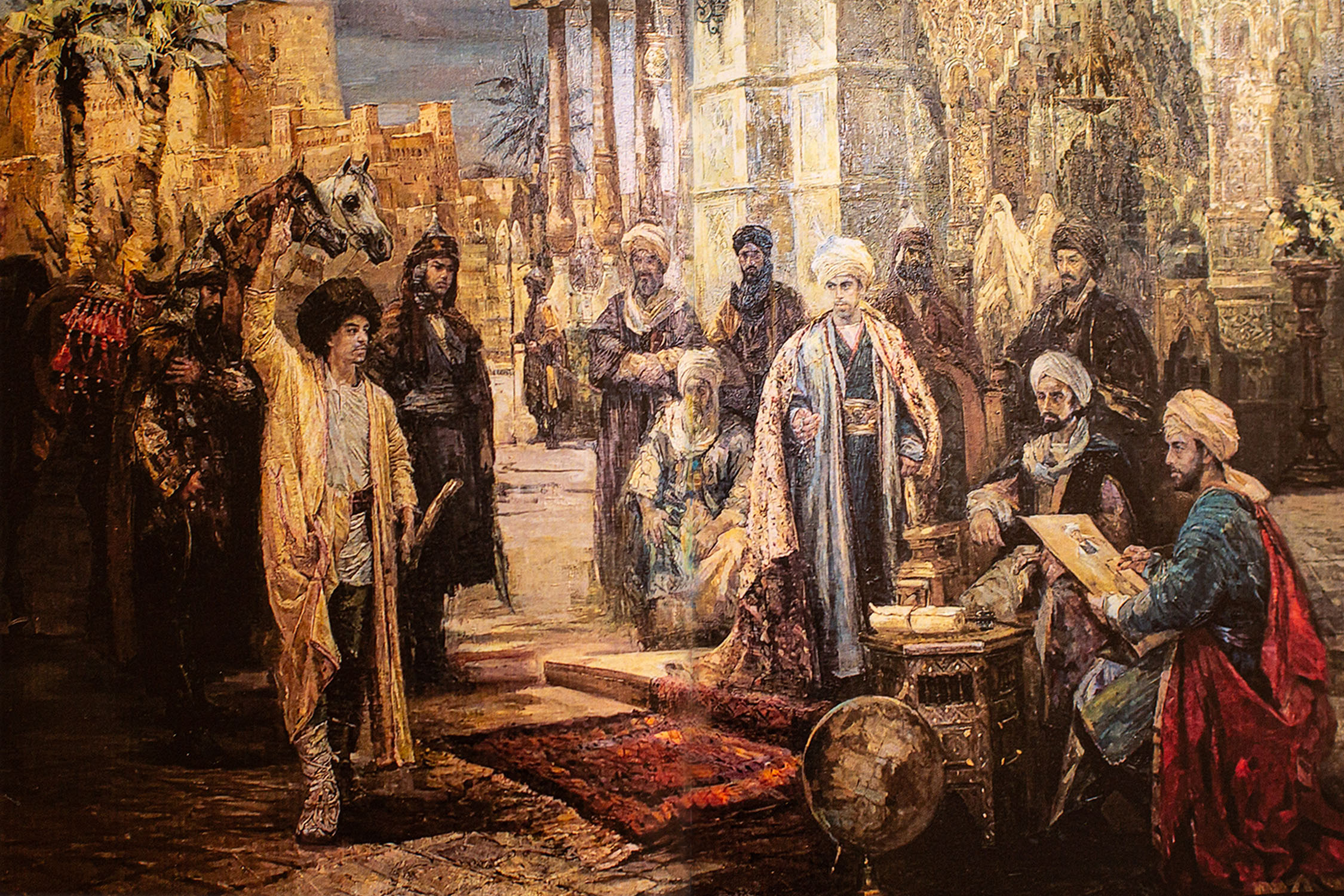
Once again, he was very fortunate: he joined the class of People’s Artist of Turkmenistan Chary Amangeldiyev. “He was a true artist,” recalls Azat Myradov. “He thought only about art, breathed it and spoke about it.” Most importantly, the master generously shared his accumulated knowledge with his talented students, including Azat. From his teacher, the young artist inherited a love of the historical genre and of the rich literary heritage of the Turkmen people, reflected in their legends and epics. “An artist must read a great deal so that his painting is not merely a picture, but a document truthfully illustrating a particular event,” Chary Amangeldiyev told his students.
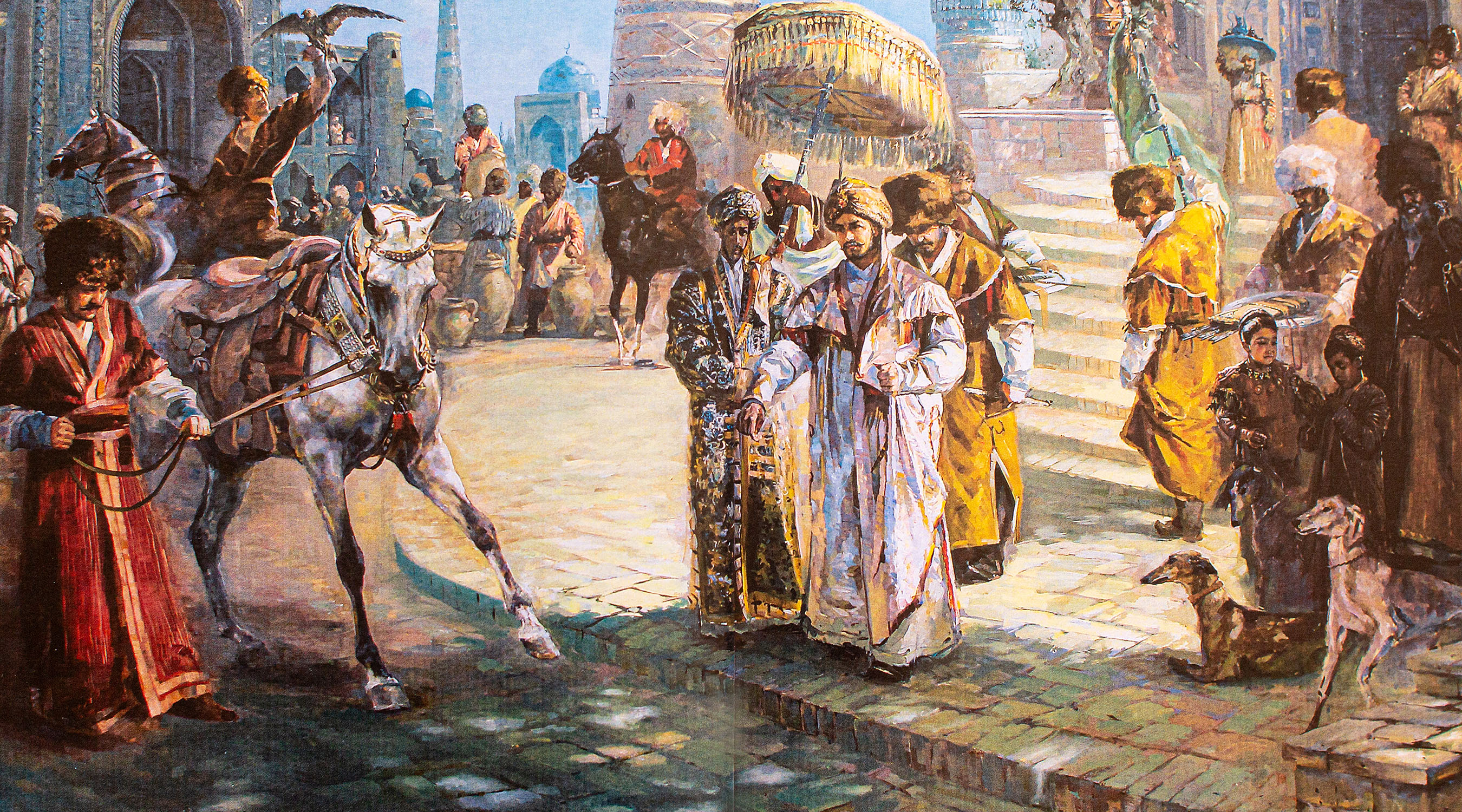
From his teacher, Azat Myradov inherited a passion for large-scale easel painting. His monumental canvases were too large for ordinary studios, so the Union of Artists of Turkmenistan provided him with a studio with a very high ceiling.
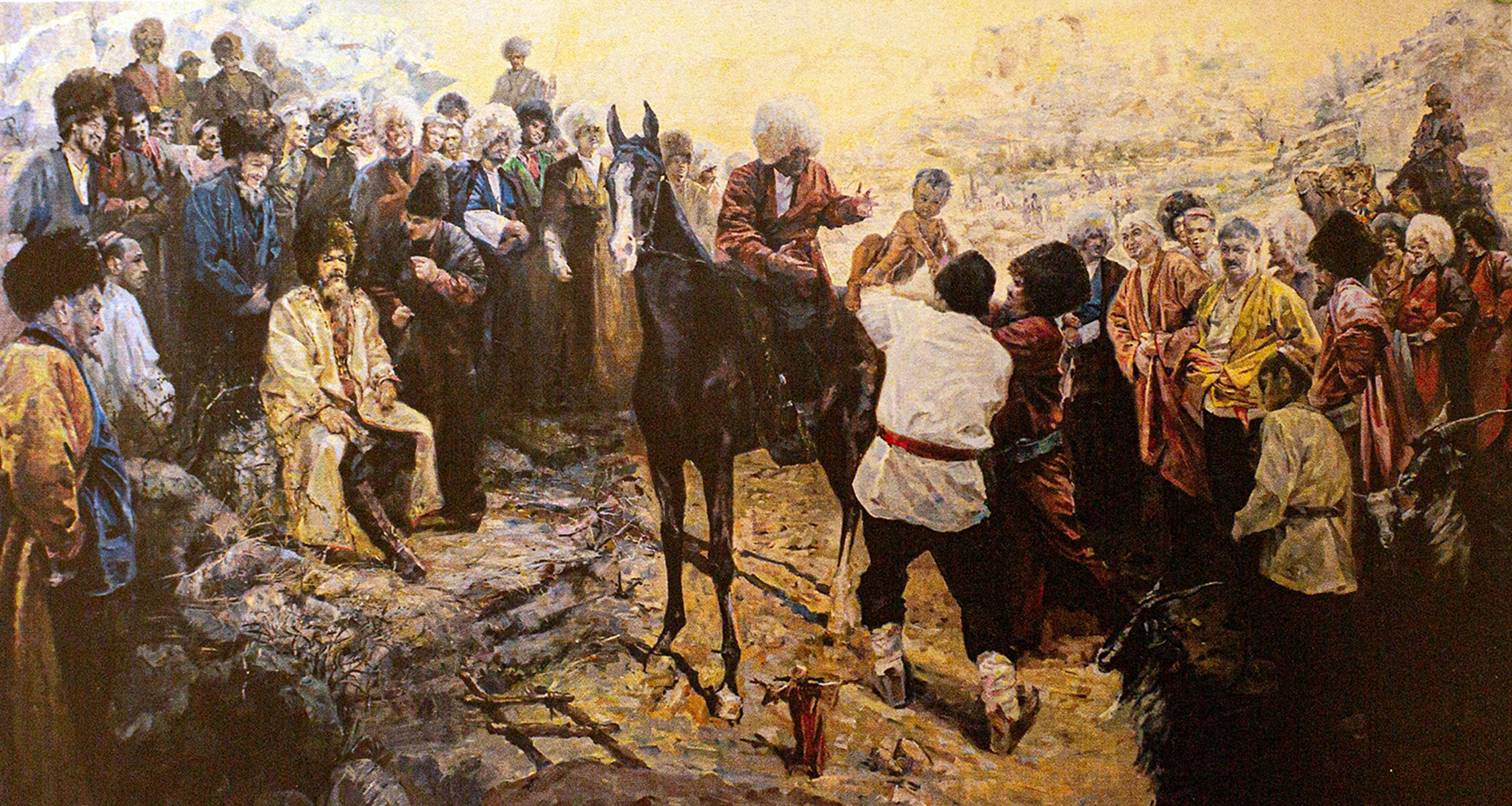
Azat Myradov’s works are captivating. The distinctive features of his artistic style are vividly revealed in his famous painting “The Second Birth of Gorogly.” In this work, the artist shifts the emphasis somewhat away from the main theme of this legendary story. Instead of focusing on the discovery of a living boy in a grave—which is itself a supernatural event—the painter concentrates on the moment when the child is handed over to Jygalybek so that his lineage may continue. It was this profound theme that inspired the artist most strongly.
The painting was created in accordance with the artistic principles of the very reproduction that had once determined Azat’s creative destiny. The artist succeeded in conveying the genuine emotions of each character. The work also reveals another distinctive feature of his style—its multitude of figures, which has become a hallmark of nearly all of the master’s works.
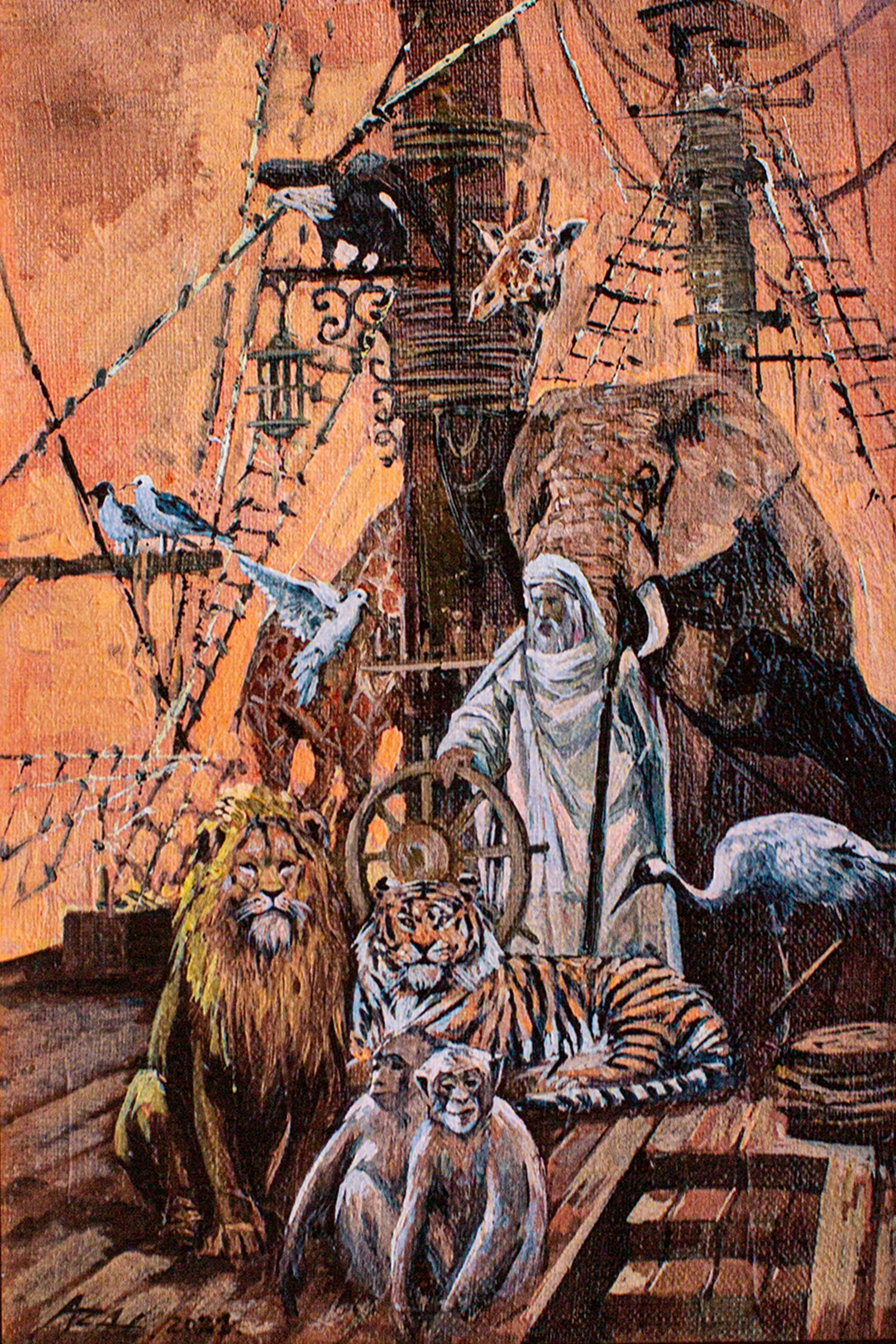
One of Azat Myradov’s major works is “Noah’s Ark.” Warned by God of the Great Flood, Noah built an ark and gathered representatives of every species of animal on Earth in pairs. In this way, Noah fulfilled the mission entrusted to him and, despite the impending end of the world, preserved life on Earth.
The main challenge Azat faced when creating this painting was deciding what nationality to give Noah: Greek, Arab or Israeli. The biblical account provided no answer. So Azat portrayed Noah as belonging to no particular nationality—the features of his face and his clothing could have belonged to an elderly man from any of these peoples.
There is another very important detail that the artist sought to convey to every viewer: the unity of all living beings in a moment of danger. Great anxiety and hope can be read in the eyes of every character in the painting. In the ark, all the animals have gathered around Noah; each longs to survive and ensure the continuation of its species on Earth.
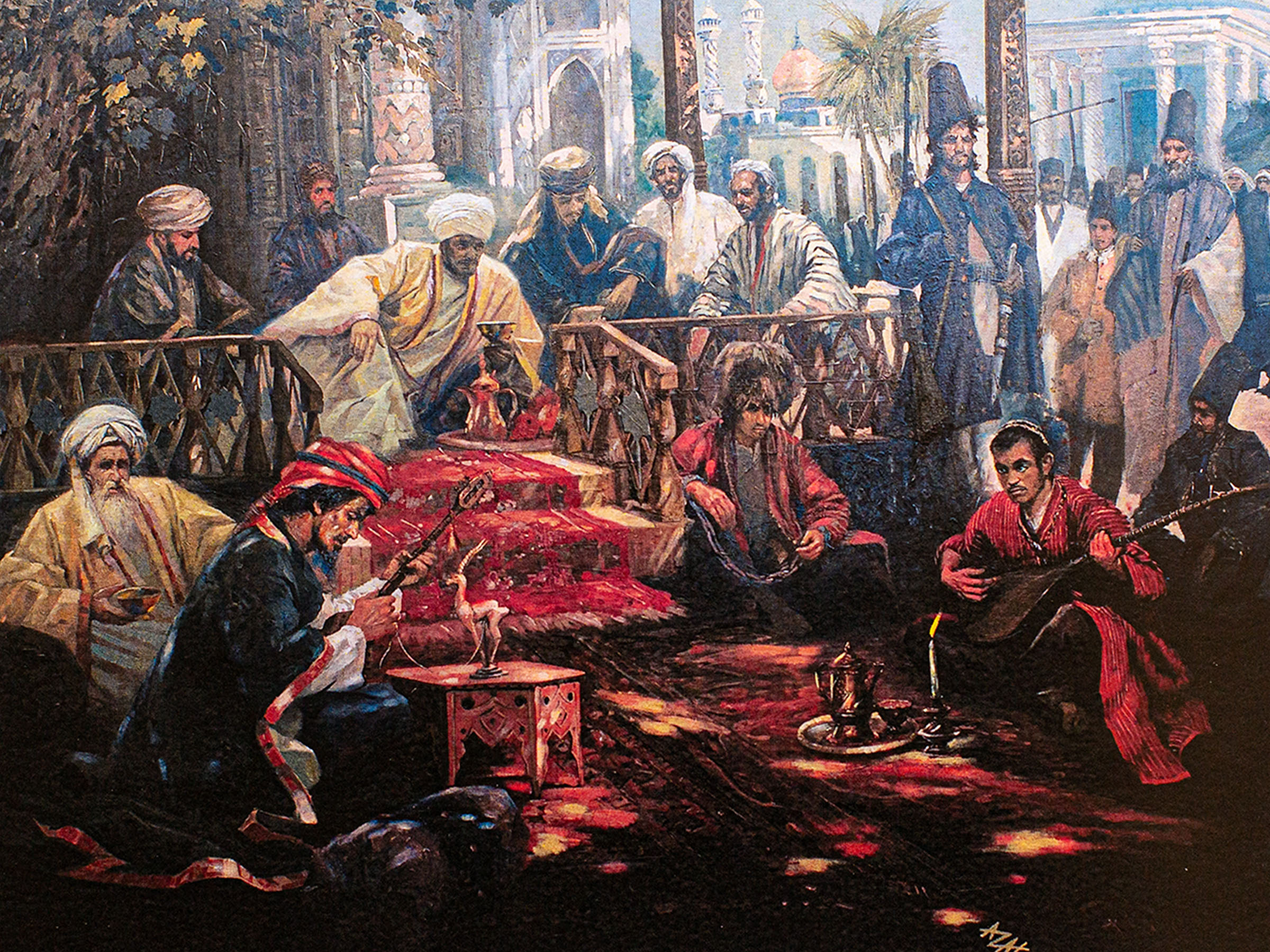
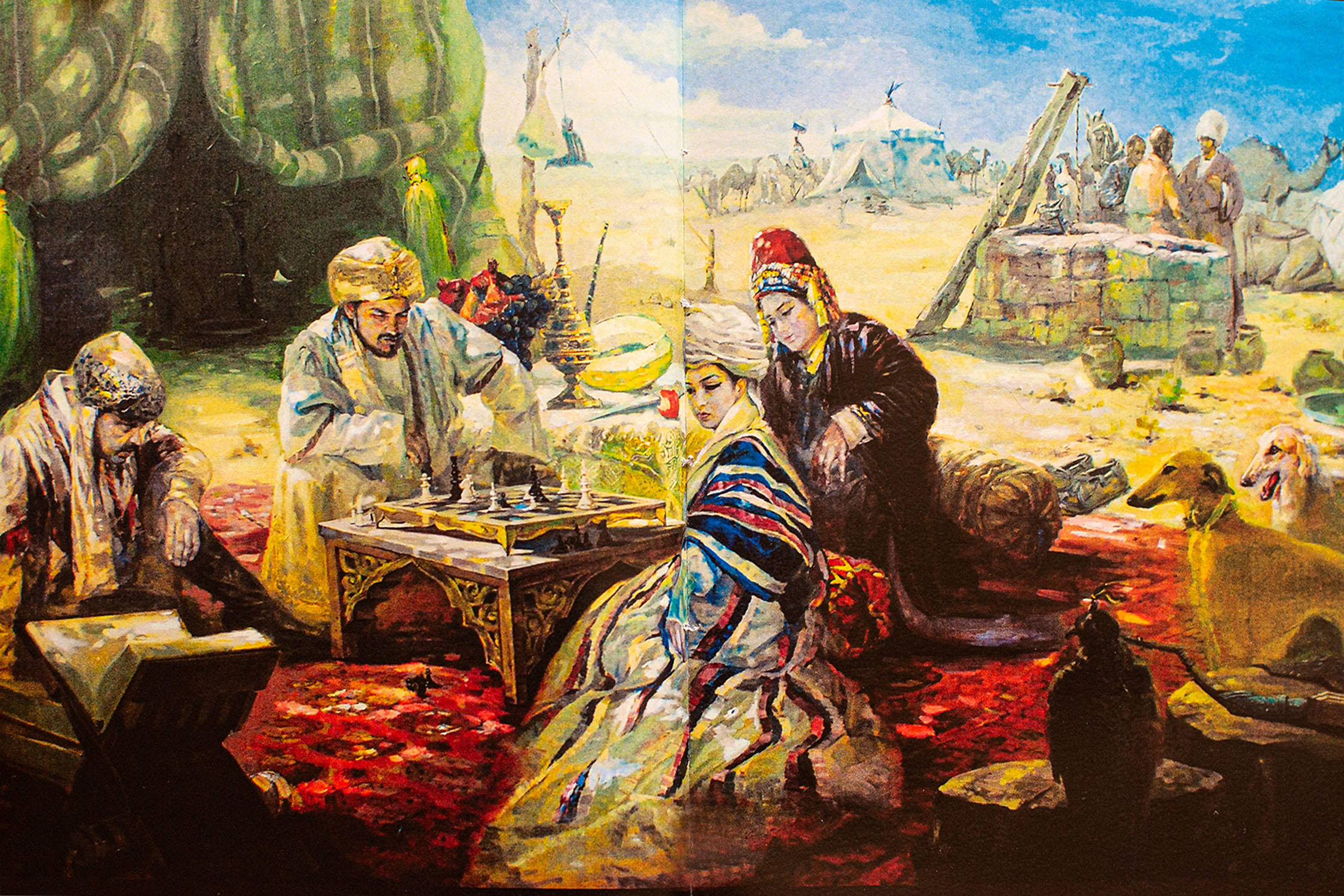
All of Azat Myradov’s works are profound in meaning and magnificent in execution. They include “Rovshan’s Trial,” “Shukur-Bakhshi,” “The Last Decree,” “Between Truth and Falsehood,” “From the Story of Yusuf-Ahmed,” “Sultan Baybars,” “The Darkness That Lasted a Long Time,” and others. However, to date, the most monumental of his works in terms of its subject matter is perhaps the painting “If I Go with My Faith, If I See the Kaaba,” named after a line from a poem by Magtymguly.
Azat Myradov depicted a bird’s-eye view of the Kaaba and pilgrims performing the sacred Hajj in Mecca. No one had ever portrayed the Kaaba in this way before! When asked the frequent question, “How did you manage to see the Kaaba from above?”, the artist invariably replies, “I looked at it through the eyes of Allah.”
Azat Myradov visited Mecca, where he took numerous photographs and made sketches. Two years have passed, but the impressions left by this sacred place still remain with him.
Azat is currently completing a second painting dedicated to Mecca, entitled “The Sacred Kaaba.” During his pilgrimage, the artist, together with other believers, performed the ritual of making seven circuits around the holy site. In this diverse multitude of people, all distinctions disappear: there is no division by age, nationality or profession. Before Allah, everyone is equal.
Azat conveyed his profound spiritual feelings in the triptych “The Sacred Kaaba.” The painting is monochromatic, executed in white and shades of grey. Yet despite its restrained palette, the canvas is filled with an inner light in which the artist’s soul seems to sing.
In general, paintings always speak eloquently about their creator. Azat Myradov is invariably drawn to heroic figures who have brought lasting glory to the Turkmen people, the East and the entire world. To become the hero of one of his paintings, it is not enough simply to be a good person. One must accomplish a heroic deed and be an extraordinary individual—a superhero, as our contemporaries might put it. And with sincere, almost boyish admiration, the artist celebrates on his canvases the courage, wisdom, determination and nobility of his characters.
As a teacher at the State Academy of Arts of Turkmenistan, Azat Myradov passes on his experience to talented young people. The union of a gifted master and capable students is a guarantee of the successful development of fine art in Turkmenistan.