


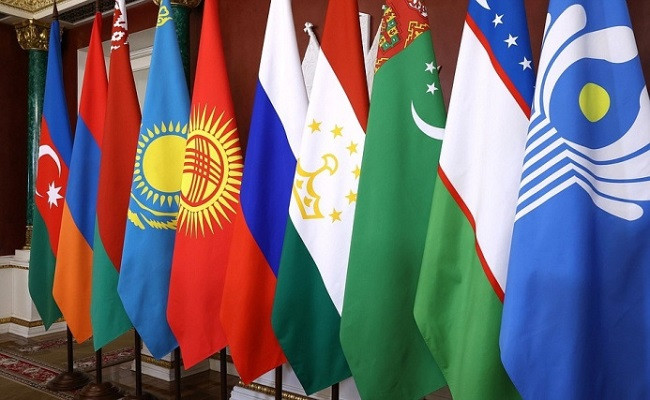
Preparations for the key events of Turkmenistan’s Chairmanship of the Commonwealth of Independent States (CIS) in 2026 have entered their final stage. The events will take place in early October of this year in the Avaza National Tourist Zone. Despite its associated status, Turkmenistan has successfully chaired the Commonwealth on several occasions, including in 2012 and 2019, initiating the adoption of such conceptual documents as the Declaration on Strategic Economic Cooperation among CIS Member States (2019).
It should be noted that our country occupies a special place within the CIS framework. Although it has not been a full member since 2005, the country has retained the status of an associate member and remains an important economic and logistical partner of the organization. The chronology of the country’s participation in the CIS shows that from 1991 to 2005, having ratified the Alma-Ata Declaration, Turkmenistan participated in the CIS as a founding state/member of the Commonwealth. Following the CIS summit in Kazan in 2005, the country acquired associate membership status. This decision was driven by the consolidation of the concept of Permanent Neutrality, recognized by the United Nations in 1995, which precludes participation in blocs and supranational political and military structures. Since then, while selectively participating in CIS agreements, Ashgabat has primarily given preference to bilateral formats or specific multilateral economic relations. The main areas of cooperation are transport and logistics, energy, humanitarian cooperation, and environmental cooperation.
According to experts and analysts from across the post-Soviet region, Turkmenistan, owing to its unique geopolitical and geographical position, serves as a natural bridge at the intersection of Central Asia, the Caspian basin, and the Commonwealth of Independent States. This role rests on three key pillars: geo-economics, infrastructure and logistics projects, and the concept of positive neutrality. The country connects the Central Asian states of Uzbekistan, Tajikistan, and Kyrgyzstan with the Caspian ports of Azerbaijan, Russia, and Iran. Bordering Iran and Afghanistan, Turkmenistan is a key transit hub for CIS countries seeking access to the markets of the Middle East, South Asia, and the Persian Gulf.
Possessing such opportunities within the CIS framework, Ashgabat is actively pursuing a strategy aimed at transforming the country into a multimodal transport hub of Eurasian significance. The largest maritime hub on the Caspian Sea—the Turkmenbashi International Seaport—provides CIS and Central Asian countries with access to the Caucasus region and the Black Sea. Meanwhile, the Kazakhstan–Turkmenistan–Iran railway line, the eastern branch of the North–South International Transport Corridor, directly connects the markets of the Russian Federation and other CIS states with Iran and the ports of the Indian Ocean. In addition, the Uzbekistan–Turkmenistan–Iran–Oman transport corridor links the Central Asian region with the Middle East.
Turkmenistan’s UN-recognized status of permanent neutrality also enables it to serve as a universal platform for dialogue among the countries of the Commonwealth. In conditions of geopolitical tension, the status of a neutral state makes Turkmenistan an optimal partner for both CIS and Eurasian Economic Union (EAEU) countries, as well as the Caspian littoral states—Russia, Azerbaijan, Iran, and Kazakhstan. In this regard, Ashgabat has repeatedly served as a venue for peace negotiations and international forums on security and sustainable development in Central Asia and the Caspian region.
At the present stage of its participation in the CIS, Turkmenistan demonstrates how a state can maintain economic partnerships with all members of the Commonwealth without assuming obligations in the political and security spheres. The country’s neutral status protects its sovereignty from supranational influence. As a result of its neutrality, multilateral CIS agreements often serve as a “framework” for Turkmenistan, while the principal economic and energy-related benefits are achieved through direct bilateral arrangements with key partners, including the Russian Federation, Uzbekistan, and Kazakhstan.
The analysis of experts and political scientists indicates that Turkmenistan’s participation in the CIS is shaped by the intersection of two theoretical concepts in international politics: foreign-policy neutrality and the theory of flexible, or multi-level, integration. The use of these approaches makes it possible to explain why Ashgabat does not isolate itself from the Commonwealth but instead develops a distinctive and pragmatic model of participation. Turkmenistan’s neutrality is not merely a geopolitical position but a strict legal and political doctrine, recognized by the United Nations in 1995, 2015, and 2025, which defines the limits of the state’s participation in international organizations.
It is worth recalling the fundamental principles underlying the country’s participation in the CIS. These include refraining from participation in military-political alliances, non-accession to supranational bodies, maintaining an equidistant position, and developing its peacekeeping potential.
The transition to associate membership once allowed Turkmenistan to preserve its presence within the Commonwealth without violating its doctrine of neutrality. Under the theory of flexible integration, certain institutions of a multilateral association are often replaced by a network of bilateral agreements. Turkmenistan’s interaction with the CIS is, in fact, a practical embodiment of this concept, in which the boundaries of participation are strictly determined by the legal doctrine of permanent neutrality. This enables Ashgabat to maintain its status as a key transport and energy hub of the Commonwealth while avoiding political and military obligations. This is one of the principal elements that makes Turkmenistan’s vector of participation in the Commonwealth unique.
Throughout the 1990s and the early 2000s, Turkmenistan consistently refrained from ratifying the CIS Charter and did not participate in agreements involving the establishment of supranational structures or military alliances, including the 1992 Collective Security Treaty. At the same time, the transition to associate membership was neither a “demarche” nor a withdrawal from the CIS. Rather, it was a step toward legally consolidating the country’s status of permanent neutrality, recognized by the United Nations, without severing its economic and logistical ties with the Commonwealth’s member states. In this respect, Turkmenistan’s experience demonstrates the considerable flexibility of the CIS framework. The separation of economic and military-political components allows states with neutral status to remain important elements of macro-regional integration. In implementing its policy of neutrality, Turkmenistan prefers to transform multilateral CIS charter-based initiatives into concrete bilateral economic and energy projects with participating states.
For example, Turkmenistan’s participation in the CIS Economic Development Strategy through 2030 and its transport and logistics initiatives constitute the practical core of Ashgabat’s interaction with the Commonwealth. Amid the restructuring of global logistics chains, Turkmenistan’s transport potential is acquiring decisive importance for all CIS states.
Within the framework of this Strategy, Turkmenistan performs the role of an “infrastructure locomotive” in the southern and Caspian directions. The implementation of Ashgabat’s transport initiatives—primarily the eastern section of the North–South International Transport Corridor and the Turkmenbashi Port—enables the Commonwealth’s member states to overcome geographical and geopolitical constraints by providing unhindered access to the markets of South Asia and the Middle East.
It is evident that Turkmenistan’s model of interaction with the Commonwealth makes it possible to derive tangible economic benefits without assuming rigid supranational obligations. This strategy accurately reflects the essence of Ashgabat’s foreign policy. The country has developed a unique form of cooperation in which geopolitical constraints have been transformed into economic advantages.
Thus, Turkmenistan’s model of participation in the CIS represents a classic example of flexible and selective pragmatism. Relying on its internationally recognized status of permanent neutrality and associate membership, Ashgabat successfully derives maximum economic and logistical benefits from integration processes within the Commonwealth while completely avoiding political risks and binding supranational obligations.
Looking ahead to the medium-term development of relations between Turkmenistan and the CIS countries, it can be assumed that these relations will be shaped by three main factors: the status of permanent neutrality, Ashgabat’s growing role as a Eurasian transit hub, and the practical results of cooperation.
It may be expected that, in the future, relations between Turkmenistan and the CIS will ultimately take the form of a symbiosis between a neutral diplomatic status and Ashgabat’s high demand as a transport and economic hub. Without changing its legal status as an associate member, Turkmenistan will continue to act as one of the key drivers of practical, economically grounded integration within the Commonwealth.