




Within the framework of the V International Theatre Festival "Theatrical Art of the Happy Epoch» a showing of the performance "The Piebald Dog Running Along the Edge of the Sea" took place on the stage of the Alp Arslan National Drama Theatre.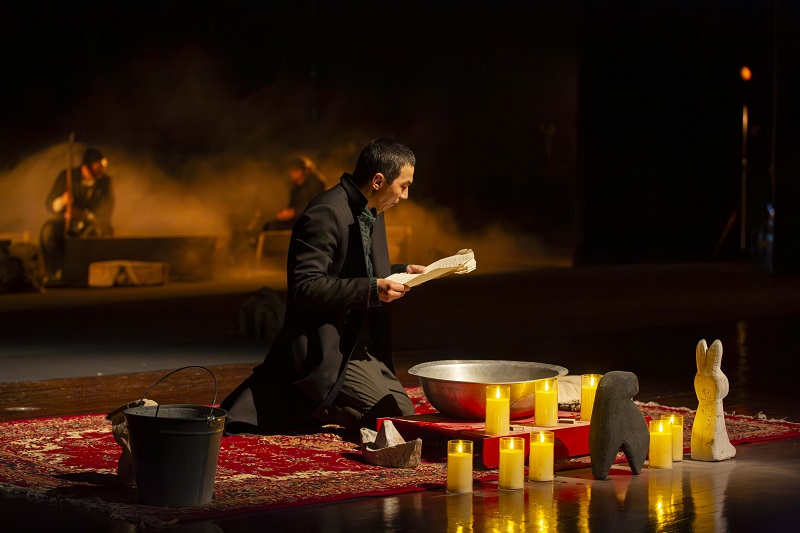
The production of the Kostanay Regional Kazakh Drama Theatre named after Ilyas Omarov is based on the novella of the same name by the Kyrgyz and Soviet writer Chingiz Aitmatov. It is noteworthy that the director of the project was the Belarusian stage director Daniil Filippovich, invited by the theatre's director Askhat Zautbek. The performance turned out to be truly international – an international union of directing and the Kazakh acting school created a powerful creative synthesis.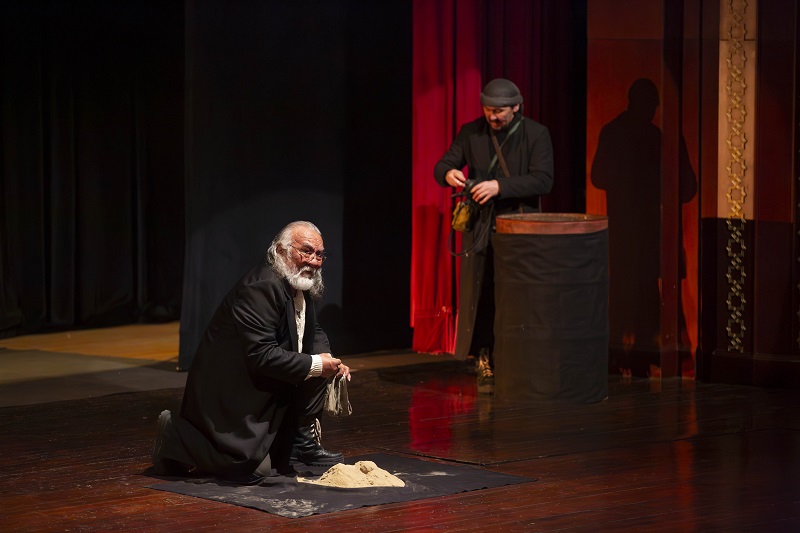
The dramatic story tells of the coming of age of the boy Kirisk, the primordial struggle of man against the harsh elements and the deep wisdom of the northern Nivkh people.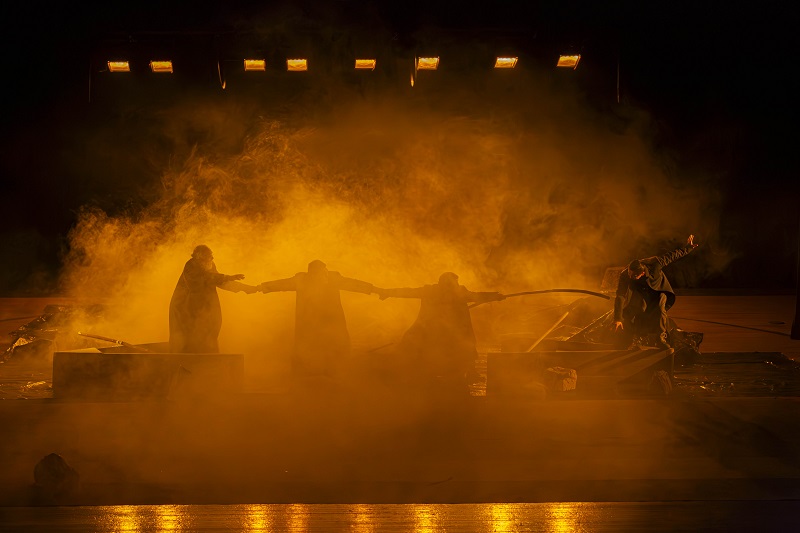
The elder of the clan, the wise Organ (Konnyspek Begaidarov), his son Emraiyn (Bakytzhan Tangatkanuly) and brother Mylgun (Erkan Barakov) take little Kirisk (Olzhas Begaidar) out to the open sea for the first time. This is an important rite of initiation. The boy must undergo the test, become a real hunter and obtain his first seal. From the shore, they are watched over by their native cape – the Piebald Dog.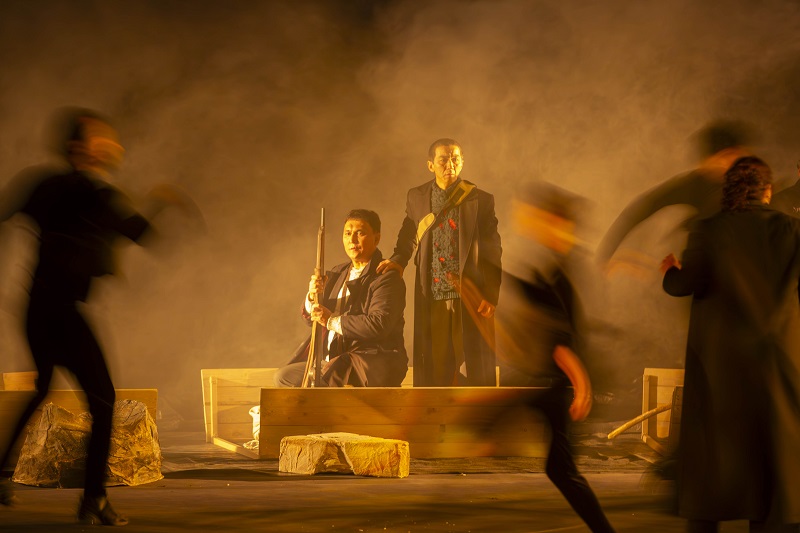
A hunt that is successful at first turns into a tragedy. A thick, impenetrable fog descends on the sea, and the boat loses its bearings. The hunters find themselves cut off from land in the boundless water without any understanding of where to sail. In order to preserve the precious drops of water for little Kirisk and give him a chance to survive, the grown men one after another make the decision to go into the deep.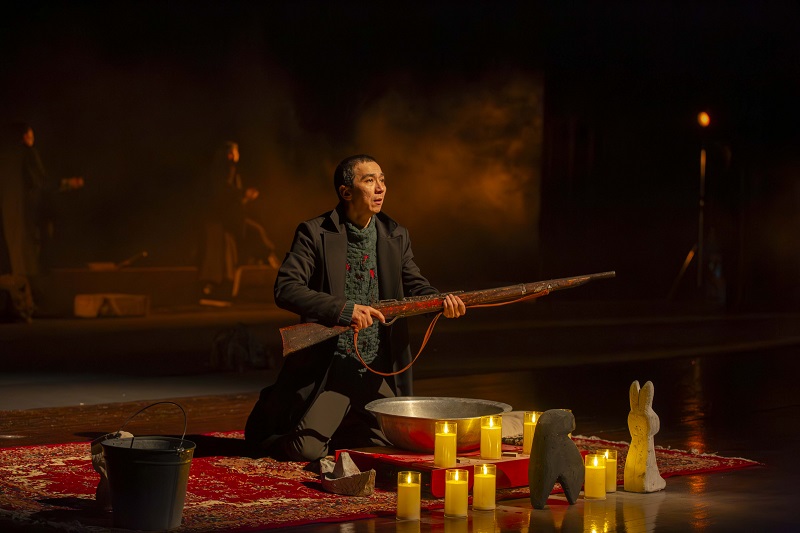
Left completely alone in the boat, the exhausted Kirisk struggles with hallucinations, fear and loneliness. In the end, the fog dissipates, and the native shore appears again above the horizon.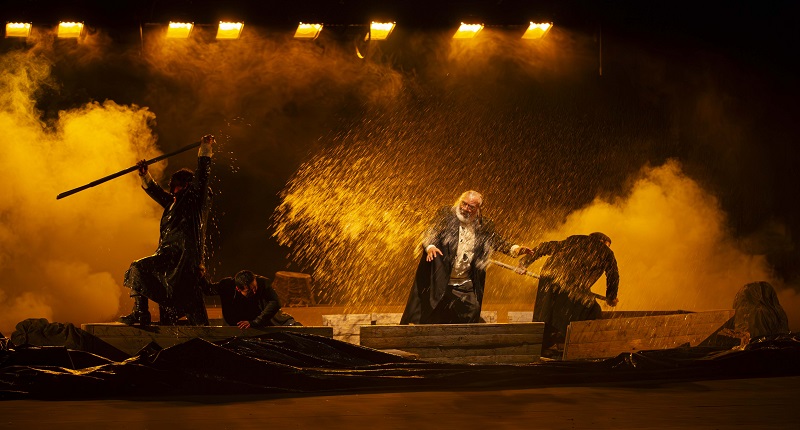
If in Aitmatov's novella the cape Piebald Dog is a motionless landmark, the land that waits for the hunters, then in the space of the stage this image is recreated through the physicality of the actors. The production in the genre of parable turns choreography into a visual embodiment of inner struggle, fate and the laws of nature. The physical images and metaphorical symbols of the performance reveal the embedded meanings with a deep emotional subtext.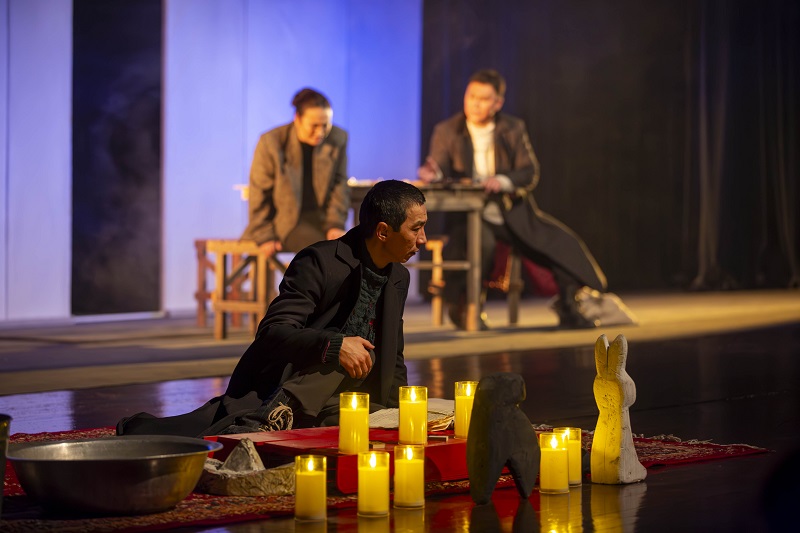
The "dogs" in the choreographic interludes are not simply animals, but zoomorphic spirits of the elements, the ancient guardians of the Nivkh clan. Their movements, now sharp and aggressive, now ritual and enveloping, show how nature watches over man.
When the kayak is lost in the sea, the choreographic group literally "narrows" the space of the stage with their bodies. The dance conveys how fog and fate fetter the heroes, which reads as a metaphor for the irreversibility of destiny. Choreography acts as a kind of bridge between the real world of the boat and the mystical world of the ancestors.
From the very first minutes, the production impresses with its precisely calibrated lighting and musical solutions. The sound score and lighting dramaturgy immerse the viewer in the atmosphere of primordial elements and growing dramatic tension, genuinely evoking goosebumps. The entire team, both creative and technical, works as a single, extremely well-coordinated mechanism. The actors instantly blur the boundaries between the stage and the auditorium. They fill the entire space, directly involving the audience in what is happening and making each person experience this story of self-sacrifice and hope for themselves.
The international theatre celebration in Ashgabat continues its program.