


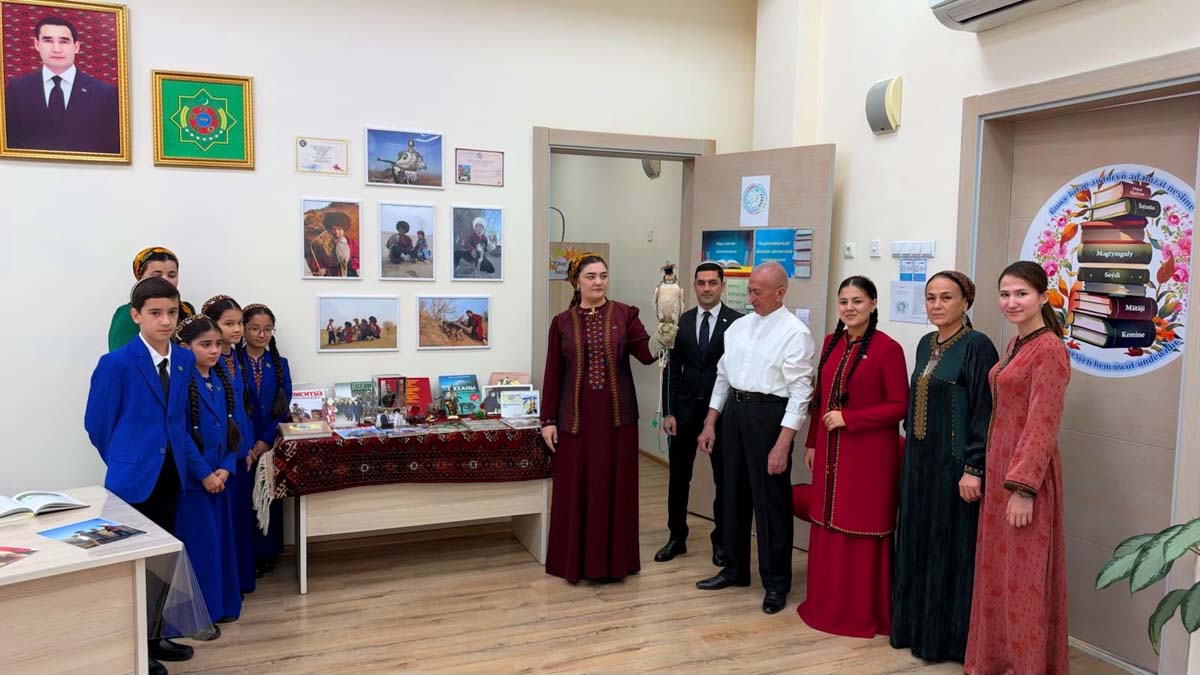
An open lesson dedicated to World Falconry Day, which is celebrated annually on 16 November, was held at Specialized Educational School No. 21. This date entered history in 2010, when UNESCO officially included falconry in the Representative List of the Intangible Cultural Heritage of Humanity. The event was organized by the school together with the Bazar Amanov State Children's Library.
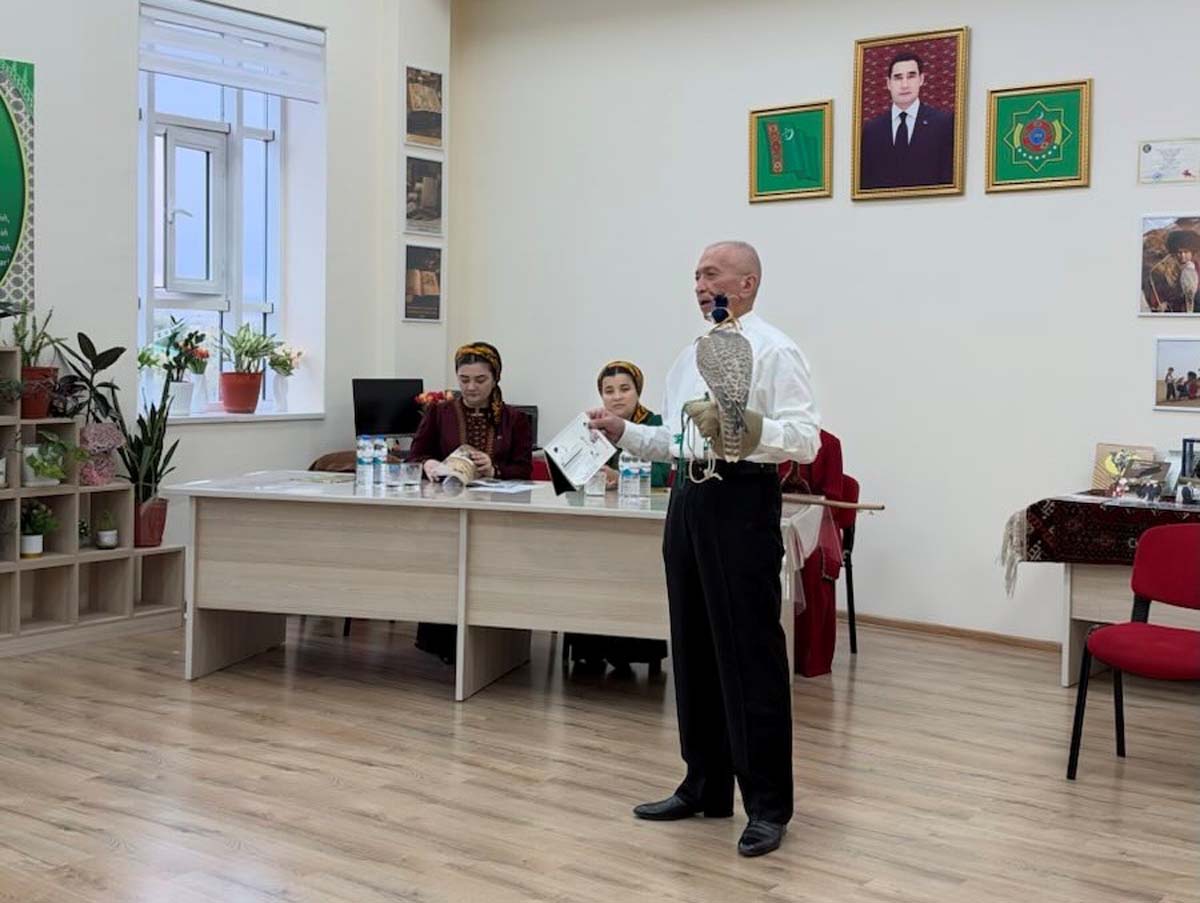
The invited guest of the meeting was a member of the International Association for Falconry, Chairman of the National Society of Falconers of Turkmenistan, hereditary falconer Atadurdy Eyeberdiyev. He came to visit the schoolchildren together with his pet and told the children about the traditions and art of falconry, whose origins go back into the depths of centuries.
Atadurdy Eyeberdiyev himself has devoted almost forty years to hunting, having begun carrying birds of prey on his arm while still a schoolboy. According to him, falconry is hard work. The hunter puts on a thick glove, places his pet on it, calls a dog of the Tazy breed and, covering dozens of kilometers, walks over the dunes in search of prey.
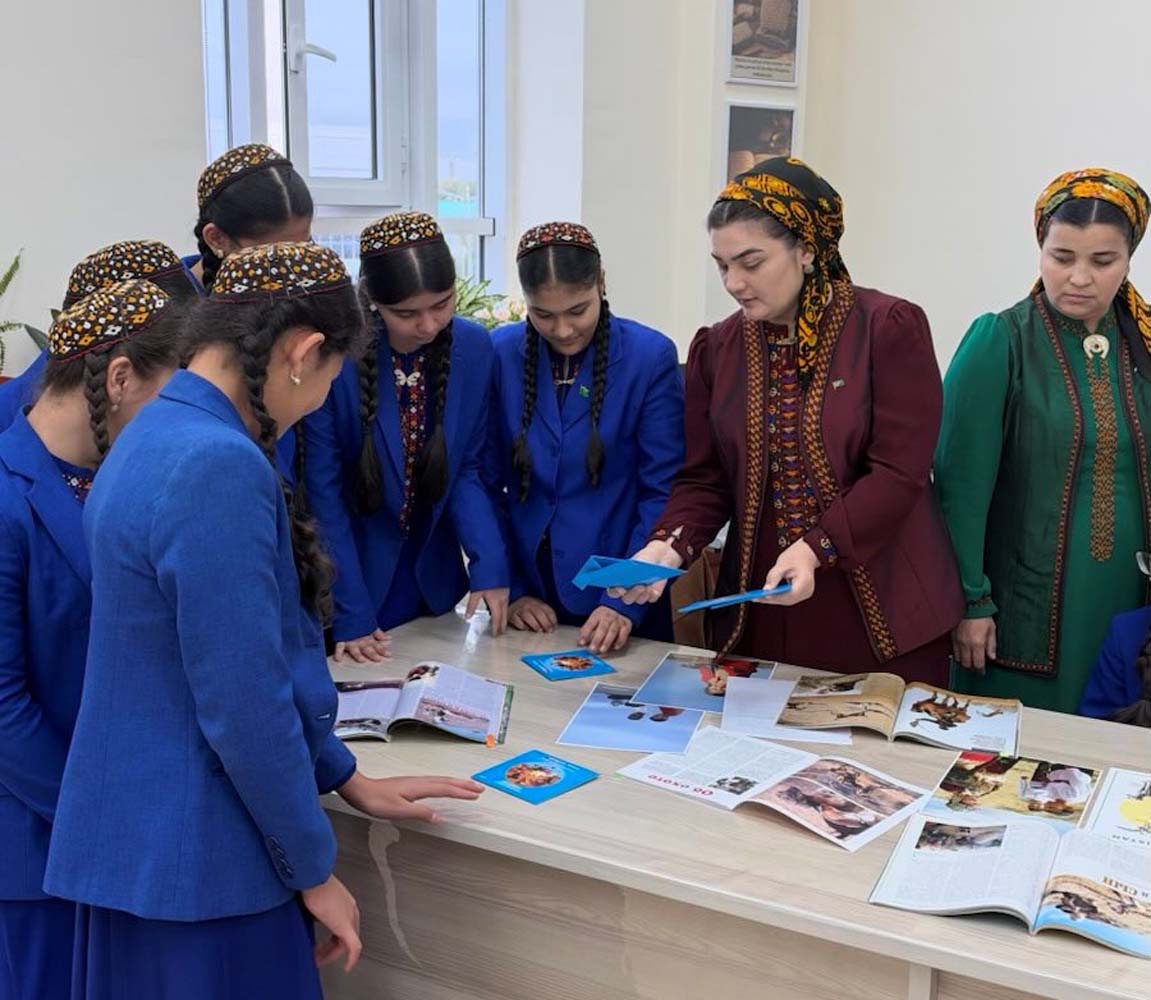
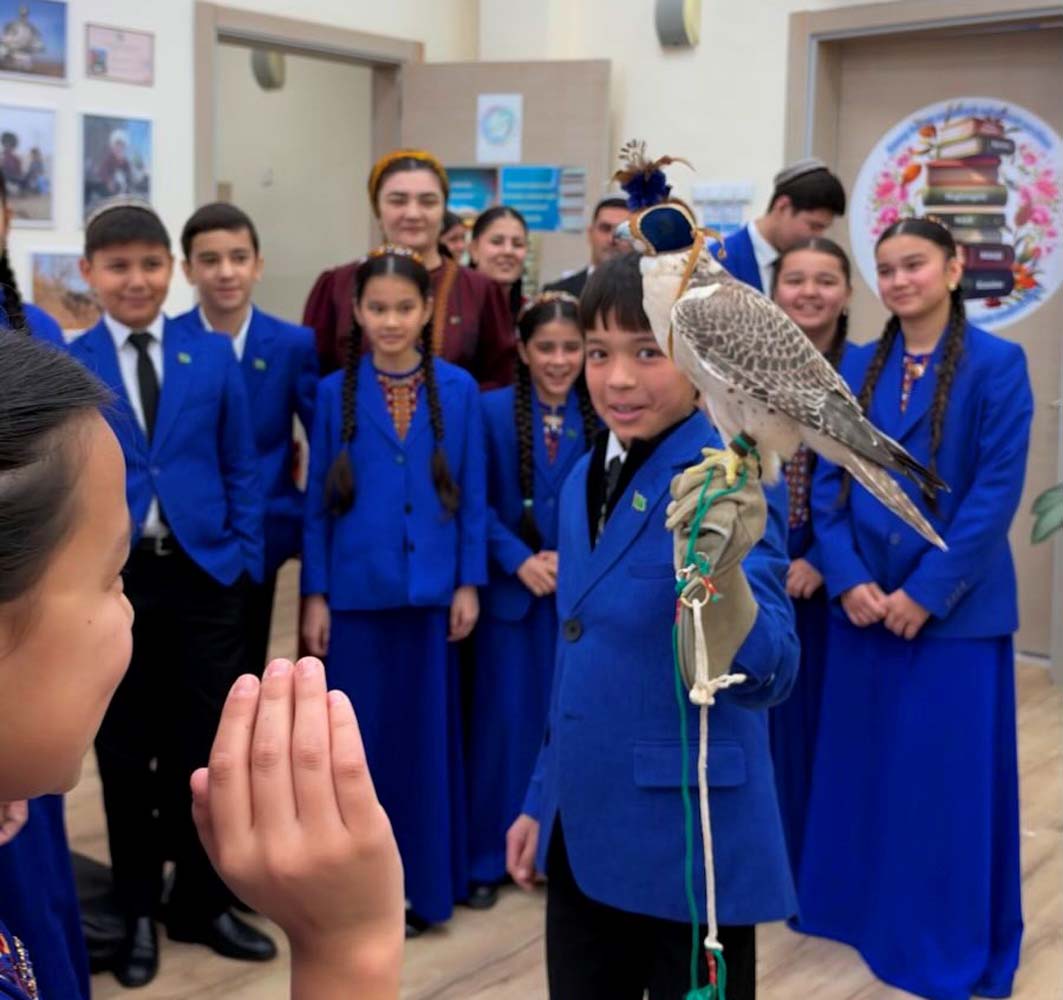
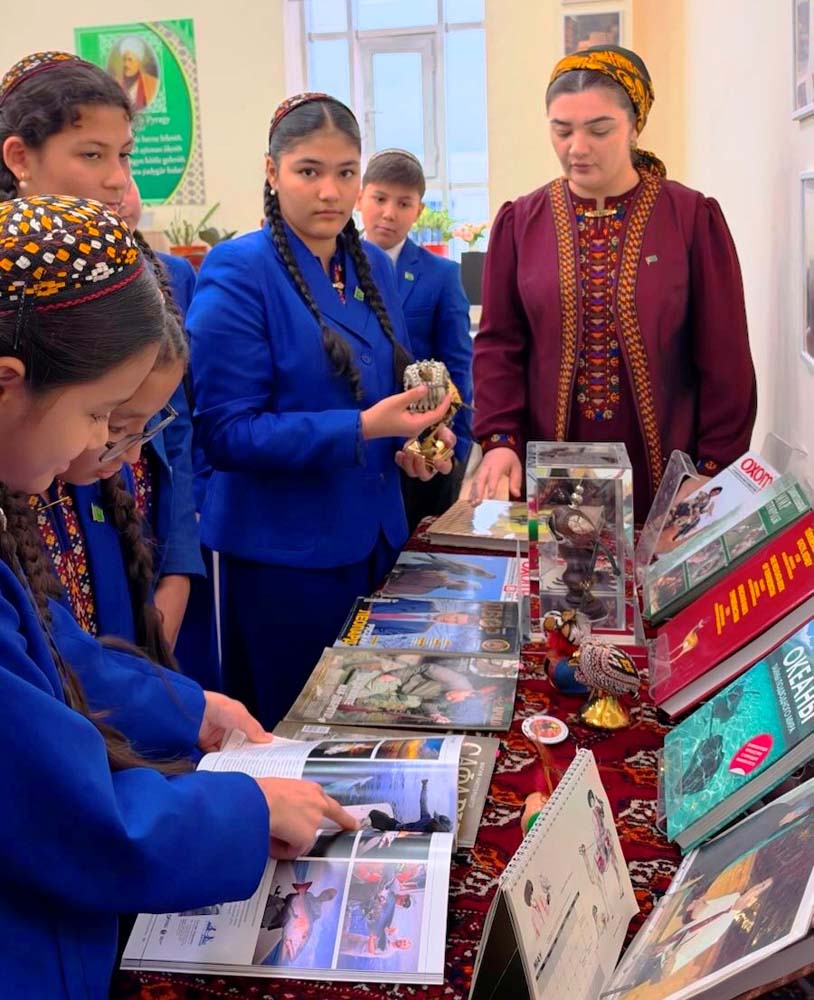
During the meeting, the schoolchildren were able not only to listen to the master's stories, but also to hold the bird of prey. In addition, the librarian Leyla Annamyradova prepared for the children a thematic exhibition of books and magazines with picturesque shots of falconry in order to clearly illustrate the features of this craft. Traditionally, Turkmen used Saker falcons in hunting, since they are larger than other species of falcons living in these parts, and therefore more successful in hunting.
In flight, Saker falcons reach speeds of up to three hundred kilometers per hour; their binocular vision allows them to magnify an image tenfold, thanks to which the feathered predator is able to determine the type of prey at a distance of two to three kilometers.
The guest dwelt in detail on the strict rules and subtleties of raising birds. Once at a nest, the hunter is obliged to observe two main principles – one must not take the only remaining chick, even if for this one had to climb the highest rock, since the parents will never return to an emptied nest. It is also forbidden to take very small chicks – the Saker falcon chick must be at least three weeks old, when it has already fledged and is preparing to take to the wing. Preference is given to females, since they are larger than males, have more developed legs and catch more hares per day.
According to folk beliefs, a good hunting falcon has a hooked beak, and two black stripes on the tongue indicate a bold and productive bird. At the same time, according to the charter of the society, each falconer may keep no more than two birds of prey.
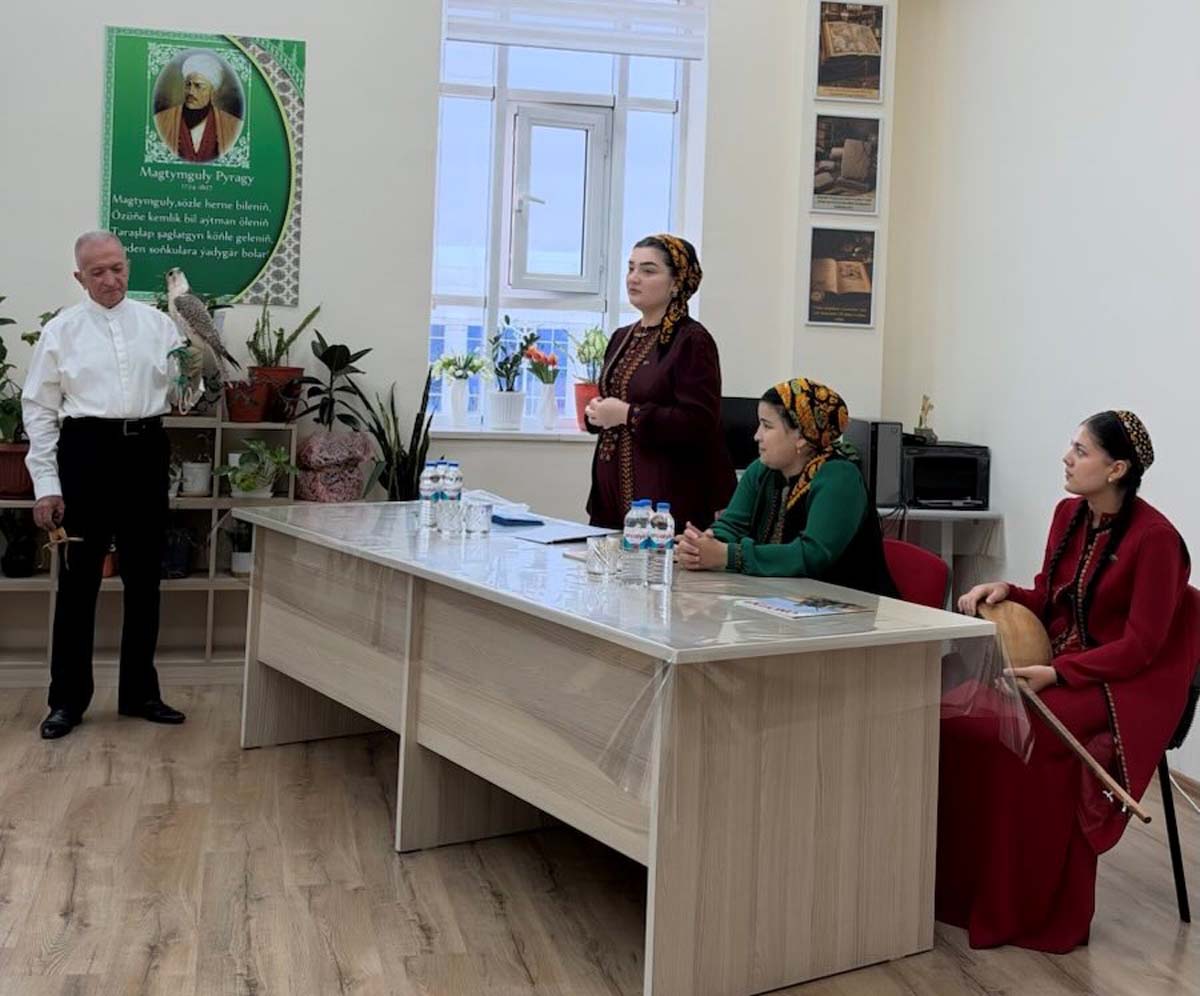
The meeting turned out to be fascinating and informative, and its decoration was the performance of students of the M. Kuliyeva Turkmen National Conservatory and the Magtymguly Turkmen State University, who performed patriotic songs glorifying their native land and traditions. The open lesson became an important and inspiring event for the younger generation, contributing to the knowledge of the history and culture of their people.