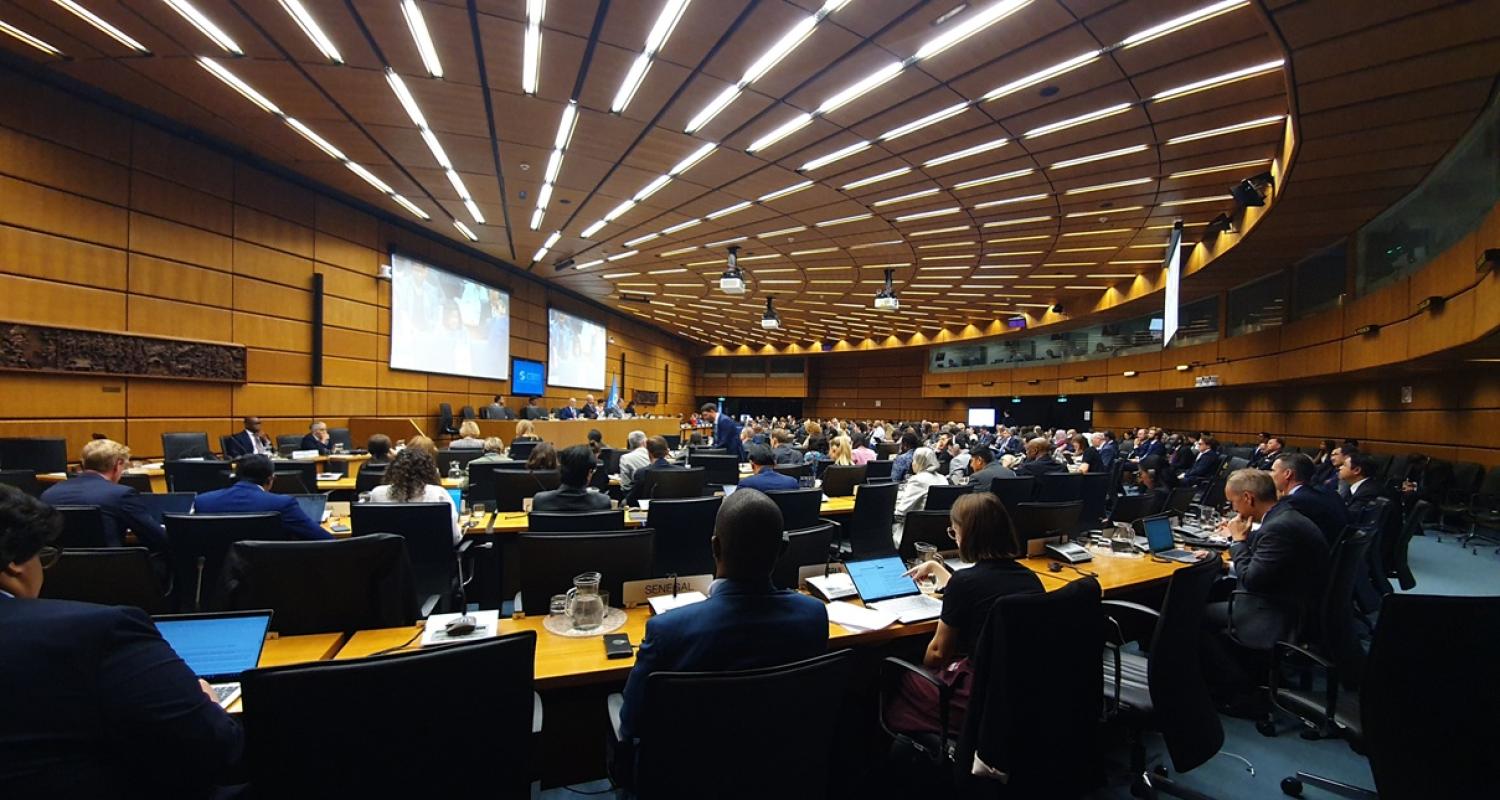



The sixth session of the Governing Council of the UN Special Programme for the Economies of Central Asia (SPECA) was held in the conference hall of the Ministry of Foreign Affairs of Turkmenistan. The unanimous decision to re-elect Turkmenistan the Chairman of the SPECA for 2012 was adopted during the session.
The session agenda focused on the outcomes of the SPECA activities since the last session of the Governing Council (Geneva, 19 October 2010) and the prospects of further cooperation.
The high-level forum was organized by the Government of Turkmenistan – the Chairman of SPECA for 2011, in collaboration with the United Nations Economic Commission for Europe (UNECE), the United Nations Economic and Social Commission for Asia and the Pacific (ESCAP) and the UN Regional Centre for Preventive Diplomacy for Central Asia (UNRCCA).
The Progress Reports on the Activities of the SPECA Project Working Groups which operate within the SPECA, particularly on water and energy resources, transport and border crossing, trade development, statistics, economic development and gender economy were delivered during the session.
The SPECA Work Plan for 2012-2013, including the projects integrated into the regular SPECA Work Plan to strengthen the stability and sustainable development of Afghanistan through regional economic cooperation in Central Asia was presented at the Governing Council Session in Ashgabat.
In their reports the participants noted that effectively pursuing the foreign policy strategy under the leadership of President Gurbanguly Berdimuhamedov to promote wide international cooperation with different countries of the world, the Government of Turkmenistan took consistent efforts to strengthen regional economic development in Central Asia.
Touching upon Turkmenistan’s chairmanship in the SPECA, the session participants emphasized that the country located at strategic transportation routes of the continent played an active role in enhancing cooperation between Central Asian states and Afghanistan. In this context emphasis was put on Turkmenistan’s active contribution to reconstruction and stabilization of Afghanistan, in particular on the significance of the Turkmen leader’s constructive initiatives supported by the international community.
It was noted that Turkmenistan, which had been endorsed as the Chairman of the SPECA for 2010-2011 at the Fifth Session of the Governing Council in October last year and re-elected the Chairman of the SPECA for 2012, had been working intensively toward these issues. With the support of the Secretariat of the United Nations Economic Commission for Europe (UNECE) and ESCAP new approaches had been developed and the vectors to build further synergies between SPECA member countries had been identified. In this context emphasis was put in the significance of the meeting of the delegations of SPECA member countries to discuss the outcomes of the Follow-up meeting of the 2010 SPECA Economic Forum which had taken place in Ashgabat early this year. A focus of this meeting was the development of a plan action to strengthen the stability and sustainable development of Afghanistan through regional economic cooperation in Central Asia. Underlining the important role of the Ashgabat meeting, the participants noted that this new vector in the SPECA activities was gaining particular significance nowadays in the context of the search for new solutions to reconstruction of Afghanistan by the international community.
In this regard it was emphasized that the international meeting on these issues had been held in Istanbul on November 2, and a new step would be a forum which would take place in Bonn on December 5.
Turkmenistan’s effective steps toward these issues vividly illustrate that the peace-building policy of our state stood nowadays as an essential factor for strengthening peace, stability and security on regional and global scale.
As is known, one of the initiatives put forward by the Turkmen leader at the sixty-sixth session of the UN General Assembly is aimed at strengthening the confidence-building measures and institutions of effective governance in Afghanistan, settling the situation in this country solely by diplomatic means and creating an atmosphere of cohesion and reconciliation there. Noting that Turkmenistan carried out the task-oriented work towards these goals, the meeting participants underlined the significance of the proposal to provide the political arena of our country for a high-level meeting under the aegis of the UN and inter-Afghan talks put forward by President Gurbanguly Berdimuhamedov.
Particular emphasis was put on the significance of the Turkmen leader’s proposal regarding the specific areas related to reconstruction of economy and social infrastructure of Afghanistan. In this regard the need to aim the efforts of SPECA member states at elaborating a joint action programme. The Turkmen side highlighted the importance of using the outcomes of the work done toward this goal in the course of 2011 as well as the need to continue this work in 2012 in close collaboration with all structures concerned, particular the UN structures tackling Afghanistan related issues.
The issues related to effective and effective use of water resources, environment, transport, trade development, gender economy, statistical capacity-building which are the major activities within the SPECA were considered during the session.
Focusing on the practicability of efficient water use, the meeting participants underscored the importance of forging well-coordinated constructive cooperation in the region. In this context the need to tackle this issue through universally recognized norms of international law an the respect for national interests of all countries of the region and active involvement of the international community represented by the UN and other authoritative international organisations was spotlighted.
The issues put on the agenda included the outcomes of the 2011 SPECA Economic Forum which had taken place in the Turkmen capital a day before. The participants were unanimous that the decisions adopted by the Economic Forum would contribute to steeping up fruitful cooperation within the SPECA and in the Central Asian region.
A constructive exchange of views on cooperation between SPECA and regional organizations and institutions took place, and the information on the actions taken to enhance effective collaboration with partner organizations and institutions was presented during the session.
Summing up the session, its participants expressed profound gratitude to Turkmenistan for the intense activity as the Chairman of the SPECA for the period of 2010-2011 and congratulated on re-election for 2012. The meeting participants reaffirmed that SPECA stood ready to promote a constructive dialogue and enhance effective collaboration with the United Nations and its structures, including UNECE, ESCAP, UNRCCA and other international partner organisations, in order to address priority regional cooperation issues.
At the conclusion of the session the participants expressed profound gratitude to President Gurbanguly Berdimuhamedov for hospitality extended in the Turkmen land, the favourable working conditions and the high level of organisation of this important international forum.
The session agenda focused on the outcomes of the SPECA activities since the last session of the Governing Council (Geneva, 19 October 2010) and the prospects of further cooperation.
The high-level forum was organized by the Government of Turkmenistan – the Chairman of SPECA for 2011, in collaboration with the United Nations Economic Commission for Europe (UNECE), the United Nations Economic and Social Commission for Asia and the Pacific (ESCAP) and the UN Regional Centre for Preventive Diplomacy for Central Asia (UNRCCA).
The Progress Reports on the Activities of the SPECA Project Working Groups which operate within the SPECA, particularly on water and energy resources, transport and border crossing, trade development, statistics, economic development and gender economy were delivered during the session.
The SPECA Work Plan for 2012-2013, including the projects integrated into the regular SPECA Work Plan to strengthen the stability and sustainable development of Afghanistan through regional economic cooperation in Central Asia was presented at the Governing Council Session in Ashgabat.
In their reports the participants noted that effectively pursuing the foreign policy strategy under the leadership of President Gurbanguly Berdimuhamedov to promote wide international cooperation with different countries of the world, the Government of Turkmenistan took consistent efforts to strengthen regional economic development in Central Asia.
Touching upon Turkmenistan’s chairmanship in the SPECA, the session participants emphasized that the country located at strategic transportation routes of the continent played an active role in enhancing cooperation between Central Asian states and Afghanistan. In this context emphasis was put on Turkmenistan’s active contribution to reconstruction and stabilization of Afghanistan, in particular on the significance of the Turkmen leader’s constructive initiatives supported by the international community.
It was noted that Turkmenistan, which had been endorsed as the Chairman of the SPECA for 2010-2011 at the Fifth Session of the Governing Council in October last year and re-elected the Chairman of the SPECA for 2012, had been working intensively toward these issues. With the support of the Secretariat of the United Nations Economic Commission for Europe (UNECE) and ESCAP new approaches had been developed and the vectors to build further synergies between SPECA member countries had been identified. In this context emphasis was put in the significance of the meeting of the delegations of SPECA member countries to discuss the outcomes of the Follow-up meeting of the 2010 SPECA Economic Forum which had taken place in Ashgabat early this year. A focus of this meeting was the development of a plan action to strengthen the stability and sustainable development of Afghanistan through regional economic cooperation in Central Asia. Underlining the important role of the Ashgabat meeting, the participants noted that this new vector in the SPECA activities was gaining particular significance nowadays in the context of the search for new solutions to reconstruction of Afghanistan by the international community.
In this regard it was emphasized that the international meeting on these issues had been held in Istanbul on November 2, and a new step would be a forum which would take place in Bonn on December 5.
Turkmenistan’s effective steps toward these issues vividly illustrate that the peace-building policy of our state stood nowadays as an essential factor for strengthening peace, stability and security on regional and global scale.
As is known, one of the initiatives put forward by the Turkmen leader at the sixty-sixth session of the UN General Assembly is aimed at strengthening the confidence-building measures and institutions of effective governance in Afghanistan, settling the situation in this country solely by diplomatic means and creating an atmosphere of cohesion and reconciliation there. Noting that Turkmenistan carried out the task-oriented work towards these goals, the meeting participants underlined the significance of the proposal to provide the political arena of our country for a high-level meeting under the aegis of the UN and inter-Afghan talks put forward by President Gurbanguly Berdimuhamedov.
Particular emphasis was put on the significance of the Turkmen leader’s proposal regarding the specific areas related to reconstruction of economy and social infrastructure of Afghanistan. In this regard the need to aim the efforts of SPECA member states at elaborating a joint action programme. The Turkmen side highlighted the importance of using the outcomes of the work done toward this goal in the course of 2011 as well as the need to continue this work in 2012 in close collaboration with all structures concerned, particular the UN structures tackling Afghanistan related issues.
The issues related to effective and effective use of water resources, environment, transport, trade development, gender economy, statistical capacity-building which are the major activities within the SPECA were considered during the session.
Focusing on the practicability of efficient water use, the meeting participants underscored the importance of forging well-coordinated constructive cooperation in the region. In this context the need to tackle this issue through universally recognized norms of international law an the respect for national interests of all countries of the region and active involvement of the international community represented by the UN and other authoritative international organisations was spotlighted.
The issues put on the agenda included the outcomes of the 2011 SPECA Economic Forum which had taken place in the Turkmen capital a day before. The participants were unanimous that the decisions adopted by the Economic Forum would contribute to steeping up fruitful cooperation within the SPECA and in the Central Asian region.
A constructive exchange of views on cooperation between SPECA and regional organizations and institutions took place, and the information on the actions taken to enhance effective collaboration with partner organizations and institutions was presented during the session.
Summing up the session, its participants expressed profound gratitude to Turkmenistan for the intense activity as the Chairman of the SPECA for the period of 2010-2011 and congratulated on re-election for 2012. The meeting participants reaffirmed that SPECA stood ready to promote a constructive dialogue and enhance effective collaboration with the United Nations and its structures, including UNECE, ESCAP, UNRCCA and other international partner organisations, in order to address priority regional cooperation issues.
At the conclusion of the session the participants expressed profound gratitude to President Gurbanguly Berdimuhamedov for hospitality extended in the Turkmen land, the favourable working conditions and the high level of organisation of this important international forum.