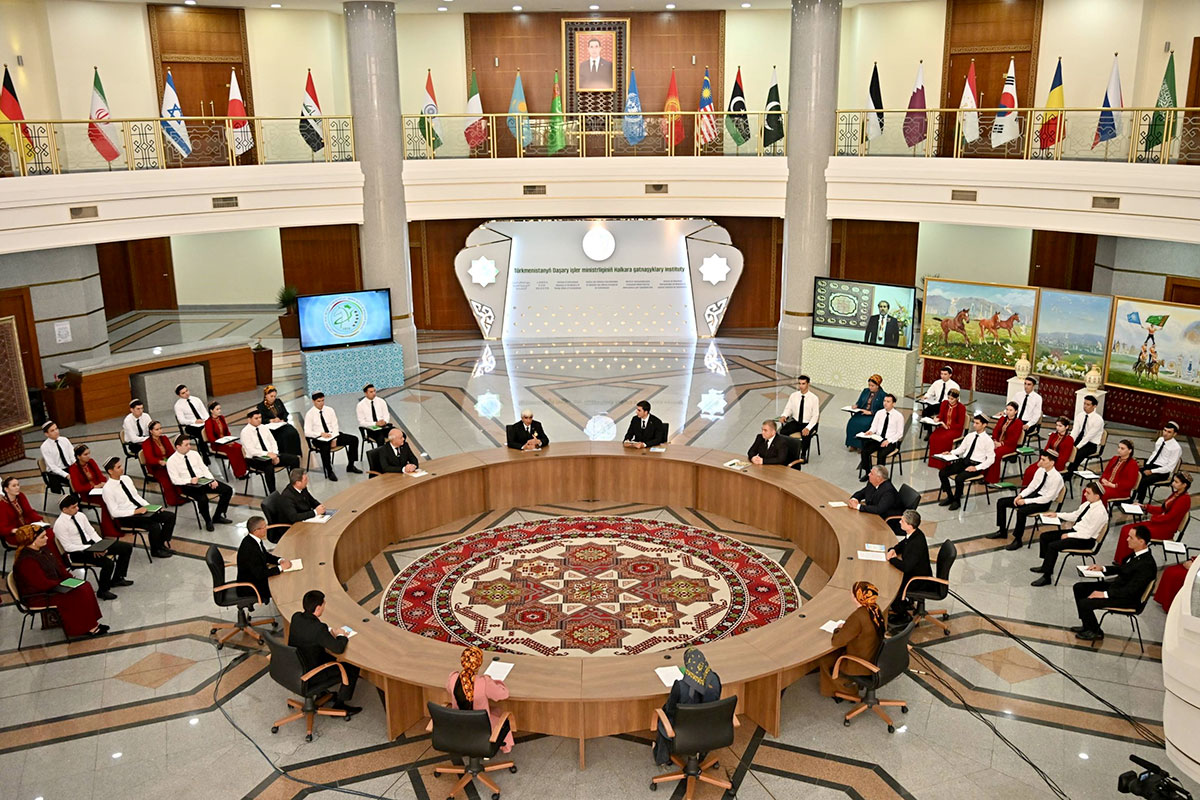



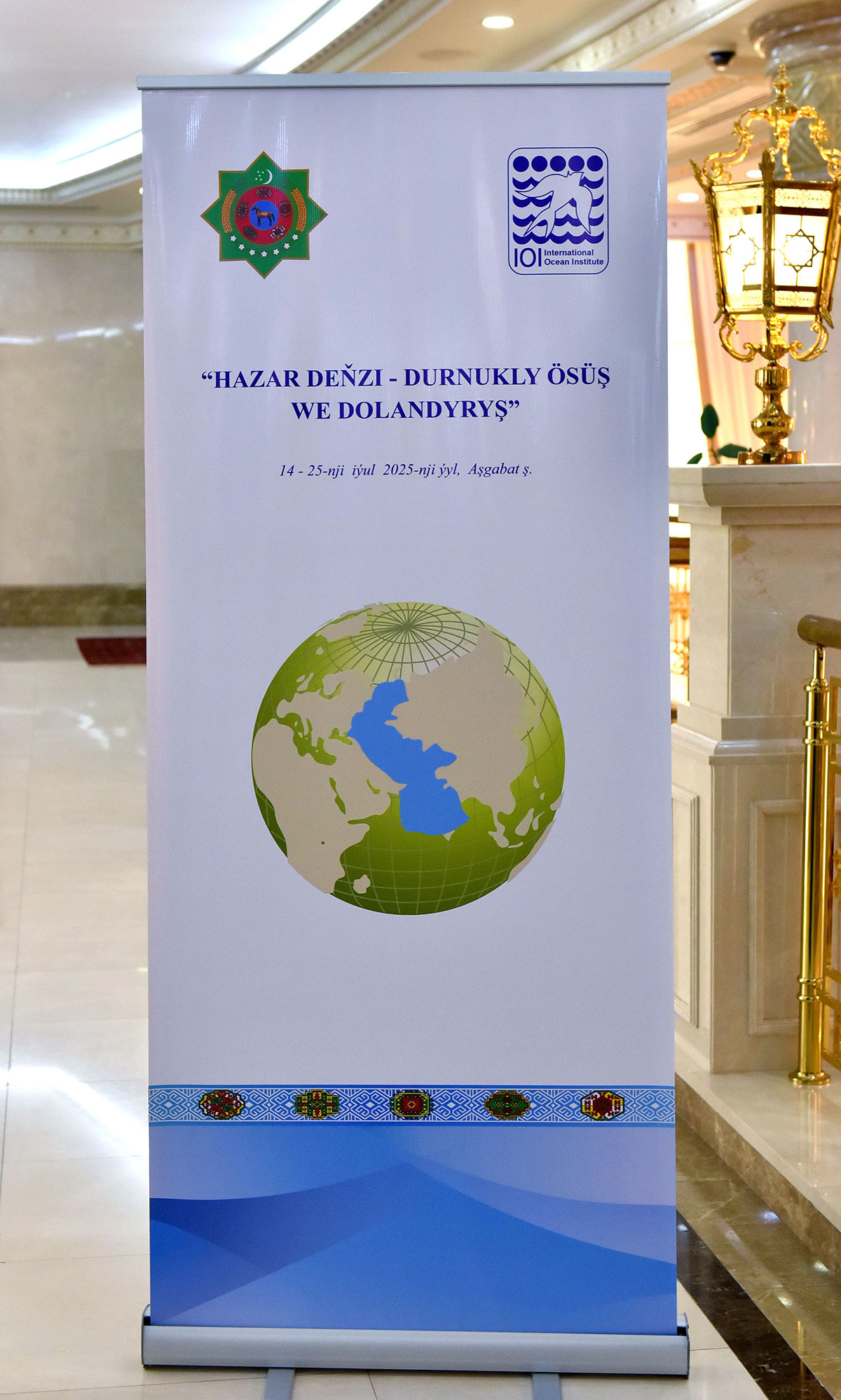
An international training course titled “The Caspian Sea – Sustainable Development and Management” is being held for representatives of the five Caspian littoral states from July 14 to 25, in Ashgabat, at the conference hall of the Archabil Hotel, with the assistance of the Ministry of Foreign Affairs of Turkmenistan and organizational support from the country's Caspian Sea Institute and the International Ocean Institute. Traditionally, a diverse teaching staff of speakers is invited to participate, whose professional profiles are related to various aspects of marine studies.
Delegations included Valeriy Devyatkov (Embassy of the Russian Federation), Mojtaba Ghafouri and Vahid Kheirabadi (a structural unit of the Embassy of the Islamic Republic of Iran in Ashgabat and the Department of Environment of the Islamic Republic of Iran), Nurdaulet Yerezhepev (specialist of the international law department of the Ministry of Foreign Affairs of the Republic of Kazakhstan), as well as Eldaniz Valiev and Gouchak Kamalzade (Ministry of Digital Development and Transport, and the State Maritime and Port Agency of the Republic of Azerbaijan).
From our country, participants in the lectures covering a wide range of Caspian issues included employees of the State Corporations “Turkmengaz” and “Turkmennebit,” the State Corporation “Turkmengeology,” the Ministries of Adalat (justice), Environment Protection (and its branch “Turkmengidromet”), Finance and Economy.
The course aims to promote scientific exchange of knowledge, experience, and data on hydrometeorology; cooperation between states on institutional, environmental, economic, and tourism issues; as well as to foster partnership ties. The goal of such events, which have become a traditional component of Caspian cooperation, is to strengthen mutual understanding, lay the foundation for developing scientific contacts, and achieve awareness of the necessity of consolidation in establishing a basis for planning economic activities at sea, developing its richest natural resources, and protecting the marine ecological environment.
Lecture days are scheduled for participants, with time allocated for discussions, exchanging opinions, question and answer sessions, independent work periods, and a cultural program.