


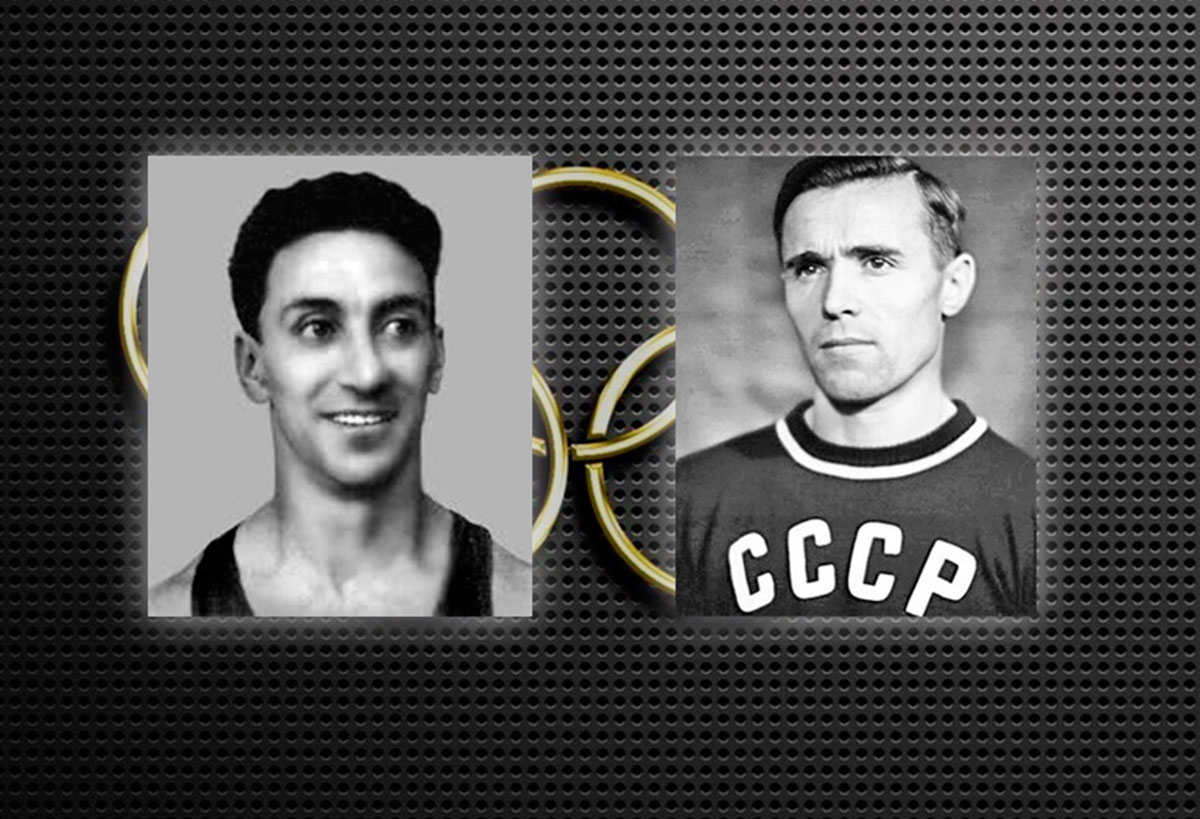
This year marks exactly 25 years since the passing of the once-famous gymnast Ajatulla Muradovich Ibadulaev. The editorial board of “Golden Age” has repeatedly written about natives of Ashgabat who became outstanding figures, thereby glorifying both themselves and their Turkmen homeland. The name of Ajat Ibadulaev, new to today’s generation and reader, surfaced — as often happens — quite by accident.
In one of the programs on Russian television, the discussion was about the celebrated gymnast Viktor Chukarin, and it turned out that one of his first coaches and close friends was a native of Ashgabat, the Turkmen gymnast Ajat Ibadulaev. For the author of these lines — who once practiced gymnastics — and for many Turkmen citizens, the name of this illustrious compatriot was a pleasant surprise, if not a revelation. Remembering our countryman and finding at least some information about him turned out to be quite a challenge. There were no details about relatives, nor photographs of Ajat Ibadulaev himself. Searches through internet resources helped to partially restore what had been lost and almost forgotten — images of Ajat were found, both from his youth and from his mature years.
Our hero was born on March 28, 1911, in Ashgabat. His full name was Ajatulla Muradovich Ibadulaev. Judging by the surname — derived from the name Hibatulla (in Arabic: Hibat) — his parents had Turko-Arab roots. The ancient Turkic element “ulla” is used in the formation of personal names. Thus, Hibatulla — and in our case Ibadula — can be interpreted as “God’s gift.” In Islamic culture, the name Hibatulla was often given to a long-awaited child, perhaps the firstborn, whose birth brought great happiness to the family. Over time, from Ibadula came the surname Ibadulaev. His parents’ choice of this name proved prophetic. Ajatulla was indeed born with the gift of a champion — and he became one, many times over. Moreover, he raised another champion like himself — one who also never knew defeat.
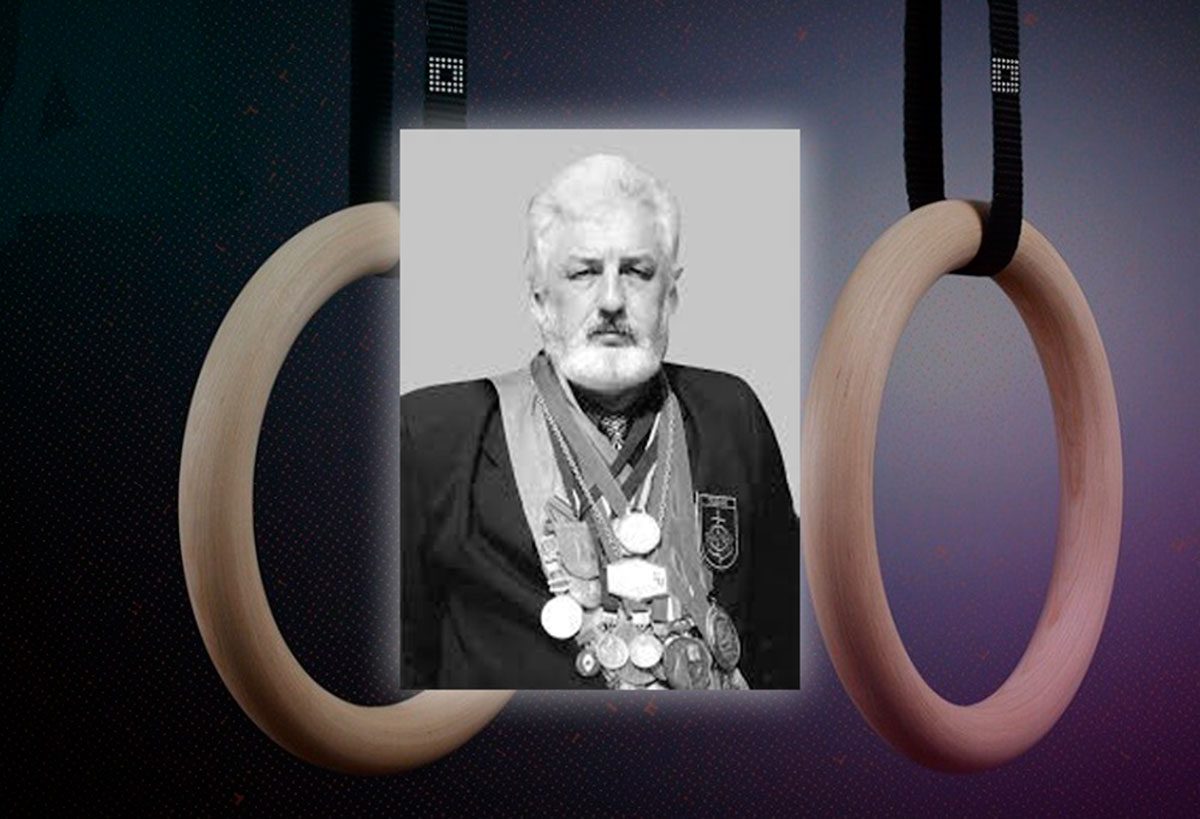
As a child of sturdy build, young Ajatulla was fond of sports. His youth coincided with a time when many athletic clubs were developing actively in Ashgabat — especially cycling and various forms of wrestling — yet he chose gymnastics. His diligent training led him, by the age of twenty-eight, to become the Union champion on his favorite apparatus — the rings. Anyone who has ever practiced gymnastics knows the immense physical strain an athlete endures while performing on the rings. Ajatulla’s incredible natural strength and talent helped him remain undefeated on this apparatus for years. The special strength exercises he developed later proved invaluable in training his students. He designed and introduced into practice a unique technical and performance style for exercises on the rings and the horizontal bar. Ajatulla Muradovich was one of the first gymnasts to incorporate strength conditioning into training routines to build endurance. He was also the first coach to conduct two training sessions a day for his athletes.
From 1939 through the 1950s, Ibadulaev became a multiple-time champion of the Soviet Union on various gymnastics apparatuses. He was undefeated — and remained so. In the postwar years, due to various circumstances, Ibadulaev moved to Ukraine, where he successfully began his coaching career. It was there that fate brought him together with Viktor Chukarin, with whom he had previously competed in gymnastics events. The fate of the future multiple Olympic champion Chukarin in many ways mirrored that of Ibadulaev.
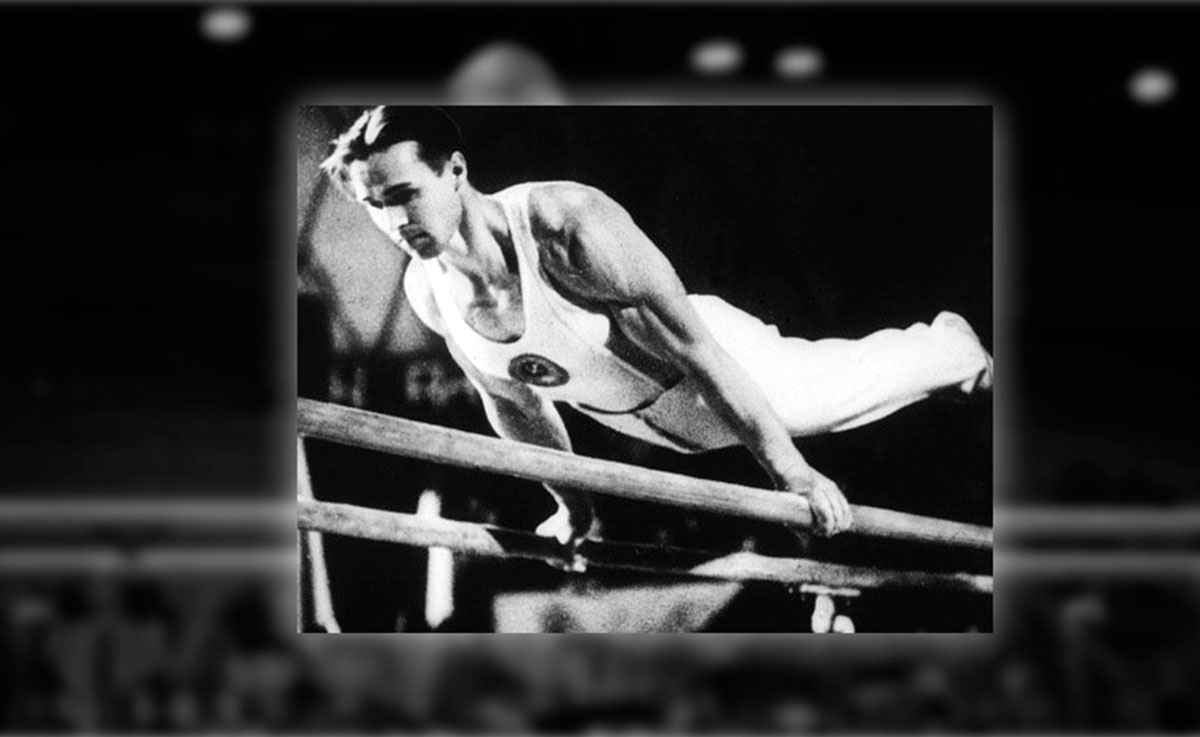
Both came from humble families, both endured the hardships of war — yet both were passionately devoted to gymnastics. From childhood, Chukarin trained in gymnastics, at first in a dusty courtyard on a horizontal bar made of rusty pipes, striving to perform difficult exercises. After finishing school — with no grades below “good” — he entered the Kyiv Physical Education College. There he met Ibadulaev. At that time, Ajatulla Muradovich, already a two-time all-around champion of the Soviet Union, began training with Chukarin. Ibadulaev, who became a true friend to the young athlete, helped him adapt to the high physical demands. Training twice a day quickly brought results.
Supporting his young friend, Ibadulaev would say: “I am ten years older than you, yet at the USSR Championship I yield to no one. Build up your muscles — look how weak they still are. You can become a leader. I will gladly give you my place on the podium.” Ajatulla’s words proved prophetic. In 1948, Chukarin won the championship of Ukraine. A year later, he became the absolute champion of the Soviet Union and held that title for more than three years. This was the result of the very training regimen he had shared with Ibadulaev. Viktor performed exercises of fantastic complexity with a calm expression on his face — it seemed almost miraculous. And indeed, there was reason to marvel. It was not for nothing that Ibadulaev had noted Chukarin’s thinness. Viktor had fought in the war, been wounded, captured, and endured the brutal hardships of concentration camps. He survived — and returned a victor. The spirit of victory sustained him at the Olympic Games as well. Sometimes, when it seemed that Olympic gold was slipping away, he would deliver such astonishing performances that his rivals could only say: “It is impossible to beat this guy…”
Then came the Olympic Games in Helsinki (1952) and Melbourne (1956), where Chukarin became Olympic champion. After his triumphant victory in Melbourne, Viktor Chukarin decided to retire — undefeated — with a collection of 11 Olympic medals: seven gold, three silver and one bronze.
These remarkable gymnasts — Ibadulaev and Chukarin — were, and remain, The Unconquered. And surely that alone is reason enough for their names to be known and remembered.