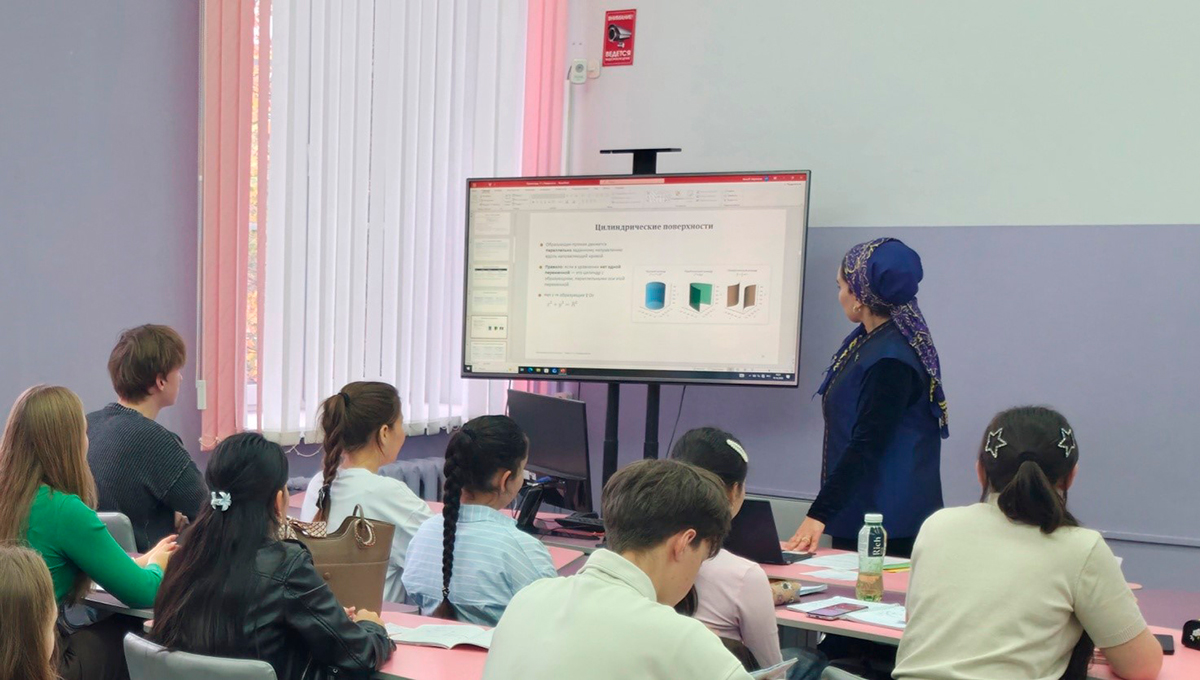



Faculty members and students from a number of higher educational institutions of the country took part in a teaching and methodological session on the topic “The Role of AI (Artificial Intelligence) Technologies in Architecture and Design and Their Application in Project Work,” held at the Turkmen State Institute of Architecture and Construction.
The session was organized under the guidance of experienced lecturers from the Department of Architecture of the Faculty of Architecture and Construction, Ashe Gubayeva and Shirmukhammet Jepbarov, with the participation of the institute’s students.
The main objective of the session was a comprehensive discussion of the possibilities for applying artificial intelligence technologies in architecture and design, as well as the formation of a deep understanding among participants of the role of AI in modern project work and its importance in enhancing creative and engineering potential.

During the teaching and methodological session, practical examples were used to examine in detail the possibilities of applying AI technologies in the creation of architectural projects, interior and exterior design, digital modeling of the urban environment, and optimization of construction solutions.
Participants were presented with substantive information on digital design platforms widely used in global architecture, generative design, and 3D modeling.
As part of the meeting, lively discussions were held on the impact of artificial intelligence on the development of the innovative potential of the architectural and construction industry, the integration of national architectural traditions with modern construction technologies, and the training of future competitive specialists of a new level.
In the concluding part of the session, professional opinions, comments, and constructive proposals from the participants were heard. The effectiveness of the session was noted, as well as the need to hold such meetings on a regular basis.
As the organizers noted, the event was held at a high level and generated significant interest within the academic and pedagogical community, highlighting the growing role of artificial intelligence technologies in modern science and education.