


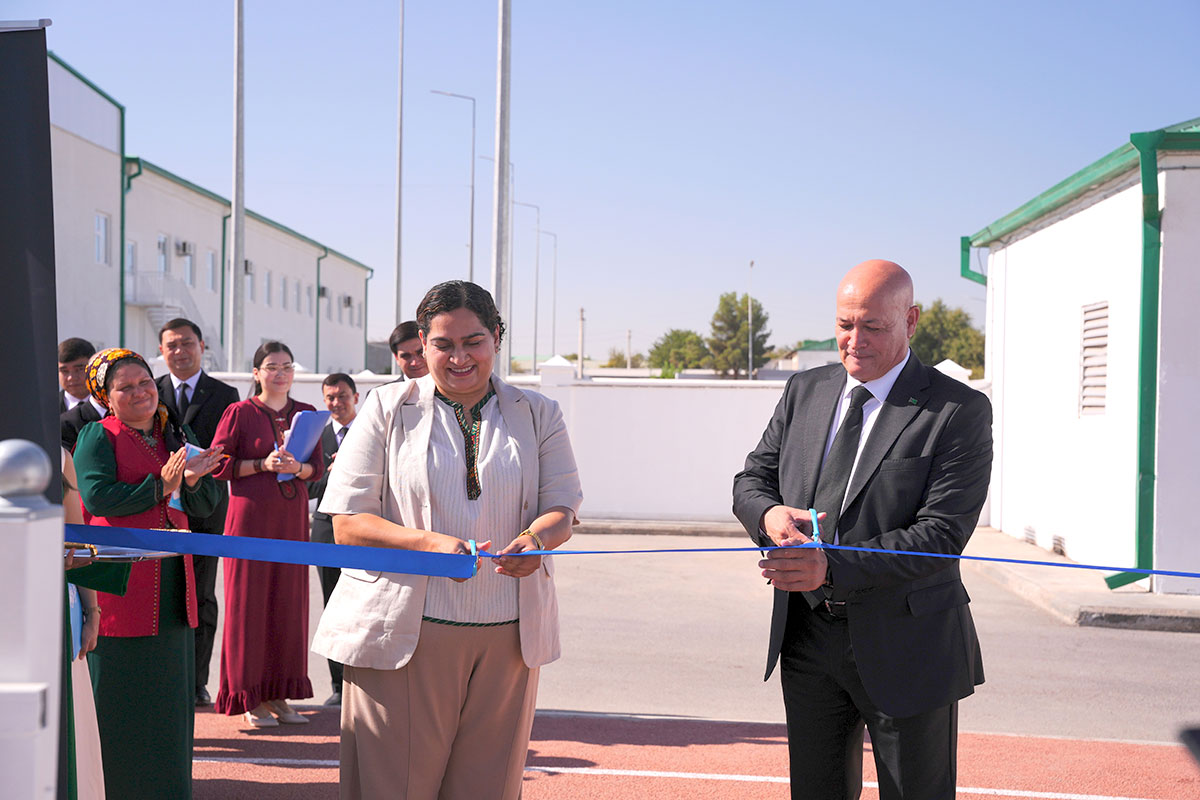
A new solar power station was officially inaugurated at Secondary School No. 36 in the city of Mary. The project was implemented as part of a joint initiative of the Ministry of Education of Turkmenistan and UNICEF.
The opening ceremony was attended by representatives of the Ministry of Education of Turkmenistan, the Mary Velayat Main Department of Education, the State Energy Institute of Turkmenistan, the Renewable Energy Sources Research and Production Centre, and the Hydyr Deryayev Pedagogical School.
The modern photovoltaic system has a capacity of 12.5 kW and is equipped with a 48 kWh lithium battery and a hybrid inverter. The station provides the school with an uninterrupted power supply, including evening lighting for the school grounds and sports field, as well as the operation of inverter air-conditioning systems under extreme climatic conditions ranging from –20°C in winter to +50°C in summer.
The facility was designed not only as a source of clean energy but also as a practical educational tool for future engineers. A digital monitoring system tracks energy generation, battery status, and electricity consumption in real time. These data will be incorporated into the educational process. Thanks to its proximity to the State Energy Institute of Turkmenistan, the station will serve as a practical training base for schoolchildren and students from across the Mary velayat.
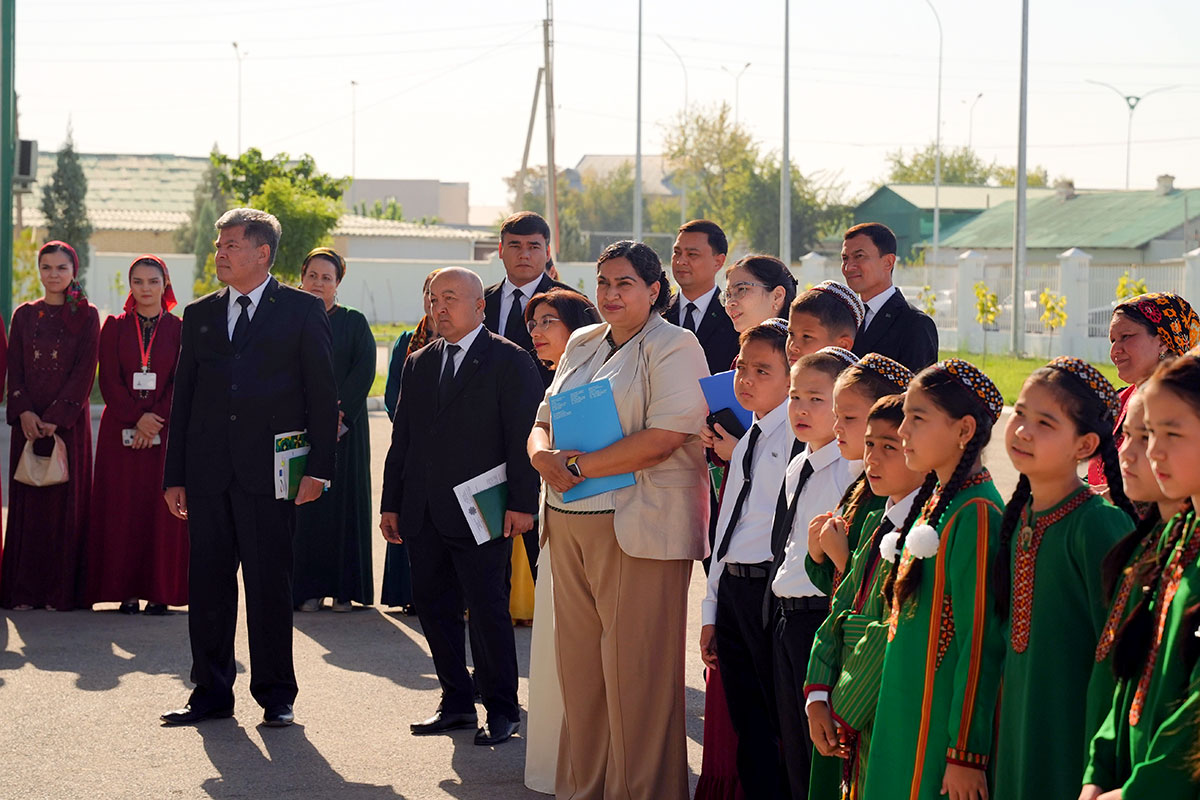
“Every child should have the opportunity to learn in a school environment that is safe, comfortable, and better prepared for Turkmenistan’s changing climate. This solar station is a practical example of how national climate ambition, government leadership, and a child-centred design can come together to benefit children. It will help light the way for children’s sports and play, and we hope it will also inspire curiosity among young people who may one day contribute to the country’s clean energy future,” said Jalpa Ratna, UNICEF Representative in Turkmenistan.
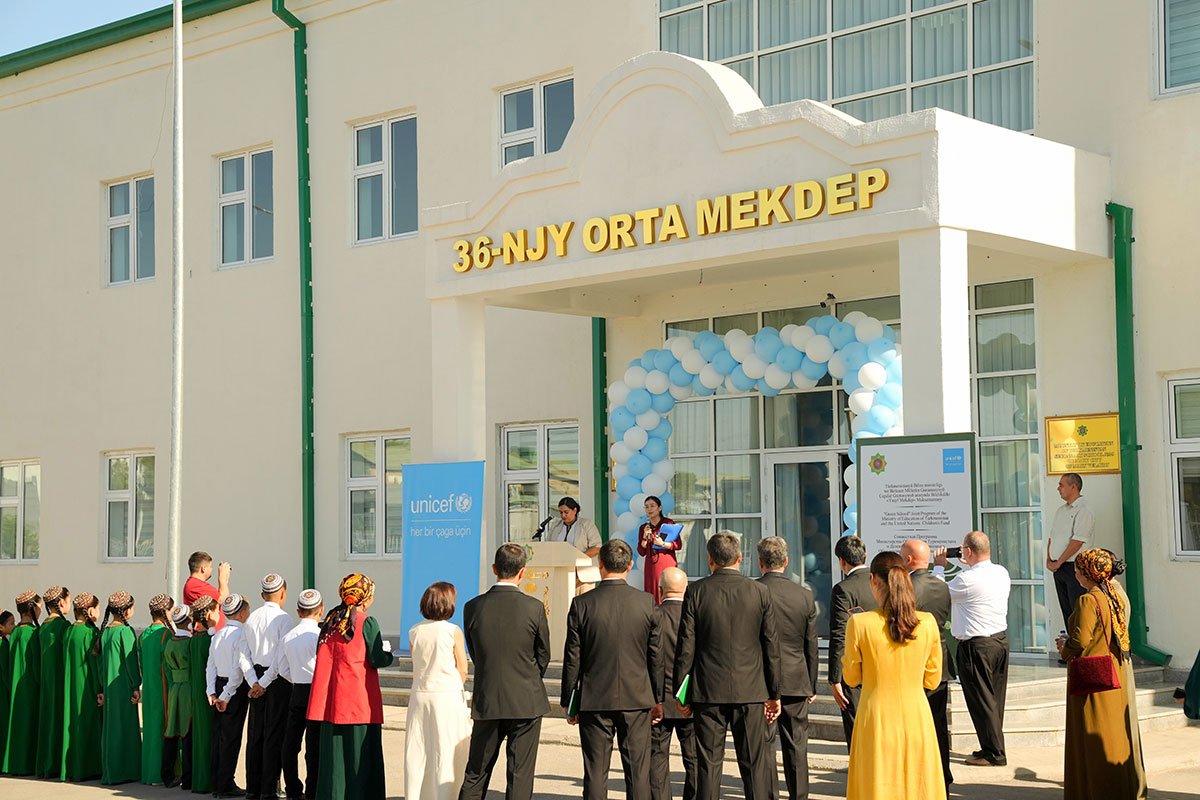
The installation of the power station was the result of an energy audit conducted by UNICEF and the Ministry of Education as part of the Green School Programme. The project directly supports Turkmenistan’s national priorities. Under the Paris Agreement and its Nationally Determined Contributions (NDCs), the country plans to reduce its greenhouse gas emissions by 20% by 2030.