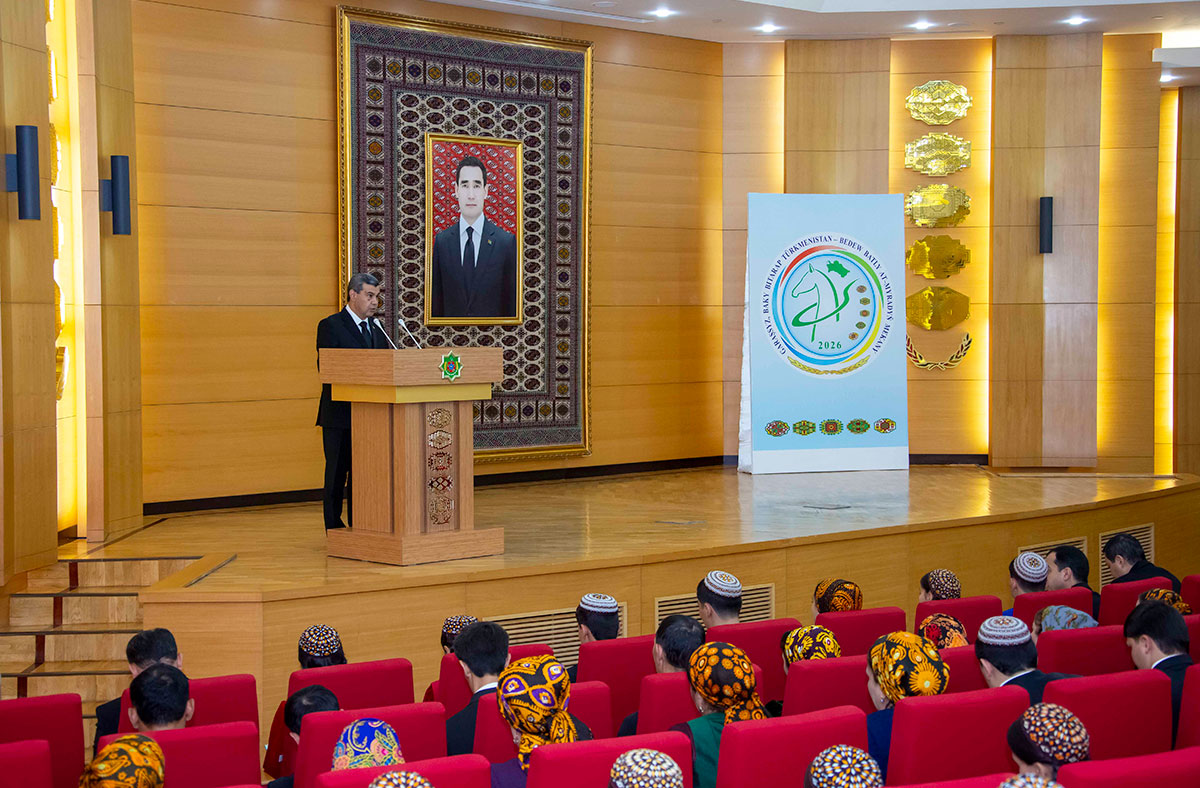



With the participation of the President of Turkmenistan Serdar Berdimuhamedov, the grand opening of the new building complex of the Turkmen state institute of architecture and construction took place in Ashgabat on Knowledge and Student Day.
The development of scientific and educational spheres and the elevation of higher education to a qualitatively new level remain among the key priorities of state policy of the country. Today, independent Turkmenistan is implementing programmatic measures to improve the education system, strengthen its material and technical base, introduce cutting-edge scientific achievements, train highly qualified personnel, and expand international cooperation. In this context, the Turkmen state institute of architecture and construction has been assigned a leading role in providing qualified specialists to the construction and industrial sectors of the economy.
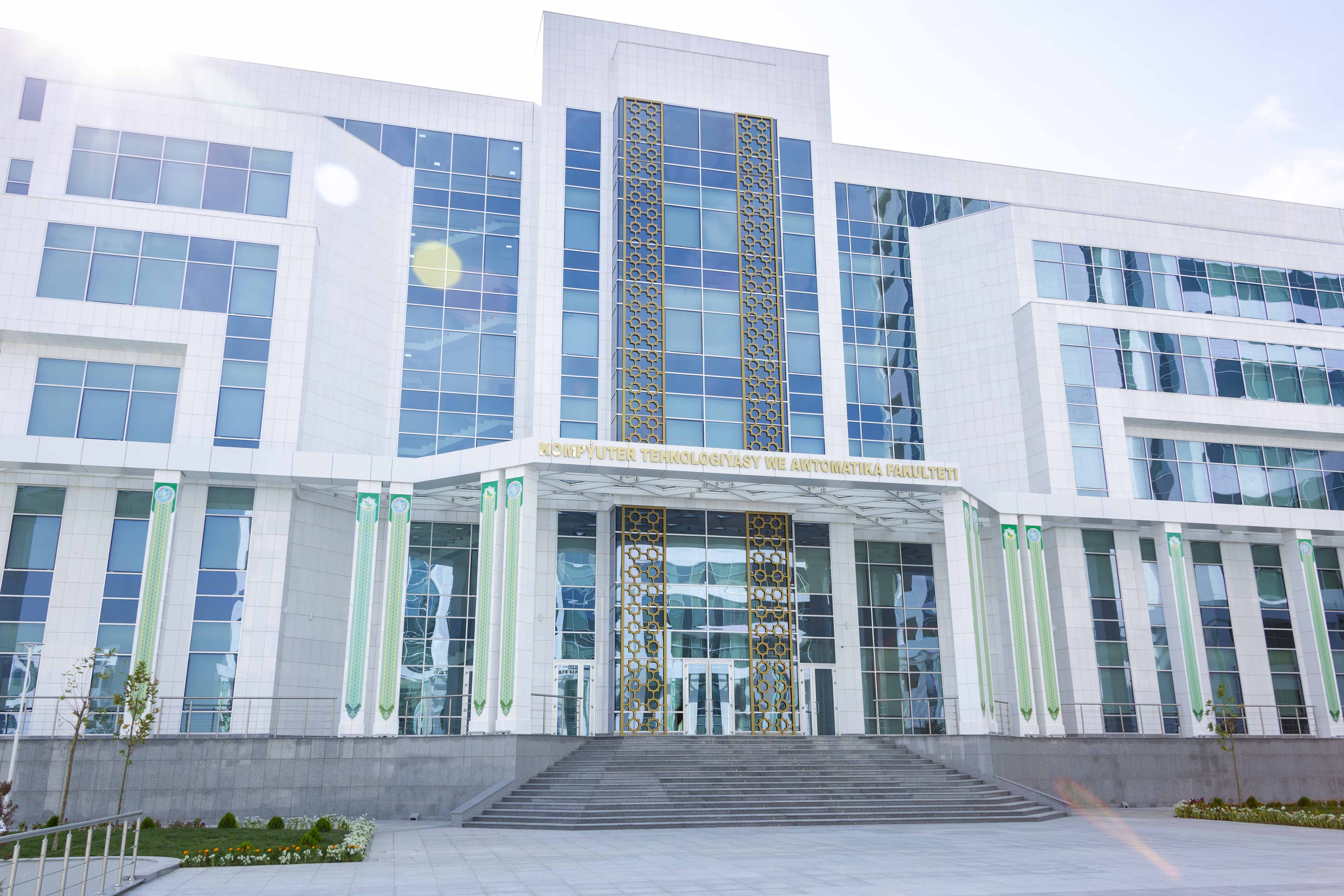
The new campus of the institute, designed for 5 thousand students, was built by «Ajaýyp Gurluşyk», a member of the Union of industrialists and entrepreneurs of Turkmenistan, in full compliance with modern architectural and urban planning requirements. The total area of the complex is 32.2 hectares. The new building represents not only a modern educational platform, but also a scientific and practical base for training future architects, engineers, and builders.
According to Didar Bayatov, deputy director of the IE «Ajaýyp Gurluşyk», work on the large-scale project was carried out in compliance with technological and environmental standards.
«In the era of the Revival of the new epoch of the powerful state, thanks to the large-scale transformations initiated by the Hero-Arkadag and successfully implemented under the leadership of Arkadagly Hero Serdar, new cities, modern educational institutions and highways are being built throughout the country, and the transport and communications infrastructure is being modernised. These steps are aimed at the comprehensive innovative development of Turkmenistan, strengthening its economic potential and continuously improving the quality of life of its citizens. We, representatives of the business community, will make every effort to make a worthy contribution to this creative process», – said D. Bayatov.
The infrastructure of the higher education institution includes a 13-storey main building, buildings for eight faculties and twenty-eight departments, a library and a conference hall. The facade of the administrative building is decorated with a symbolic image of a compass and measuring instrument. A dormitory with 2600 places is provided for student accommodation, and two residential buildings with 40 apartments each have been built for the teaching staff.
The high level of equipment and organisation of the educational process in the new complex is confirmed by international certificates, including compliance with ISO standards, as well as UNDP environmental requirements.
In particular, the international certification body CERT International awarded the institute certificates of conformity with five international ISO standards. The Turkmen state institute of architecture and construction became the first higher education institution in Turkmenistan and the CIS countries to receive simultaneous certification according to these five standards.
In collaboration with the scientists of the institute, the United Nations Development Programme (UNDP) promoted the implementation of innovative and environmentally efficient technologies. The institute was awarded «green» certificates and documents confirming its compliance with sustainable development principles (energy efficiency, water conservation, water resource management, monitoring, and youth engagement in sustainable energy development).
In addition, an authorised centre, «Certiport», has been established at the site of the institute. The Institute has been awarded the status of an authorised international examination center by «Certiport», which allows it to conduct testing and confirm the digital and professional skills of students and specialists according to internationally recognised standards.
In turn, the classrooms and specialised laboratories of the institute are equipped with innovative equipment from leading global manufacturers.
Thus, the experimental laboratory for architecture and earthquake-resistant construction is equipped with a Motion Systems PS-6TM-550 test platform, which allows simulating the vibrations of real earthquakes on scaled-down building models, reading data from sensors on load-bearing columns, and transmitting data to a digital system for 3D visualisation. Equipment from Moho and Sara Electronic Instruments (Italy) is designed for recording seismic vibrations, seismic exploration, and long-term monitoring of the vibration state of critical structures. The laboratory is also equipped with high-precision geodetic instruments from Leica (Switzerland) and testing equipment from UTES (Türkiye), used to measure the physical and mechanical properties of building materials, concrete, and paint coatings.
The electromechanics laboratory is equipped with interactive simulators from CM LABS (Canada), which allow students to learn how to safely operate 10 types of heavy construction equipment in a virtual environment, and a Soldamatic simulator from Seabery (Spain), which uses augmented reality (AR) technology for welding training. The training complex of the Lucas-Nülle company (Germany) is equipped with a KUKA CRK 11 industrial robot and a Profinet system, which are used for mechatronic testing and research in the field of automation.
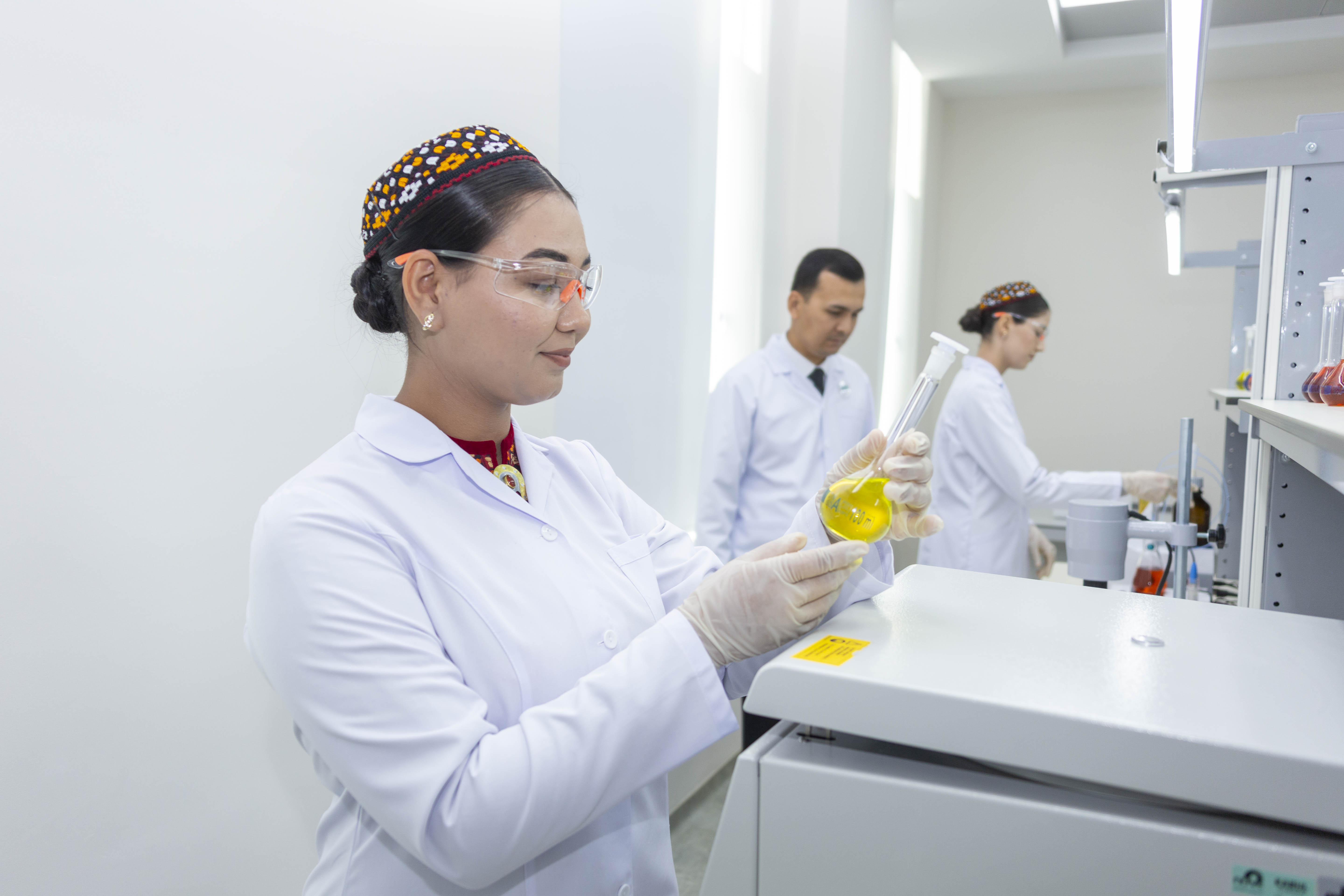
The General Chemical Technology Laboratory has implemented the Spectrocube analytical system from Spectro (Germany), which allows for high-precision X-ray fluorescence analysis and determination of the elemental composition of the materials being studied.
The new building complex of the Turkmen state institute of architecture and construction opens up broad prospects for the development of domestic science, the implementation of digital technologies, and the expansion of international academic cooperation.