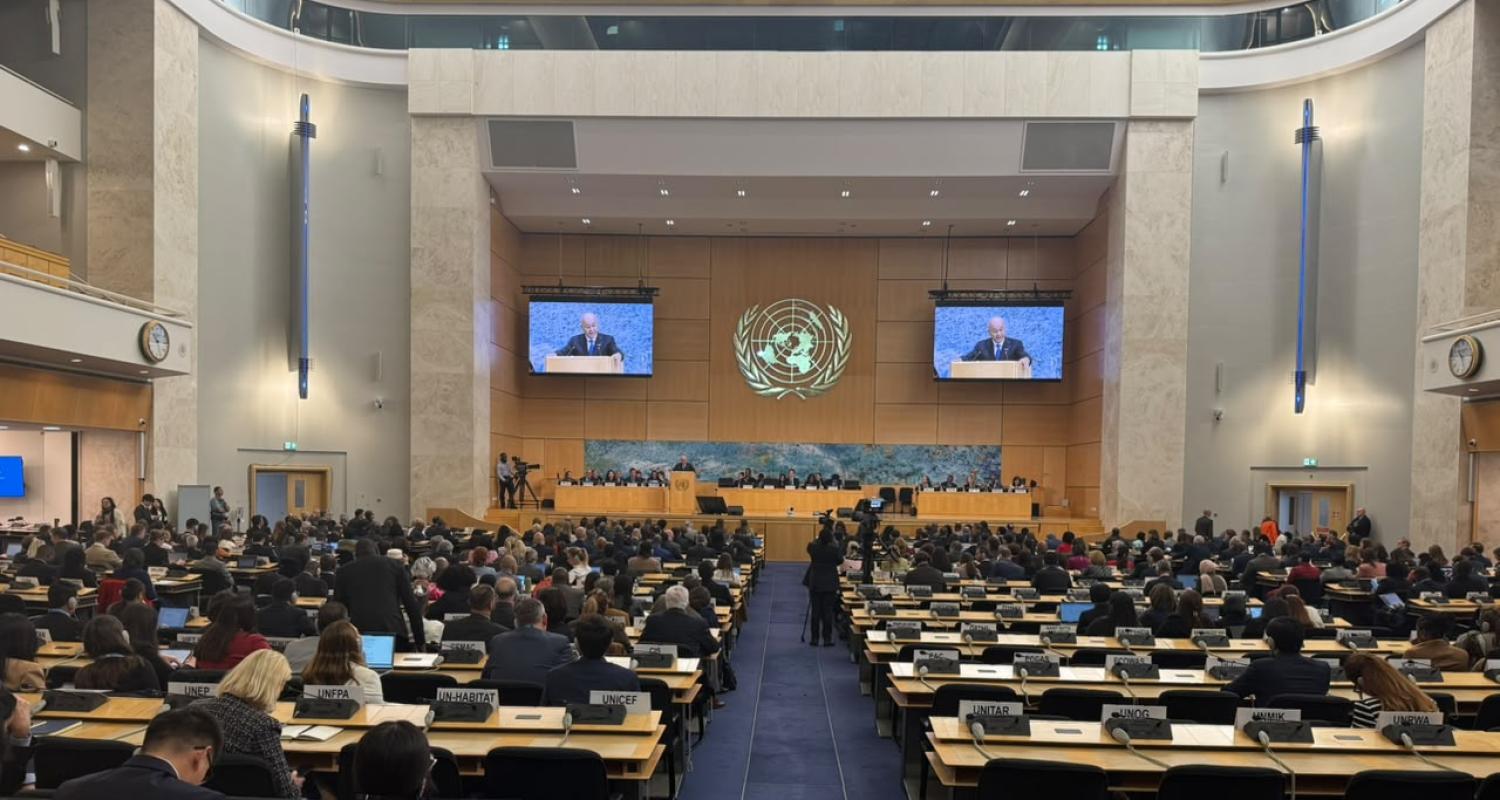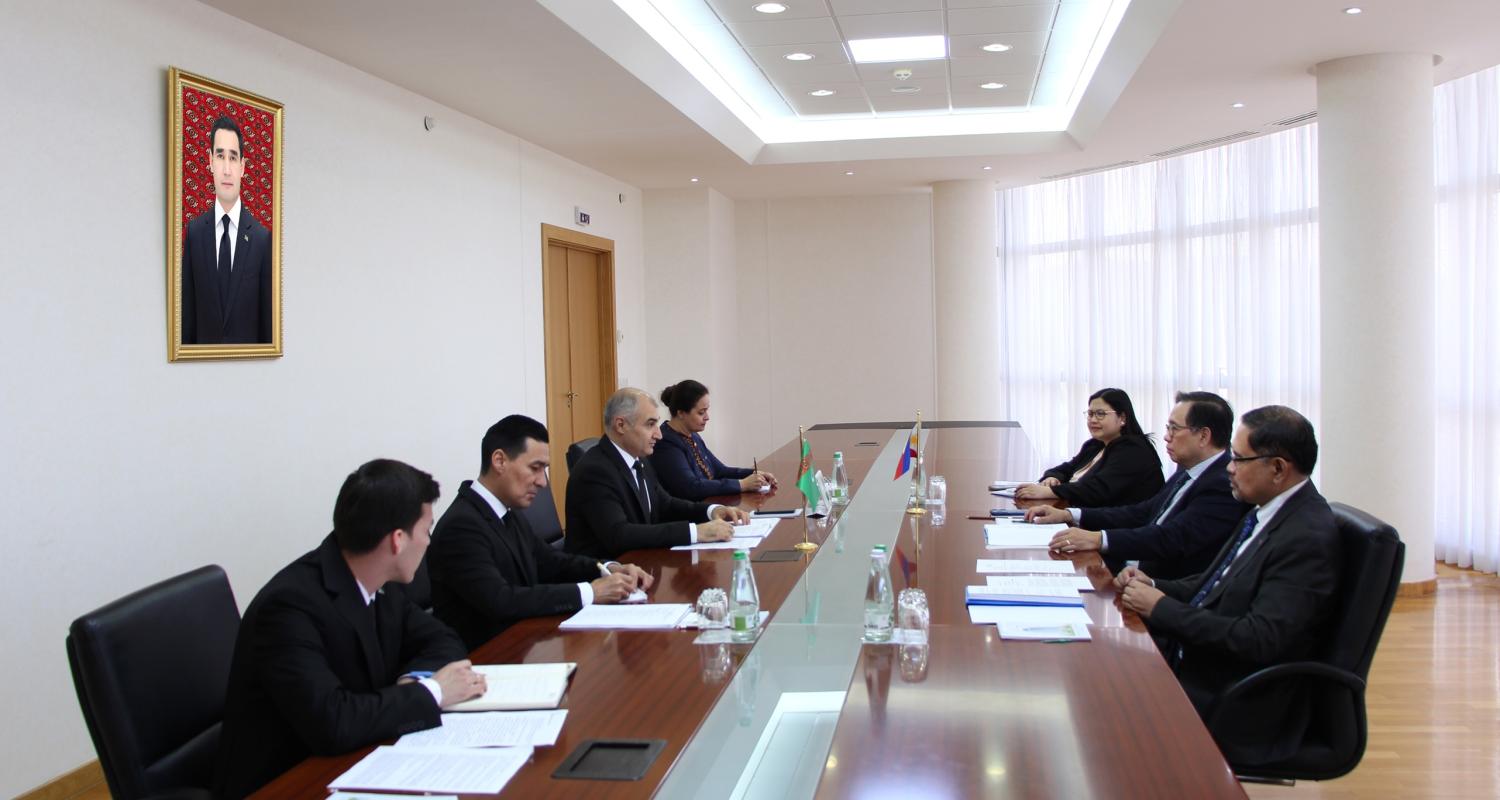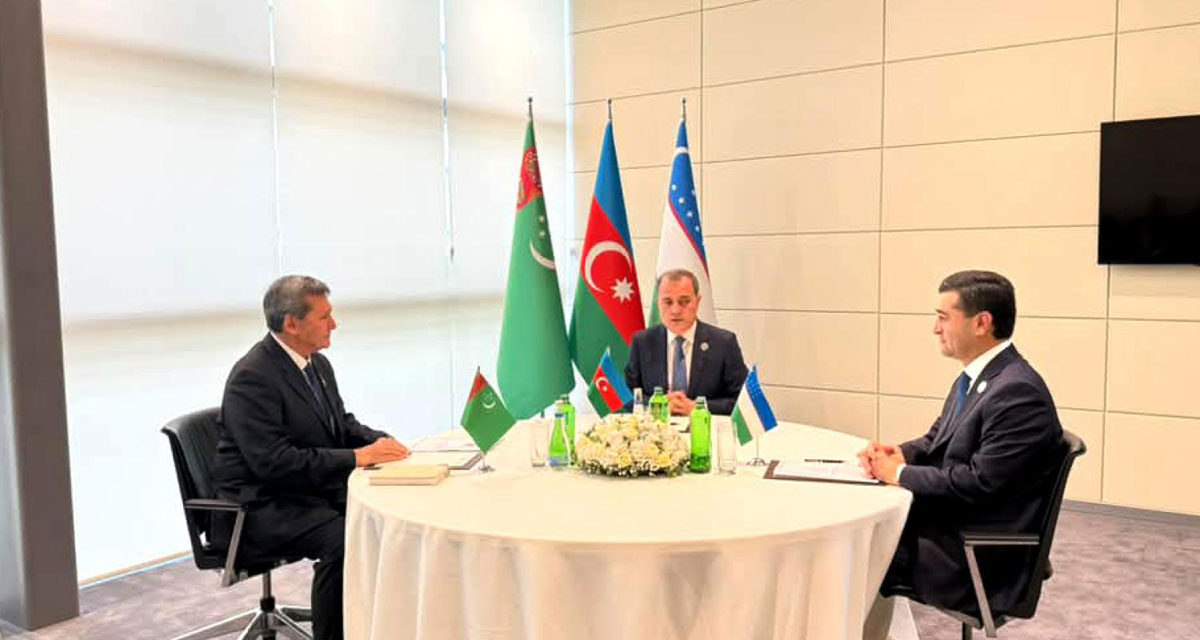



In early October of this year, the eighth Consultative Meeting of the heads of state of Central Asia and Azerbaijan took place in the «Avaza» National tourist zone, located on the Turkmen coast of the Caspian sea. The summit, held in the year marking the 35th anniversary of the states' independence, demonstrated the high relevance and independent nature of this political dialogue format. During the meetings, the heads of state discussed the development of political, trade and economic, transport, energy, and humanitarian ties. Particular attention was paid to regional security, digitalization, environmental issues, and the expansion of investment cooperation.
In their statements, the heads of state put forward concrete proposals and initiatives for further deepening and expanding cooperation. Thus, President of the Republic of Kazakhstan Kassym-Jomart Tokayev emphasised the importance of expanding interregional trade, integrating cross-border trade, logistics, and industrial hubs, and modernising transport infrastructure. President of the Kyrgyz Republic Sadyr Japarov noted the importance of equality, mutual respect, and consideration for the interests of all states. President of the Republic of Tajikistan Emomali Rahmon identified the following as priorities: industrial cooperation, the processing of natural resources, the implementation of digital and «green» technologies, the application of artificial intelligence, and support for small and medium-sized enterprises. President of the Republic of Uzbekistan Shavkat Mirziyoyev emphasized the role of the Consultative Meetings in strengthening trust among the countries of the region. The head of Uzbekistan also put forward proposals to implement a trade and economic cooperation program titled «Six Economies – One Product» through 2035; to hold a «Central Asia – Azerbaijan» business forum in 2027; to establish a platform for financial and technical support for joint investment projects; to develop a new energy concept; to implement digital monitoring of water resources; and to create an international consortium, «Clean air of Central Asia», as well as a Regional alliance on critical minerals.
In his address, President of Turkmenistan Serdar Berdimuhamedov stated that it is necessary to focus on:
– building the capacity of the six-party partnership, and preserving and strengthening the spirit of solidarity, unity, and mutual support among the countries and peoples;
– ensuring a lasting peace, security, and predictability in the region and adjacent areas, and creating conditions for an effective political and diplomatic dialogue with partners on pressing international issues;
– injecting new momentum into trade, economic, and investment cooperation, and joining forces to transform Central Asia and Azerbaijan into key, indispensable participants in the continent’s transport-logistics, energy, and industrial corridors along the East–West and North–South axes;
– creating conditions for accelerated technological development and the implementation of artificial intelligence, with the goal of achieving a competitive global standing in these areas;
– creating conditions for accelerated technological development and the implementation of artificial intelligence, with the goal of achieving a competitive global standing in these areas;
These are extremely clear, concrete initiatives. On the diplomatic front, given the expansion of the circle of partners, a proposal was put forward to establish a six-party consultation mechanism between foreign policy agencies within the framework of the consultative meetings to be held on a regular basis.
Following the meeting, the heads of state signed and approved key documents:
– The Joint Statement is a concluding political document that captures the shared vision of the «C6» leaders regarding key areas of cooperation: expanding regional trade, implementing transport and logistics projects (including the development of the Trans-Caspian route), coordinating efforts in the energy, water, and climate sectors, and jointly addressing security challenges;
– The decision regarding the regulatory documents for the Consultative Meeting is an institutional one; it updates and formalizes the rules and operational procedures for the «C6» format meetings, taking into account the full-fledged accession of Azerbaijan.
It was decided that the next meeting of the heads of state of Central Asia and the Republic of Azerbaijan will take place in 2027 in the Republic of Azerbaijan.
The numerous assessments and comments from political analysts and experts from various countries that followed the conclusion of the «Avaza» summit were predictably logical and clear.
Regional experts unanimously noted that the eighth Consultative Meeting of the heads of state in the «C6» format (five Central Asian countries plus Azerbaijan), held in «Avaza», solidified the transformation of this framework from a consultative platform into a full-fledged economic and geostrategic alliance. The main conclusions and assessments from political analysts and experts in the region are as follows:
First. The inclusion of Baku in the format has definitively cemented the Trans-Caspian connecting bridge. Analysts emphasize that pooling the resources of the six states creates an internal market with a combined GDP of over $620 billion and a population of approximately 85 million people.
Second. The signing of regulatory documents governing the conduct of meetings demonstrates readiness of the leaders to move from declarations to the operation of a systematic coordination mechanism. The transfer of the chairmanship to Azerbaijan places greater emphasis on ties with the South Caucasus and Europe.
Third. Experts identify the transport sector as central to C6. The development of the Trans-Caspian International Transport Route (TITR) via Turkmen and Azerbaijani ports is becoming an essential, primary objective for Kazakhstan, Uzbekistan, and other countries in the region.
Fourth. Political analysts point to initiatives focused on the unified digitalisation of customs procedures, the optimization of tariffs, and cooperation on infrastructure. The expert community speaks highly of proposals to establish a shared computing infrastructure and databases for industrial cooperation. This is seen as a step toward reducing technological dependence and increasing the value added to products manufactured in the region.
Fifth. In the context of the summit held in «Avaza» (on the Caspian sea coast), experts emphasise the importance of the environmental agenda primarily the issue of receding water levels of the Caspian sea and the rational use of water resources. Cooperation in the realm of «green» energy and electricity exports is viewed by them as a promising avenue for Azerbaijan, Kazakhstan, and Uzbekistan.
Overall, regional observers agree that the summit in «Avaza» demonstrated a high degree of consolidation among the countries of Central Asia and the Caucasus. The countries within this format no longer position themselves as objects of influence for external players, but rather as independent actors in global politics and trade, possessing significant transit and resource potential.
Supporting these conclusions are assessments from specific experts.
Sanjar Valiyev (Director of the centre for foreign policy research and international initiatives under the MFA of Uzbekistan):
«MICA analysts regularly emphasize that the formalization of consultative meetings and the inclusion of Azerbaijan are transforming the region from an «object» of geopolitical rivalry among external actors into a «subject» of international politics one capable of independently shaping its own transit, logistics, and economic agenda».
Erkin Tukumov. (Director of the Kazakhstan Institute for Strategic Studies under the President of the Republic of Kazakhstan, KISS): «KISS experts promote the thesis regarding the agency and “strategic autonomy” of Central Asia». In their assessments, expanding the format to include Azerbaijan is seen as the key to transforming the region into a unified transit hub and an independent center of power in Eurasia.
Farhod Tolipov (director of the non-governmental research institution «Znaniye Ma'rifat», Uzbekistan): «Strengthening the internal institutional ties of the «group of five» (now a «group of six») is the only way to forge a robust international agency for the region one that major global powers will be compelled to reckon with».
Ilgar Velizade (Chairman of the «South Caucasus» Political Scientists Club, Azerbaijan): «Azerbaijani experts emphasize that pooling the resources of the Central Asian countries and Azerbaijan creates a bridge between Asia and Europe, transforming this macro-region into a unified, economically self-sufficient participant in global trade».
Mehmet Fatih Öztarsu and analysts at ANKASAM (Centre for Crisis and Policy Studies, Türkiye) state: «International and regional experts analyzing the dynamics of the meetings in «Avaza» note that the transformation of the format into «C6» creates a geopolitical configuration that possesses its own weight in terms of both resources and transit on the international stage».
It should be noted that there is also a more pragmatic view of outcomes of the summit within the expert community. Proponents of this approach believe that without strict centralisation, it will be difficult to move forward. Yet they, too, rightly point out that the current flexible format («C5+1» or «C6») is, at this stage, more viable and enduring than any other alternative. As emphasised, the format of Consultative Meetings currently being developed is built upon a fundamentally new logic referred to in international politics as «soft regionalism» or «networked cooperation». In this format, there are no supranational officials in the capitals issuing orders. Each country retains 100 percent of its sovereignty and may choose to join only those projects that are to its benefit (for example, the construction of a railway or a unified digital customs system).
«C6» is not being created as an ideological bloc or an alliance «against anyone». This is a strictly economic and transit-focused cooperative arrangement: it entails the joint development of the Middle Corridor, trade in energy resources, and the integration of logistics networks. The countries involved in this format do not forgo their relationships with major global players (such as China, Russia, the United States, and EU nations). They join forces solely to strengthen their position in the dialogue with them, by presenting a unified, agreed-upon platform.
The model of flexible network-based cooperation in which states retain full independence while coordinating infrastructure, logistics, and tariffs appears far more resilient than other models. It is not based on coercion or a unified ideology, but rather on the tangible, practical benefits for each individual country in the region.
Some Russian experts (from the Valdai Club, IMEMO RAS, and other organizations) view the summit in «Avaza» primarily through the lens of strategic partnership, logistics, and regional security.
Western experts (Chatham House, Carnegie Endowment), meanwhile, view the Avazinsky summit through the lens of diversifying logistics and strengthening regional integration.
This is also evidenced by the statements of the heads of six states, who, in their final declaration, affirmed their interest in expanding regional partnership, strengthening security, and developing economic and humanitarian ties, as well as the importance of coordinated action on international platforms.
Allaberdi Nyyazov,
senior researcher at the centre for strategic studies of the IIR of the MFA of Turkmenistan