


In the era of the Revival of the new epoch of the powerful state, the initiatives of the National Leader of the Turkmen people, Hero-Arkadag, in the field of environmental protection and turning the country into a blooming garden are being successfully implemented under the wise leadership of President Serdar Berdimuhamedov. Thanks to the annual spring and autumn nationwide greening campaigns, in which citizens of all ages actively participate, hundreds of thousands of trees are being planted in our Fatherland. Constant care is also being taken of previously planted trees. This clearly testifies to the effective implementation of environmental policy in the country. In the complex of measures to protect nature, which is one of the most important directions of the state strategy, a special place is assigned to protected areas. Among the sites successfully carrying out nature conservation activities is the Amudarya State Nature Reserve, which strikes the imagination with its unique beauty at any time of the year.
The head of the scientific department of the reserve, A. Sadykov, spoke about the activities of the employees and the unique features of this natural corner:
– The Amudarya State Nature Reserve was created in 1982 for the purpose of scientific study and preservation of the ecosystems of the tugai forests bordering the banks of the middle reaches of the Amudarya (Jeyhun) River, and the coastal areas of the Kyzylkum and Karakum deserts. The reserve included the Goreldi, Gabakly and Nargyz sections, and the Kelif sanctuary was also transferred to its jurisdiction.
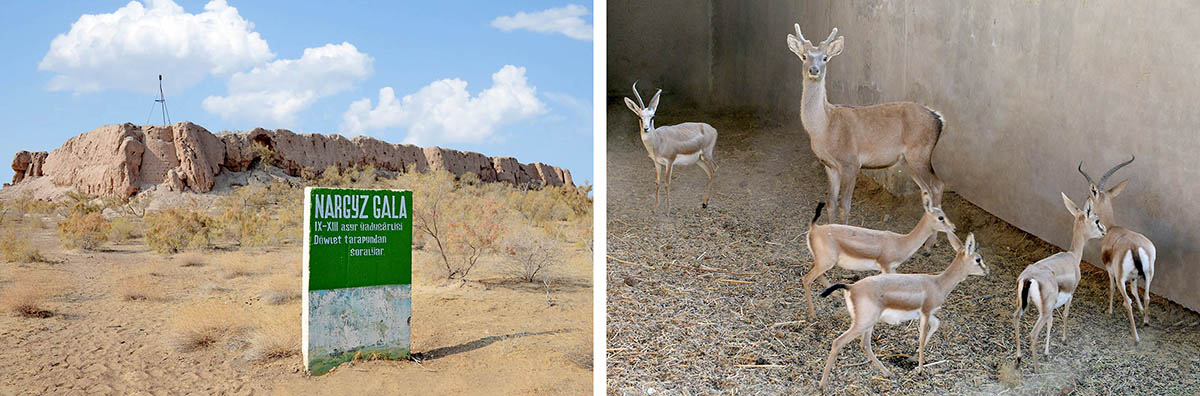
The main sections of the reserve are located in the northeastern part of the Lebap velayat on the territory of the Danew, Darganata and Farap etraps and occupy an area of 48,350 hectares. The Kelif sanctuary stretches across the southeast of the Karakum, on the territory of the Halach and Kerki etraps, and occupies an area of 103,000 hectares. The reserve is located within the northern landscape region of the sandy-desert zone of the Turan Lowland. The Gabakly and Goreldi sections of the reserve lie on the left bank of the Amudarya, and the Nargyz section – on the right.
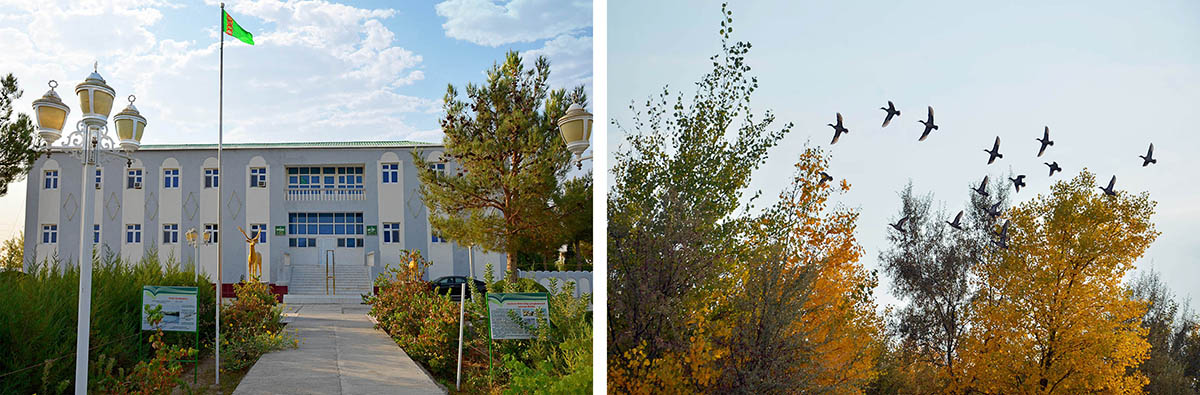
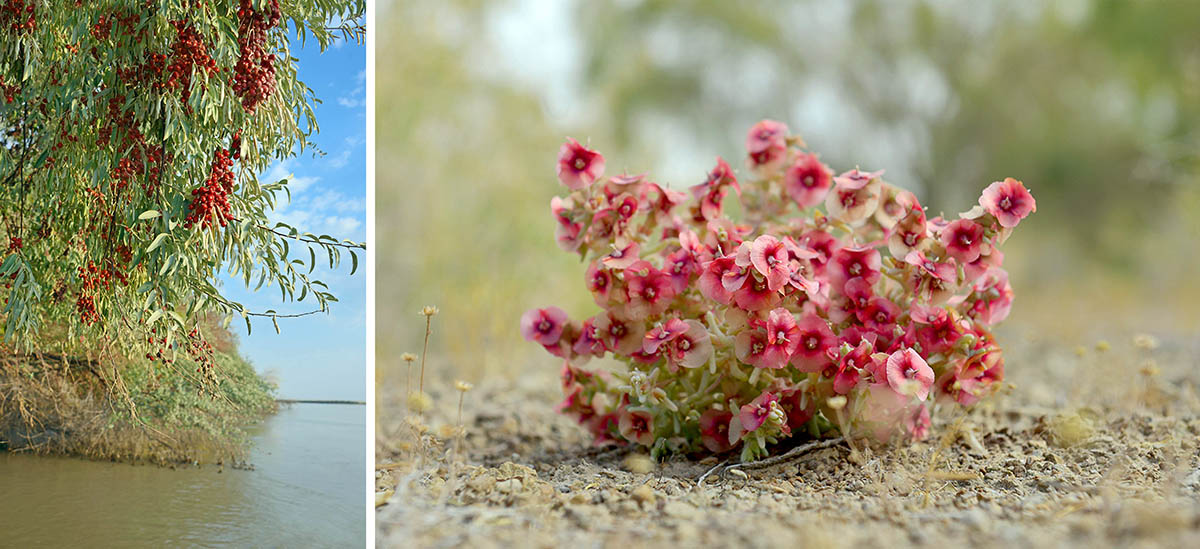
The Nargyz section with a total area of 28,177 hectares consists not only of coastal tugai forests, but also includes the desert landscapes of the Kyzylkum on the northeastern border. Forests occupy 3,246 hectares of this territory. Large specimens of tree-like saxaul, elm, as well as turanga (Euphrates poplar), reaching a height of 13–14 meters, testify to the ancient origin of the local tugai.
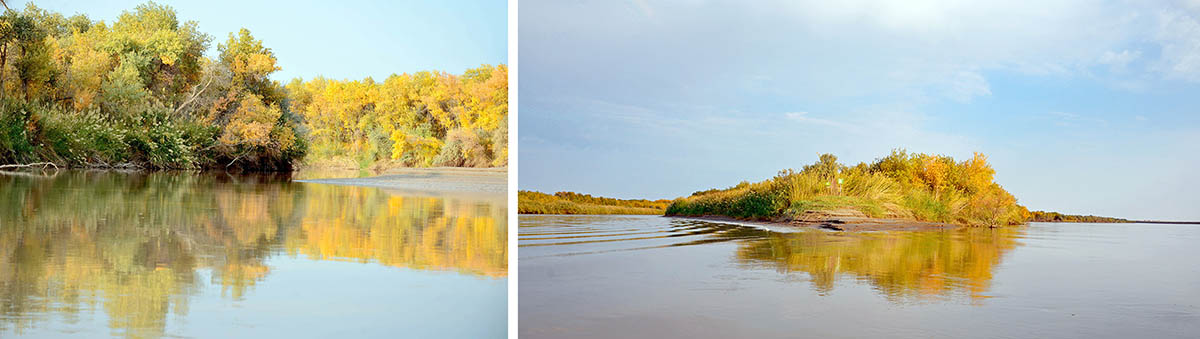
The Gabakly section of the reserve is located on the left bank of the Amudarya, 6 kilometers from the village of Gabakly. In the southwest it borders on the Karakum desert, and in the northeast it reaches the river, beyond which the Kyzylkum desert stretches. The relief of the section is distinguished by great diversity. Here there are river channels separating forest tracts, lowlands covered with reeds, sand dunes, as well as sparse and dense tugai thickets.
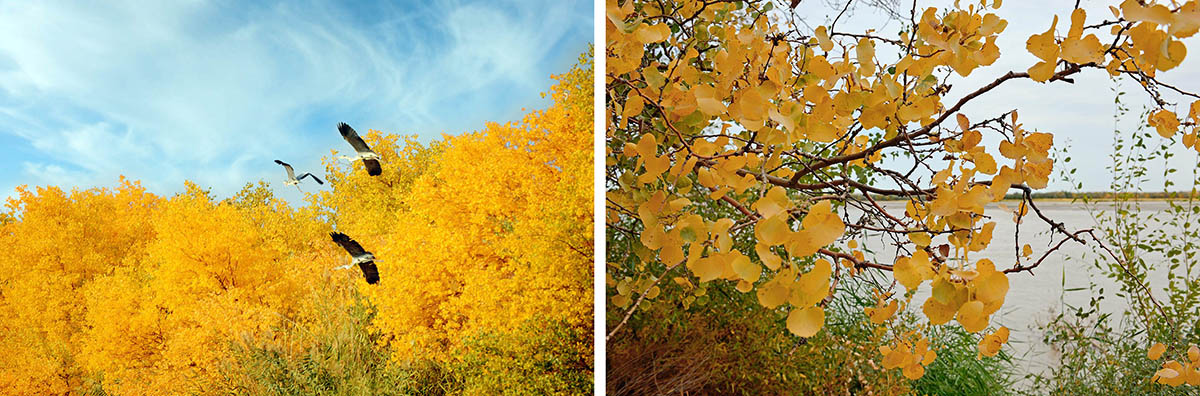
The Goreldi section of the reserve is located in the Darganata etrap, in the north of the Lebap velayat. This territory with an area of 2,058 hectares, completely surrounded by forests, borders on the Karakum desert in the southwest. A high activity of Bukhara deer has been recorded here. The vegetation in the tugai is dense and mixed.
Over almost 45 years since the creation of the Amudarya State Nature Reserve, a number of scientific studies have been carried out here on environmental protection and the study of flora, fauna and ecosystems. Effective work is underway to restore and enrich the plant and animal world of the reserve.
Here dwell 41 species of mammals, 36 species of fish, 2 species of amphibians, 29 species of reptiles, several hundred species of invertebrates (including more than 80 species of spiders), and 175 species of birds have also been recorded. In addition, many wintering and migratory birds migrating along the river find refuge in these places. One of the main features of the reserve is that the Bukhara deer, widely known as the tugai noble deer, lives here. At present, the work to protect it and increase its numbers is yielding successful results.
The leaves, flowers, fruits and roots of the plants growing in the tugai serve as the main food base for the local fauna. Among the birds inhabiting the reserve, one can first of all note the Amudarya pheasant, the white-tailed eagle, the pink and Dalmatian pelicans, the black duck, the Pallas's fish eagle, the eagle owl, the night heron, the greylag goose and others.
Among the mammals, one can meet here the otter, the jungle cat, the Bukhara deer, the badger, the honey badger, the steppe cat, the jackal, the goitered gazelle, the hare, and the long-eared hedgehog.
The flora of the Amudarya Reserve is also distinguished by its diversity. 227 species of higher plants grow here. According to the results of scientific research, 125 species of plants have been identified in the desert territories, among which 15 are medicinal. In the forest zones, 86 species are found, of which more than 30 are recognized as medicinal.
Trees such as turanga, tree-like saxaul, elm, and Dzungarian willow predominate here. Impassable tugai thickets of tamarisk, chingil, licorice, wolfberry (khash) and common reed form the main habitat of wild animals, their true natural home. In the coastal tugai of the Amudarya, 35 species of medicinal plants have been recorded, which have been used in folk medicine since ancient times.
The scientific staff of the reserve carries out important work on the preservation and propagation of rare plant species. Specialists also make a great contribution to the implementation of the state environmental policy and the fostering of a careful attitude toward the environment. All this activity is aimed at maintaining the ecological well-being of the region and preserving the beautiful gift of nature.