




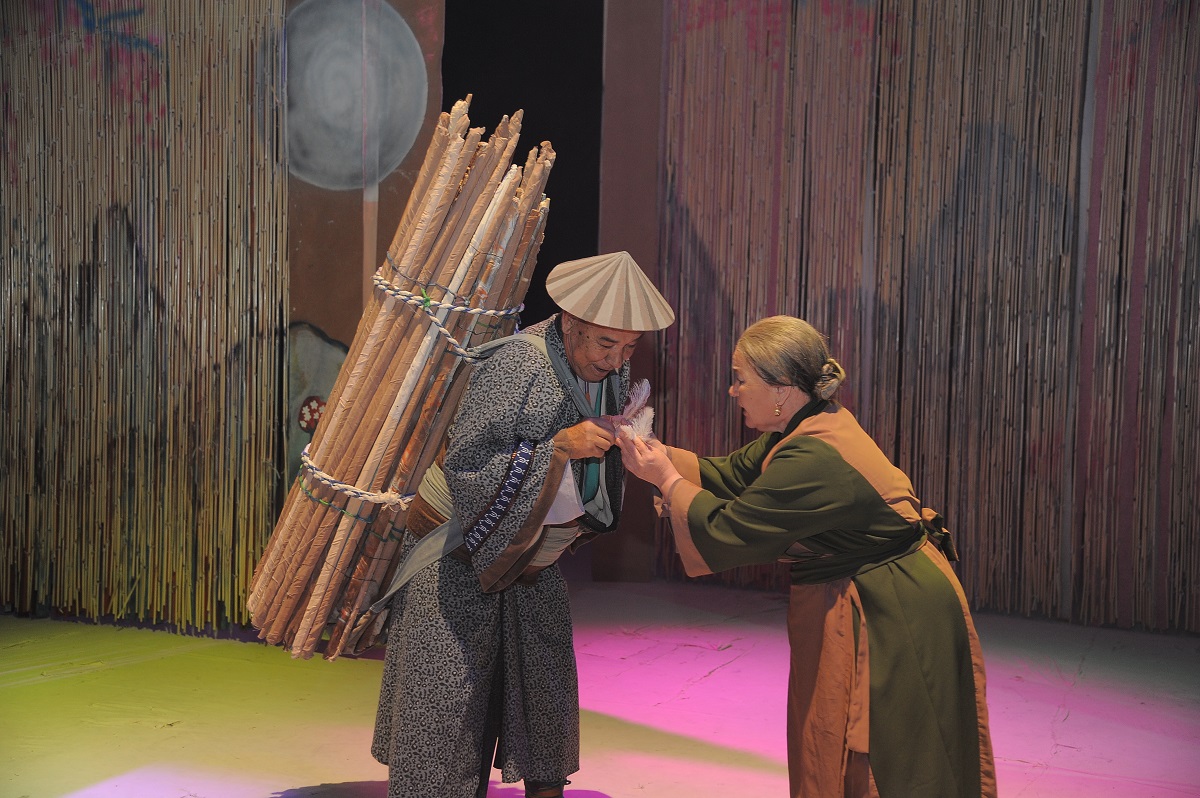
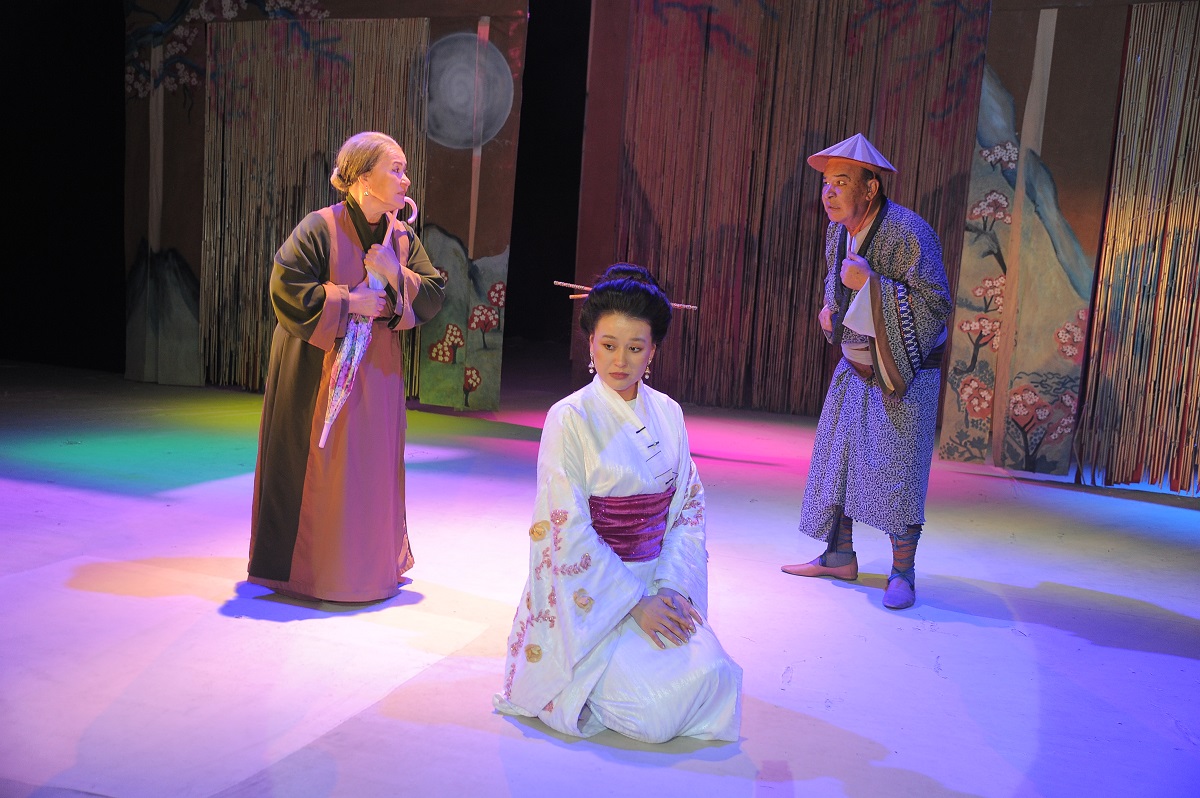
On the first day of the Week of Foreign Drama, a premiere performance of the Japanese folk tale “The Grateful Crane” was staged at the Main Academic Drama Theatre of Turkmenistan named after Saparmyrat the Great. All fairy tales—Turkmen, Arab, Russian, or American—share a common call to kindness. The Japanese tale “The Grateful Crane” is yet another confirmation of this.
The performance begins immediately with a good deed. An old man in the forest frees a crane that entangled in nets. The bird decides to thank her rescuer. She transforms into a young woman and asks to stay in his home on the condition that no one enters her room while she is working. The old man and his wife lived in such poverty that they could not pay their taxes, so the girl, named Durdane-ai, wove a fabric of extraordinary beauty for them. Not only were the old couple able to pay their taxes, but they also saved some money for a rainy day. However, the greed of the tax collectors, who ordered more of the same fabric from the old couple, pushed them to peek into Durdane-ai’s room. The secret of the girl-bird, who wove the cloth from her own feathers, was revealed, and she, turning back into a crane, left the old couple’s home.
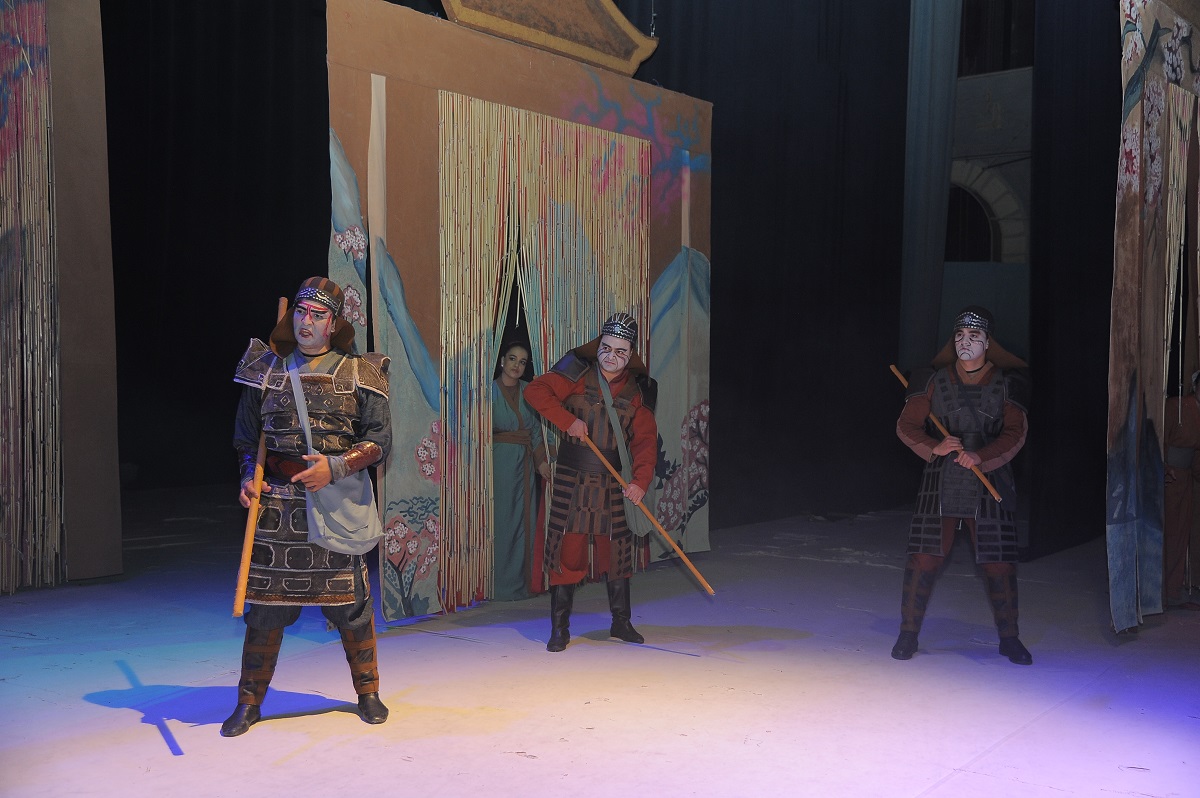
The tale “The Grateful Crane” was staged for Turkmen audiences by the director, People’s Artist of Turkmenistan Kakajan Ashyrov. The main achievement of the production is that the tale was presented in an authentically Japanese style. This was made possible by the musical design of Derkar Jalilov and Eziz Saparov, as well as the scenography and costumes created by Honored Worker of Culture of Turkmenistan Maksat Amangylyjov and Guljemal Saparova.
But above all else was the acting. It is well known that under Kakajan Ashyrov’s direction, poor acting is impossible, and every actor excelled. Yet the one who surpassed them all was People’s Artist of Turkmenistan Orazgeldi Durdyyev, who played the role of the old man Yamamoto. The actor inhabited the role so naturally that it seemed as though he himself were a native of Japan.

The ethereal beauty of Durdane-ai, portrayed by Ogulgovkher Mukhammedova, captivated the audience. Despite the tale’s sad ending, the performance left viewers with a pleasant sense of sentimentality. Much of the credit for this belongs to the entire creative team of the Main Theatre.
“We chose to present a Japanese tale during the Week of Foreign Drama,” says director Kakajan Ashyrov, “because Turkmenistan’s status of Permanent Neutrality forms the basis for the cultural tolerance of different peoples. The ancient and rich culture of Japan embodies the same spiritual values as the culture of the Turkmen people.”


