



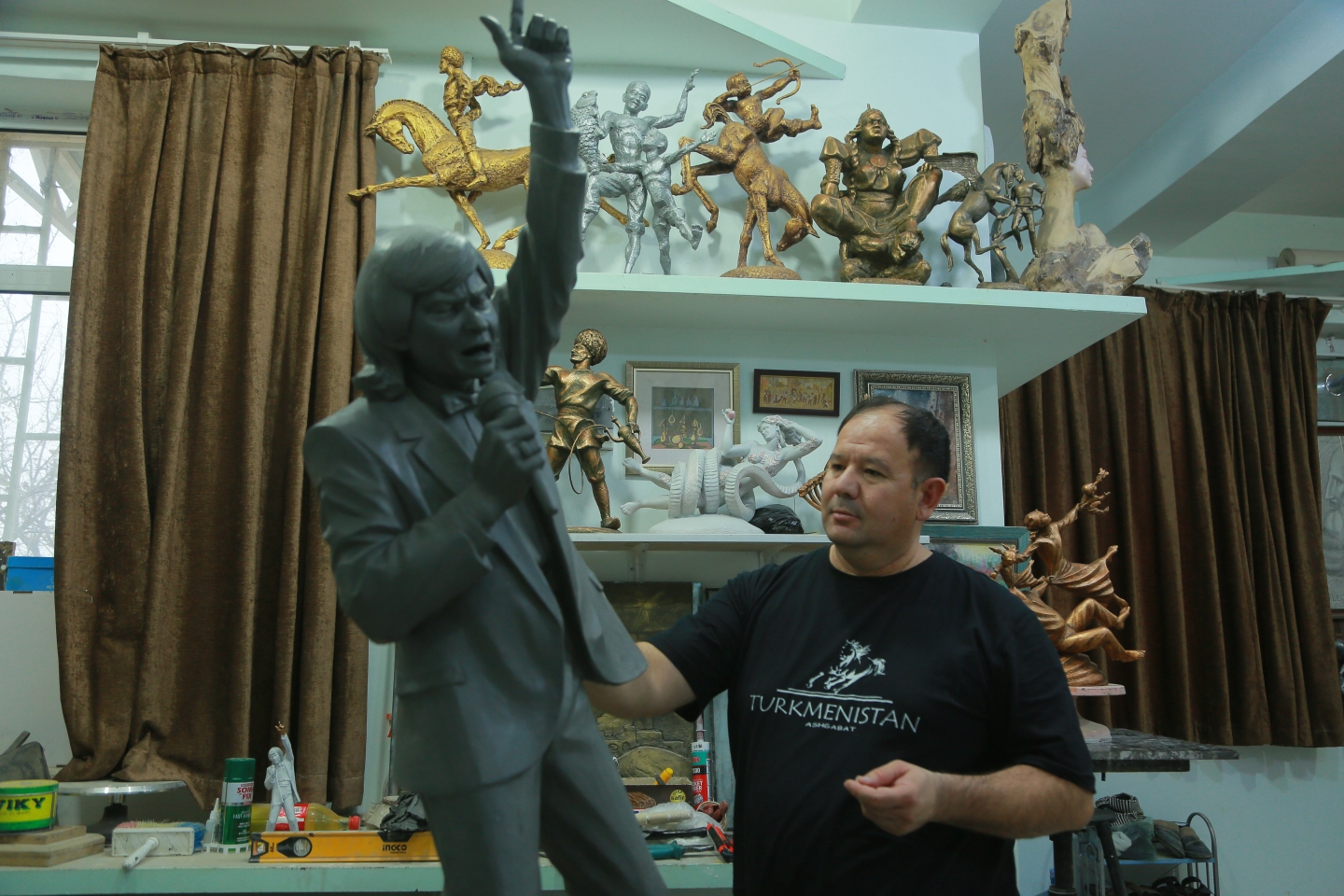
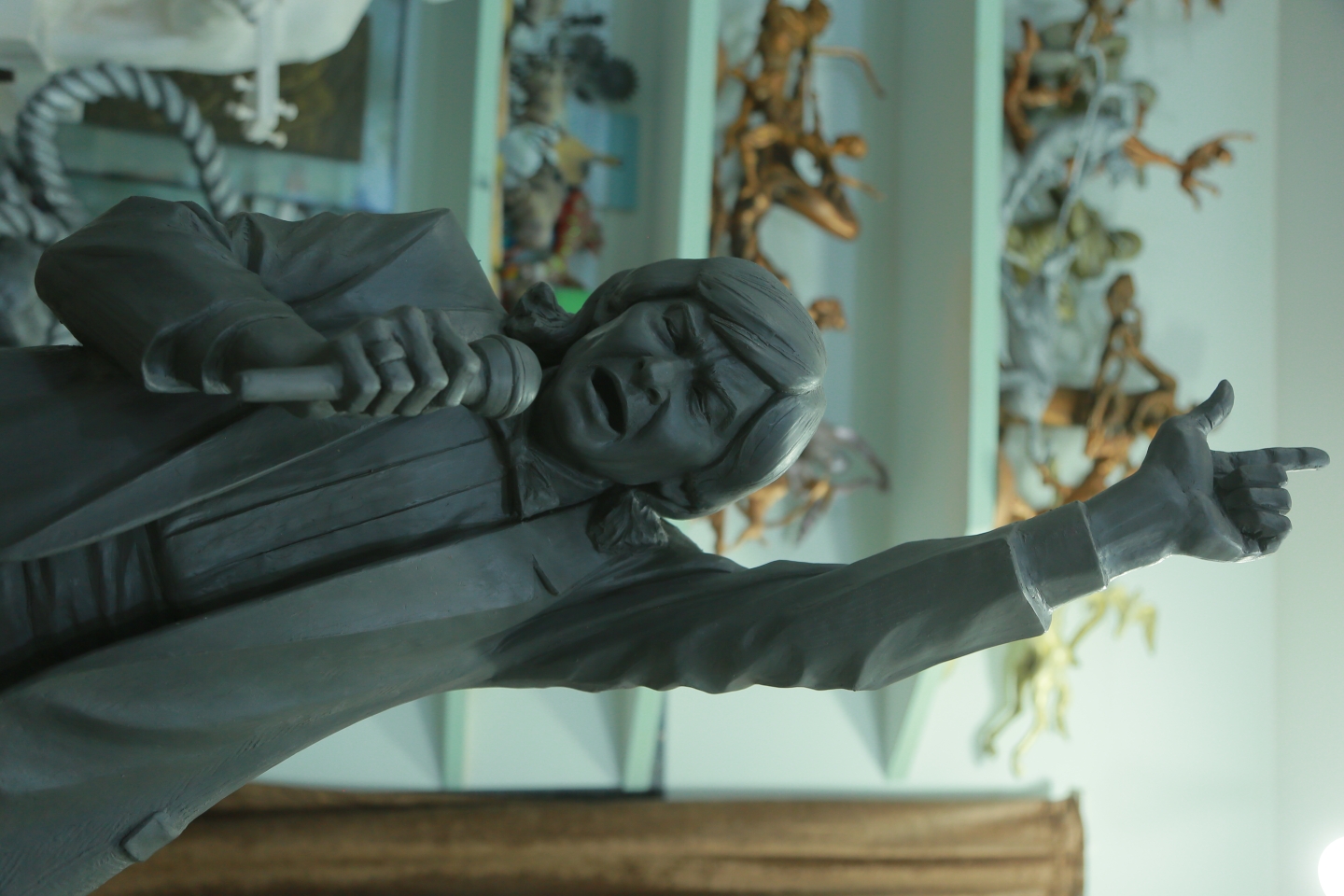

It sometimes happens that a personal exhibition by an artist has already ended, yet discussions about it continue among lovers of the fine arts. This was also the case with the exhibition of sculptor Maksatmyrat Hojainov. Therefore, we decided to visit the artist’s studio, where we found him at work on a sculpture of Atabay Charygulyyev, People’s Artist of Turkmenistan, laureate of the Magtymguly Prize. The singer stands on an improvised stage and performs one of his popular songs into a microphone. The sculpture clearly bears Hojainov’s signature style — the singer’s light, relaxed pose and the emotional energy emanating from him.
— Please tell us how you became a sculptor.
— From early childhood I loved to draw, — Maksatmyrat Hojainov began his story. — Once I drew my mother sorting rice for pilaf. The drawing turned out so successful that my mother gave it to television, and it was shown on the program “Good Night, Little Ones.” For me, a five-year-old boy, that event became the starting point of my dream to become an artist.
However, my mother saw me as a jeweler, like her brother Ovez Soyunov. Therefore, my education began at the Children’s Art School named after Byashim Nurali, in the jewelry department. My childhood was very demanding: studying at two schools and traveling the Anev–Ashgabat route, which took 1.5–2 hours one way and the same amount of time back.
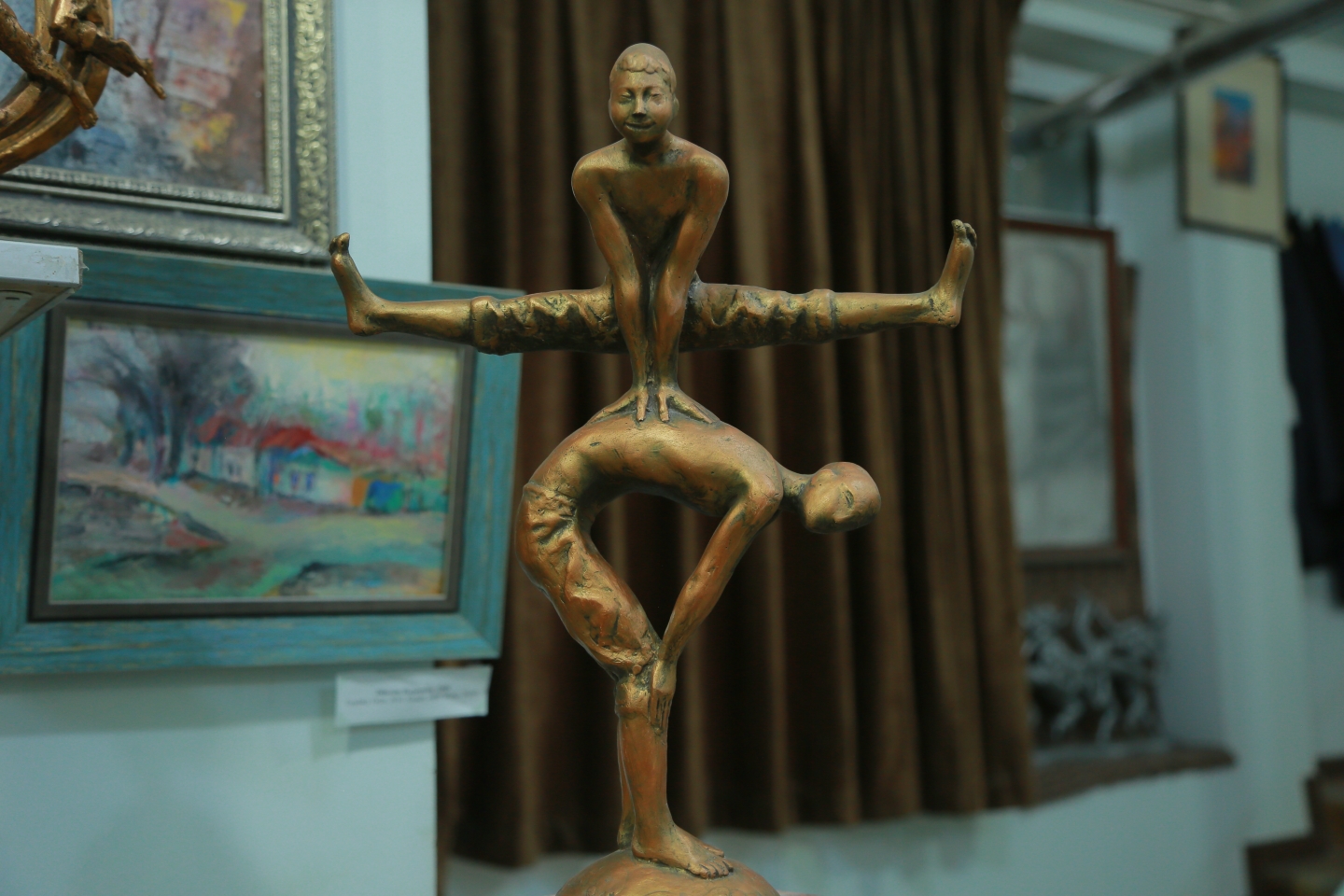
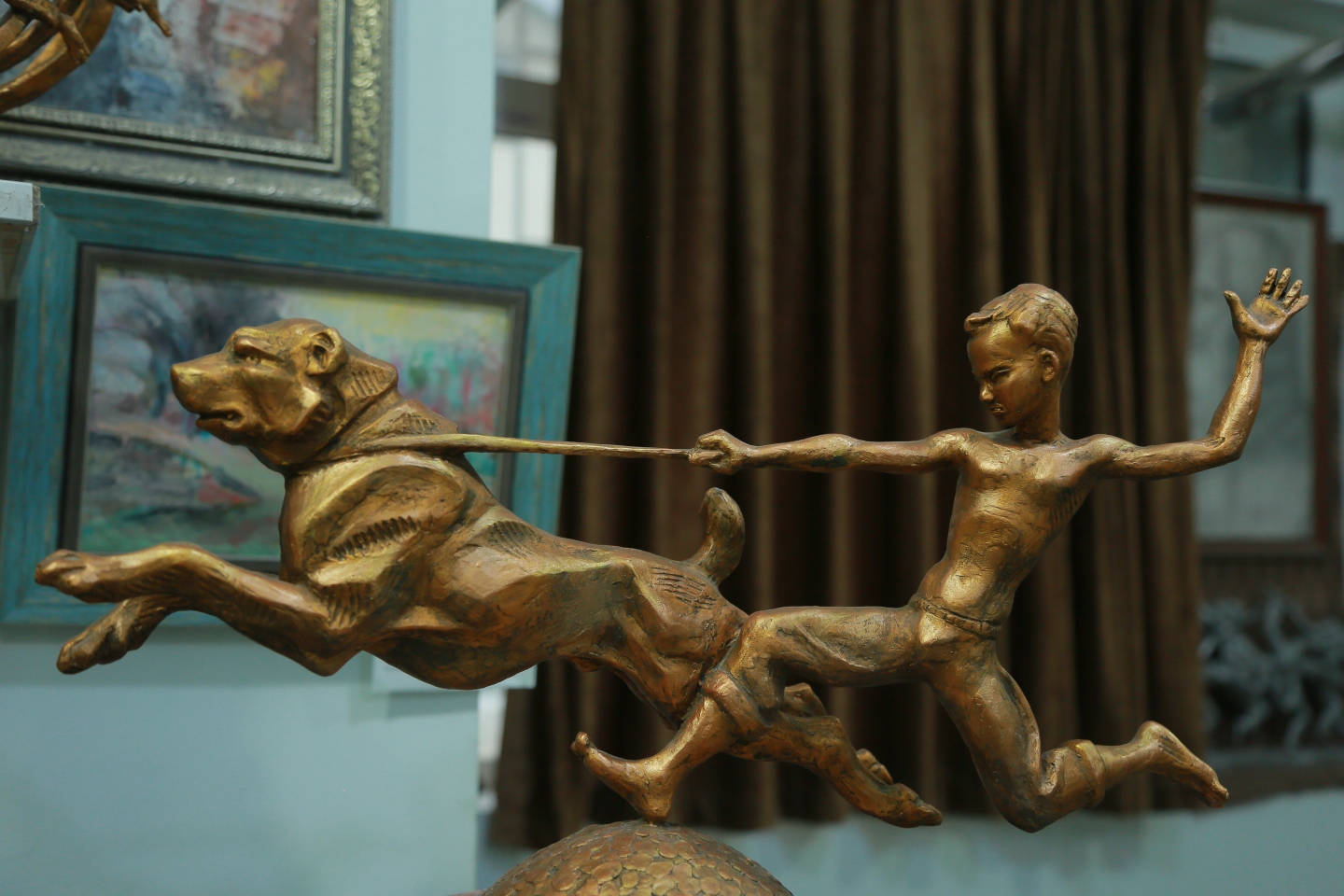
And yet, on the shelves of his studio there are many wonderful works devoted to childhood: “Fishermen,” “Children’s Games,” “Leapfrog,” and others. They are filled with the genuine joy characteristic of that age.
— But I also had summer holidays, which brought me back to a carefree childhood, — explains the sculptor.
At the time of his admission to the Turkmen State Art College, there was no enrollment in the jewelry department, so among the other specialties Maksatmyrat chose sculpture. But his mother did not abandon her intentions and decided that her son would study jewelry in parallel under his uncle, Ovez Soyunov. The teacher Saragt Babaev recognized her plan:
— Choose one thing, — he advised Maksatmyrat. — If you chase two hares, you’ll catch neither.
Contrary to his mother’s wishes, Maksatmyrat chose sculpture. Being a student of Saragt Babaev was not easy. The teacher demanded that students produce 30 sketches and one finished drawing every day. There was catastrophically little time. Maksatmyrat adapted by completing assignments on the road: at bus stops, at the Teke Bazaar, and sometimes right on the bus. One of his favorite works from that time, which today occupies an honored place in his collection, is aptly titled “At the Tekinka.”
— Thanks to Saragt Babaev, I met my future wife, Dilaram. We attended “Evening Drawing” sessions together at the master’s studio. At that time I was finishing my studies at the State Academy of Arts, and she was a first-year student at the art college. I was flattered to learn that the young woman studying in the painting department was familiar with my composition “Gorogly with His Grandfather Jygalybek.” Dilaram liked my work, and I liked hers. That’s how our friendship began.
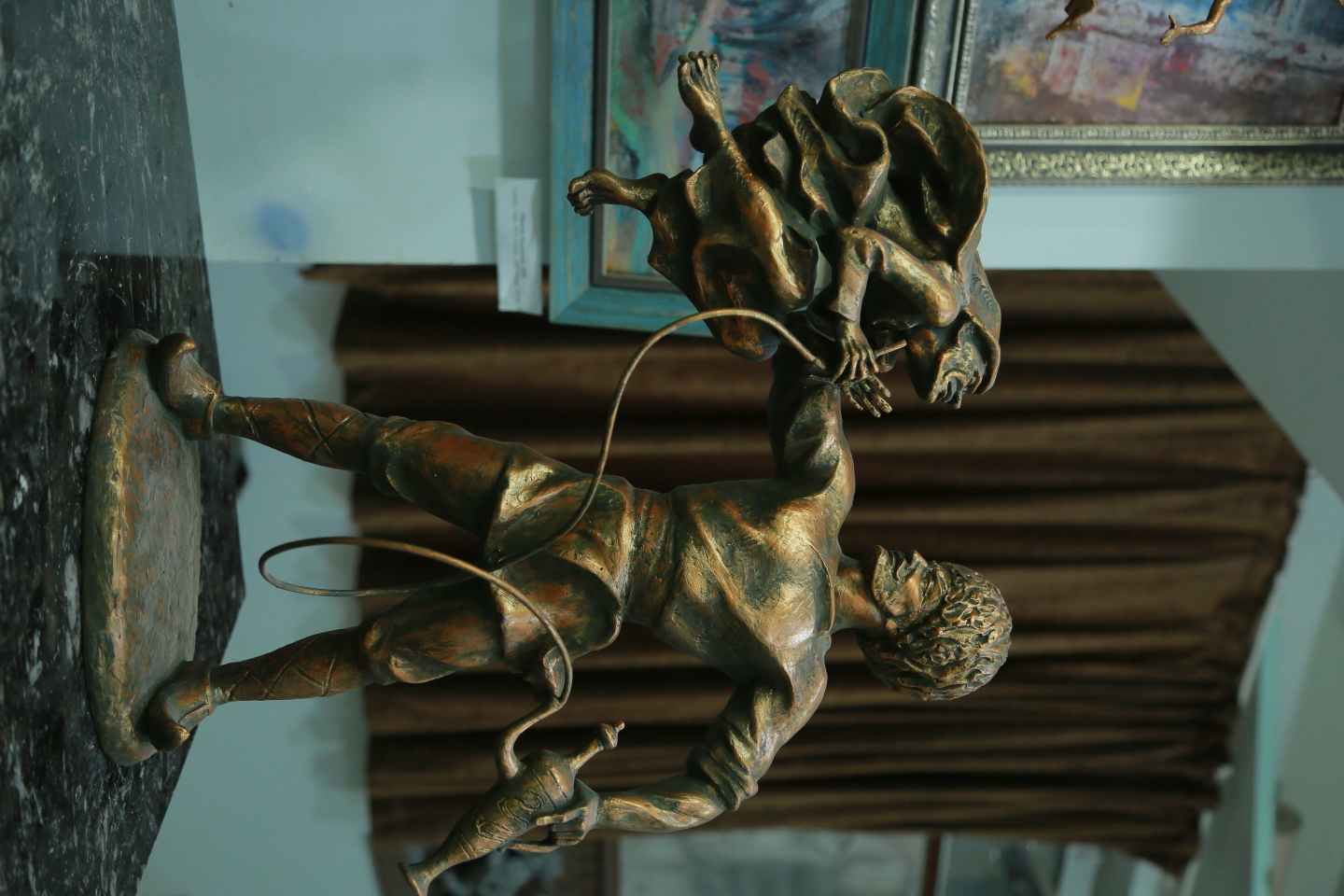
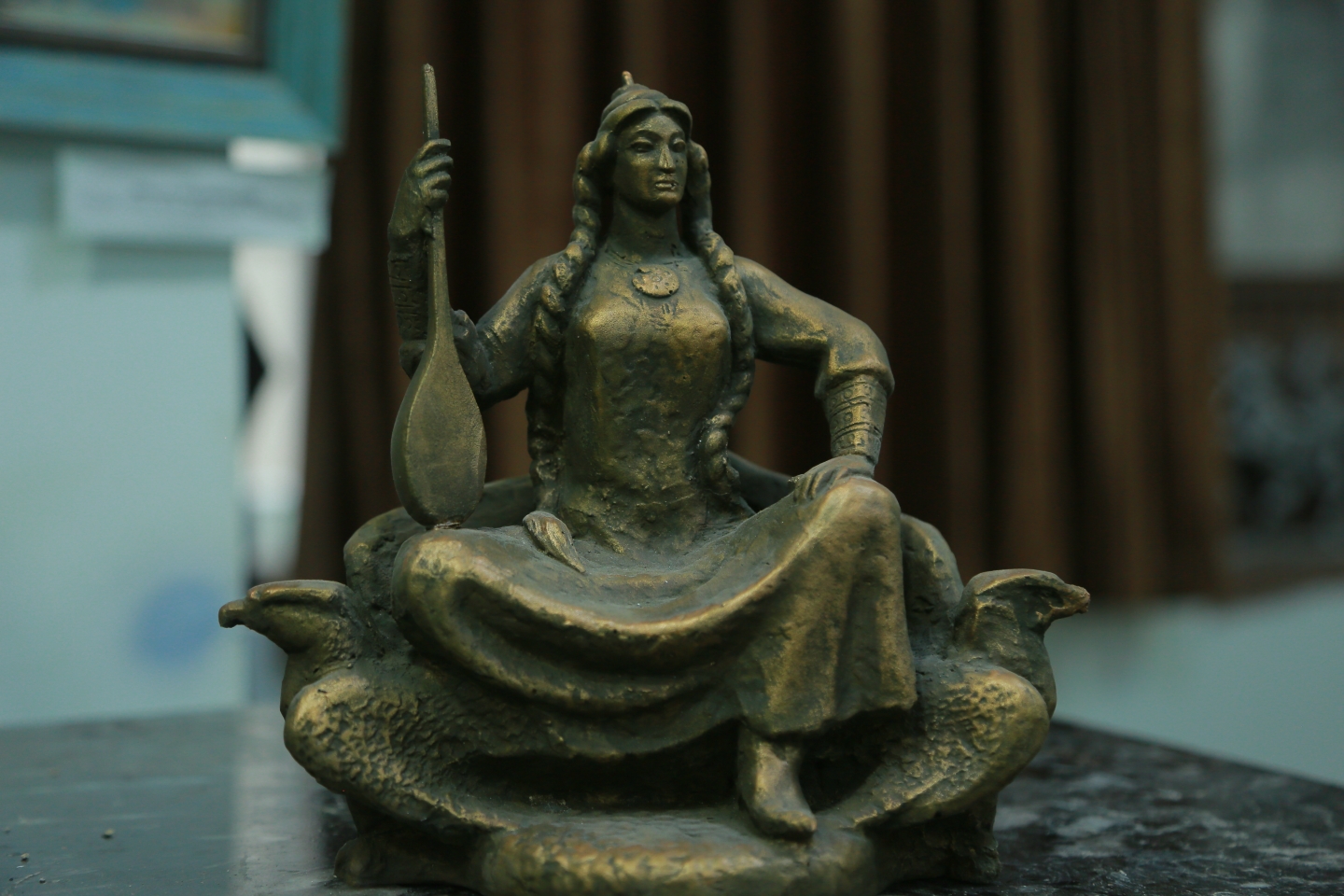
It should be noted that the epic “Gorogly” made an indelible impression on Maksatmyrat. He created many of the epic’s characters in plaster and bronze. His favorite heroine from the epic is Harmandali — a warrior maiden who defeated all suitors competing for her hand and heart.
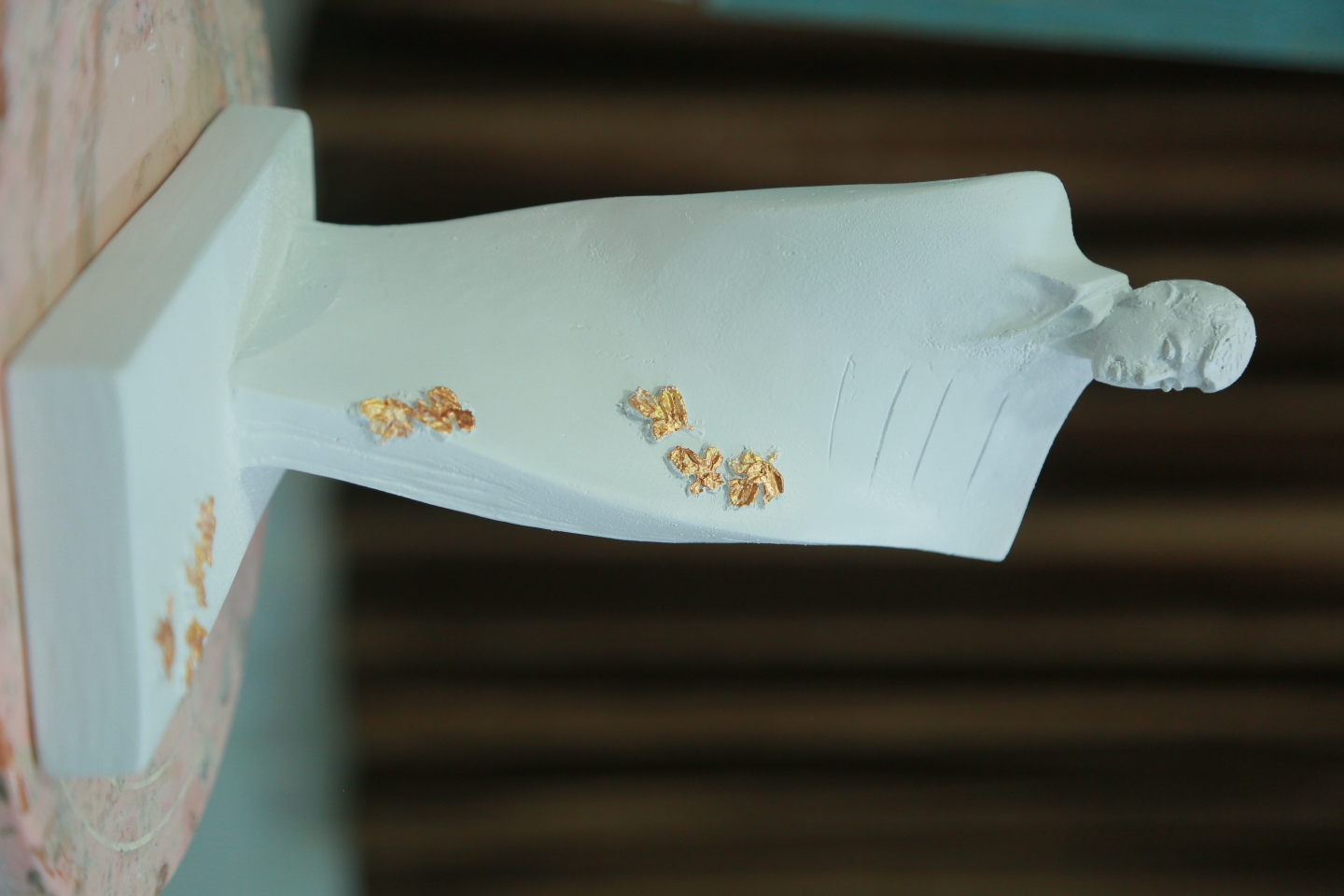
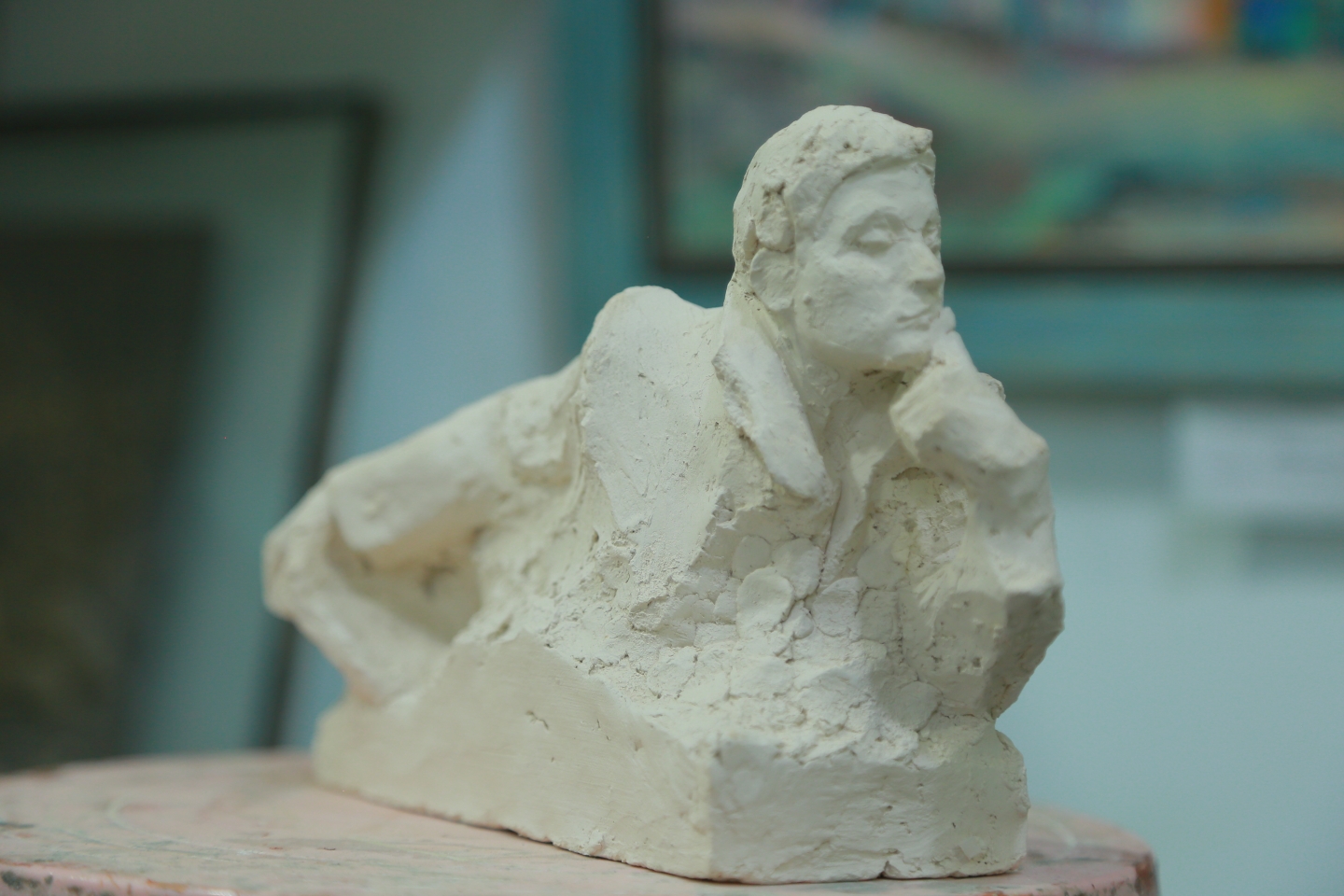
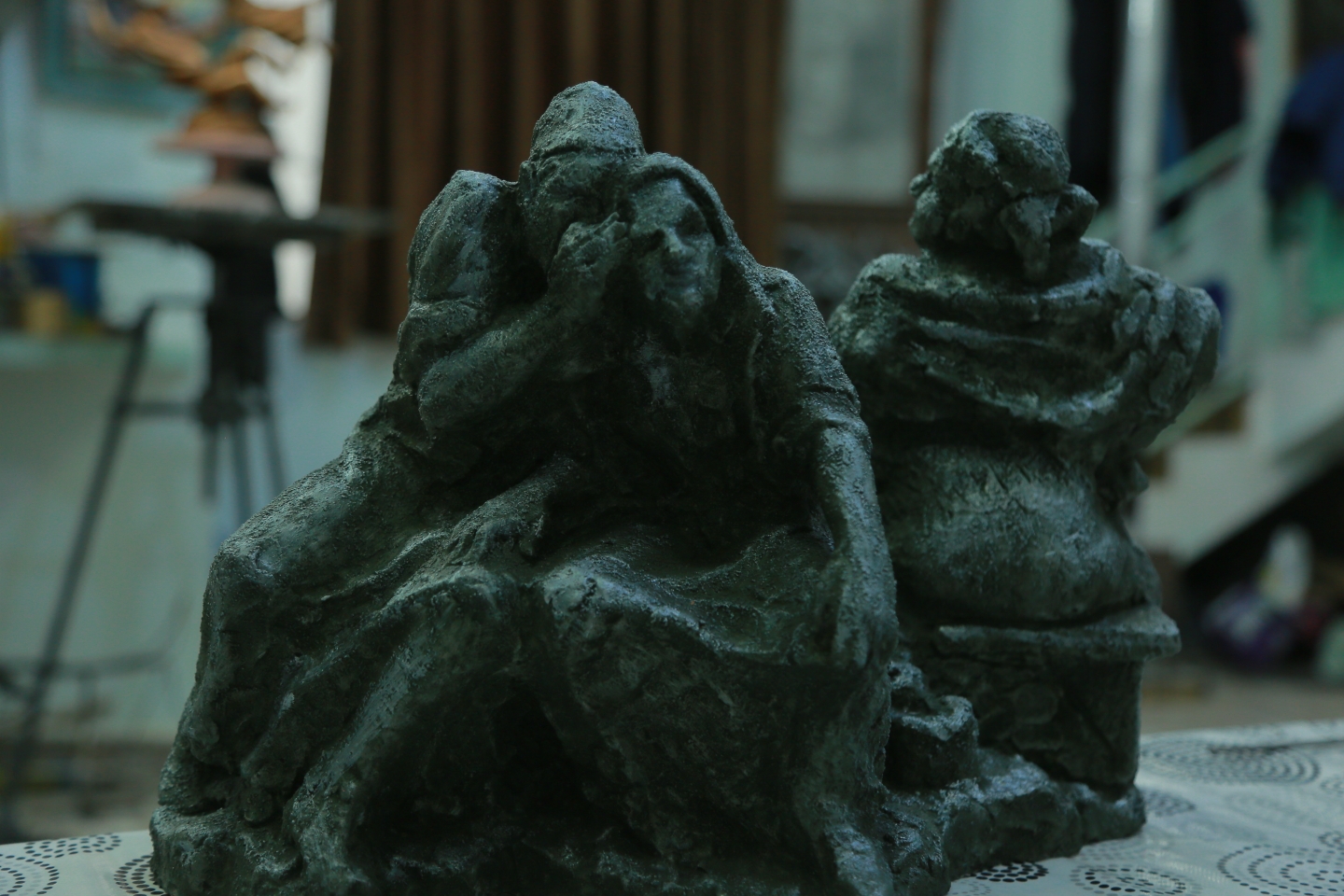
On the shelves of Maksatmyrat Hojainov’s studio stand remarkable small-scale sculptures on various themes. Among them are two plaster sculptures of Gurbannazar Ezizov. Such attention to the famous poet is explained by the fact that Gurbannazar Ezizov is related to Maksatmyrat — he is the uncle of Atabay Charygulyyev, the very singer whose sculpture the artist is currently working on, and who is also Maksatmyrat’s uncle. The sculptor depicted the profile of Gurbannazar Ezizov on a snow-white plaster slab. Golden leaves glide downward across it — in memory of the autumn season that the poet loved so much.
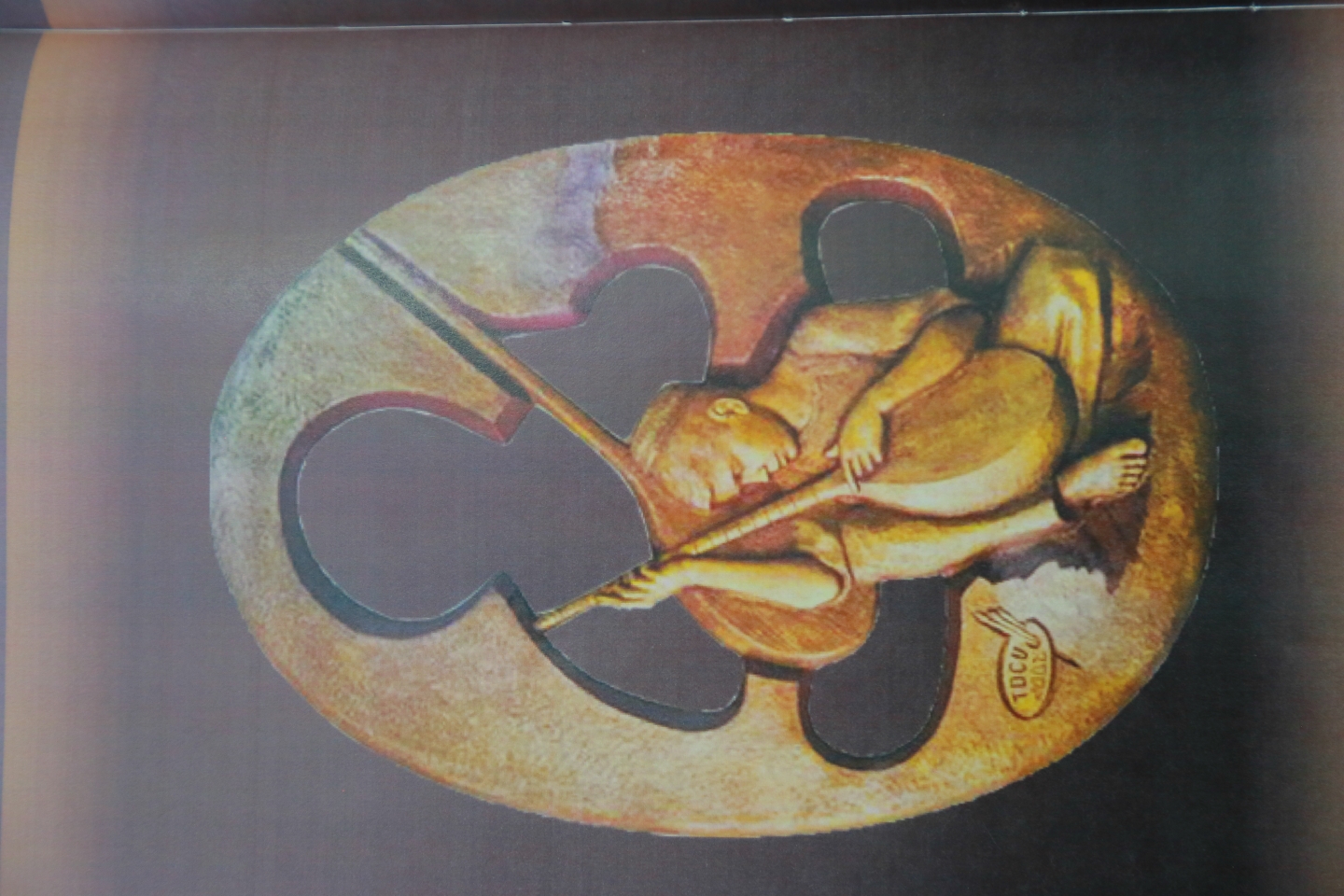
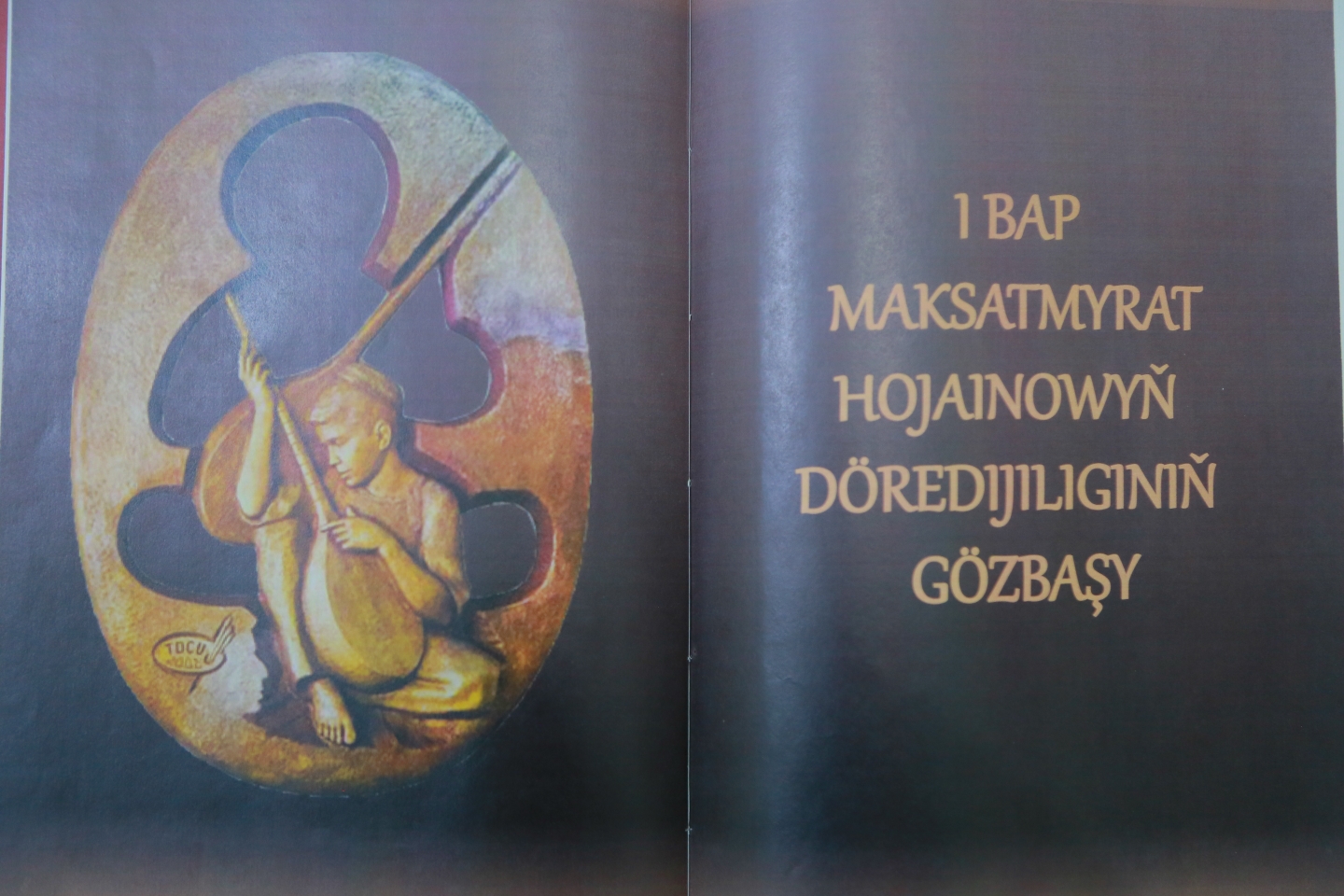
Today Maksatmyrat Hojainov teaches composition at the State Academy of Arts. He explains to students how important it is, when creating a sculptural image, to imbue it with philosophical concept. As an example, he cites his graduation work — a bas-relief dedicated to the legendary dutar player Mylly Tachmyradov and his followers, which now adorns the Turkmen National Conservatory. The bas-relief depicts only the shadow of Mylly Tachmyradov, beneath which a young musician plays the dutar with passion. The shadow represents the legacy left by Mylly Tachmyradov in Turkmen music. The young performer is the continuer of the great dutar player’s art. The bas-relief is executed in an oval shape resembling an egg — a symbol of the continuation of life. There is one more detail characteristic of Maksatmyrat Hojainov’s work: at the bottom, in a fold of the bas-relief, the artist’s profile is subtly embedded — the sculptor’s personal signature.
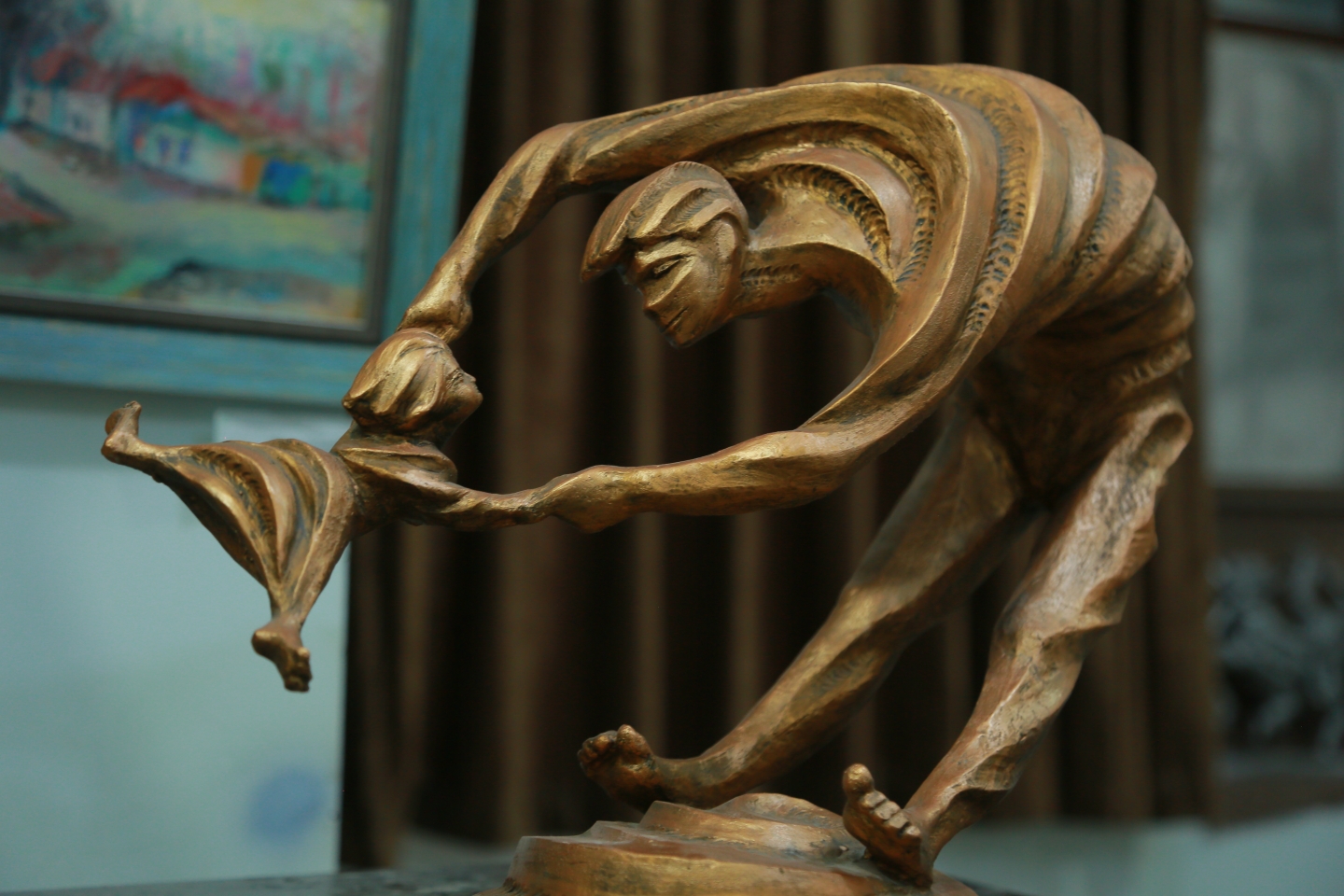
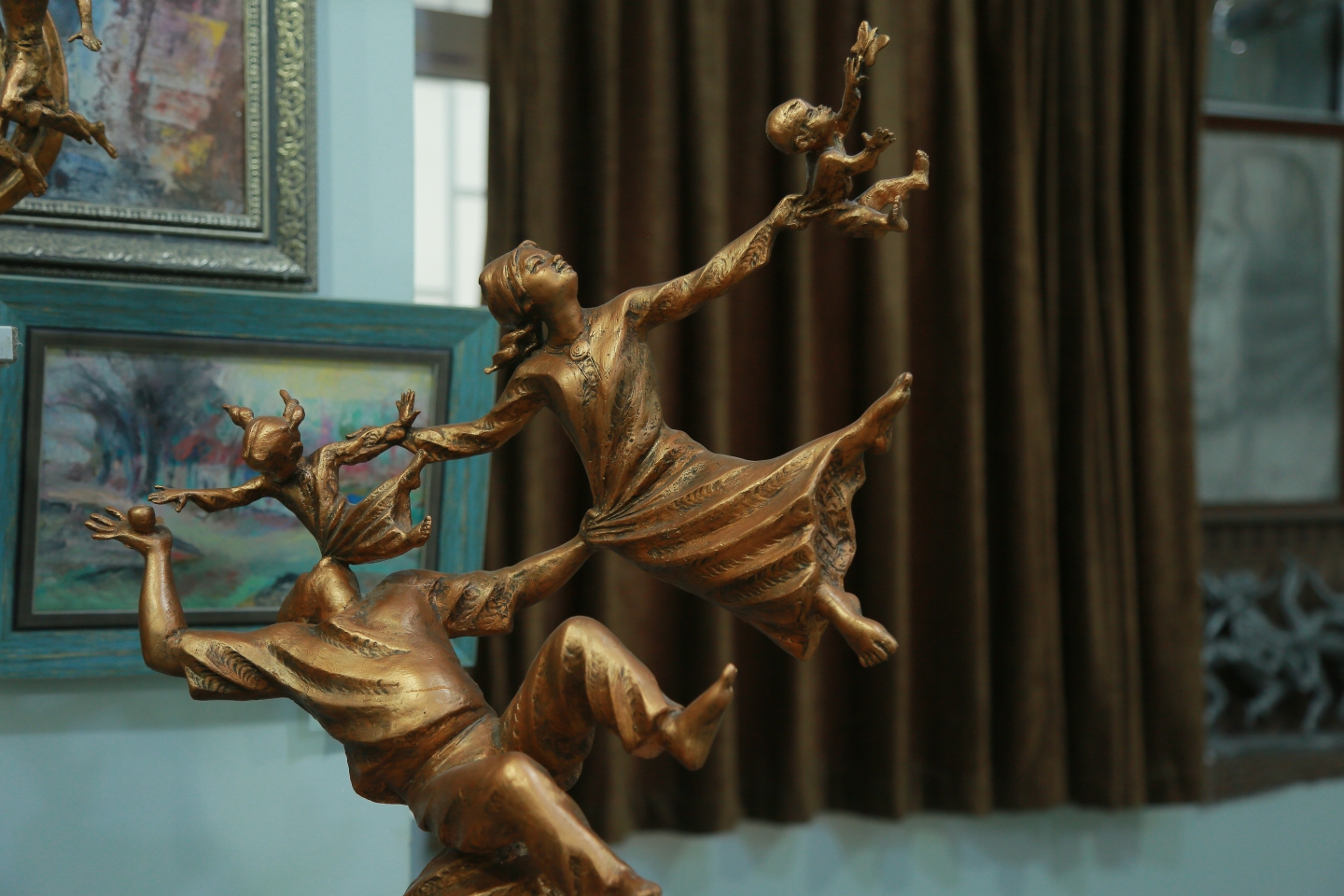
Instead of answering the question “Which of your works are your favorites?” the artist takes out two sculptures — “Joy,”in which he spins together with his daughter Enejan, and “Family,” where the father forms the foundation of the entire composition and supports Enejan, who firmly holds her mother’s hand, while the mother, with her free hand, supports their son Yunus.
— The philosophical subtext of this sculptural composition is that we all support one another, and our family happiness depends on each of us, — explains the remarkably talented sculptor, in whose hands clay obediently transforms into any image, as soon as he imagines it.
We are proud that among us there are artists whose works make our lives more colorful and interesting.


