


Turkmens say, «The bottom of patience is pure gold» or «Good intention is half the happiness». These wise folk proverbs reflect the behavioural essence of actions and deeds, reflecting the current extraordinary decisions and actions of Turkmens in relation to both domestic and foreign policy situations. Why do these proverbs come to mind when, in the times of today of political and economic instability in the global space, Turkmenistan remains an island of stability and sustainable development? Apparently, the point is that in the first years of independence, when the republic, despite having gigantic reserves of natural gas (the fourth largest in the world!), did not have the opportunity to diversify its sales markets, precisely these qualities were required – patience and persistence in the search for reliable partners for the supply of blue fuel. And it produced results.
In 2009, the People's Republic of China became such a partner. On the 14th of December of this year, the first Turkmen gas began to flow there. Three years earlier, in April 2006, an agreement on the construction of a gas pipeline was signed. China provided a loan for the development of gas fields in Turkmenistan and for the construction of a gas pipeline. And Chinese companies received exclusive rights to develop the deposits. The contract included the construction of three parallel pipelines that were to transit through Uzbekistan and Kazakhstan to western China. The capacity of the three lines is 50 billion cubic metres per year, of which Turkmenistan provides 35–40 billion.
This is how Turkmenistan began to diversify its product supplies. From that moment on, the country began to see other opportunities that opened up more profitable, promising, and reliable pipeline gas supplies. The TAPI (Turkmenistan-Afghanistan-Pakistan-India) gas project has begun to shine with its great potential and powerful prospects. Many other neighbours of the country, including Europe, have also developed a need for Turkmen gas.
On the other hand, it was not surprising that newly opened opportunities Turkmenistan did not diminish, but rather, increased, the number of skeptics regarding new transit pipeline projects of the country. «The country does not have enough resources to lay pipelines, and besides, gas reserves are greatly exaggerated», – came the unfriendly cries from some media outlets. «Turkmenistan simply does not have the 30 billion cubic metres of gas that they would like to sell to Europe. Almost all developed deposits work for China. And it is not a fact that China will allow gas from new Turkmen fields to go not to them, but to Europeans. In any case, Turkmenistan will not have enough gas to supply both TAPI to India and a hypothetical European gas pipeline at the same time», – wrote one would-be expert.
Skepticism did not subside even after Ashgabat and Beijing announced the construction of a fourth line of the gas pipeline to China in January 2023. «It is strange to build a fourth pipeline line if the first three lines of the gas pipeline were never used at full capacity. Turkmenistan is a generally closed country, and there are doubts that it really has as large a resource base as leadership of the country claims. The big question is how much Turkmenistan will be able to increase production, how long it will take, and what investments are needed. There is no visible increase in production yet. Another disadvantage of Turkmenistan is its rather risky proximity to Afghanistan, which remains a problematic region from which terrorists can infiltrate», – wrote another «prominent» expert.
However, the diversification policy has fully justified itself. The principles of selling natural gas «from the border of Turkmenistan» and further to interested countries, as well as the desire not to politicise purely economic projects, have fully justified themselves and demonstrated the guaranteed stability of Turkmen gas supplies and the inviolability of contractual obligations. The Middle East crisis also demonstrated something else: the advantage of pipeline transit projects over all others.
Regarding the influence and significance of the Turkmenistan-China pipelines, today, based on production and trade results, it is possible to highlight some key aspects of the long-standing fruitful cooperation between Turkmenistan and China in the gas sector. This is the reliability of the Turkmen-Chinese gas alliance, which is the foundation of economic stability for all of Central Asia. The Turkmenistan-China gas pipeline, which runs through Central Asia, is considered a modern-day embodiment of the Great Silk road, and Turkmenistan is also a major supplier of gas to China, supplying approximately 40 billion cubic metres annually.
Today, Ashgabat celebrates many years of successful energy cooperation, encompassing not only supplies but also infrastructure projects. According to experts, Turkmenistan plans to increase production to 76 billion cubic metres in 2026 and increase supplies to China to 65 billion cubic metres per year if the fourth line of the gas pipeline is commissioned.
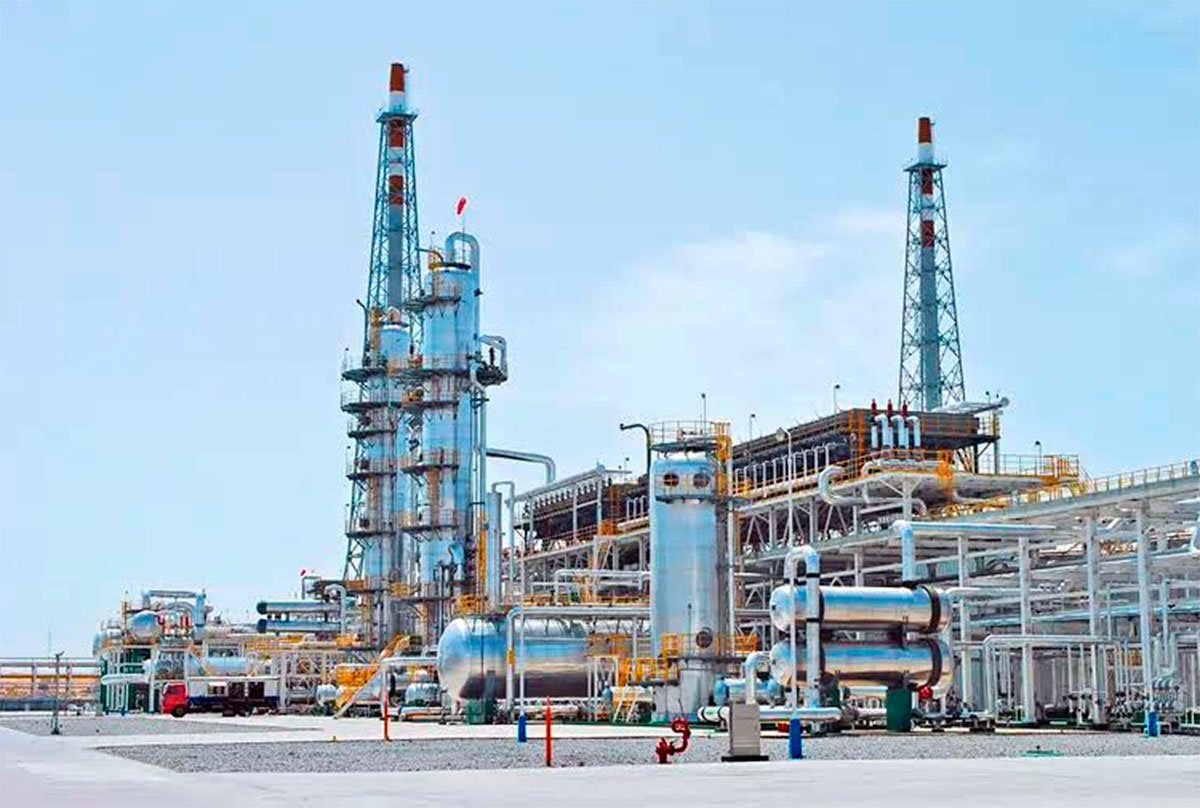
We did not believe it… But here it is, it happened! Turkmenistan and China signed a contract for the fourth stage of development of the «Galkynysh» gas field. The contract is valued at 5.1 billion USA dollars. As part of the deal, the Chinese company CNPC will build a complex at the field to process an additional 10 billion cubic metres of gas per year, as well as drill new production wells. The signing ceremony took place as part of the International Scientific and Practical Conference, recently held in Ashgabat, dedicated to the 20th anniversary of strategic cooperation between Turkmenistan and the People's Republic of China in the gas industry.
As for the reserves. Enough or not enough. In response to this, the leading expert companies Gaffney, Cline & Associates issued their conclusions, according to which the reserves of «Galkynysh» and the associated Yashlar and Garakel fields are estimated at 27.4 trillion cubic metres. Such natural gas reserves make «Galkynysh» the third-largest gas field in terms of production after the North/South Pars fields, which are shared between Qatar and Iran. The fourth line of the gas pipeline will run from the border of Turkmenistan through Uzbekistan, Tajikistan, and Kyrgyzstan to the southern and central parts of Xinjiang Uyghur autonomous region of the China.
This year has become symbolic for bilateral relations – it marks 20 years since the beginning of large-scale gas cooperation between the two countries. During this time, the energy sector has become a key pillar of the strategic partnership between Ashgabat and Beijing.
According to the data released, by the 1st of March, 2026, the total volume of Turkmen natural gas supplies to China reached an impressive 460 billion cubic metres. For 14 years in a row, China has remained main trading partner and largest importer of Turkmenistan of its gas.
It should be especially noted that today, in the conditions of turbulence in global relations, China has a reliable source of energy resources, and Turkmenistan has stable income and employment development. The Turkmen side has repeatedly given a similar assessment. National Leader of the Turkmen People Gurbanguly Berdimuhamedov has repeatedly noted that strategic cooperation in the gas sector not only strengthens bilateral ties but also has a positive impact on the global economy.
There is no doubt that the next stage of development of the partnership will be the implementation of the project to develop the fourth stage of one of the largest gas fields of the world «Galkynysh». The new project is expected to significantly increase gas production volumes, strengthen the economy of the country and create additional jobs. Energy cooperation between the two countries will continue to develop, opening up new prospects for regional growth and stability.