


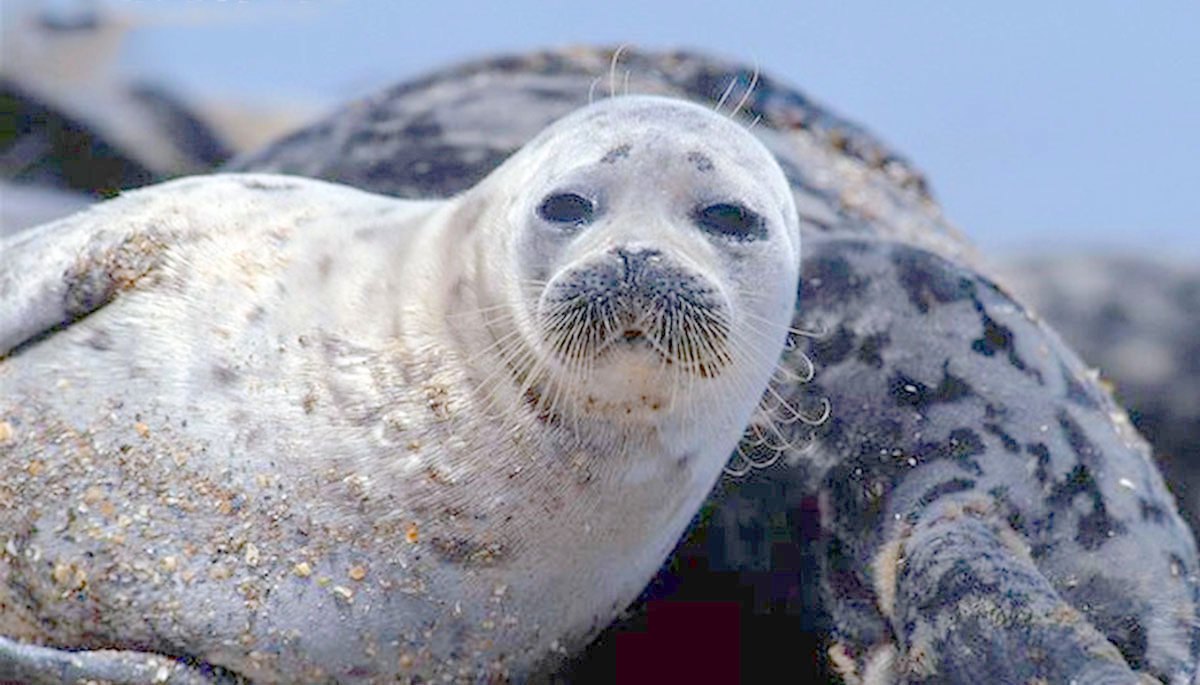
Seeing a Caspian seal in its natural habitat is a great stroke of luck. Anyone who has met this cute little animal at least once—seemingly accidentally swimming up to a sandy shore and lazily sprawling out to warm in the sun—has felt tenderness and joy.
But where did this unique animal come from in the Caspian Sea? Scientists believe that the ancestors of the Caspian seals arrived here from the Arctic via river routes that existed before the Ice Age. Over time, these routes disappeared, and the population became isolated in this enclosed sea.
The Caspian seal, also known as the Caspian nerpa, is a unique marine mammal endemic to the Caspian Sea. Its scientific name is Pusa caspica, and it is the smallest member of the family of true seals. The body length of a Caspian seal can reach up to 150 cm, and the weight up to 90 kg.
The coloration of these animals changes with age. Newborn seals, called pups, are completely white. Adolescents—called "sivari"—have a grayish color; their fur is shorter, but they already have a good layer of subcutaneous fat, which they accumulated thanks to the nutritious mother’s milk. Adult males are bluish-gray with many dark spots, while females usually have a more even coloration.
Seals are true sea travelers. In spring, they travel from the lower reaches of the northern rivers flowing into the Caspian to the southern part of the sea. Their path lies through the center of the water body, where they follow shoals of sprat—their favorite prey. Searching for food, seals can dive to depths of up to 90 meters. They spend most of their time in the water, while on the coasts and islands, they create temporary haul-outs for resting.
In Turkmenistan, seals find refuge in the Hazar State Nature Reserve, including the Osushnye islands and the Ogurjaly sanctuary.
In 2011, the Caspian seal was listed in the Red Data Book of Turkmenistan and later in the similar publications of Kazakhstan and Russia. Now this species is included in all Red Data Books of the Caspian littoral countries and in the Red List of the International Union for Conservation of Nature (IUCN) as critically endangered.
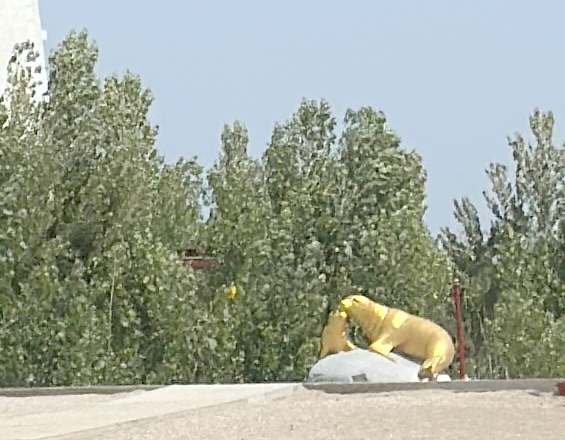
Despite this, it is heartening to see people pay tribute to these amazing animals, reminding of the importance of their conservation. For example, in Kazakhstan, on the Aktau embankment, there is a monument to the Caspian seal, and in Turkmenistan, near the Berkarar hotel in Avaza, one can see a charming sculpture of a seal mother with her pup.
That is why the International Caspian Sea Day, celebrated annually on August 12 in all Caspian littoral countries including Turkmenistan, is so important. On this day, various ecological events and campaigns are held aimed at preserving the unique nature of the Caspian. This date is particularly significant because on August 12, 2006, the Framework Convention for the Protection of the Marine Environment of the Caspian Sea, known as the Tehran Convention, came into force.