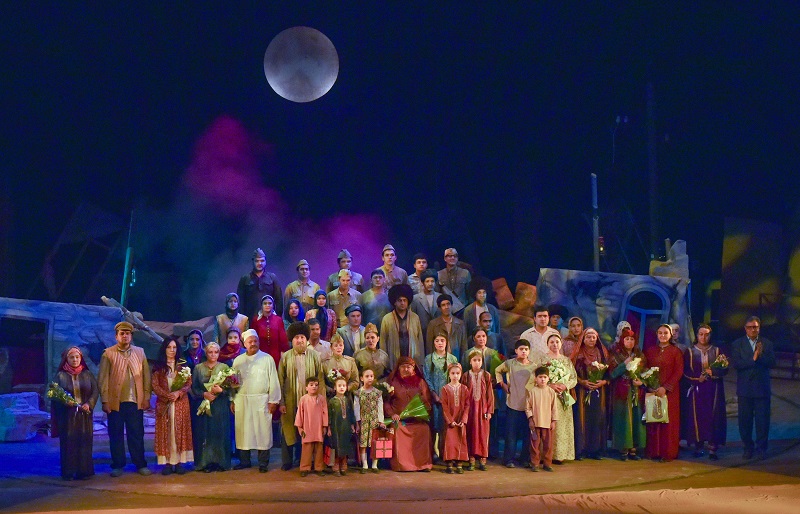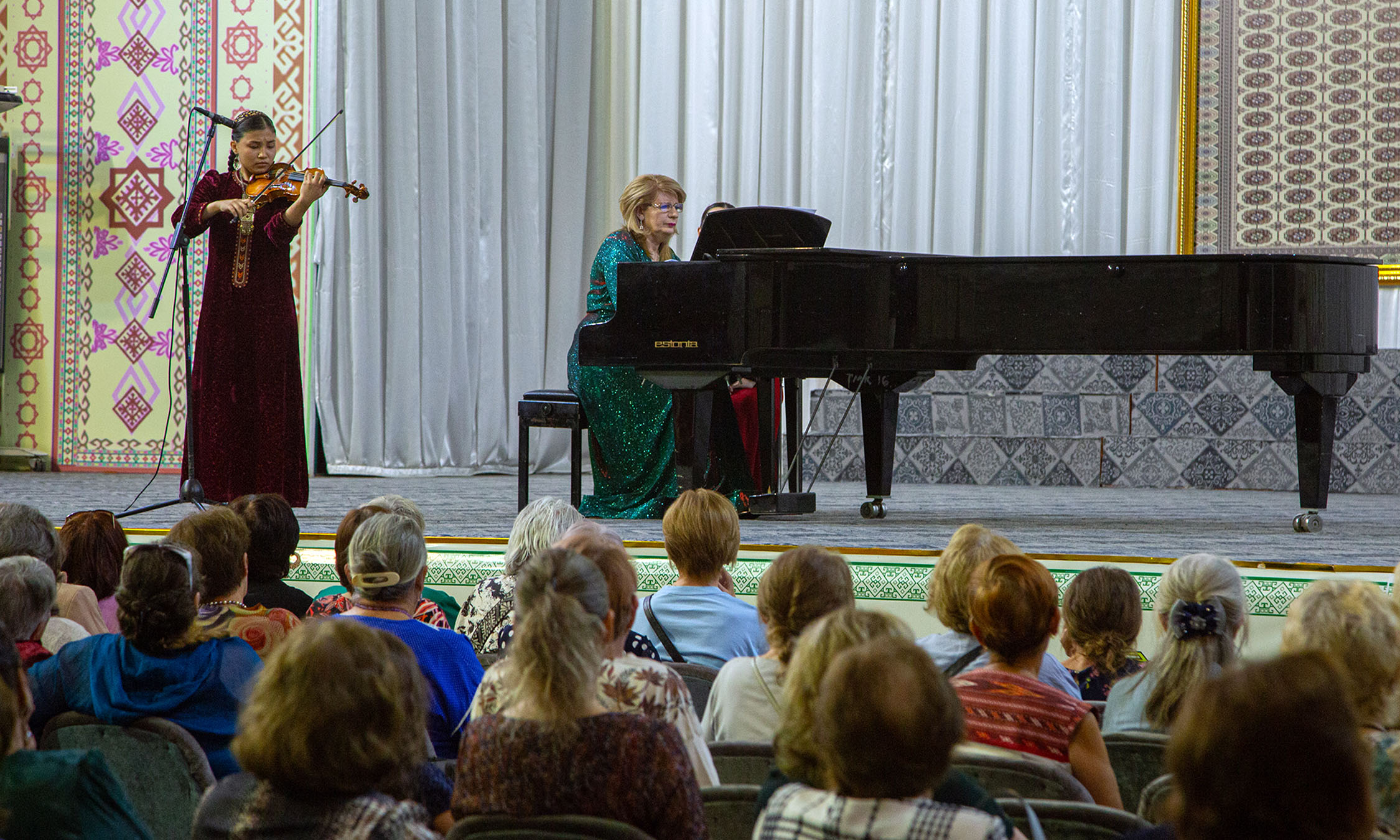



Today, Turkmenistan, while embracing new trends, is characterised by the careful preservation of the rich, truly priceless cultural heritage of its people.
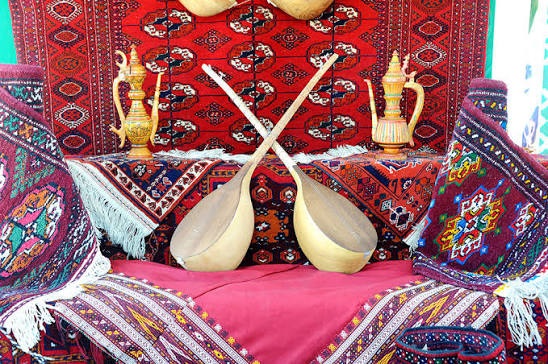
Music for the Turkmen is the life of the people in sounds, a truthful and moving story of happiness and sorrow, joy and suffering, the beauty of the soul and feelings. It heals a person from wounds and grievances, calms and infuses him with vitality and energy. When people talk about national art, they mean, first of all, playing the dutar and gyjak.
Folk music, rooted in ancient times, has provided fertile ground for the emergence and further development of the art of professional folk musicians, which enjoys the immense love of listeners and rightfully occupies a leading place in the musical heritage of the Turkmen people. Over the centuries, people have created music that amazes everyone with its unique flavour. At all times, the art of singing and playing national instruments by folk musicians – bagshy – was treated with special honour and respect.
This rich musical culture was passed down from generation to generation. The Bagshies were the collectors and keepers of Turkmen musical folklore, and the traditional repertoire, accumulated over centuries, is truly a pearl of musical heritage. They found out in advance which bagshy was coming so they could thoroughly prepare for the meeting: think through questions for conversation, choose a place for the celebration. They spread a carpet on the site, lit a large fire that illuminated everyone present, and a few metres away they spread out a tablecloth-destarkhan on which they displayed sweets and treats. A large number of people gathered to listen to the bagshy, whose singing usually began at sunset and ended at sunrise.
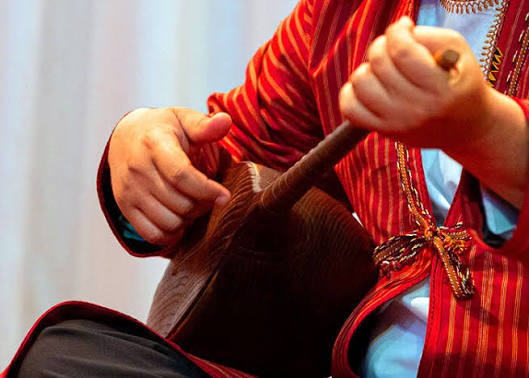
The art of bagshy (singers and storytellers) and sazanda (performers on folk musical instruments), developed in form and content, requires high professional skill from performers. To earn the right to be called a bagshy or sazanda, it was necessary to study with a halypa (mentor).
In the 1930s, the foundations of professional musical art were just being laid in the national culture of Turkmenistan. Among the oldest representatives of folk art is Shukur-bagshy; other performers of classical national songs include Sary-bagshy Purli ogly, a student of the famous Kel-bagshy; Tachmammet Suhangulyyev, who had a vast repertoire of folk destans and lyrical-epic plays; Mylly Tachmyradov, who inherited the art of his teachers Sary-bagshy and Kel-bagshy; and Sahy Jepbarov, a talented singer and dutarist, composer, and temperamental performer of a wide range of songs, both classical and contemporary.
Much credit for the formation and development of the art of Bagshy goes to the family school of the Sary-bagshy dynasty. Sary-bagshy was born in 1871 in the village of Bamy in the Baharly etrap of the Ahal velayat into a family of the musician. The attraction and love for folk music was subsequently passed down through generations. His first musical instrument was the dutar. From an early age he accompanied the bagshy and learned the art of singing. From the age of 11, the young bagshy was welcome at every celebration, and word of his singing prowess quickly spread.
Sary-bagshy works with such musicians - bagshy as Molla Guvanch, Tachmammet Suhangulyyev, Kel-bagshy, Muhat ussa, Hally bagshy. In 1925-1930, the musical ethnographer and composer V.A. Uspenskiy carried out three musical-ethnographic expeditions to various parts of Turkmenistan. V.A. Uspenskiy received an offer to come to Turkmenistan from the leaders of the republic at the end of 1924. His acquaintance with national music and folk musicians began much earlier. In 1921, concerts were organised in Tashkent, in which musicians from all over the region participated. In collaboration with the scientist V.M. Belyayev, they wrote a joint scientific work, «Turkmen music», published in Moscow in 1928. According to V.M. Belyayev, such concerts were «almost the first attempt to organise a broad Olympiad of national music and national art». Famous Turkmen folk musicians were invited to participate, including the famous Sary-bagshy, part of whose repertoire was included in the second volume of «Turkmen music».
In 1927, V.A. Uspenskiy stayed at the house of Sary-bagshy and transcribed his music and songs into sheet music, in his memoirs, he writes: «... Turkmen music is an art that stands at a decidedly high level of perfection, and this is its true value». According to V.A. Uspenskiy: «Having received a pata (blessing) from his teacher or having achieved the position of bagshy, thanks to his personal abilities, a young musician becomes a professional, sometimes having no other occupation besides music (like the famous Sary-bagshy, who possessed, in the words of N.N. Yomudskiy, a voice, a dutar and a magnificent black horse)». An acquaintance with a learned musicologist and ethnographer contributed to the move of bagshy with his family to Ashgabat, where he began his career at the newly opened Turkmen state music college. Son of Purli Saryyev, Oraz Saryyev (gyjak) and Nury Saryyev (gyjak), also studied at the same technical school.
People's Artist of Turkmenistan Purli Saryyev worked for a long time at the Turkmen State Philharmonic and Radio Committee, head of the Folk Instruments Ensemble of the radio, Honoured Artist of Turkmenistan Oraz Saryyev worked as a musician in the Folk Instruments Ensemble at the State Broadcasting Committee, Nuri Saryyev, as a student at the Moscow State Conservatory named after Tchaikovskiy in the early days of the Great Patriotic War, volunteered for the front, he served in the 8th Krasnopresnenskaya Division, died at a young age in October 1941 near Smolensk, his grandson Seyitmuhammet Saryyev, an honoured artist, devoted his entire creative life to television and radio.
It was not possible to make recordings of songs performed by Sary-bagshy during his lifetime. Later, when he was gone, in 1935, songs and music of Turkmen bagshy performers and musicians were recorded in Moscow. But his music, songs and talent were not lost; they were passed on to his children and grandchildren, and they to their students.