


The construction of modern medical facilities, their equipping in accordance with the requirements of the time, and the training of highly qualified personnel are priority areas of the state policy of the President of Turkmenistan. This is a clear indication of the constant of the state and close attention to strengthening and protecting the health of its citizens.
Recently, the National Leader of the Turkmen people, Chairman of the Halk Maslahaty of Turkmenistan, and doctor Arkadag reviewed the situation at the International scientific and clinical oncology centre, which is being built in the northern part of the capital. Currently, all construction and commissioning work is being completed here.
The opening of this ultra‑modern scientific and clinical complex, whose construction was initiated by Hero‑Arkadag, will take place this year, which is marked by the glorious 35th anniversary of sacred independence of the country, and will be timed to coincide with the Day of Healthcare Workers and the Medical Industry.
The newly established Centre will join the ranks of modern medical facilities of the country. It is planned to provide specialised medical services that fully meet the highest international standards. This issue is given special importance at the International scientific and clinical centre of oncology, which has no analogues in the region.
Thanks to the tireless efforts of Hero‑Arkadag, who is an exemplary model of inspired service to the Motherland and the people, international cooperation is developing fruitfully within the national healthcare system. The interaction of Turkmenistan with authoritative international organisations, primarily with the UN and its specialised agencies, has traditionally been productive. The World Health Organization (WHO) and the International Atomic Energy Agency (IAEA) occupy an important place in the system of the country of international relations.
With the support of the IAEA, advanced methods of diagnosing and treating dangerous diseases are being actively implemented in Turkmenistan. Consultations with international experts contribute to the continuous improvement of specialised medical care and the enhancement of the quality of services provided to the population.
As part of this cooperation, a new Country Framework Programme for 2026–2030 has been developed, outlining the priority areas for technical cooperation. This document will serve as a reliable foundation for the implementation of promising projects aimed at introducing innovative technologies into nuclear medicine and improving safety levels in various industries.
The equipment level of the new Centre includes the latest models of medical technology. Digital technologies, as well as artificial intelligence capabilities, are being implemented in all its departments. To ensure the uninterrupted operation of the highly complex equipment, the Centre will have access to high‑speed internet.
Foreign experts have already given high praise to the attention of the Centre to detail and technological security. In particular, German doctors highly praised the work of the radioactive waste decontamination system created here. The complex is equipped with special containers where liquids are neutralised using the most advanced technologies. Foreign experts specifically noted that many of the devices installed at the Centre are being introduced in the region for the first time, which indicates that the healthcare system of Turkmenistan is operating at the level of the latest achievements of world science.
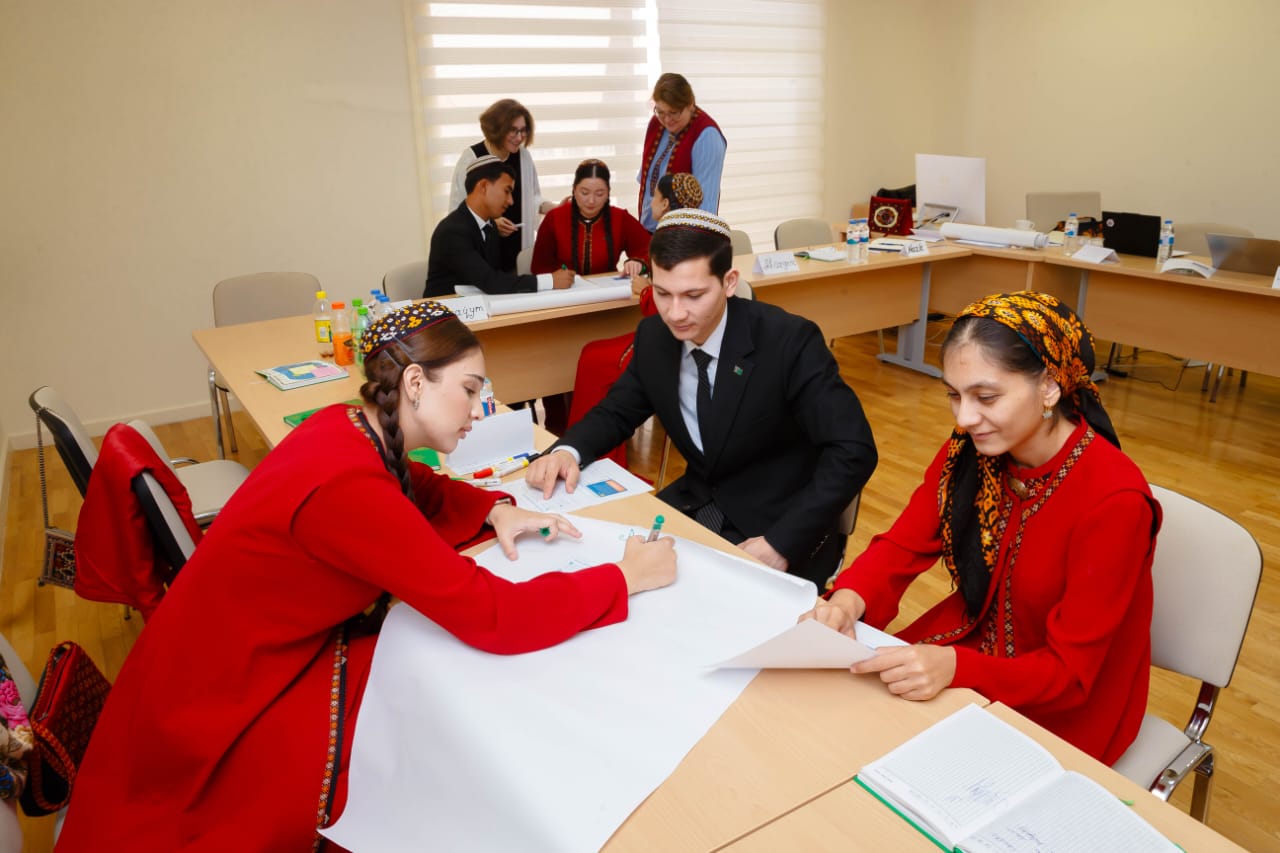
Special emphasis is placed on developing scientific and practical cooperation with leading scientific and clinical centres around the world, including Germany, which will create conditions for Turkmen doctors to master advanced practices. To train highly qualified specialists, it is planned to involve young people, hold seminars for clinical residents and researchers, and organize joint activities between the teaching staff of the Engineering and technology university named after Oguz han and professors from major foreign higher education institutions.
Hero-Arkadag emphasised the need for a comprehensive approach to organising of work of the Centre, as well as the effective use of modern equipment and digital solutions. Among the main tasks are creating a unified database on the health status of citizens and establishing a unified communication system between medical institutions of the country.
Digital technologies will make medicine even more accessible and open to the public. All information related to services and capabilities of the Centre, as well as diagnostics and treatment of diseases, will be available through the digital system. Conditions are being created to ensure that citizens can obtain the necessary information right from home, and that relatives and loved ones of the patients have access to up‑to‑date information about their health status.
The construction and imminent commissioning of the International scientific and clinical oncology centre in Ashgabat serve as a vivid confirmation that concern for the individual occupies a central place in the state policy of Turkmenistan, which consistently adheres to the noble principle of Hero‑Arkadag: «The state is for the person!