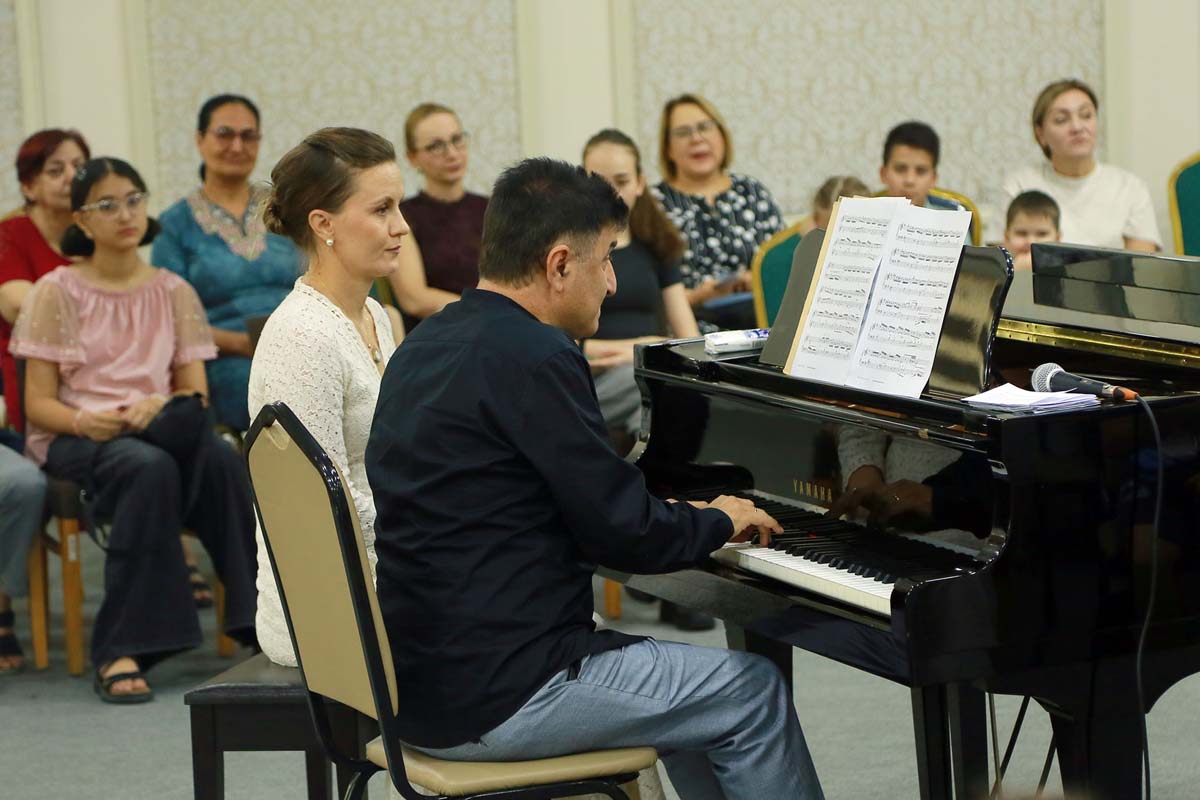



A creative meeting between aspiring composers and Rovshen Nepesov, Honored Art Worker of Turkmenistan and composer, was held at the Danatar Ovezov Turkmen State Special Music School under the Maya Kuliyeva Turkmen National Conservatory.
For young musicians interested in composition, the meeting was an important event. Its main purpose was to support the creative initiative of the younger generation, identify talented authors, help them realize their potential, and take their first steps towards professional mastery.
The participants asked Rovshen Nepesov questions about the process of creating music: how an idea is born, how the concept of a work takes shape, how a composer develops musical material, and what is required to transform an initial idea into a complete musical composition.
A particularly interesting part of the meeting was the listening session featuring the works of the young composers. The maestro carefully familiarized himself with their compositions and noted that there were many talented, creative, and promising young people among the participants who possess the most important quality of a future professional composer—an earnest desire to compose, create, and constantly develop.
During the discussion between the young people and their mentor, considerable attention was devoted to the national musical heritage. Rovshen Nepesov emphasized that folk music is an inexhaustible source of creative inspiration and the foundation for the formation of a national musical language. For this reason, it is especially important for young composers not only to listen to folk music but also to study and analyze it, make transcriptions, gain a profound understanding of the distinctive features of national intonation, and find ways of reinterpreting it in contemporary compositions.
The practical part of the meeting continued with creative assignments. The maestro proposed an individual area of work for each participant: some were tasked with writing a melody for a song, others with creating an instrumental composition; some expressed a desire to try their hand at jazz music, while others chose to compose a work for the dutar—a symbol of Turkmen musical culture. Such work helps young composers develop their professional skills and shape their own distinctive compositional style.
Meetings of this kind are of particular importance for the development of musical culture. It is precisely through the direct dialogue between experienced masters and their younger colleagues that creative continuity emerges, unique knowledge is passed on, and a new generation of composers is formed.