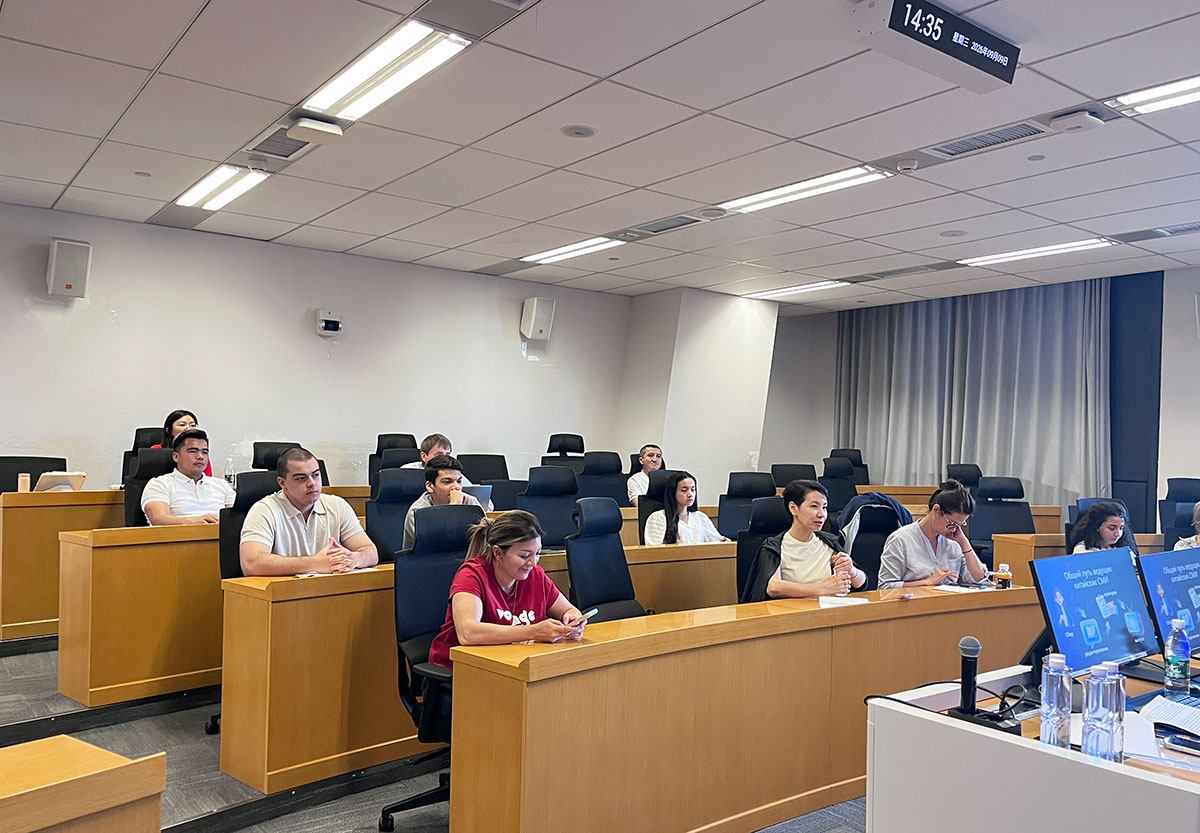



The OSCE Centre in Ashgabat hosted a two-day training course on covering environmental issues in the media. The event brought together employees of print publications, news websites, national television, and public organizations.
As the organizers and experts of the training emphasized, environmental and climate issues now occupy a fundamental place in the concept of sustainable development, being one of its equally important components alongside the economy and social well-being.
During the sessions, international expert Angelina Davydova (Russia, Germany) introduced participants to the current structure of the environmental agenda and methods for mapping expert sources. The program included practical group work, during which journalists searched for topics relevant to Turkmenistan, Central Asia, and the world as a whole. The proposed projects generated lively interest and may potentially serve as the basis for new publications.
An important part of the program was learning to use modern artificial intelligence tools. Batyr Rejepov (Turkmenistan) presented his experience of effectively applying neural networks in routine editorial work, while Marat Sadykov (Kazakhstan) demonstrated practical aspects of working in online formats. The knowledge gained enabled content creators to expand their professional toolkit for improving the environmental literacy of the population.
New technologies create significant opportunities for preparing analysis and disseminating content, but they also bring new challenges. Environmental issues require a deep understanding of scientific data, statistics, and complex cause-and-effect relationships, while audiences face an enormous volume of information, including unreliable information and disinformation.
As William Leaf, Head of the OSCE Centre in Ashgabat, noted, it is no longer sufficient simply to report on one environmental event or another. It is important to be able to verify information, critically assess sources, correctly interpret data, and present a topic in such a way that the material is accurate, understandable, and useful to the audience, since journalists play a key role in shaping society’s informed attitude toward environmental issues.
The training course, held as part of the OSCE Centre’s systematic work aimed at supporting climate initiatives and developing media literacy, directly corresponds to international priorities.
Thus, in 2024, the OSCE Representative on Freedom of the Media, together with the Special Rapporteurs of the United Nations, the Organization of American States, and the African Commission on Human and Peoples’ Rights, signed a Declaration on the Climate Crisis and Freedom of Expression, in which environmental journalism was given an important place.
The joint practical guide published in 2026 by UNESCO and the Office of the OSCE Representative provides journalists with knowledge, tools, and strategies for covering environmental issues across all areas — from politics and business to culture and local communities — helping to strengthen the contribution of the media to informed public dialogue that promotes the adoption of more sustainable solutions.