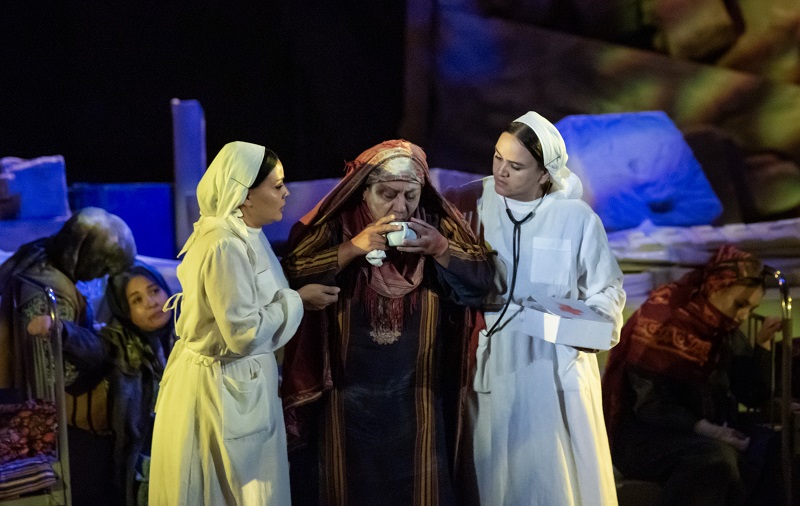



On the eve of a tragic date in the history of the Turkmen people—the 78th anniversary of the Ashgabat earthquake—the Alp Arslan National Drama Theatre presented the play “Halk hakydasy.”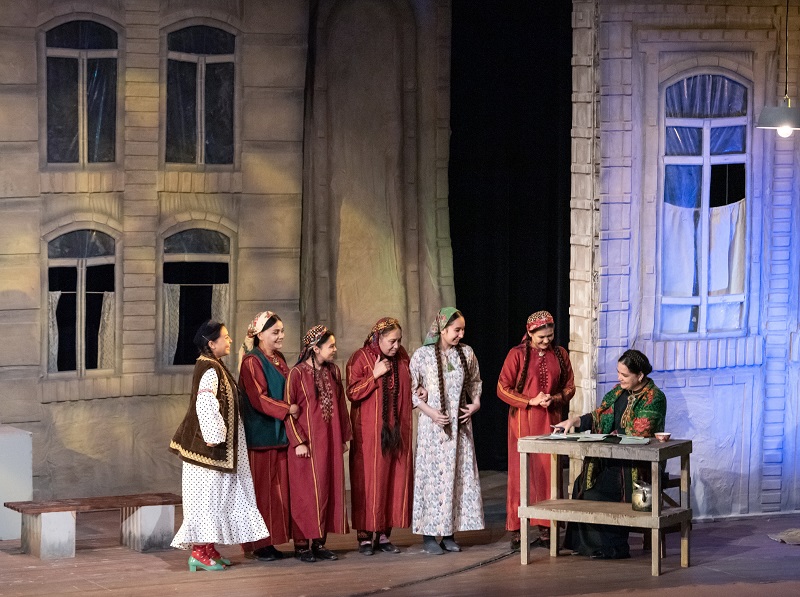
It should be recalled that at the recently held national theatre festival “Garaşsyzlyk ganatym, Watanym – sezde gähim,” this production received the highest award—the Grand Prix. Surely, among those in the auditorium and on stage were grandchildren of the victims of that devastating natural disaster. Touching, tear-evoking accounts of eyewitnesses have remained in the memory of the people of Turkmenistan. We mourn the victims who forever remained beneath the rubble of collapsed buildings.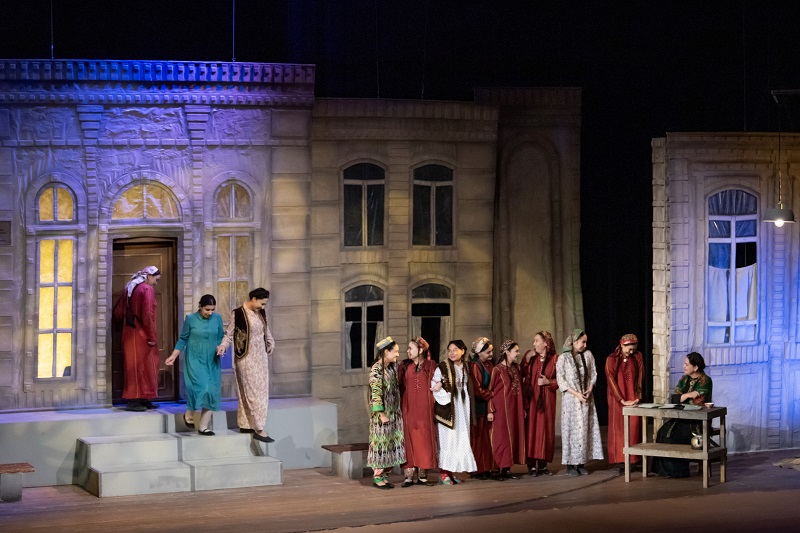
The play “Halk hakydasy,” based on a work by playwright Gadam Kakabayev, conveys with documentary accuracy the horror that began at twelve minutes past one on October 6, 1948. The creative team of the Alp Arslan National Drama Theatre approached the production with meticulous attention. The work of the production designers, Honored Art Workers of Turkmenistan Batyr Bekmuradov and Mekan Annamuradov, fully recreated on stage the destruction of a women’s student dormitory at one of Ashgabat’s higher educational institutions, where, until that tragic moment, young people from many republics of the former Soviet Union had studied alongside Turkmen girls.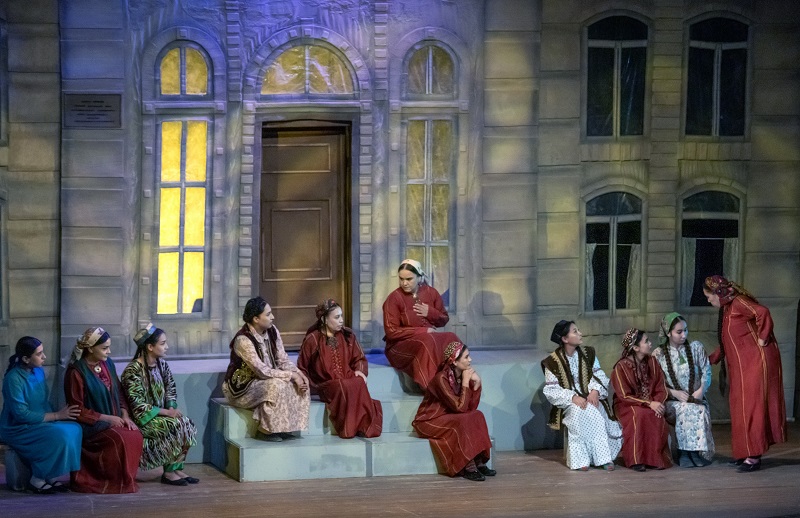
“This is not a story about a single hero or even about a single nation, because among the victims of the earthquake, besides Turkmen, there were many Uzbeks, Kazakhs, Kyrgyz, Russians and others who perished,” comments playwright Gadam Gylyjovich. “The tragedy depicted in the play lasts approximately from 2 a.m. until 6 a.m. However, the heroism of the people of Ashgabat became evident during the very first hours of the earthquake. In addition to evoking compassion for the characters, the play provides the audience with valuable information, through their example, about how one should behave in the event of unforeseen disasters.”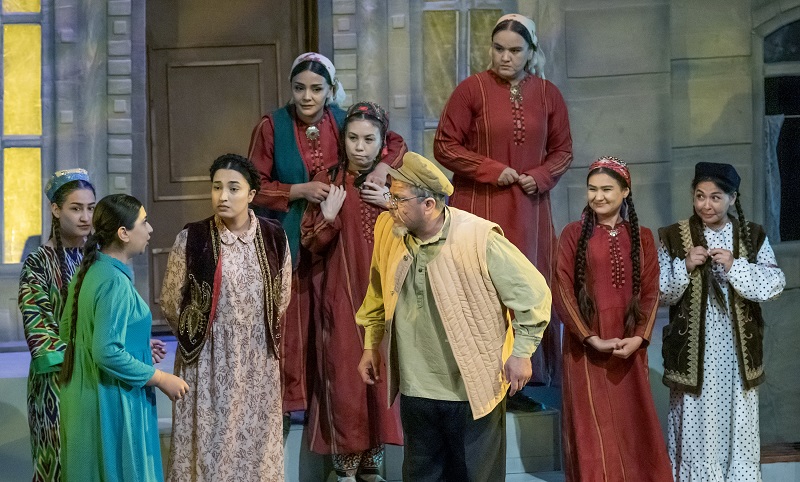
Doctors, military personnel, and the victims themselves unanimously demonstrated extraordinary human courage. Turkmen and Armenians, Russians and Tajiks responded to their shared tragedy with friendship among peoples, in which everyone was a brother, and anyone who had even a little strength gave it to saving other victims.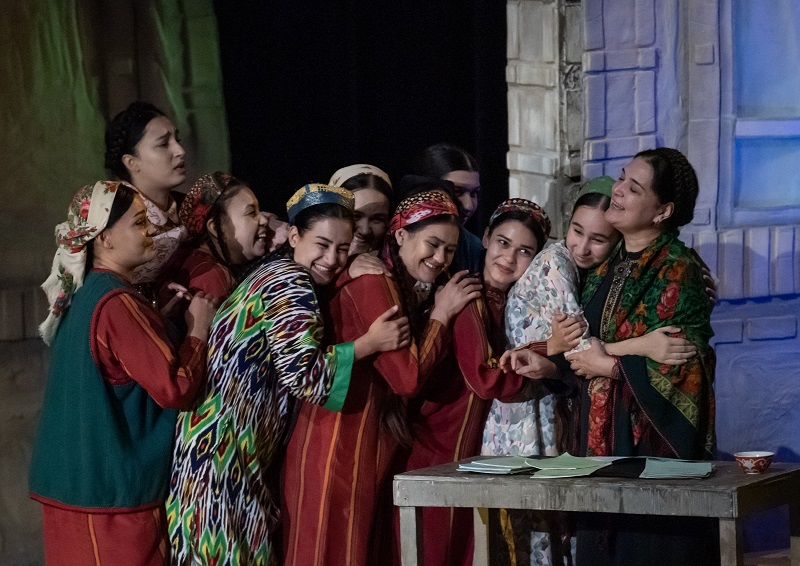
Alongside the heroic actions of the people of Ashgabat, the plot of the play also includes an episode involving looting. At first glance, it might seem unnecessary and out of place. However, it underscores the honesty of the creators of the production, who showed on stage everything that actually happened in real life.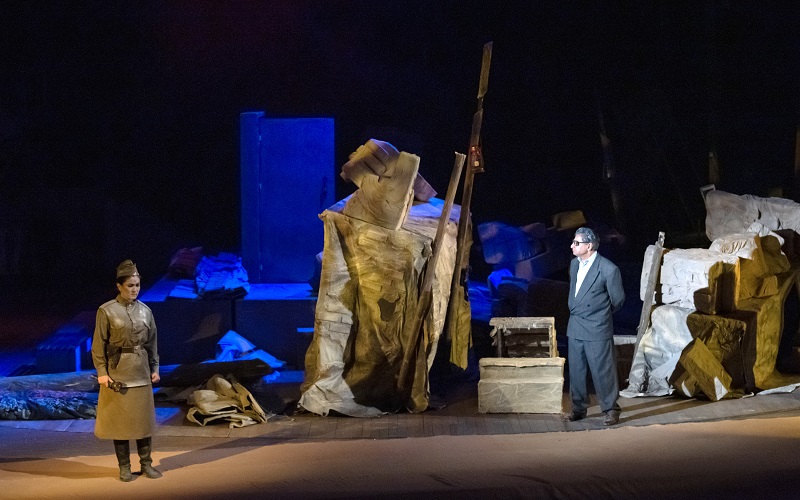
There are no main characters in the play—all the roles could be called episodic. Yet, in this kaleidoscope of tragic events, the destructive force of the Ashgabat earthquake is conveyed most vividly. The musical accompaniment can also be considered a major strength of the production. Music director Mammet Hydyrov used fragments from works by Danatar Hydyrov and Rejep Rejepov, which appropriately reflected the emotional drama experienced by everyone who found themselves amid the ruins of Ashgabat that night.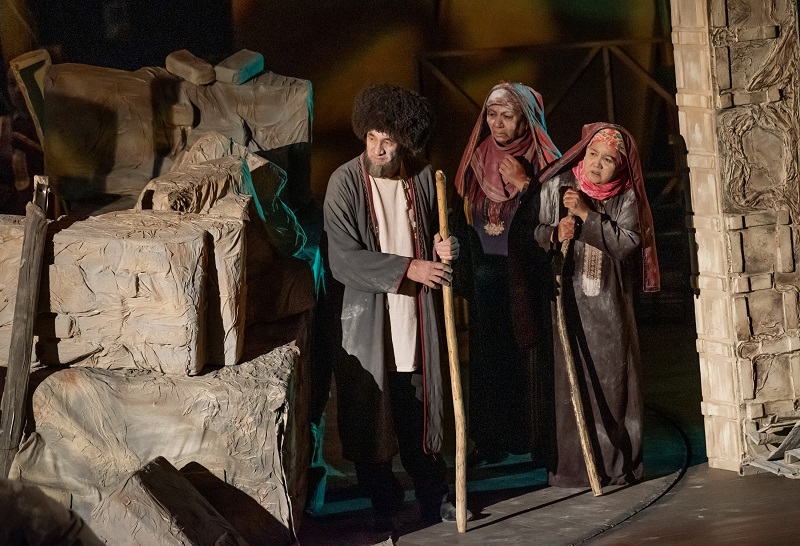
The tragedy depicted on stage had a profound emotional impact on the audience, bringing tears to their eyes and leaving a lump in their throats. Perhaps this is an expression of compassion for innocent victims, in whose place anyone could have found themselves. The audience greeted the actors who came out for the curtain call with thunderous applause. Usually, at this moment, the actors invite the director onto the stage. However, in this production, the director, Honored Artist of Turkmenistan Handurdy Berdiyev, himself played the role of a university rector and chose to remain among the cast.