


The unique exhibition “MAMA: Mother Nature” continues to welcome visitors in Ashgabat. Conceived by Leyla Aliyeva, Vice President of the Heydar Aliyev Foundation and founder and head of the IDEA Public Association, and curated by Emin Mammadov, the project brings together contemporary art, environmental awareness, and humanitarian dialogue.
Following exhibitions in Azerbaijan, the show embarked on an international tour, visiting Bahrain, Italy, the United Kingdom, Georgia, Germany, Albania, Switzerland, and Latvia before arriving in Ashgabat directly from Madrid, Spain.
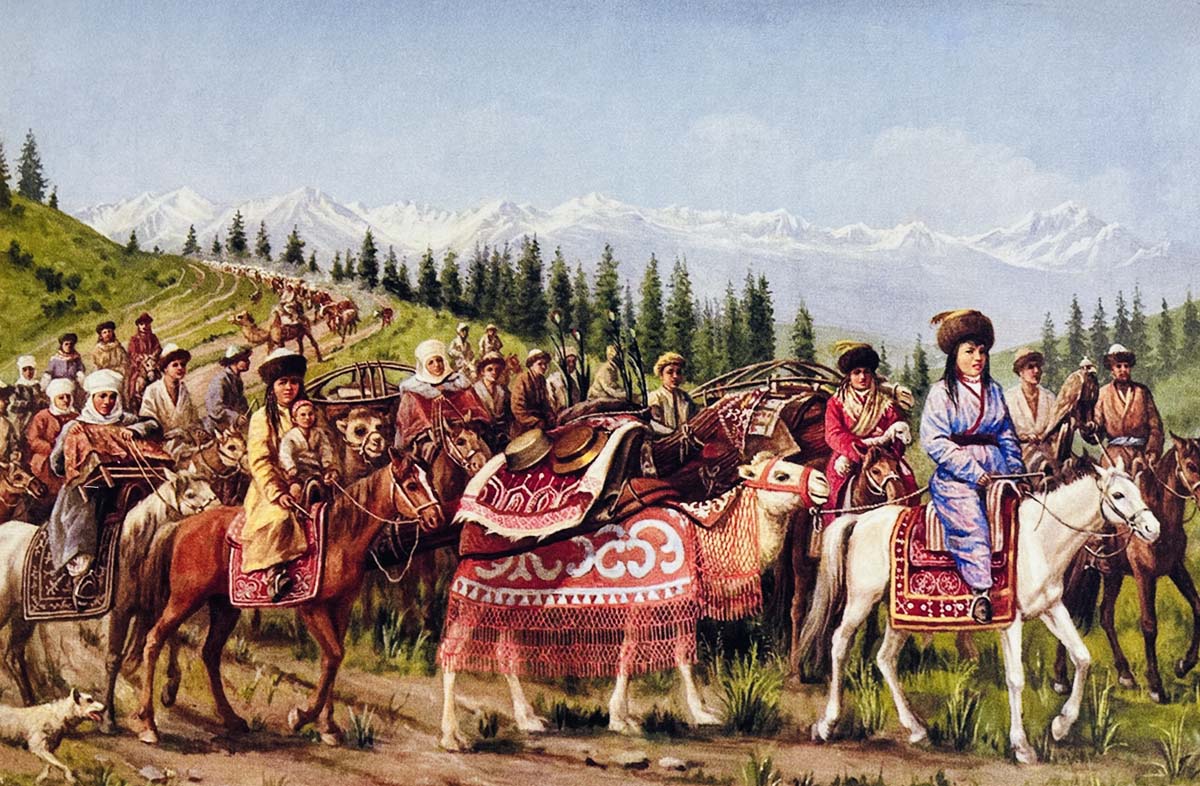
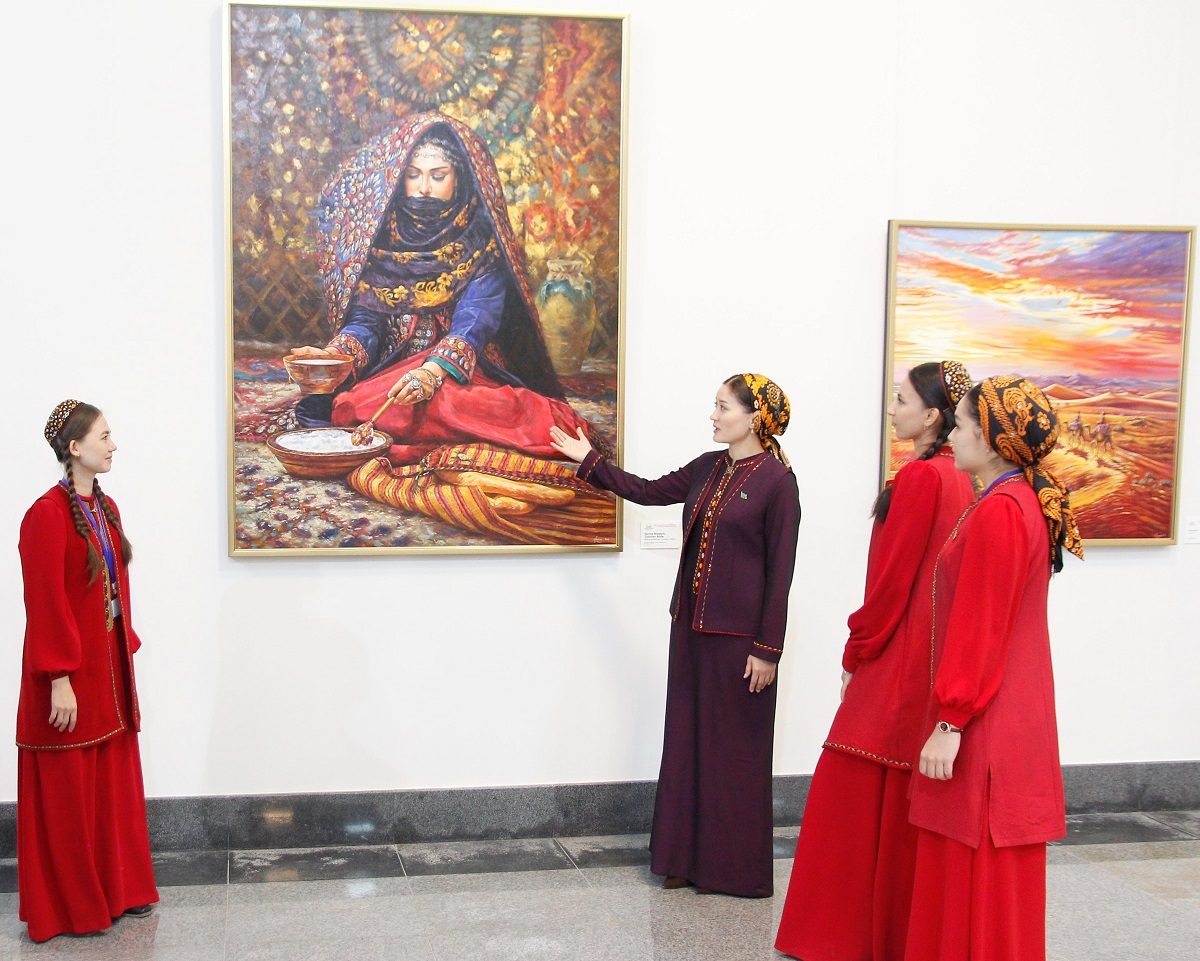
Today, the gallery halls feature 116 works by 62 artists from 35 countries around the world. The lineup of participating artists remains virtually unchanged from one exhibition venue to another. Notably, Turkmen artists have also joined the Ashgabat exhibition, adding their distinctive voices to the international showcase. Rustem Haidov presents his paintings “Milli buýsanjymyň atly hazynasy” (“The Akhal-Teke Horse: A Treasure and Source of National Pride”) and “Türkmen sährasynyň salkyn şemaly” (“The Cool Breeze of the Turkmen Desert”), while Abdulmukhammet Deryayev contributes the works “Türkmen Gelni” (“The Turkmen Bride”) and “Kerwen” (“Caravan”). Their pieces bring a distinctive national character and local perspective to the international exhibition.
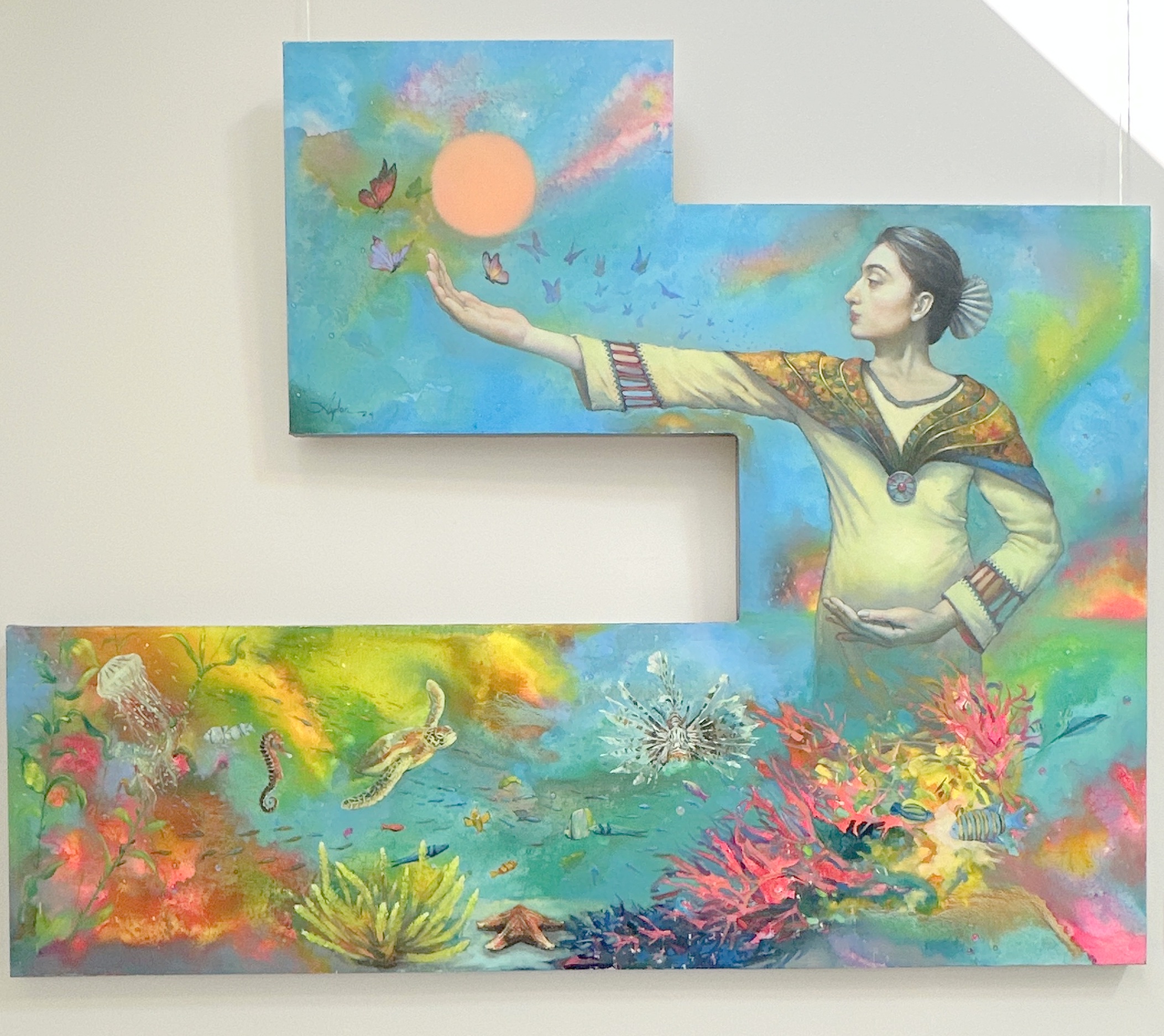
Through painting, sculpture, installation art, video art, textiles, and mixed media, the international art project explores the inseparable bond between humanity and the natural world, presenting the environment as a living archive of memory, culture, and identity.
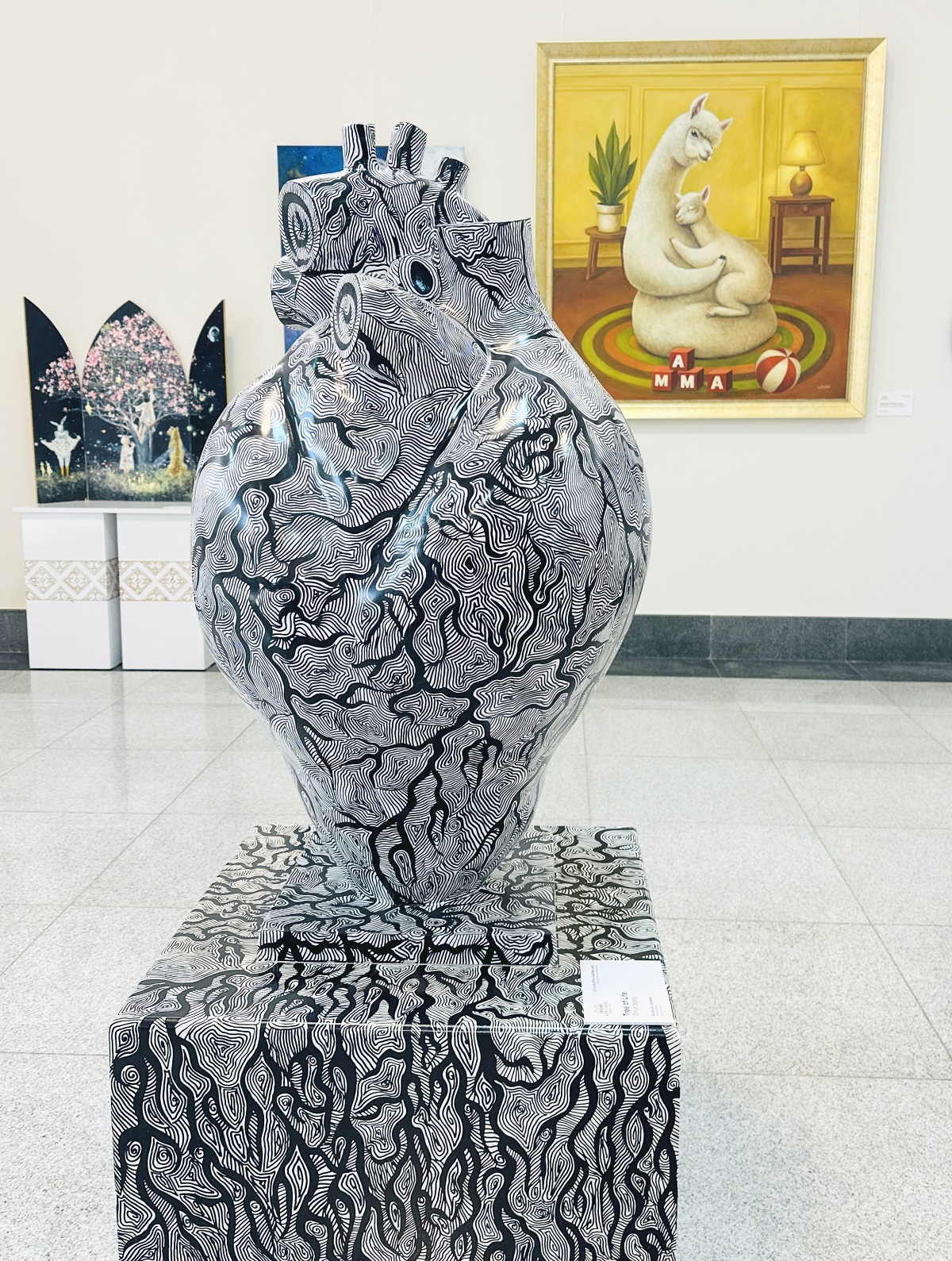
Undoubtedly, the centerpiece of the exhibition is “The Tree of Life,” a three-dimensional, heart-shaped sculpture by Leyla Aliyeva. Its symbolic blood vessels, visually reminiscent of tree roots, intertwine, gently envelop the pedestal, and descend toward the ground, connecting with the very foundation of existence. Through this metaphor, the artist invites viewers to understand that the pulse of the Earth is inextricably linked to the way humanity interacts with the gifts of nature.
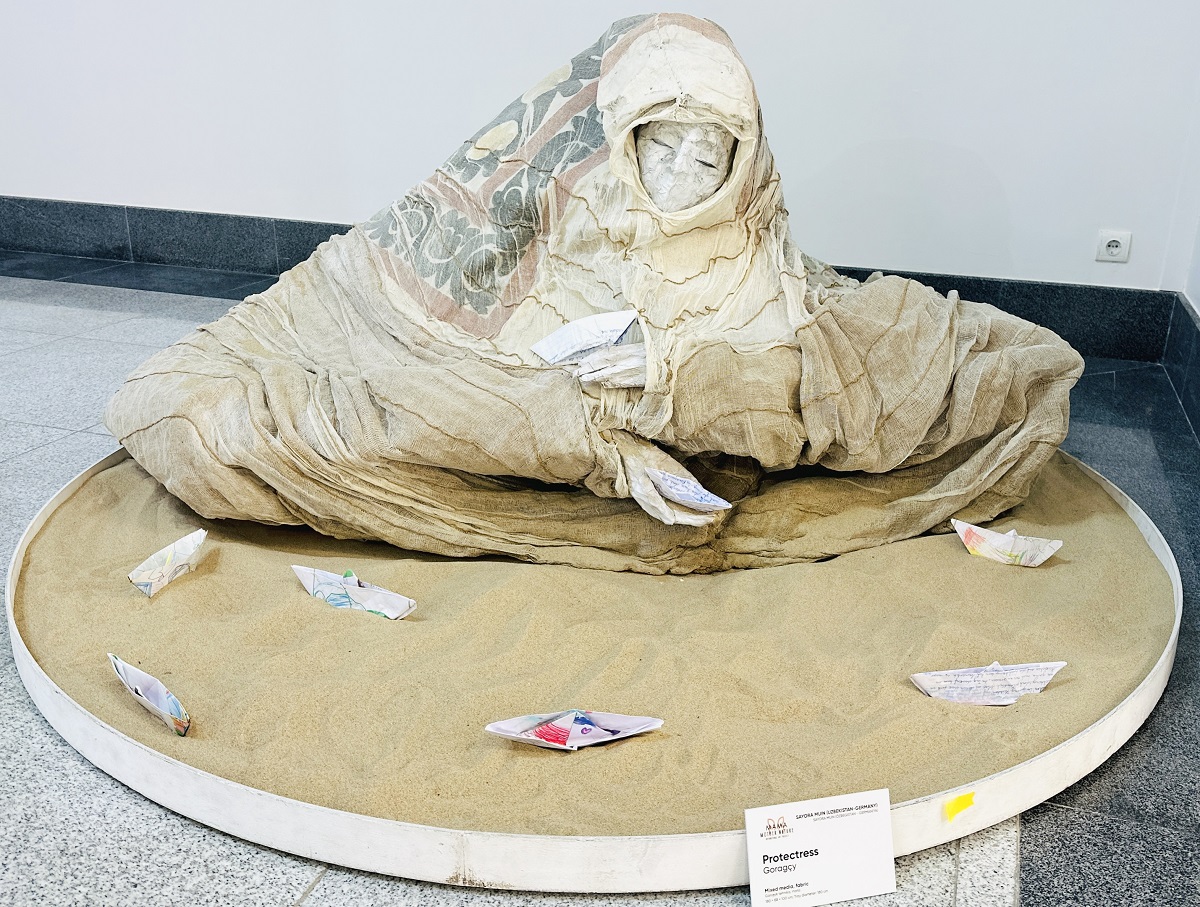
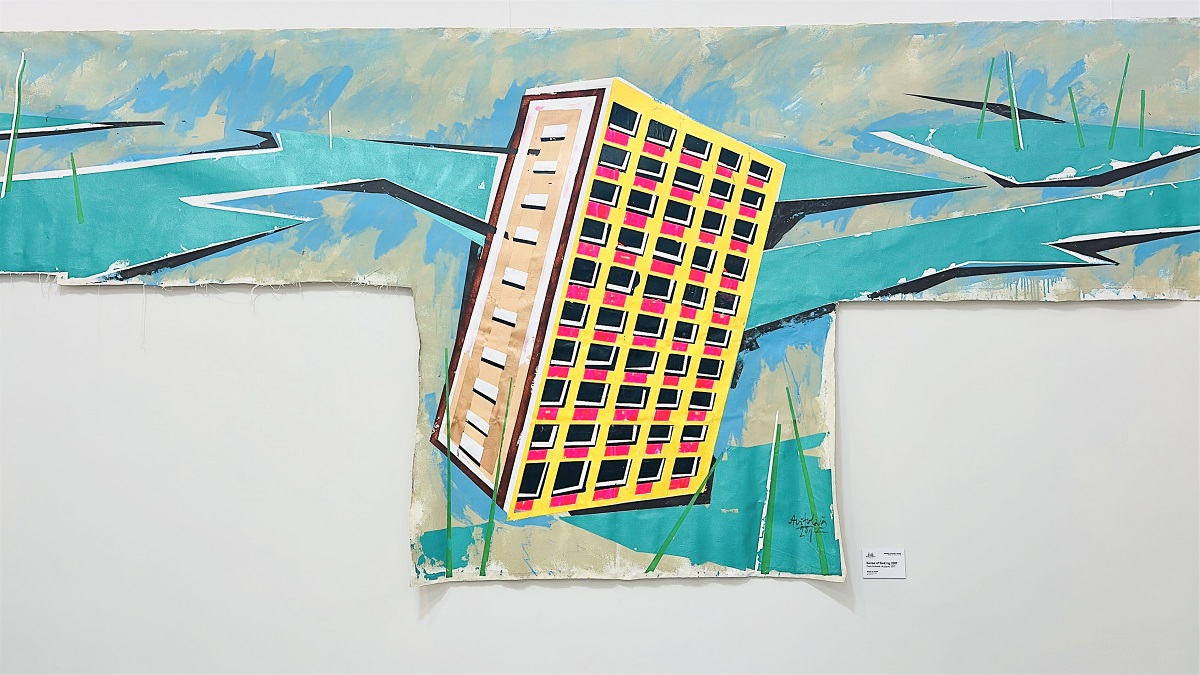
These metaphorical roots lead toward works in which artists reflect on the future of civilization. While “A Sense of Immersion,” a painting on an irregularly shaped canvas by Latvian artist Andris Vitoliņš, explores the dynamics of urbanism, Uzbek artist Sayyora Muin addresses the plight of the Aral Sea in her installation “The Protector.” The Aral Sea represents one of the largest human-caused environmental disasters of the 20th century, resulting from the drying up of what was once the world’s fourth-largest lake.
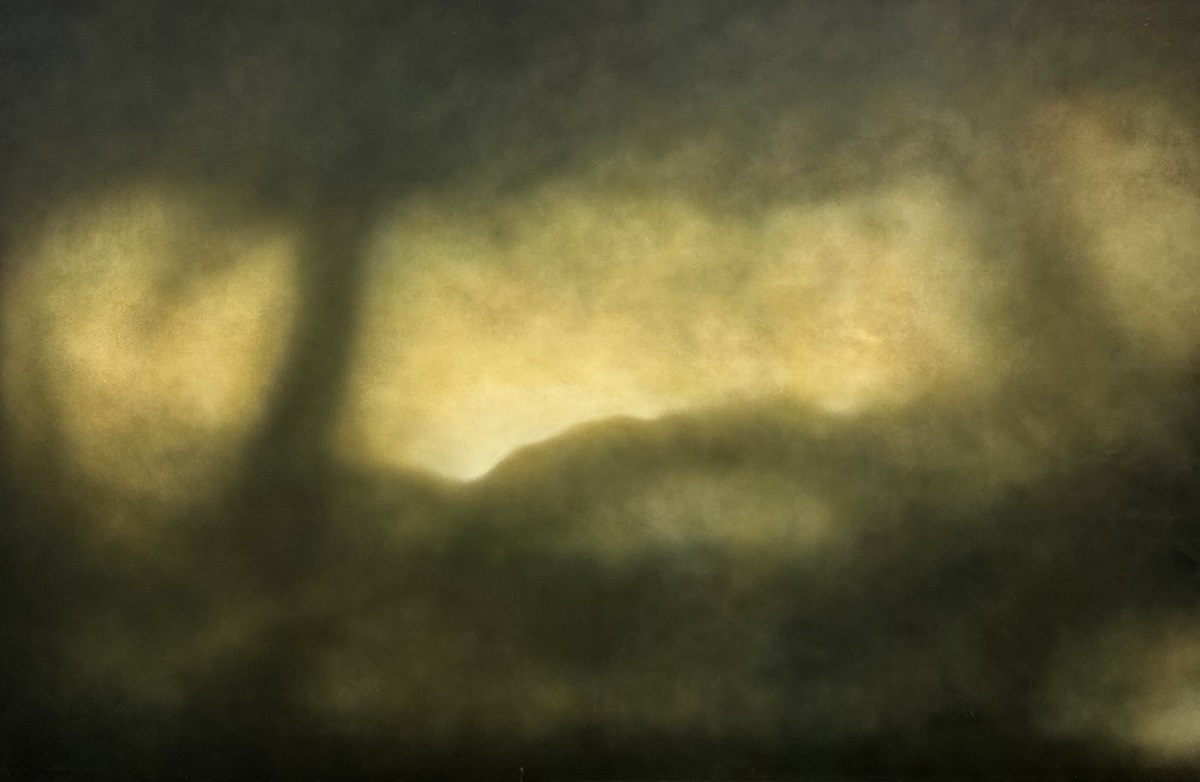
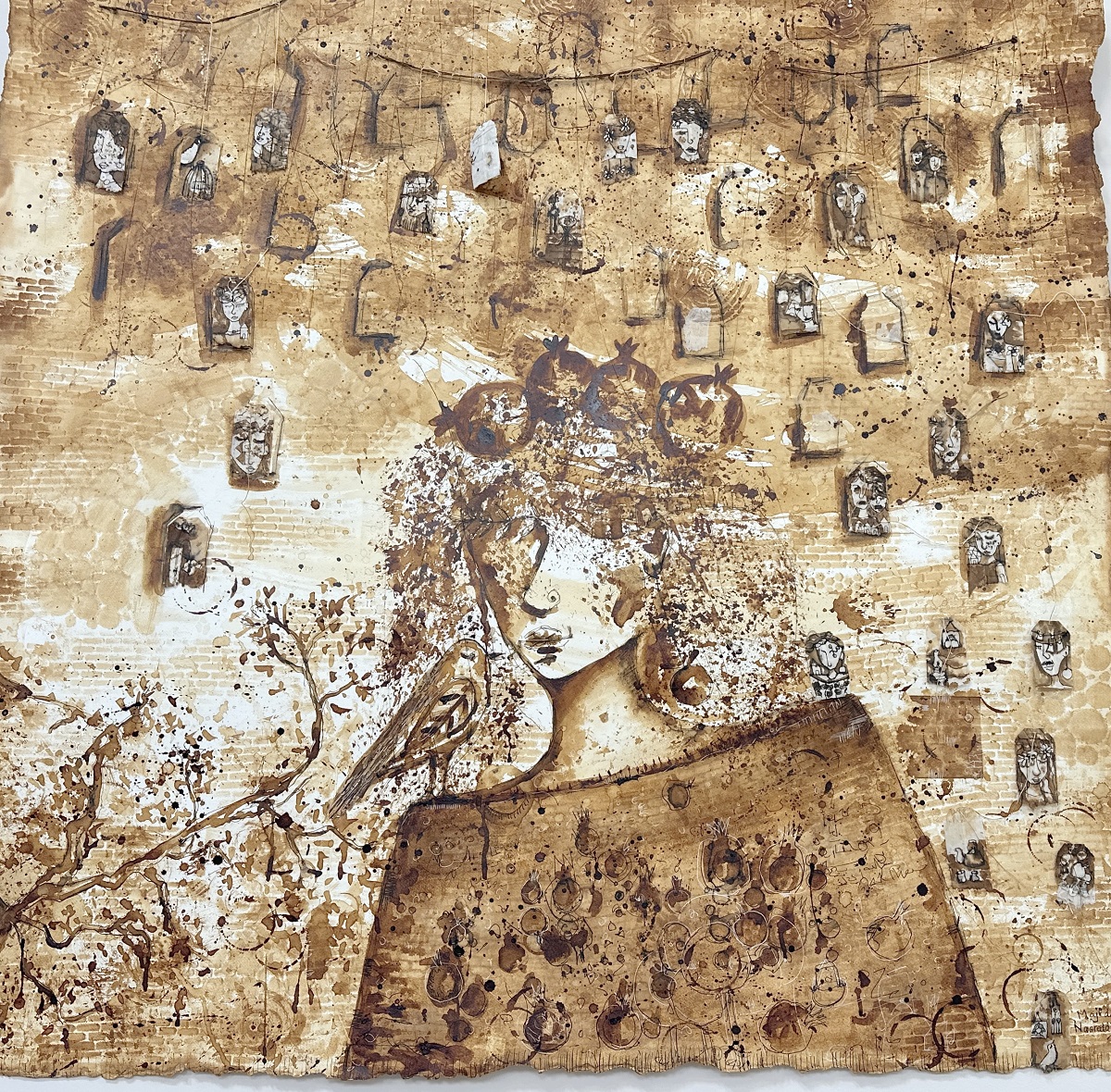
Each work invites visitors to pause and delve deeply into the message conveyed by its creator. These include “I Can Fly” by Serbian artist Gala Chaki, “Generated Generation” by Azerbaijani artist Farid Rasulov, and the unique “tea-and-coffee” portraits by Lebanese artist Majida Nasreddine. Particularly captivating is the monumental painting “Untitled” by Russian painter Nikolai Makarov, who lives in Germany. The artist depicts dense, gathering clouds through whose impenetrable darkness a patch of ethereal light emerges. Whether this light will grow stronger or disappear altogether is a question each viewer must answer for themselves.
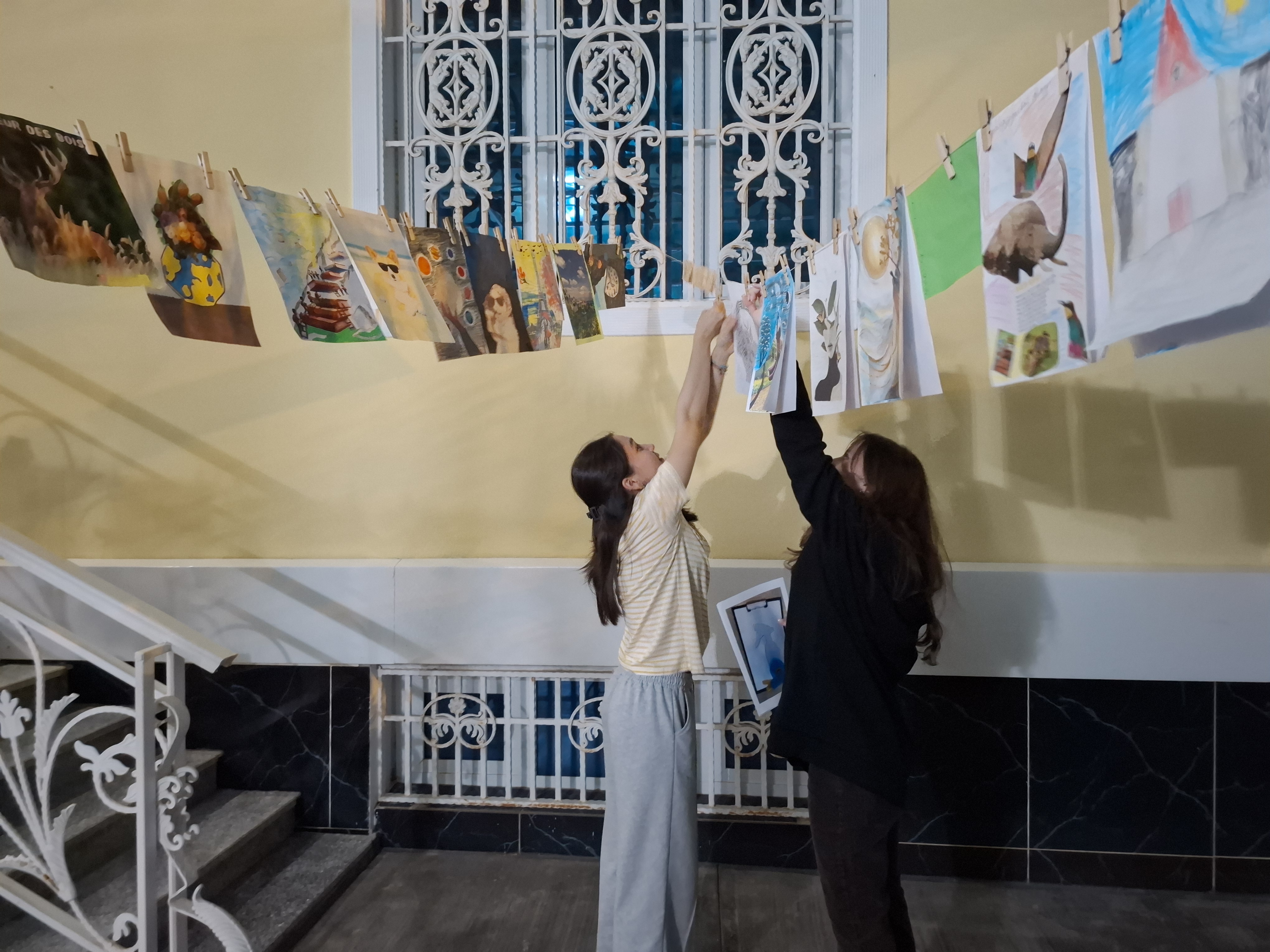
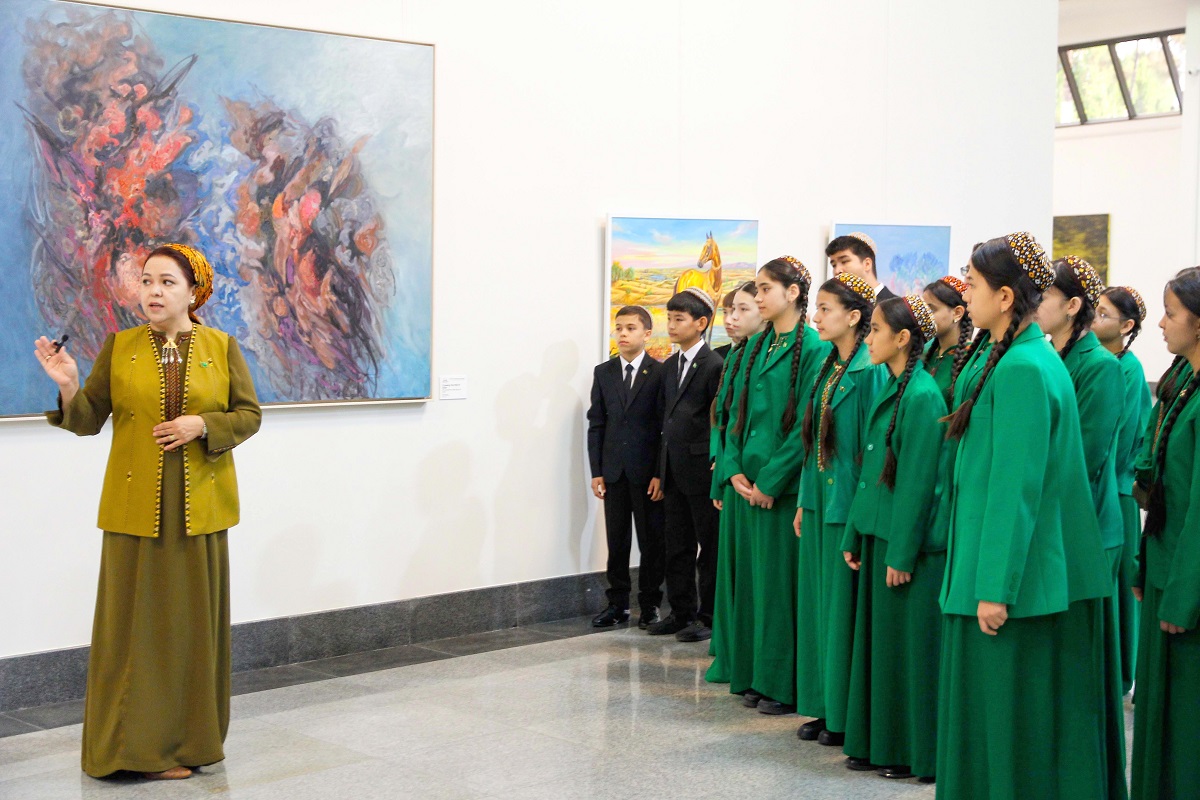
The gallery halls are crowded with visitors every day. Schoolchildren, university students, local residents, and visitors to the capital come to explore the exhibition. The organizers have set up a special guestbook where visitors can leave a commemorative message and note which artwork they liked most. The “MAMA: Mother Nature” exhibition will remain open in Ashgabat until November 30 of this year. Admission is free.
“This exhibition is definitely worth visiting for aspiring artists,” says Aijan Kadyrova, an art historian, lecturer, and head of the Art History Department at the State Academy of Arts of Turkmenistan. “Every work contains its own sacred meaning, subtly concealed so that viewers must look closely and discover a deeply personal interpretation. And, of course, this is important for our younger generation, because the central conversation here is about nature, ecology, and the feelings of a mother—whether the mother of an animal or the mother of humanity. We must protect nature. Regardless of which country we come from, we are united in our care for and reverence for Mother Nature.”
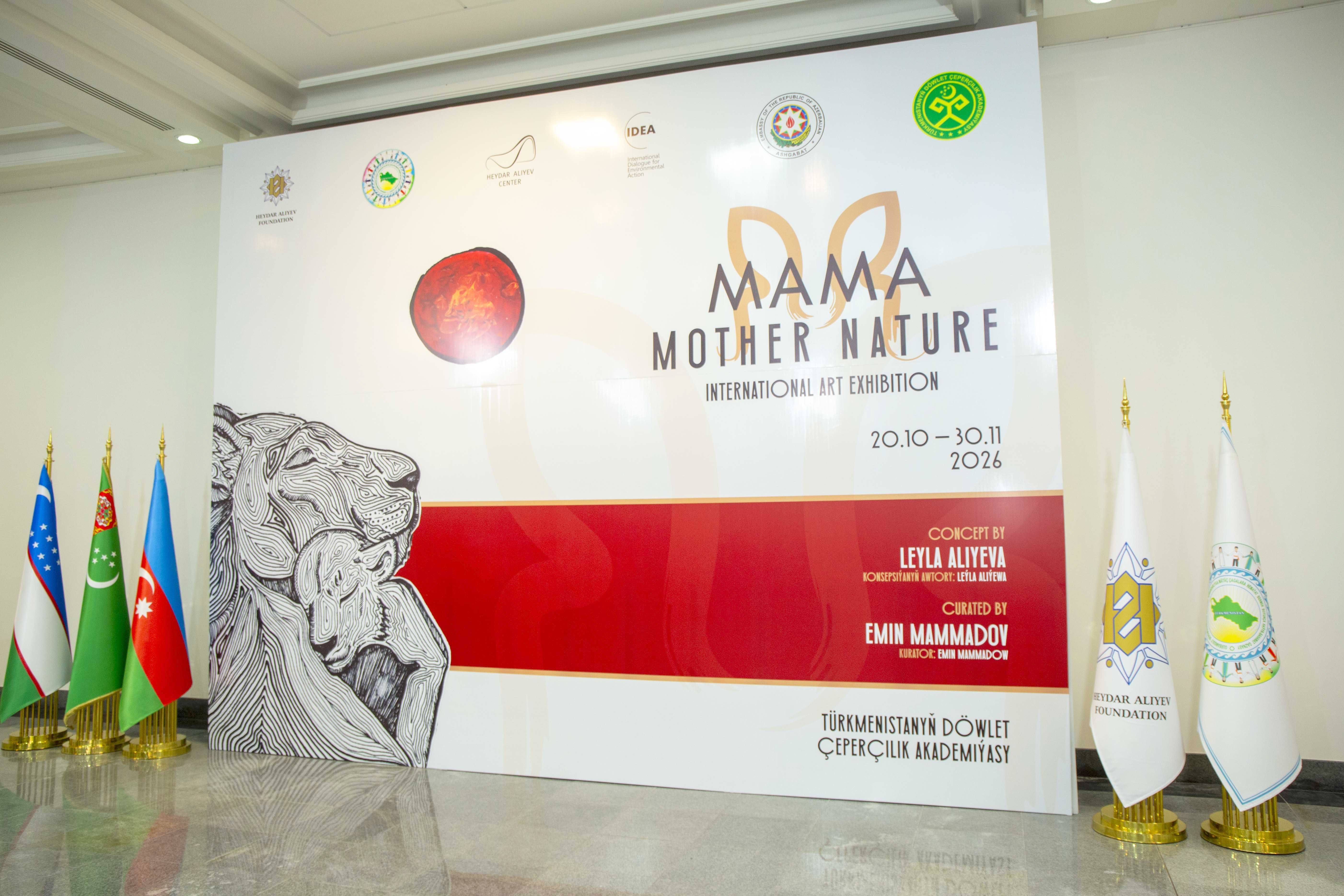
As Oguljahan Atabayeva, Vice President for Medical Activities of the Gurbanguly Berdimuhamedov Charitable Foundation for Assistance to Children in Need of Guardianship, noted at the exhibition’s ceremonial opening in Ashgabat, the event is a vivid outcome of the friendly and productive cooperation established between the Gurbanguly Berdimuhamedov Foundation, created on the initiative of Hero-Arkadag, the National Leader of the Turkmen People, and the Heydar Aliyev Foundation of the brotherly Republic of Azerbaijan.
In Turkmenistan, the exhibition takes on special significance, continuing a longstanding dialogue between the two countries, which are united by historical ties, cultural kinship, and their shared Caspian region. Today, this cultural dialogue creates a space for a renewed understanding of common values. Traditions, memory, nature, and spiritual heritage serve as links between generations, transcending national borders.