


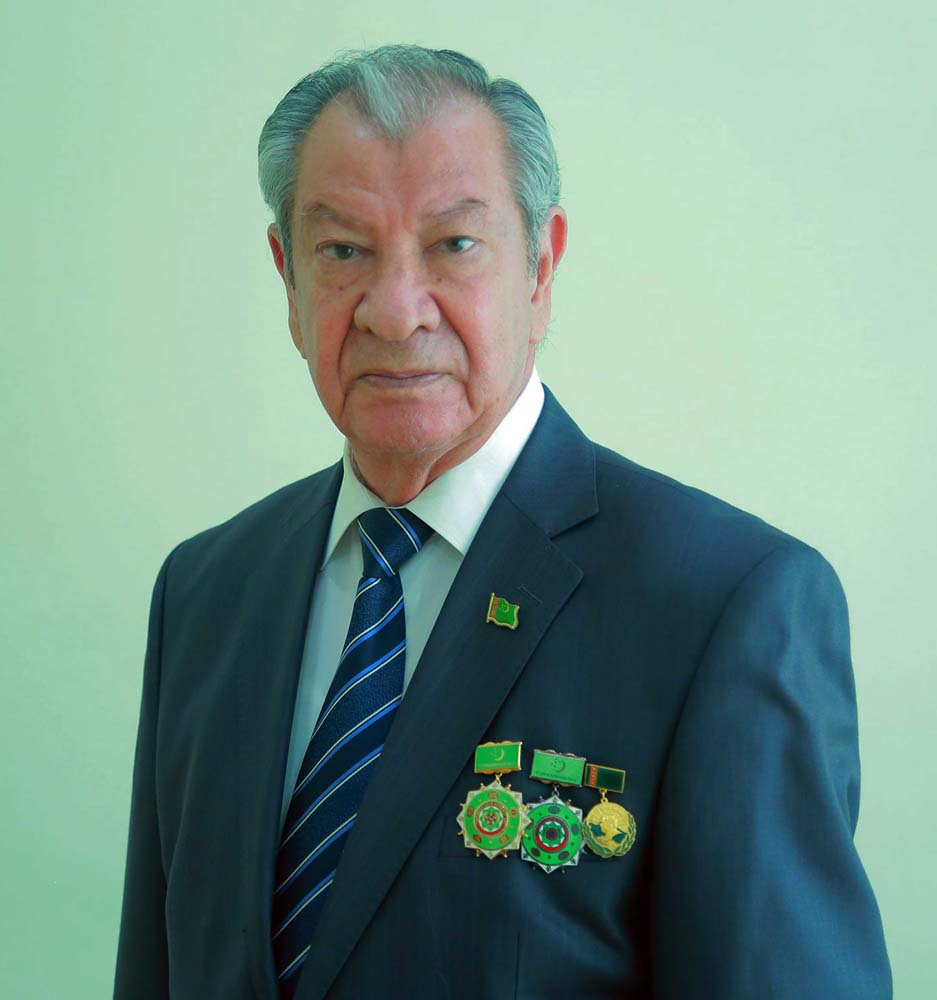
2025 was an exceptionally successful year for choreographer Seyitnepes Nepesov: this year, he celebrated his 80th birthday and was awarded the title of People's Artist of Turkmenistan for his significant contribution to the country's dance culture.
Photojournalist Yusup Turshekov and I met with Seyitnepes Nepesovich and, after congratulating him on this joyous occasion, asked him to tell us about himself and the work that earned him such high praise.
– I have been passionate about music since childhood: I played the dutar and sang, – says Seyitnepes Nepesovich. – In 1958, as a young man from Gyzylartbat, I entered the Republican Music Boarding School to study clarinet. Within a year, I mastered the two-year curriculum and was transferred to the third grade as an external student. I would have become a good clarinettist if not for a chance encounter that would radically change my future life. A group of choreographers from Moscow came to the Republican Music Boarding School to select children for the Moscow Choreographic School. I was also among the guys who had potential for dancing.
Do you want to dance? – They asked me.
I do not know, – I answered honestly, because in principle the clarinet suited me.
The school council was divided between those who opposed and those who supported me. The latter prevailed, so I went to Moscow. I am very proud of my teachers, and especially Yuriy Alekseyevich Bahrushin, who was a true professional. My first semester was disastrous. I got bad grades in all my general subjects. At the council of teachers, the question of my expulsion was raised. Teacher Yuriy Grigorovich Kondratyev defended me: «Do we really have that many students who are talented at dancing? He does not even know Russian! Help him learn it».
All the kids went to holiday homes for the winter break, playing snowballs and skiing, while I started learning Russian with my teacher. Within four to five months, I had transitioned from sign language to casual conversation, and, as people around me noticed, without an accent. The kids from Cuba, Chile, Indonesia, and China who lived in the same boarding school with us only gave up sign language after two to three years.
On holidays, the school administration invited celebrities to visit us. On the 8th of March in 1961, we were visited by ballet legend and People's Artist of the USSR Galina Sergeyevna Ulanova. She spoke of how the entire world admired Soviet ballet. As a memento of that meeting, I have a priceless photograph of Galina Ulanova with a group of young people, including me.
On the 9th of May in 1965, the ballet «Swan Lake» was being performed on the stage of the Kremlin Palace of Congresses, starring Maya Plisetskaya and Nikolay Fadeyechev. I was dancing in the crowd. I tried my best to perform cleanly, without mistakes. The realisation that I was dancing on the same stage with Maya Mihailovna Plisetskaya herself came later. And it's a good thing it happened that way, otherwise I would have become nervous and probably made mistakes.
Another interesting fact happened to me with celebrities: I was the first to graduate from the teacher Pyotr Antonovich Pestov’s class, and Nikolay Tsiskaridze was the last.
In 1966, after graduating from the Moscow Choreographic School, I came to Moscow and went into a rehearsal room with some friends to practice. I was noticed by Igor Moiseyev, the founder and longtime director of the USSR Folk Dance Ensemble, who offered me a job with him.
No, – I answered, – Turkmenistan sent me to study, I have to work there.
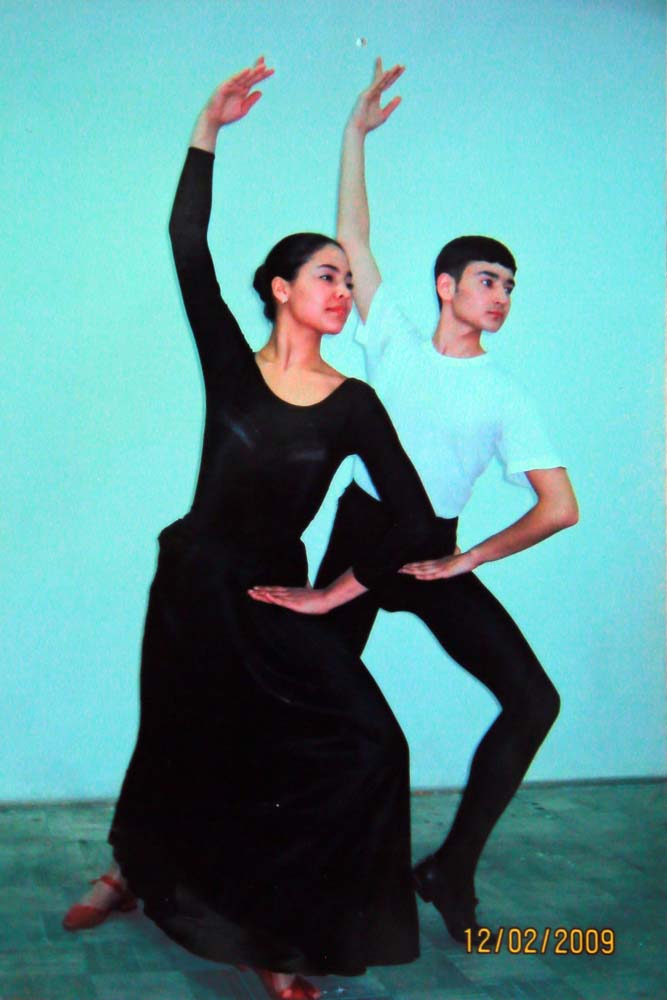
Igor Moiseyev's offer was very flattering, but I could not do otherwise. Upon arriving in Ashgabat, I joined the creative team of the Turkmen Opera and Ballet Theatre named after Magtymguly, and it became my new family. Looking back from today, my work is divided into two parts: artistic and pedagogical.
I headed the folk dance department at the State Music College named after Danatar Ovezov. Participation in festivals is paramount in assessing the level of a creative team's development. While in 1987 in Chisinau, we looked like newcomers to this art form, by 1991 in Yerevan we were already on equal terms with other participants. This was facilitated by the opening of a classical dance department, and our children began to dance pointe. And in 1992, at the First International Choreographic Festival in Minsk, «I Love Ballet», the Turkmen folk dance «Yhymmyl» and the dance of kurdish girls received a third-place diploma and the Crystal ballerina award.
I currently teach in the choreography department of the Special Music Boarding School at the Turkmen National Conservatory named after M. Kuliyeva. Of the six teachers working in the choreography department, four are my students. Interestingly, the department is headed by my former graduate, Yelena Seyitkuliyeva. I am very positive about this, believing that students should surpass their teachers.
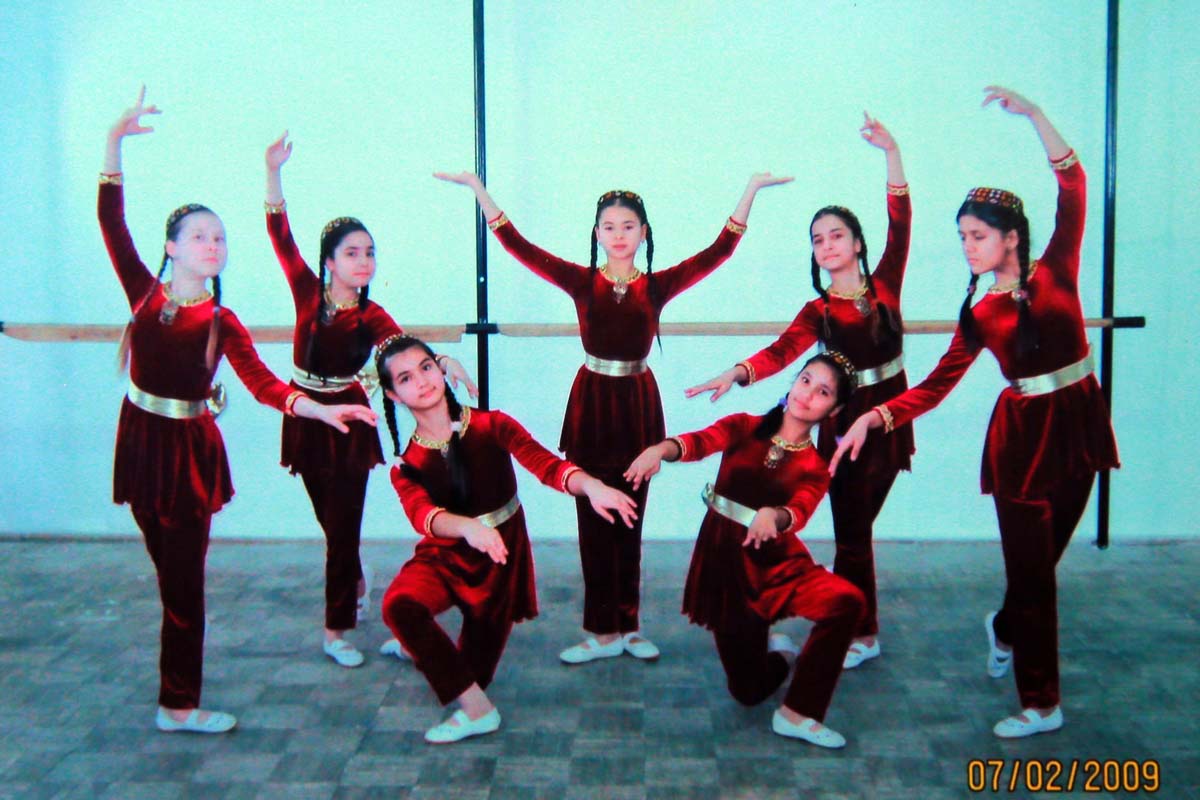
Aysha Rejepova, one of Yelena Seyitkuliyeva's students, won this year's prize in the international online competition «The Planet of Art-2025», performing a variation of «Carmen Suite» and the composition «Charlie Chaplin» via video link. As the competition winner, Aysha has been invited to a concert dedicated to the 43rd session of the UNESCO General Assembly, which will take place in October in Samarkand, Uzbekistan.
I would also like to add that the city of Arkadag will host an international event in October—the Viennese Ball—in which our students will participate. It is gratifying that, observing this event every year, I always notice how dance skills of our students stand out from the crowd.
By the way, every year in May we hold a final concert. Admission is free; come and enjoy the performance of the choreography department students.
The actress Faina Ranevskaya once said, «Ballet is roses and hard labour». This remarkably accurate aphorism has accompanied me throughout my life, starting with my studies at the academy. And yet, I am happy that my life is inseparable from dance.