


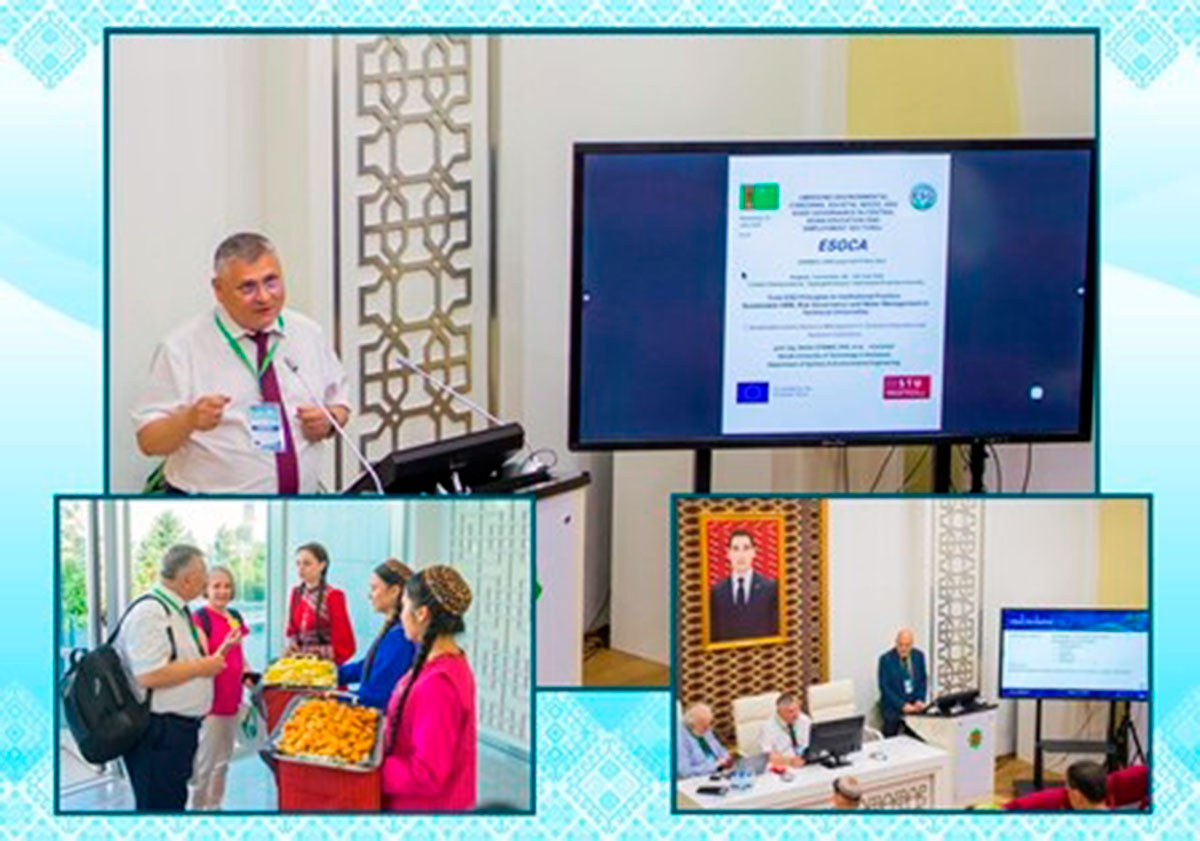
A training seminar was held in Turkmenistan within the framework of the Erasmus+ CBHE project «ESGCA – Bridging Environmental Concerns, Societal Needs and Good Governance in Central Asian Education and Employment Sectors».
The ESGCA project is implemented with financial support from the European Union within the framework of the Erasmus+ Capacity Building in Higher Education (CBHE) programme and aims to develop educational programmes based on ESG (Environmental, Social and Governance) principles. The project is coordinated by the University of Genoa, Italy, and its participants include universities and organisations from Central Asian countries and the European Union.
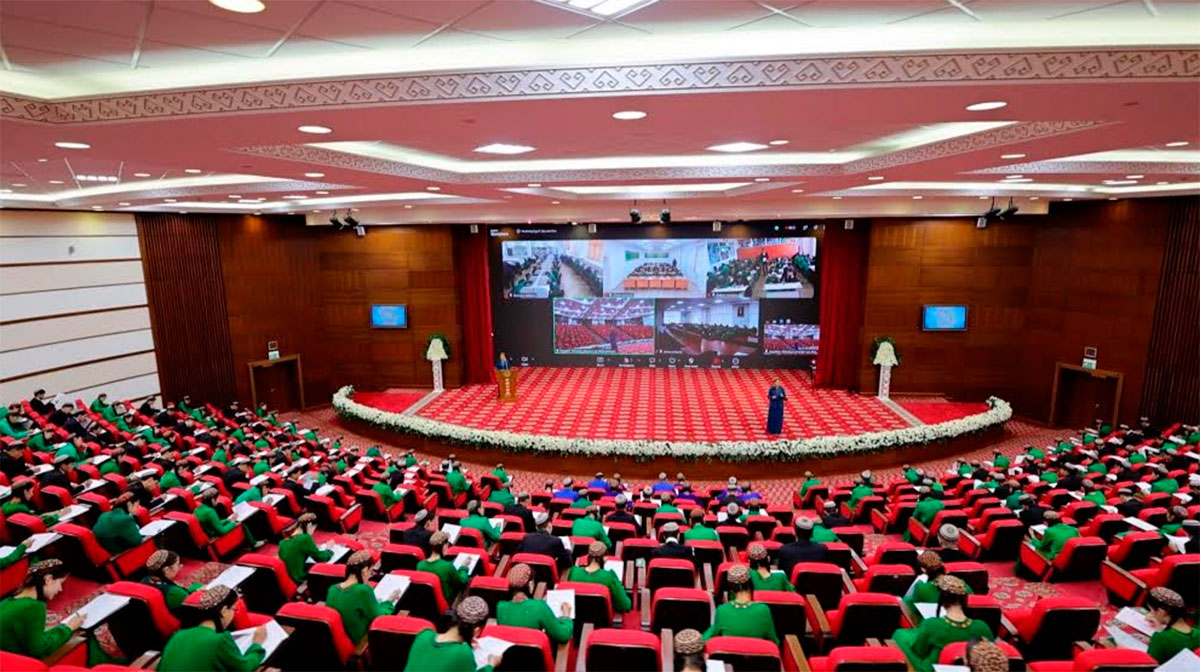
The five-day seminar was held at the International university of oil and gas named after Yagshygeldi Kakayev and the State energy institute of Turkmenistan, which organised the event.
The seminar was attended by teachers, researchers, and specialists from universities across the country, as well as representatives from the University of Genoa and the Slovak technical university in Bratislava.
The opening ceremony of the seminar took place at the International university of oil and gas named after Yagshygeldi Kakayev. University Rector Professor Bayrammyrat Atamanov delivered a welcoming speech, noting the importance of participation of Turkmen universities in international educational initiatives and emphasising the significance of ESG approaches for training modern specialists.
The project coordinator of the university, Professor Maksat Churiyev, presented an overview of the completed activities, discussed the results achieved, and outlined prospects for the further development of the project. Representatives of the University of Genoa and other international organisations involved in the implementation of the ESGCA addressed the participants online.
The first day of training was devoted to introducing participants to the ESG concept and the main directions of the project. Faculty from the International University of State Oil and Gas named after Y. Kakayev presented reports on environmental sustainability, social responsibility, risk management, and modern corporate governance. Particular attention was paid to the role of higher education in the formation of a culture of sustainable development.
The seminar then continued with the participation of international experts from Italy. ESGCA project coordinator from the University of Genoa, Angelo Musai, presented the project structure, its key objectives and expected results. He spoke in detail about the interaction between European and Central Asian universities, as well as the mechanisms for implementing project activities.
Professor Agostino Massa of the University of Genoa held a training seminar on the social component of ESG. The presentation addressed modern approaches to human resource management in the public sector, methods for improving employee performance, issues of professional development, and ensuring a favourable work environment.
Professor Giovanni Adorni gave a lecture on the digital transformation of education and the use of artificial intelligence in the educational process. Participants learned about modern educational technologies, artificial intelligence tools, and the prospects for their application in higher education. Of particular interest were examples of the use of intelligent systems for the preparation of educational materials and the organisation of the educational process.
The third day of the seminar was devoted to the practical aspects of using digital technologies and ESG approaches in educational activities. Professor Giovanni Adorni conducted a training session on Prompt-Based Learning technology, demonstrating the possibilities of effective interaction with artificial intelligence systems.
Continuing the topic, Professor Stefan Stanko of the Slovak technical university presented international experience in implementing ESG principles in the activities of technical universities. The lecture covered issues of sustainable personnel management, environmental management, risk management, and rational use of water resources. Particular attention was paid to practical examples of the implementation of ESG initiatives in European universities.
On the fourth day, work continued at the State energy institute of Turkmenistan in the city of Mary. Participants learned about the educational and scientific activities of the institute, as well as its experience in implementing sustainable development principles in the educational process. Institute representatives delivered presentations on the environmental aspects of ESG, social responsibility, and risk management.
The final day of the seminar took place at the International University of State Oil and Gas named after Y. Kakayev. The program included a continuation of lectures of Professor Stefan Stanko, as well as practical sessions devoted to analysing international experience in implementing ESG principles in the activities of educational organisations.
An important part of the event included group discussions and practical assignments, during which participants developed proposals for integrating ESG approaches into the educational activities of Turkmen universities. Particular attention was paid to the development of new master's programs, which are expected to become one of the key results of the ESGCA project.
During the discussions, the structure of future educational programs, the list of academic disciplines, requirements for graduates, and opportunities for international cooperation were considered. Participants also discussed the creation of specialised ESG centres that will facilitate the further development of the project and dissemination of the lessons learned.
Following the five-day event, participants noted the high level of organisation, the relevance of the topics discussed, and the practical significance of the knowledge gained. The seminar served as an effective platform for exchanging experiences between Turkmen teachers and European experts, and also contributed to strengthening international academic cooperation.
The event concluded with a ceremony awarding international certificates to faculty, specialists, and staff from the International University of Oil and Gas named after Yagshygeldi Kakayev and the State energy Institute of Turkmenistan who successfully completed training within the project.
After the seminar, a cultural tour of Ashgabat was organised for foreign guests. Representatives from European universities visited the sights of the Turkmen capital, becoming acquainted with its modern architecture, cultural sites, and historical heritage.
The main goal of the ESGCA project is to develop modern educational approaches that will help prepare a new generation of specialists capable of taking into account environmental, social, and governance aspects in their professional activities.
During the implementation of the project in 2025–2026, international training sessions, internships, and educational events were organised in various countries of Europe and Central Asia. In particular, representatives of partner universities participated in educational events held in Bratislava, Genoa, and Sibiu, where issues of sustainable development, modern management, leadership, risk management, and effective decision-making were studied.
A series of specialised trainings was then conducted in Astana, Bukhara and Dushanbe. These events focused on environmental aspects of ESG, social responsibility of organisations, human resource management issues, corporate governance and risk management. The knowledge and experience gained formed the basis for conducting national training seminars in all partner countries of the project.
The seminar held in Turkmenistan marked an important stage in the implementation of the ESGCA project. Its results will contribute to the further development of international cooperation, the improvement of educational programs, the advanced training of teachers, and the introduction of modern ESG approaches into the higher education system of the country. In the long term, the project will train highly qualified specialists capable of effectively addressing pressing challenges of sustainable development and management in the modern economy.