


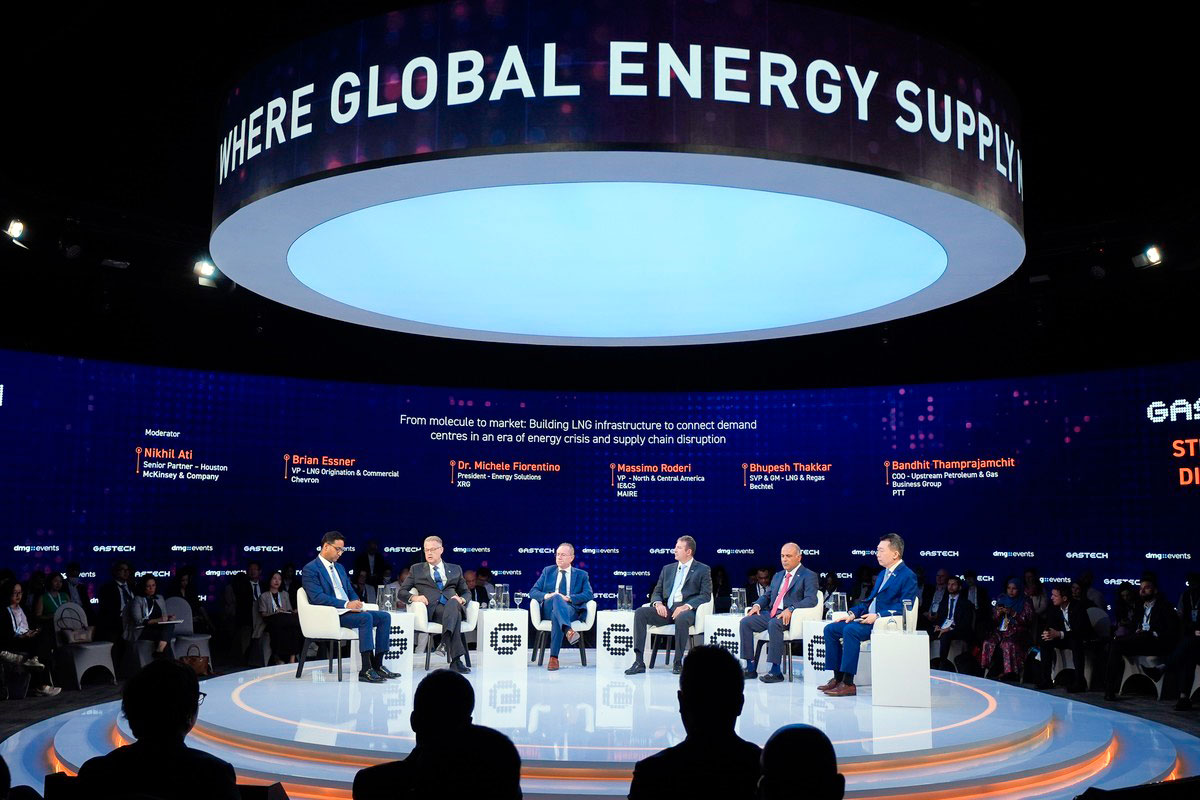
As Gastech 2026 brings the international energy industry together in Bangkok, questions of energy security, affordability, supply diversification and investment are dominating the conversation. Insights from Valérie Ducrot of the Global Gas Centre, international energy journalist and moderator John Defterios, and Petroleum Economist's Joseph Murphy point to an increasingly pragmatic global energy agenda. Next month, many of those same conversations will continue in Ashgabat at OGT 2026.
Bangkok has become the centre of the global energy conversation this week. From 14–17 September, Gastech 2026 is bringing together around 50,000 energy professionals and 1,000 exhibiting companies, with representatives from more than 150 countries gathering in the Thai capital. Ministers, chief executives, investors, technology companies, traders and policymakers are confronting an energy landscape shaped simultaneously by geopolitical uncertainty, rising demand, price volatility, accelerating electrification and the need for enormous new investment.
The scale is significant. But the more important story emerging from Bangkok is the change in the character of the global energy debate.
The conversation is becoming increasingly pragmatic.
Energy security is again at the centre of national economic strategy. Affordability has returned as a fundamental consideration for consumers and governments. Rapidly growing electricity demand — driven by industrialisation, urbanisation, data centres and artificial intelligence — is placing additional pressure on energy systems. At the same time, governments and companies continue to pursue lower-carbon technologies and improved environmental performance.
The question facing the industry is therefore no longer simply which source of energy will prevail.
It is how the world can deliver more energy, more reliably and at an affordable cost, while continuing to build a progressively more efficient and sustainable energy system.
That is the conversation taking place in Bangkok. And it has direct relevance for the next major international energy gathering in Ashgabat.
A new realism in the global energy debate
The official Gastech programme itself reflects this shift. Its strategic themes range from the global energy economy and geopolitics to natural gas and LNG, electrification, finance and investment, artificial intelligence, low-carbon solutions, hydrogen and international partnerships. The common thread is increasingly one of implementation: how to build resilient infrastructure, mobilise investment and ensure sufficient energy supply amid geopolitical and economic uncertainty.
That message was reinforced during Gastech's opening discussions.
Former UK Prime Minister Tony Blair argued that energy security has become an integral part of national security and economic prosperity, while emphasising the importance of diversified energy supplies as electricity requirements increase, including those associated with artificial intelligence.
For Valérie Ducrot, Executive Director of the Global Gas Centre, the central challenge is reconciling four priorities that can no longer be considered separately: energy security, affordability, economic growth and climate objectives.
Her assessment from Bangkok highlights a broader change in emphasis. The energy transition needs to be practical and achievable. Energy projects need to be connected with investors through clear and stable frameworks. Promising ideas need to become practical solutions. And international dialogue and cooperation are becoming more important rather than less.
Ducrot also sees natural gas and LNG remaining essential to reliable and diversified energy supplies as countries pursue greater resilience and economic development.
Those observations closely mirror the themes running through the wider Gastech programme.
Five messages from the market
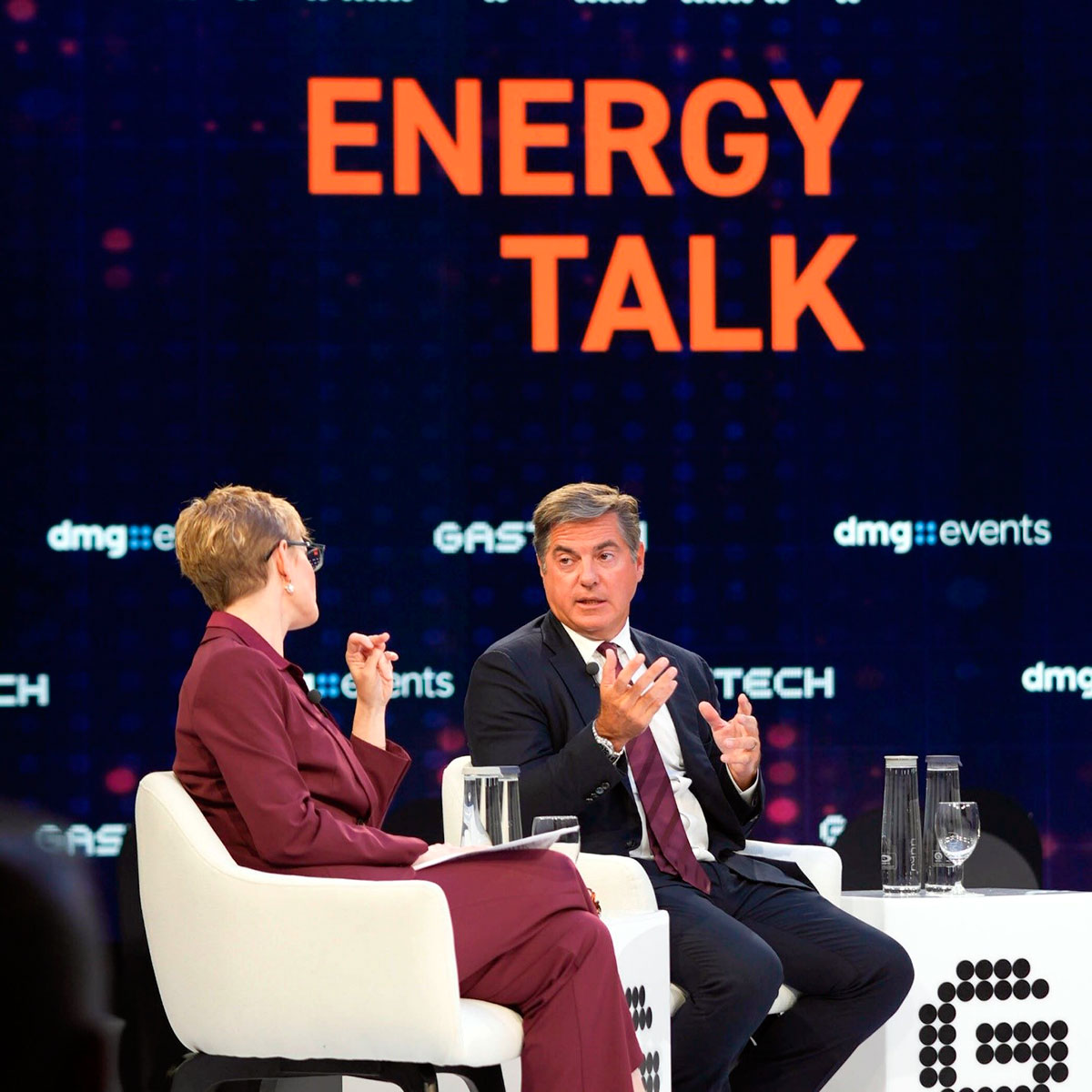
From the conference floor, Joseph Murphy of Petroleum Economist identifies another important dimension: the way recent shocks are changing the behaviour of gas producers and buyers.
His first takeaway is diversification.
Recent disruption affecting energy flows through the Strait of Hormuz has again demonstrated the risks associated with excessive dependence on a single source, supplier or transit route. For Asian buyers, Murphy argues, energy security increasingly means diversifying not only suppliers, but geography, contractual structures and delivery routes. In some markets, it can also mean finding the appropriate balance between LNG imports and pipeline gas.
This is no longer an abstract concern. Recent disruption has driven Asian spot LNG prices sharply higher and reduced demand in some price-sensitive Asian markets. Yet industry executives gathered in Bangkok expect consumption to recover as prices normalise, reinforcing the distinction between temporary demand destruction caused by extreme prices and the longer-term Asian gas demand story.
That leads to Murphy's second observation: today's demand destruction should not automatically be interpreted as tomorrow's demand trajectory.
His third is the continuing importance of gas to Southeast Asia. Industrialisation, expanding electricity requirements, data-centre investment and the integration of intermittent renewable generation are all contributing to the need for reliable power supply. Domestic production will remain important, but imported energy is expected to play a growing role as well.
Developments announced at Gastech are already illustrating the connection between those trends. GE Vernova and B.Grimm Power, for example, announced agreements associated with gas-fired generation and equipment in Southeast Asia, including a Malaysian project intended partly to meet growing electricity requirements from data-centre development.
The fourth message concerns long-term contracting. After repeated shocks to global gas markets, both buyers and producers are again examining the value of long-term supply arrangements: buyers seeking greater predictability of physical supply and pricing, and producers requiring sufficient commercial certainty to support capital-intensive new projects.
And the fifth is perhaps the broadest: the energy transition is meeting commercial reality.
Hydrogen, carbon capture, renewables and other lower-carbon technologies remain firmly on the agenda in Bangkok. But affordability, security of supply and commercial viability are increasingly being discussed alongside decarbonisation.
Natural gas, in that context, is increasingly being considered not simply as a temporary bridge, but as part of a broader energy system in which different technologies and resources perform different functions.
From Bangkok to Ashgabat
There is also a human bridge between the two energy gatherings.
International energy journalist and moderator John Defterios, who is participating in the global energy dialogue surrounding Gastech, will travel to Ashgabat next month as Anchor and Lead International Moderator of OGT 2026.
His message captures the connection simply: the global energy dialogue does not end in Bangkok. It continues in Ashgabat.
That is more than an event slogan.
Many of the questions occupying executives and policymakers at Gastech have direct relevance to Turkmenistan: How can energy security be strengthened through diversification? Where will the next generation of gas supply come from? How can resources be connected efficiently with markets? What infrastructure will be required? How can major projects attract long-term investment? And what role can technology play in increasing production efficiency while improving environmental performance?
These questions are particularly important for a country possessing one of the world's major natural gas resource bases.
Turkmenistan and the diversification equation
The discussion around diversification emerging from Bangkok gives particular relevance to Turkmenistan's evolving energy strategy.
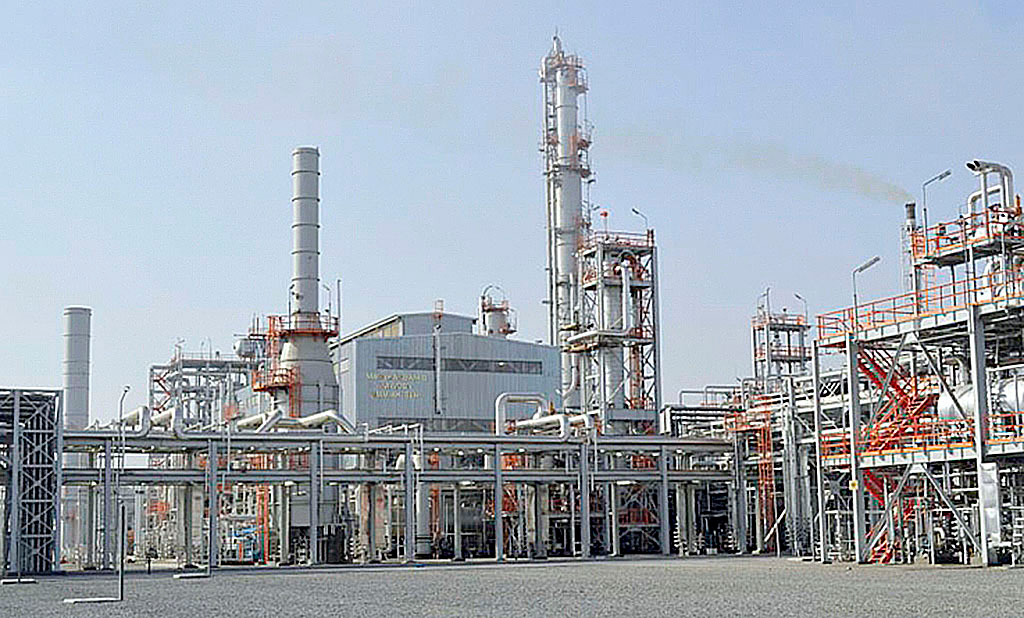
The country already occupies an important position in regional gas markets through long-term pipeline exports to China. At the same time, the next stage of development of the giant Galkynysh gas field is moving forward, with Phase IV involving production drilling and new gas-treatment capacity designed to produce approximately 10 billion cubic metres of commercial gas annually.
But resource development is only one part of the equation.
The other is connectivity.
The Turkmenistan–Afghanistan–Pakistan–India gas pipeline — TAPI represents one of the most significant potential new connections between Central Asian gas resources and the growing markets of South Asia.
Viewed through the lens of the discussions taking place in Bangkok, TAPI becomes relevant to a much wider international conversation.
If energy security increasingly means diversity of suppliers, geography and transportation routes, then new pipeline corridors can complement global LNG trade by creating additional physical connections between producing and consuming regions.
For Turkmenistan, TAPI represents an opportunity to further diversify export infrastructure. For Afghanistan, Pakistan and India, its strategic rationale lies in the possibility of accessing an additional long-term source of pipeline gas. At a regional level, it represents something broader: the potential to connect resources, infrastructure and markets across Central and South Asia.
The project's designed capacity of 33 billion cubic metres per year gives that proposition significant scale.
As construction advances in Afghanistan towards Herat, the discussion around TAPI is therefore increasingly moving from concept towards infrastructure delivery.
And that is precisely where one of the strongest messages from Gastech becomes relevant: energy resources create their greatest value when they can be connected reliably to markets.
Resources need infrastructure — and infrastructure needs investment
Bangkok is also reinforcing another lesson.
Possessing resources is not enough.
Pipelines, processing facilities, LNG terminals, electricity networks, storage, digital systems and other infrastructure are what ultimately connect energy supply with economic demand.
Financing them requires something equally important: confidence.
Investors need credible projects, stable frameworks, appropriate risk allocation and a clear understanding of future demand. Producers need confidence that markets will exist for long-lived assets. Buyers need confidence that supply will remain available and affordable.
That is why investment and infrastructure have moved so decisively towards the centre of the international energy debate.
Gastech's 2026 programme explicitly links energy security with resilient infrastructure, pragmatic policy and investment, while its natural gas and LNG discussions focus on supply routes, price volatility and infrastructure gaps.
For gas-producing countries such as Turkmenistan, this creates opportunities extending far beyond upstream production.
Gas processing and petrochemicals can create additional value from the resource base. Digital technologies and artificial intelligence can improve reservoir understanding, operational efficiency and predictive maintenance. Methane management and other environmental technologies can improve performance. Engineering and service companies can contribute to the development of increasingly complex projects.
The investment conversation therefore moves progressively from resources to projects, from projects to infrastructure, and from infrastructure to markets.
Technology joins the energy-security equation
Another strong connection between Bangkok and Ashgabat is technology.
Artificial intelligence has become a prominent part of Gastech 2026, alongside digitalisation, advanced analytics and technologies designed to improve energy-system efficiency. Gastech's dedicated AI offering examines the growing convergence between artificial intelligence, energy and infrastructure.
For a major producing country, however, digitalisation matters most when it produces measurable results.
Advanced reservoir modelling can improve understanding of complex fields. Predictive analytics can identify equipment problems before they cause costly interruptions. Digital twins can support engineering and operating decisions. Improved seismic processing can reduce geological uncertainty. Automation can enhance the reliability and safety of pipeline and processing infrastructure.
Technology is therefore becoming inseparable from the resource story.
And international energy partnerships are increasingly defined not only by capital, but by engineering expertise, technology, specialist knowledge and the ability to execute projects effectively.
Three voices, one direction
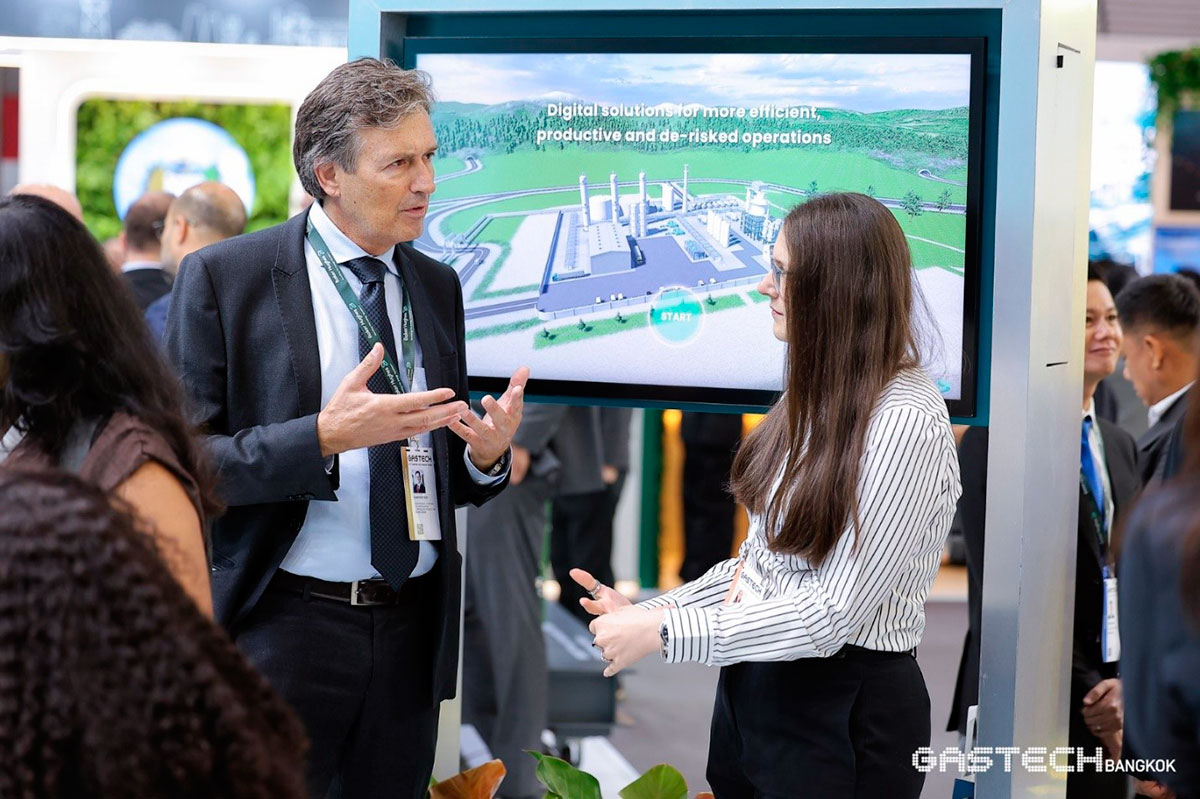
Ducrot, Murphy and Defterios approach the energy industry from different perspectives.
Ducrot's is an institutional and international gas-industry perspective: security, affordability, economic growth and climate objectives must increasingly be reconciled rather than considered separately.
Murphy's is a market perspective: diversification matters, high prices can temporarily suppress demand without eliminating its underlying drivers, Asia still needs energy, and long-term commercial relationships are regaining importance.
Defterios provides the strategic bridge: the questions being debated by the global industry in Bangkok will continue in Ashgabat.
Together, these perspectives point towards a common conclusion.
The energy debate is moving away from simple choices between competing technologies or resources. It is increasingly about building systems capable of delivering security, affordability, resilience, economic development and progressively better environmental performance at the same time.
Doing that requires resources.
But it also requires infrastructure, capital, technology, markets — and partnership.
Next stop: Ashgabat
From 21–23 October 2026, the 31st International Conference and Exhibition “Oil and Gas of Turkmenistan – OGT 2026” will bring the international energy community together in Ashgabat.
Its agenda will take forward many of the questions now being discussed in Bangkok: the future role of natural gas, development of Galkynysh, gas monetisation and petrochemicals, TAPI and regional connectivity, opportunities in the Turkmen sector of the Caspian Sea, investment, digitalisation, artificial intelligence, methane reduction, efficiency and international partnership.
But Ashgabat adds something distinctive to that global conversation.
It brings those questions directly to a country with a major hydrocarbon resource base, significant projects moving into new stages of development and an increasingly important discussion about how resources, infrastructure and markets can be connected.
For investors, that means examining where the next opportunities may emerge.
For engineering, service and technology companies, it means understanding where international expertise can contribute.
For policymakers and energy companies, it means considering how new infrastructure and long-term partnerships can strengthen regional energy connectivity.
And for the wider industry, it provides another opportunity to continue a conversation that has become increasingly urgent.
Bangkok is asking how the world can deliver the secure, affordable and increasingly sustainable energy required for the next phase of economic growth.
In October, that dialogue moves to Ashgabat.