


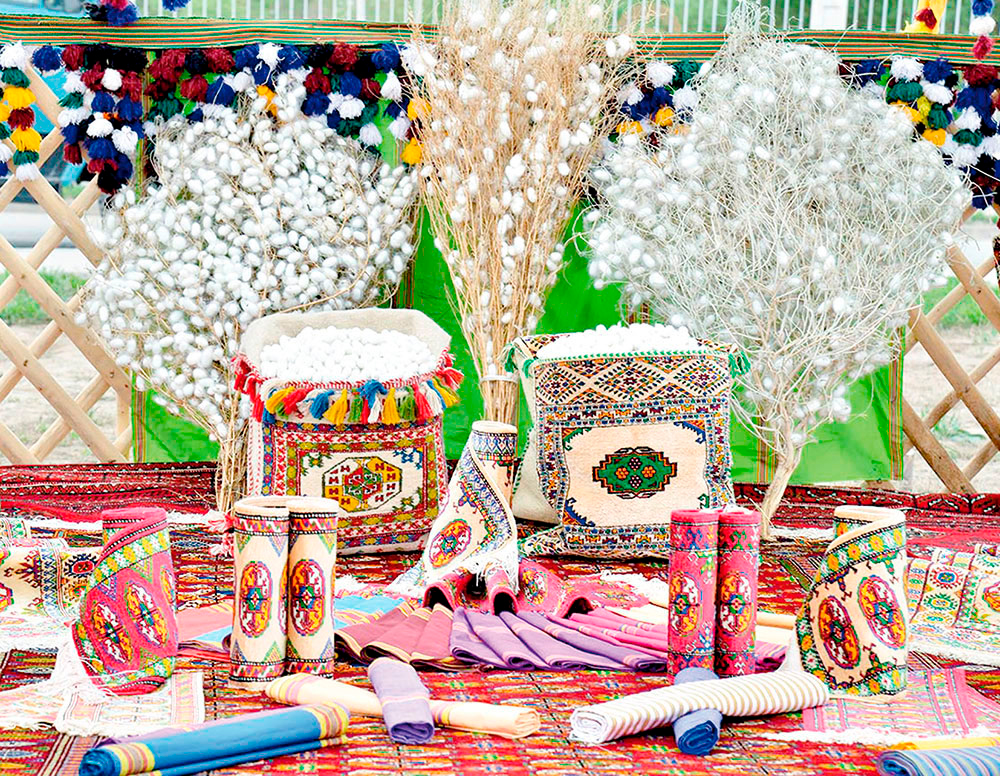
The important seasonal campaign for silkworm cocoon production is now in full swing in the Dashoguz velayat. The significance attached to this agricultural undertaking in the region is evident from the scale of participation: this year, nearly 7,000 tenant farmers, 186 peasant farms, and dozens of farmers’ associations are involved in the campaign.
The region’s producers of this valuable raw material possess extensive experience in successful silkworm breeding. They understand that obtaining high-quality silk ultimately depends on several key factors: proper feeding of the silkworm larvae, maintaining optimal temperature and humidity in the facilities designated for rearing them, and ensuring ideal conditions throughout the production process. Considerable attention is also given to the timely implementation of preventive measures to protect the silkworm larvae from disease, as well as to the quality and freshness of mulberry leaves—their primary food source—and to maintaining an appropriate feeding schedule.
Thanks to the comprehensive support and favorable conditions created throughout the region for successful cocoon production, the silk growers of the velayat are confident that they will fulfill their target on schedule by harvesting 500 tons of this valuable raw material for the domestic textile industry.
It should be noted that, as a result of consistently implemented measures, the velayat now has a strong feed base for the continued development of sericulture. Its mulberry plantations cover thousands of hectares, and the number of trees is increased each year through the planting of large numbers of new saplings along the perimeters of agricultural lands and beside water sources.